Kirishima · MaruoNo.1184★★Open in map →
Kirishima Onsen Village
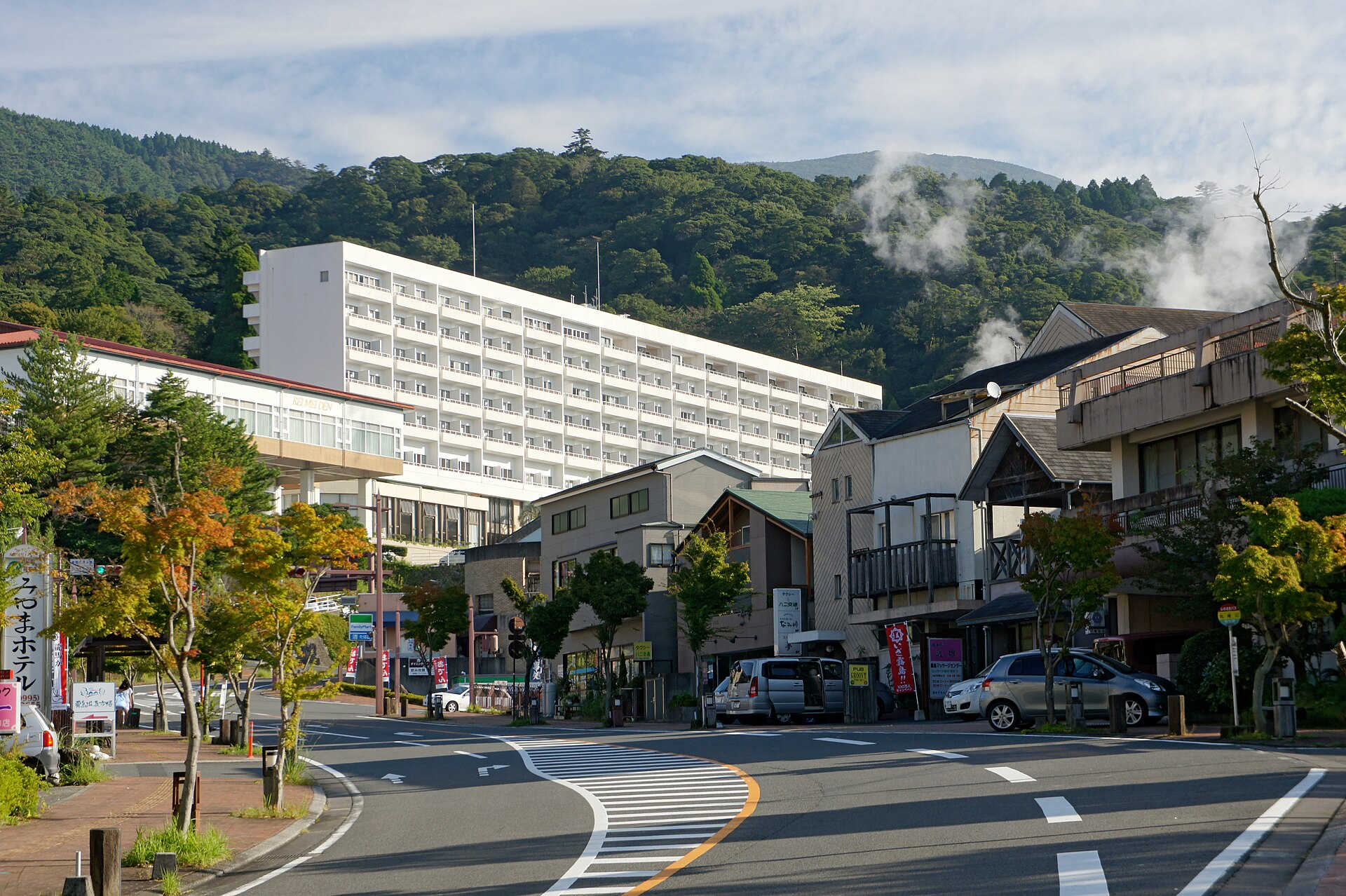
Nine hot springs spread across the southwest slopes of the Kirishima volcanoes, between 600 and 850 metres up. Maruo is where the buses stop, and its market building — tourist office, food steamed over a vent, a paid footbath — is the practical centre of the whole group.
- FromKagoshima Airport
- ~30 minAirport bus, direct
- Get off atMaruo (Kirishima Jingu Access Bus)
- On foot
- Kirishima Onsen Village
The sweet spot
This is a well-known destination rather than a discovery — the mountains behind it have been national park land since the very first designations in Japan. What stays quiet is the geography. Because the nine springs are spread across a mountainside instead of packed into one street, the crowd never concentrates in a single place, and how busy Maruo feels depends almost entirely on whether a bus has just pulled in.
Where it is
12 more notes in Kagoshima · open the map →What to look for — in walking order
- Kirishima Onsen Marketthe roadside hub at Maruo, with the tourism office, shops and food steamed over a spring vent
- Yukemuri no Sato footbatha paid open footbath in the market's yard, fed by a sulphur-bearing sodium chloride spring at 40 to 45 degrees
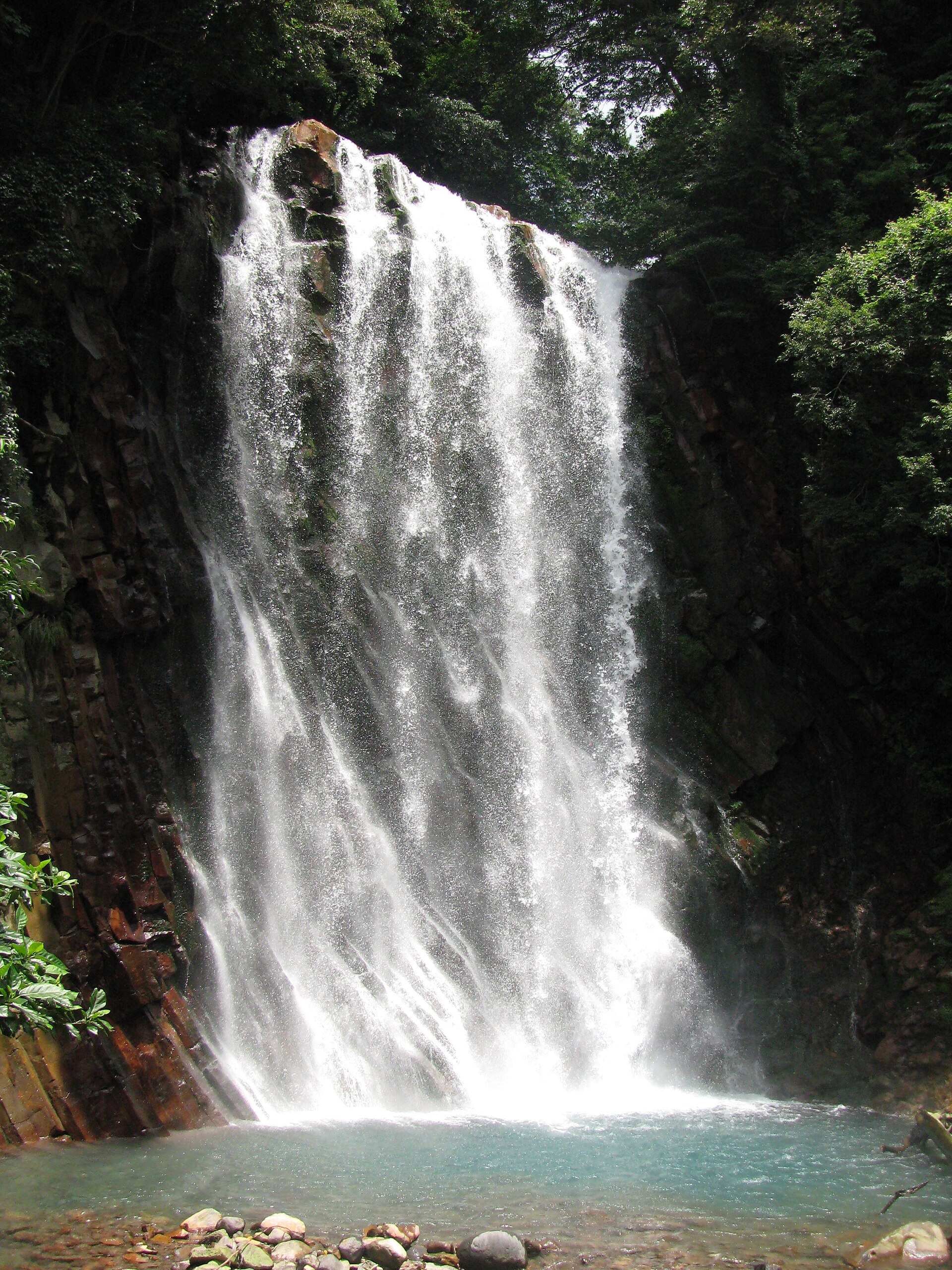
- Maruo Falls23 metres high and 16 across, carrying hot-spring water gathered from the Iodani source upstream
- Maruo Nature Traila forest walk through old-growth woods, passing Kirishima's oldest rock bath
How to actually get there
- Kagoshima Airport → Maruo (Kirishima Jingu Access Bus, no change).
- Maruo stop → Kirishima Onsen Market, a minute on foot.
- Market → Maruo Falls, walking east along Route 223.
- Falls → Maruo Nature Trail, or back to the stop for the bus on to Kirishima Jingu.
- Kirishima Jingu Access Bus from Kagoshima Airport
- Kagoshima Airport →(Kirishima Jingu Access Bus)→ Maruo, with no change on the way. The city's published timetable puts the Maruo stop half an hour after the airport departure. The service runs only a few times a day, with one extra departure at weekends and on public holidays, so it is a bus to build the day around rather than to turn up for.
- Return from the Maruo stop
- The same route continues to Kirishima Jingu and Kirishima-Jingu Station, so from Maruo you can either turn back toward the airport or carry on to the railway and leave by train. Either way the departures are few and the last one is early by city standards. Read the board at the stop when you get off.
About the place
Kirishima Onsen Village is a name for a group rather than a place. Nine hot springs lie scattered over the southwest slopes of the Kirishima range, all of them between 600 and 850 metres above sea level, and the water is not the same from one to the next. Maruo is the hub: the buses stop there, the tourism association keeps an office there, and a market building beside the road sells eggs and vegetables cooked over a spring vent. Steam rises out of the hillside around it, which is the first thing anyone notices on arrival. The same water reaches a waterfall a short way down the road.
How to enjoy it
With only a few buses each way, the return is the thing to settle first — check the board at the stop before you walk anywhere. An hour covers the market, the footbath and the waterfall; the nature trail wants half a day and proper shoes. The prefecture's guide notes that the falls throw up visible steam in winter, which is when that stretch of road is at its strangest.
Background & history
In 1866 Sakamoto Ryoma travelled through Kirishima with his wife Oryo, working round the springs of the range, Sakanoo among them, and climbing Takachihonomine on the ridge above. Kagoshima's records call that journey the start of the Japanese honeymoon. The mountains behind the springs became national park land in 1934, in the first round of designations made in Japan. Kinkowan Bay was added in 1964, and in 2012 the park took its present name, Kirishima-Kinkowan.
Before you go
- Cash
- Walking around Maruo costs nothing. The bus is covered by the Kirishima one-day pass, priced at 1,500 yen for adults when checked, which also covers the other routes in the area; drivers do not take cards. The footbath at the market was 100 yen including a towel. Individual bathhouses set their own charges.
- Before you go
- This is volcanic ground high on the range, so it runs colder and wetter than the city below. Route 223 past the waterfall has no pavement in places and no lighting after dark. Bathing hours differ from one establishment to the next, and the nature trail is a forest path rather than a promenade.
- Another way
- From the railway, buses bound for the Kirishima Iwasaki Hotel reach the Maruo stop from Kirishima-Jingu Station on the JR Nippo Main Line and from Kirishima-Onsen Station on the JR Hisatsu Line. By car the approach is up from the Mizobe-Kagoshima-Kuko interchange on the Kyushu Expressway.
- After you get off
- The Maruo stop is on the main road through the village, and the market building is a minute away on foot. The waterfall lies east along the same road; the nature trail starts on the uphill side.