North Kagoshima · IsoNo.1005★★★Open in map →
Satsuma Kiriko Cut Glass
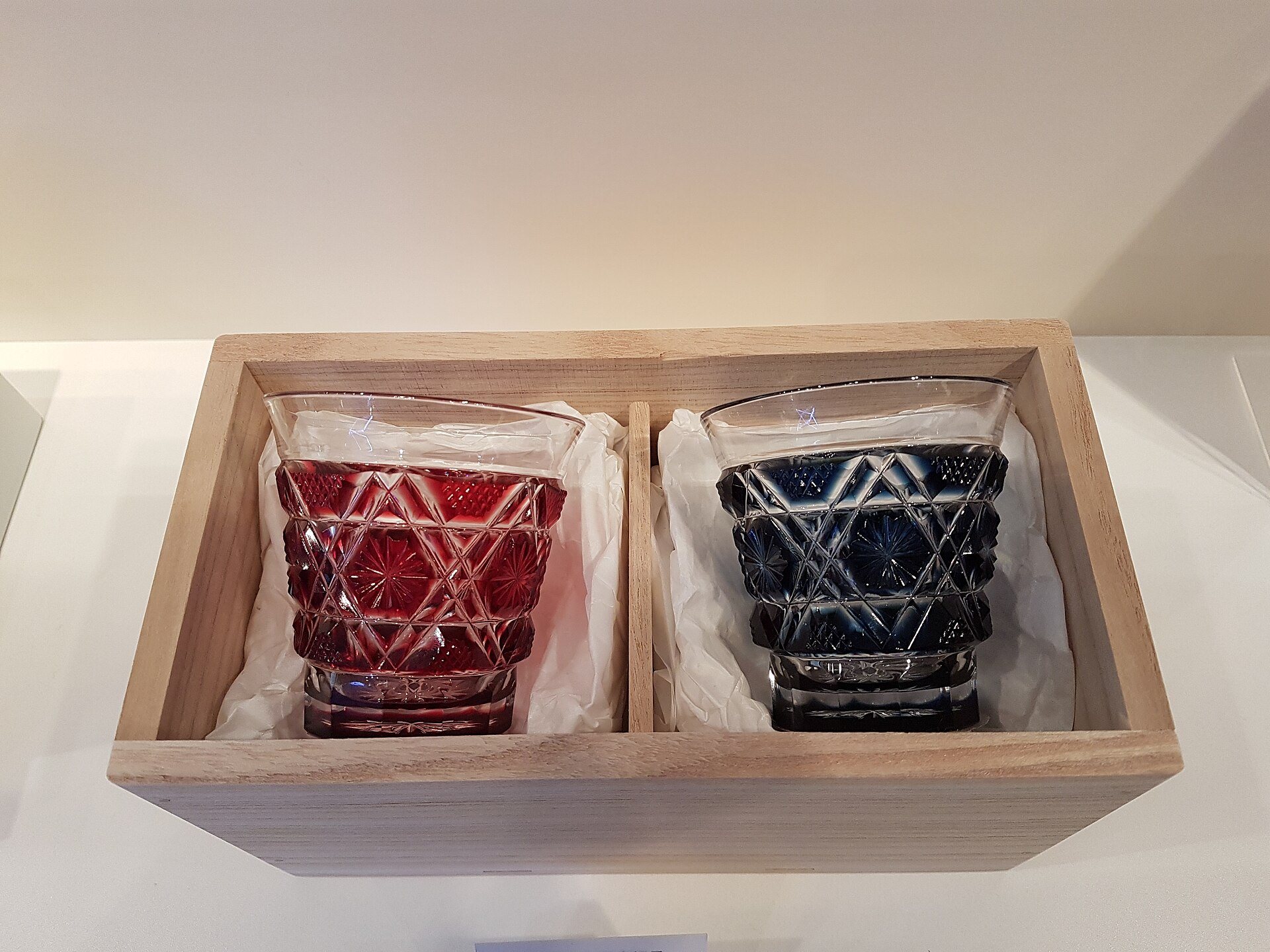
Kagoshima's coloured cut glass, seen where it is made. The workshop on the Iso shore reconstructed a technique that had died out a century earlier, and the rooms where the glass is blown, cut and polished are open to visitors at no charge.
- FromKagoshima-Chuo Station
- ~50 minKagoshima City View loop bus
- Get off atSenganen-mae (Kagoshima City View bus)
- On foot
- Satsuma Kiriko Cut Glass
Where it is
12 more notes in Kagoshima · open the map →What to look for — in walking order
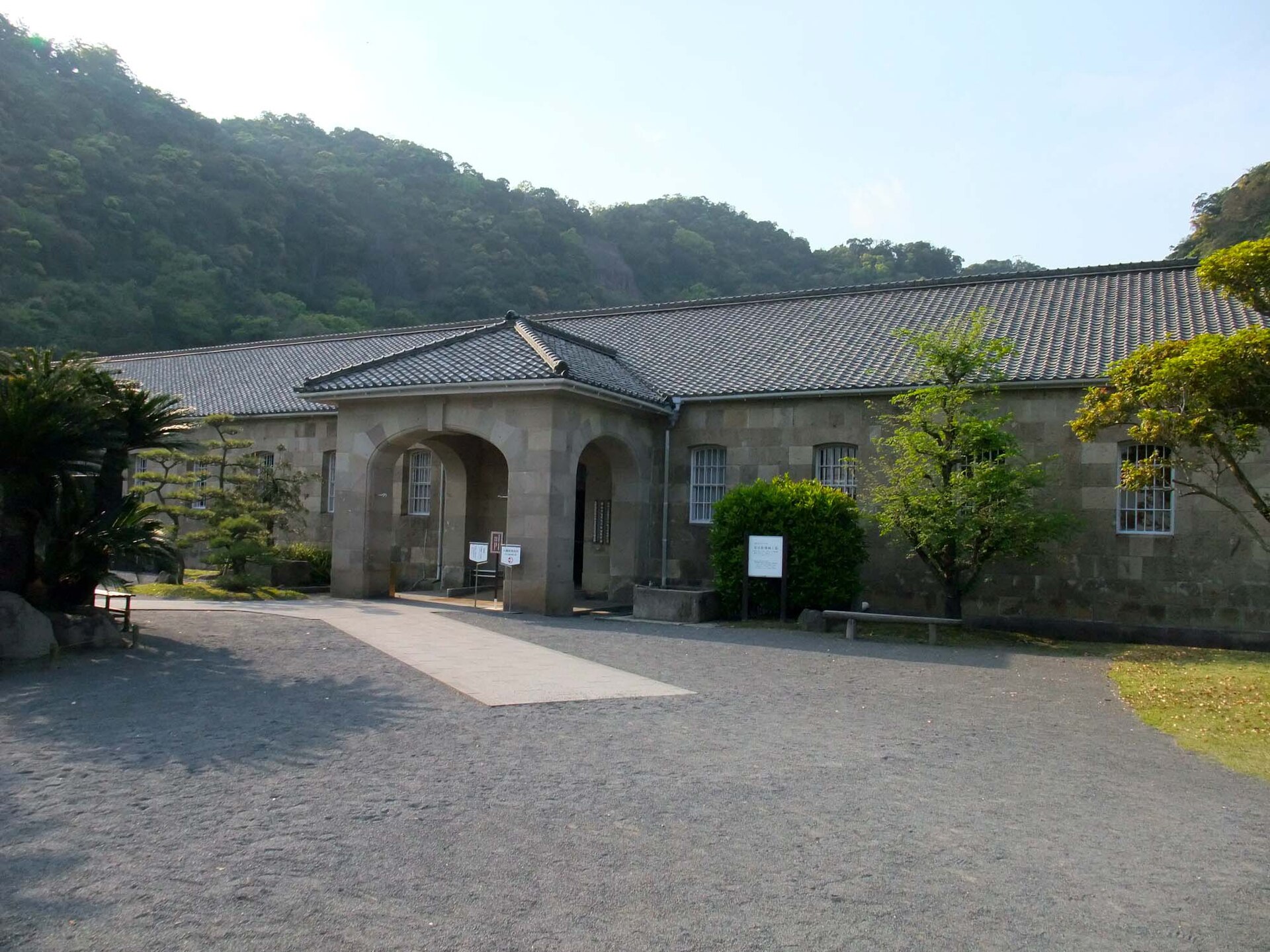
- The Iso Kogeikan gallerythe white western-style building on the coast road, lit by a ceiling fitting made of the glass itself
- The blowing floorirons, furnaces and moulds, where the coloured skin goes onto the clear body
- The cutting floorwheels turning while the pattern is scored down through the colour layer
- The polishing benchthe last stage, bringing the cut faces back to clarity
- Shoko Shuseikan next doorthe stone museum that keeps the surviving originals and supervises the reconstructions
How to actually get there
- Kagoshima-Chuo Station to Senganen-mae on the Kagoshima City View loop bus.
- Walk west along the coast road to the white gallery building; the workshop is next to it.
- Take the rooms in production order: blowing, then cutting, then polishing.
- Finish in the gallery, and cross to the museum or the garden if the ticket suits you.
- Kagoshima City View loop bus from Kagoshima-Chuo
- The city's sightseeing loop leaves Kagoshima-Chuo Station about every half hour through the day and reaches Senganen-mae in roughly fifty minutes. It is a loop rather than a direct run, so that figure includes the circuit through the centre. The stop is on the coast road in front of the garden gate.
- Back from Senganen-mae
- The same loop carries on round to Kagoshima-Chuo from the stop you arrived at. It runs only into the early evening, so a late start leaves little room. The workshop shuts before the buses do.
About the place
The workshop stands on the Iso shore north of central Kagoshima, at the end of the same run of buildings as the garden and the museum. Work is split across three rooms and the tour passes all of them. In the first, clear crystal and coloured glass are gathered on separate irons and joined, so the body comes out with a thick coloured skin over a clear core. In the second, that body is held against a spinning wheel and the pattern is cut by hand, deep enough to reach through the colour. The third brings the cut faces back to a shine. Where a cut passes through the colour it leaves a soft fade. That fade, bokashi, is what separates this glass from the clear-cut kiriko of Tokyo.
How to enjoy it
The floor is not in motion every minute. Work pauses for breaks through the day, the longest of them running from noon for an hour, so arriving either side of that puts you in front of hands that are moving. The cutting room is the one to stand still in, because the thick colour makes the wheel hard to read and the pattern still comes out even.
Background & history
Glass-making began in Satsuma when Nariakira's father set his people to studying it, and Nariakira folded the work into the domain's Shuseikan industrial complex, where the thick coloured overlay was developed. His death, the British bombardment of Kagoshima and the disorder that followed shut the craft down in the early Meiji years, and the skill was lost rather than handed on. Reconstruction succeeded in the 1980s, and in 1989 the result was listed as a traditional craft of Kagoshima Prefecture, a prefectural listing and not a national one precisely because the line had been broken. The gallery beside the workshop dates from 1909, built as an office for the Shimazu forestry estate.
Before you go
- Cash
- Watching the workshop costs nothing and no booking is taken. The building beside it is a shop and gallery rather than a paid exhibit. The garden next door is ticketed separately, and the cutting class held on the garden side is charged and booked in advance.
- Before you go
- Closed on Mondays and on the third Sunday of the month, with the closure moving to the following day when a Monday falls on a public holiday. Machinery maintenance can also close it at short notice, and the operator asks visitors to check before travelling.
- Another way
- By car it is about twenty minutes from Kagoshima-Chuo, and the car park is shared with the gallery. JR Senganen Station on the Nippo Main Line stands on the same stretch of the coast road, but read the timetable before building a plan on it.
- After you get off
- The bus stop and the station sit together on Route 10, in front of the garden gate. Walk west along the same pavement for a couple of minutes; the white gallery building is the marker and the workshop is beside it.