Kagoshima · KirishimaNo.519★★★Open in map →
Kirishima Jingu
— A vermilion national treasure in the mountains
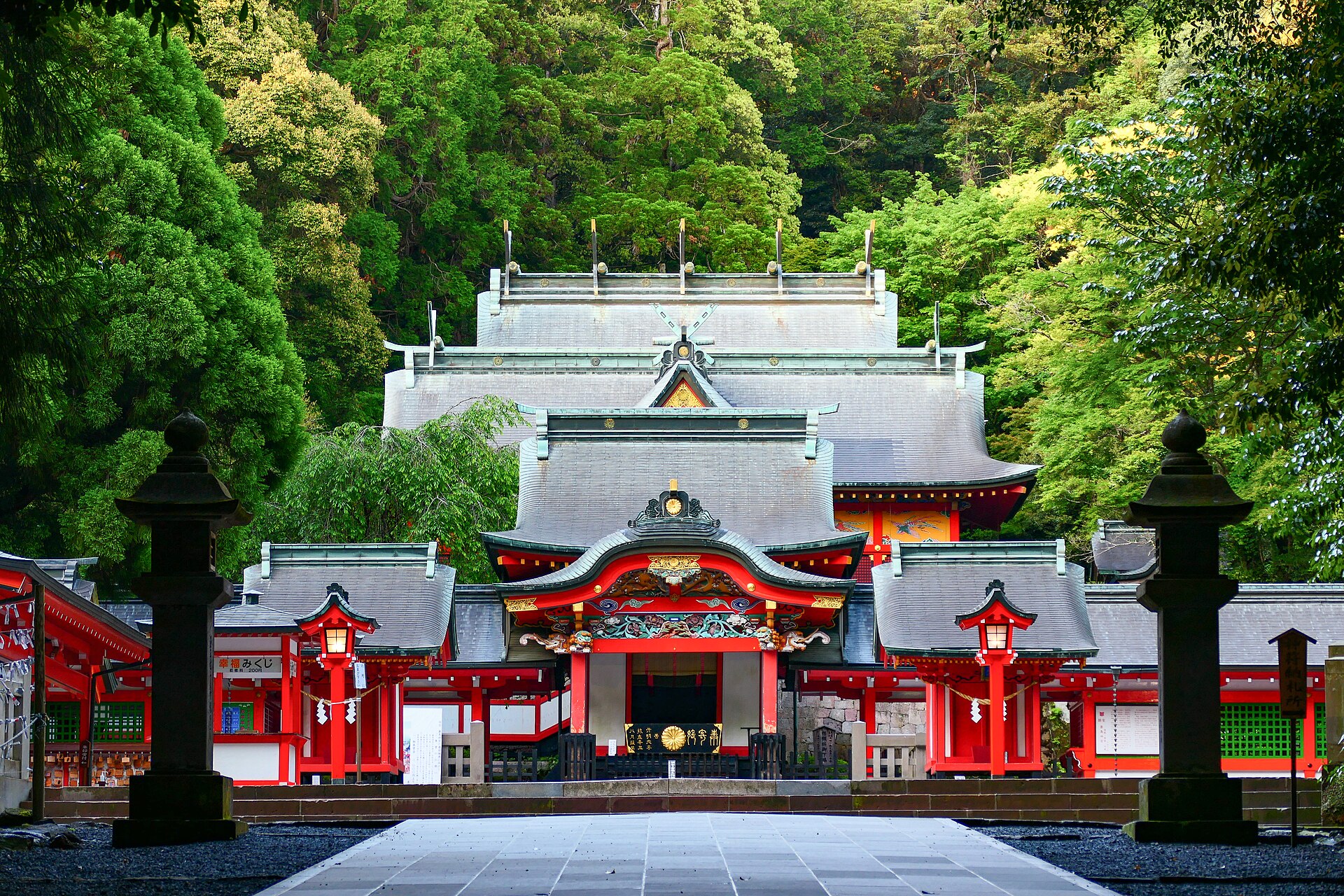
A mountain shrine in cedar forest above Kirishima, dedicated to Ninigi-no-Mikoto of the descent-from-heaven myth. Its lacquered and polychrome halls were designated a national treasure, and a terrace behind them looks west over Kagoshima Bay.
- FromKirishima-Jingu Station (JR Nippo Line)
- ~15 minBus from the station, ~15 min
- Kirishima Jingu
Where it is
12 more notes in Kagoshima · open the map →What to look for — in walking order
- The great toriithe large gate on the highway below the shrine, marking where the approach begins
- Sazare-ishithe conglomerate stone set beside the third torii, the kind named in the national anthem
- Temizuyathe covered water basin at the top of the steps, where the approach turns toward the halls
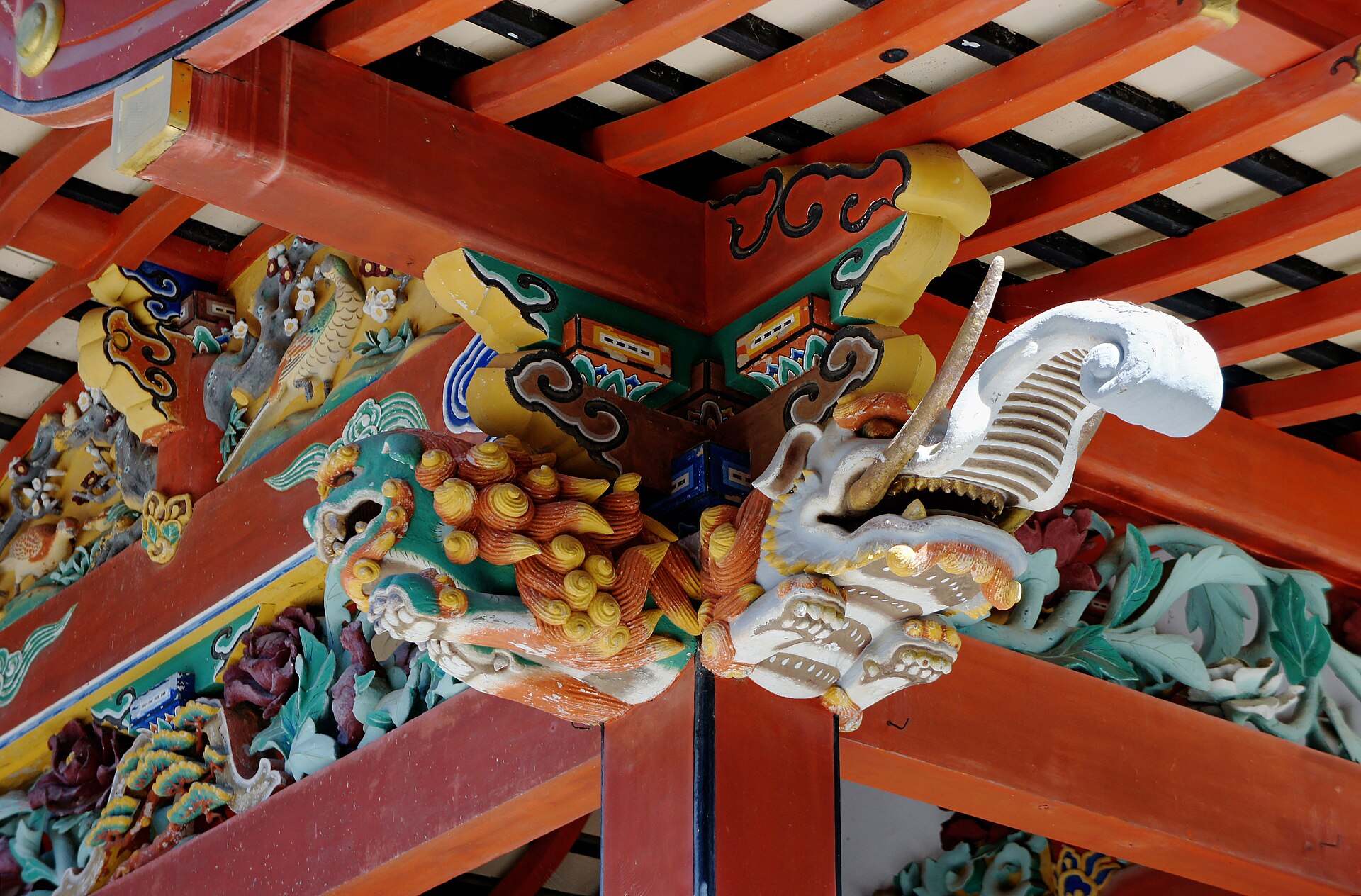
- The dragon pillarscarved dragons on the offering hall, paired open-mouthed and closed-mouthed, under fully polychrome eaves
- The west terracea lookout projecting from the precinct, reaching to Kagoshima Bay, Sakurajima and Mount Kaimon on a clear day
How to actually get there
- Kagoshima-Chuo Station → Kirishima-Jingu Station (JR Nippo Line).
- Kirishima-Jingu Station → Kirishima-Jingu bus stop (bus bound for Kirishima Iwasaki Hotel).
- Walk up the approach from the great torii, through the gates and steps, to the halls.
- Return on the same bus line to the station.
- JR to Kirishima-Jingu Station, then bus
- Take the JR Nippo Line to Kirishima-Jingu Station, then the bus bound for Kirishima Iwasaki Hotel from outside the station; it reaches the shrine in about fifteen minutes. Services are not frequent, so look at the departure board before you leave the station rather than after you have finished at the shrine.
- Back down to the station
- The same bus line runs back down to Kirishima-Jingu Station, where trains are spaced out rather than constant. Note the connection you intend to take when you arrive; the shrine is on a mountain road and there is little at the bus stop if you are left waiting.
About the place
The shrine sits above the town of Kirishima-Taguchi, on a shelf of hillside with cedar behind it and a long approach road in front. Its deity is Ninigi-no-Mikoto, the grandson of the sun goddess in the founding myth, and six further deities are enshrined alongside him. The buildings are the reason to come. Under the eaves the timber is finished in lacquer and full polychrome, with carved dragons on the offering-hall pillars — one with its mouth open, one closed — and painted panels set into the small walls above the lintels. Local records describe the work as carrying Satsuma's own regional character rather than following a central pattern.
How to enjoy it
The counters open at eight, which is the practical argument for an early bus: you can walk the approach, see the carving in low side light, and be finished before the first coaches unload. Look up rather than ahead — most of the detail here is under the eaves and above the lintels, not at eye level. Leave ten minutes at the end for the west terrace, which sits off the main line of the approach and is easy to miss entirely.
Background & history
The shrine's earliest sites were higher up the mountain and were repeatedly destroyed by eruptions; the buildings burned in the eruption of 1234. It was rebuilt at Takachihogawara, and in 1484 the priest Kenkei restored it again under Shimazu Tadamasa. The halls standing today date from 1715, when Shimazu Yoshitaka, lord of Satsuma, paid for their reconstruction. They were listed as an important cultural property in the Heisei era, and on 9 February 2022 the main hall, offering hall and worship hall were designated a national treasure.
Before you go
- Cash
- There is no admission charge for the grounds or the halls as confirmed. Amulets, goshuin seal stamping and prayers at the counters are cash transactions. Parking is free, and there is space for coaches as well as cars.
- Before you go
- The counters keep daytime hours and close in the late afternoon — check the current times, as published hours differ between sources. Special viewings and ceremonies occasionally restrict access to parts of the precinct, and these are announced on the shrine's own news page. Kirishima is high and wet: fog rolls through often, so carry rain gear even on a clear morning.
- Another way
- From Kagoshima Airport there is a direct Kirishima Jingu access bus, which suits arrivals better than doubling back to the rail line. By car, the shrine is reached from the Kyushu Expressway at Mizobe-Kagoshima-Kuko IC.
- After you get off
- From Kirishima-Jingu Station the bus climbs to the Kirishima-Jingu stop at the roundabout by the great torii. From there the approach runs up past the bridge and the stone steps to the halls, a walk of a few minutes.