Izu · ShuzenjiNo.783★★★Open in map →
Shuzenji Onsen
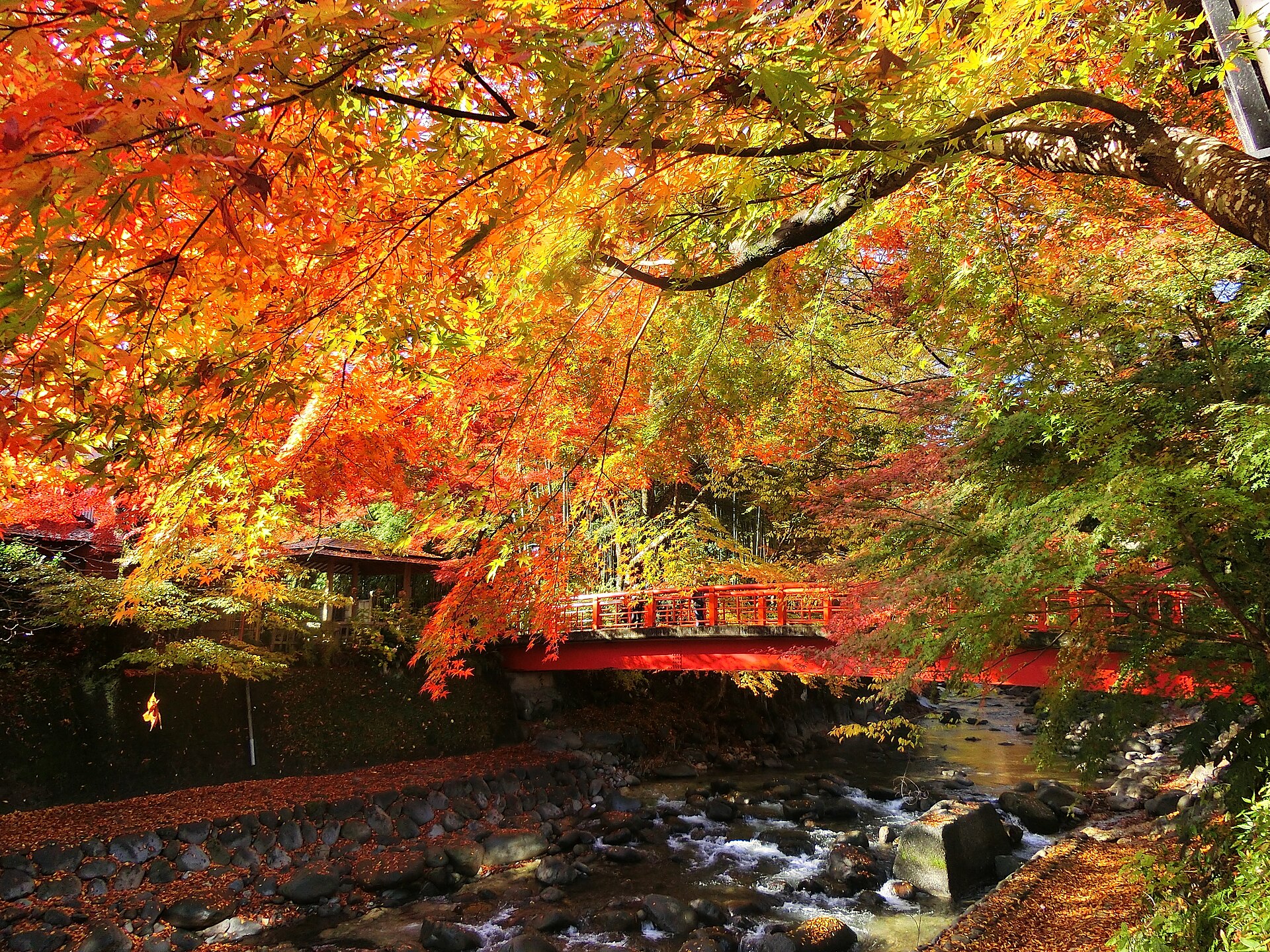
Izu's oldest hot-spring town runs along the Katsura River. The spring it began from stands in the riverbed and is kept for viewing rather than bathing, while the terrace, foot bath and lanes around it are free to walk.
- FromMishima Station
- ~33 minIzuhakone Line, ~33 min
- Get off atShuzenji Station (Izuhakone Sunzu Line)
- From there
- Shuzenji Onsen
Where it is
16 more notes in Shizuoka · open the map →What to look for — in walking order
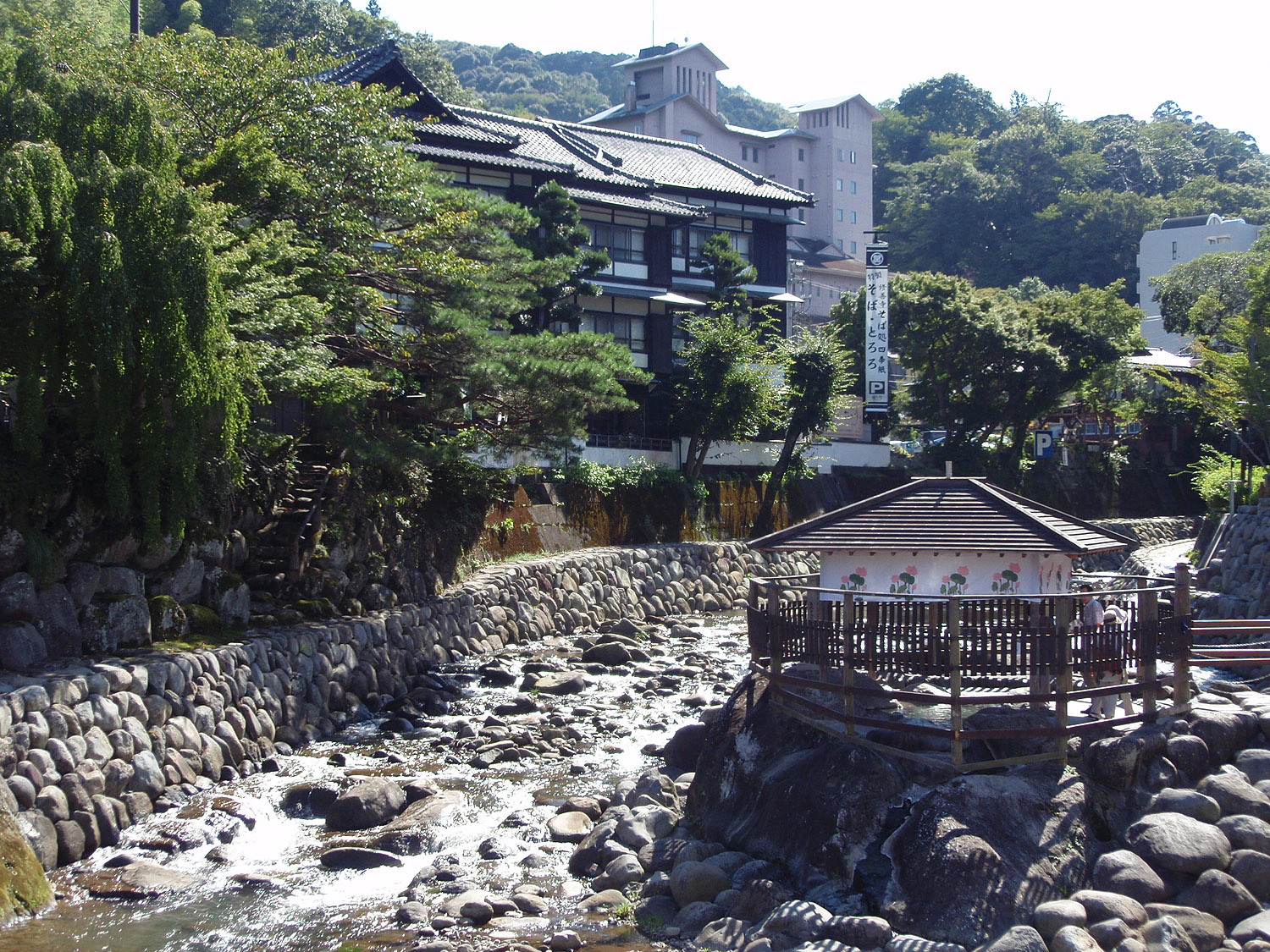
- Tokko-no-yuthe roofed spring standing in the riverbed, the point the town grew from and now a viewing place
- Tokko-no-yu Park and River Terrace Sugi-no-yuthe free terrace and foot bath on the far bank, with a stone vajra and the Yukake Chigo Daishi figure
- Shuzen-ji Templethe temple the town is named after, up the slope from the water
- Bamboo Patha short lane of bamboo following the river south of the bridges
- Shigetsudena hall raised by Hojo Masako for her son, held to be the oldest wooden building in Izu
How to actually get there
- Tokyo or Nagoya → Mishima Station (Tokaido Shinkansen).
- Mishima → Shuzenji Station (Izuhakone Railway Sunzu Line, terminus).
- Station stand 1 → Shuzenji Onsen terminus (Tokai Bus).
- Down to the river at Tokko-no-yu, then round by the temple, the bamboo lane and Shigetsuden.
- Sunzu Line from Mishima
- Mishima Station, where the Tokaido Shinkansen stops, is the interchange. The Izuhakone Railway Sunzu Line runs from there down to Shuzenji, its terminus, in about thirty-three minutes. The Odoriko limited express also runs through from Tokyo to Shuzenji without a change.
- Back to Mishima
- The same line returns from Shuzenji to Mishima for the Shinkansen. The bus between the onsen and the station is the part of the chain worth planning around, so read the return times posted at the terminus when you get off rather than after dark.
About the place
Shuzenji sits on the inland side of the Izu Peninsula, on a short stretch of the Katsura River, which is also called the Shuzenji River. Inns and shops line both banks. The spring the place grew from is not inside any of them but out in the riverbed itself, under a small roof. Izu City's tourism office is blunt about what it is now: Tokko-no-yu cannot be bathed in, and it cannot be used as a foot bath either. The soaking has moved to the park on the opposite bank, which is free and open. From there the temple, the bamboo lane and Shigetsuden are all a few minutes on foot.
How to enjoy it
The bus from the station takes about ten minutes, and once you are off it the town is small enough that an afternoon covers it without staying the night. Come before the coach groups and the lanes belong to the people who live in them. The park terrace and foot bath opposite the bath have no closing day, which makes them the obvious place to wait for the bus back.
Background & history
The founding is dated to 807 and attached to Kukai, the monk later known as Kobo Daishi. Izu City's telling has him come upon a boy washing his sick father in the cold river, strike the rock with the ritual vajra he carried, and bring hot water up out of it. The bath took its name from that implement. The temple that gave the town its name is written with a different middle character from the place itself — the temple takes zen, the town takes zen meaning good.
Before you go
- Cash
- Walking the town costs nothing. Izu City lists both the bath and the park opposite as free and with no closing day, and the riverside lanes are open ground. What you pay for is the train and the bus.
- Before you go
- Tokko-no-yu has no closing day, but Izu City states plainly that bathing is not permitted and that it cannot be used as a foot bath. To soak, cross to the park. The bath house stands in the riverbed itself, so how much of it you see depends on how high the water is running.
- Another way
- By car the tourism association gives about thirty minutes from the Numazu interchange on the Tomei or the Nagaizumi-Numazu interchange on the Shin-Tomei, using the Izu Jukan expressway, the Izu Chuo road and the Shuzenji road, or about fifty minutes on national routes 1 and 136 alone.
- After you get off
- From Shuzenji Station take the Tokai Bus from stand 1, signed for Shuzenji Onsen, and stay on to the terminus — the tourism association puts that at about ten minutes. The town begins where the bus stops. Walk down to the water and Tokko-no-yu is the roofed structure standing in it.