Akita · NyutoNo.575★★★Open in map →
Nyuto Onsenkyo
— Seven inns, each with its own spring
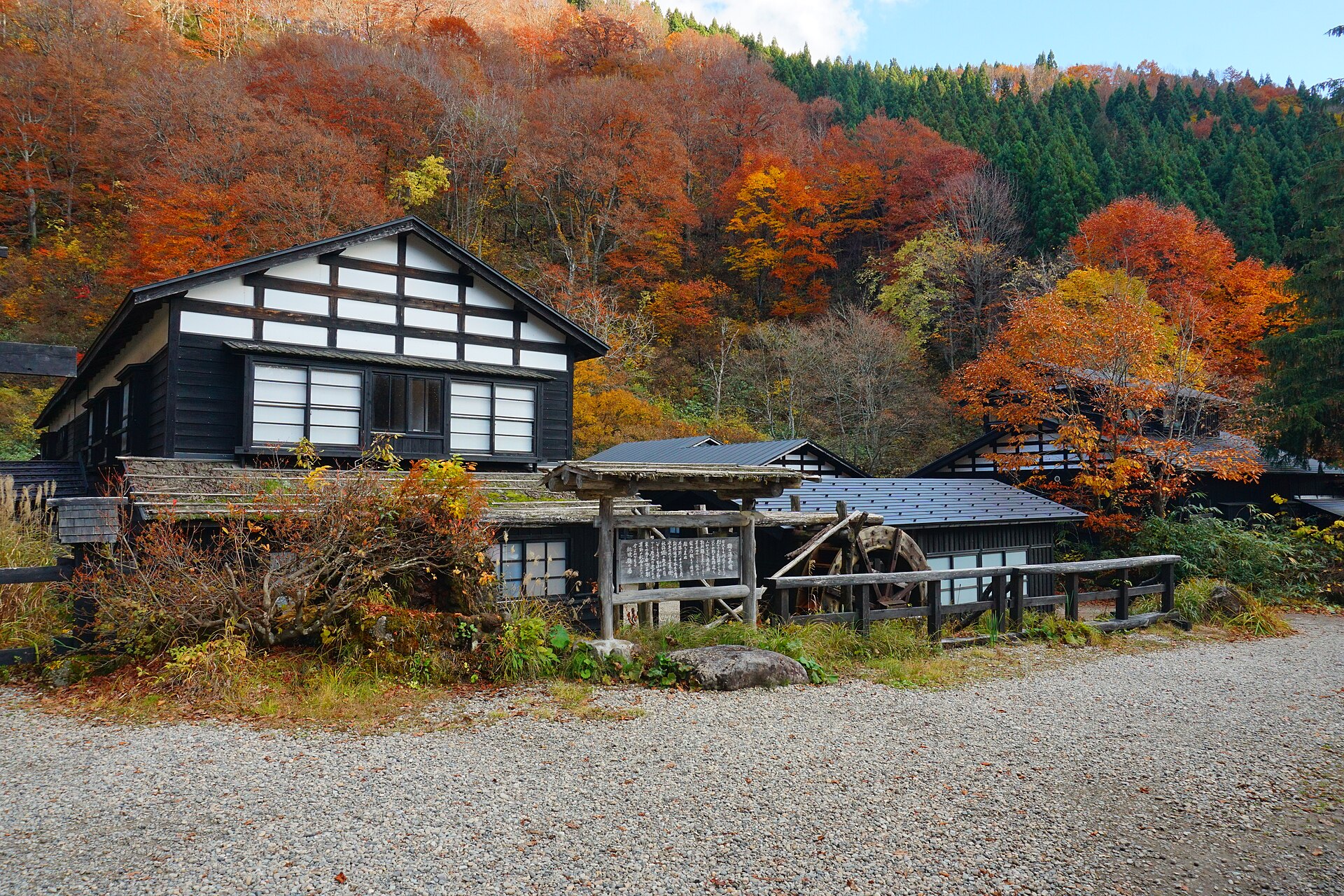
Seven inns scattered through beech forest at the foot of Mt Nyuto, inside Towada-Hachimantai National Park. Each holds its own spring, so the colour and smell of the water change from one bath to the next along a single mountain road.
- FromTazawako Station
- ~50 minLocal bus, ~11 a day
- Get off atNyuto Ganiba Onsen (Ugo Kotsu Nyuto Line, terminus)
- On foot
- Nyuto Onsenkyo
Where it is
34 more notes in Akita · open the map →What to look for — in walking order
- Ganiba Onsenthe bus terminus; its best bath sits apart from the inn, ringed by old-growth forest
- Okama Onsena relocated wooden schoolhouse turned bathhouse, with an open-air bath used all winter
- Taenoyubaths above the Sendatsu stream, close enough to hear the water from the rock pool
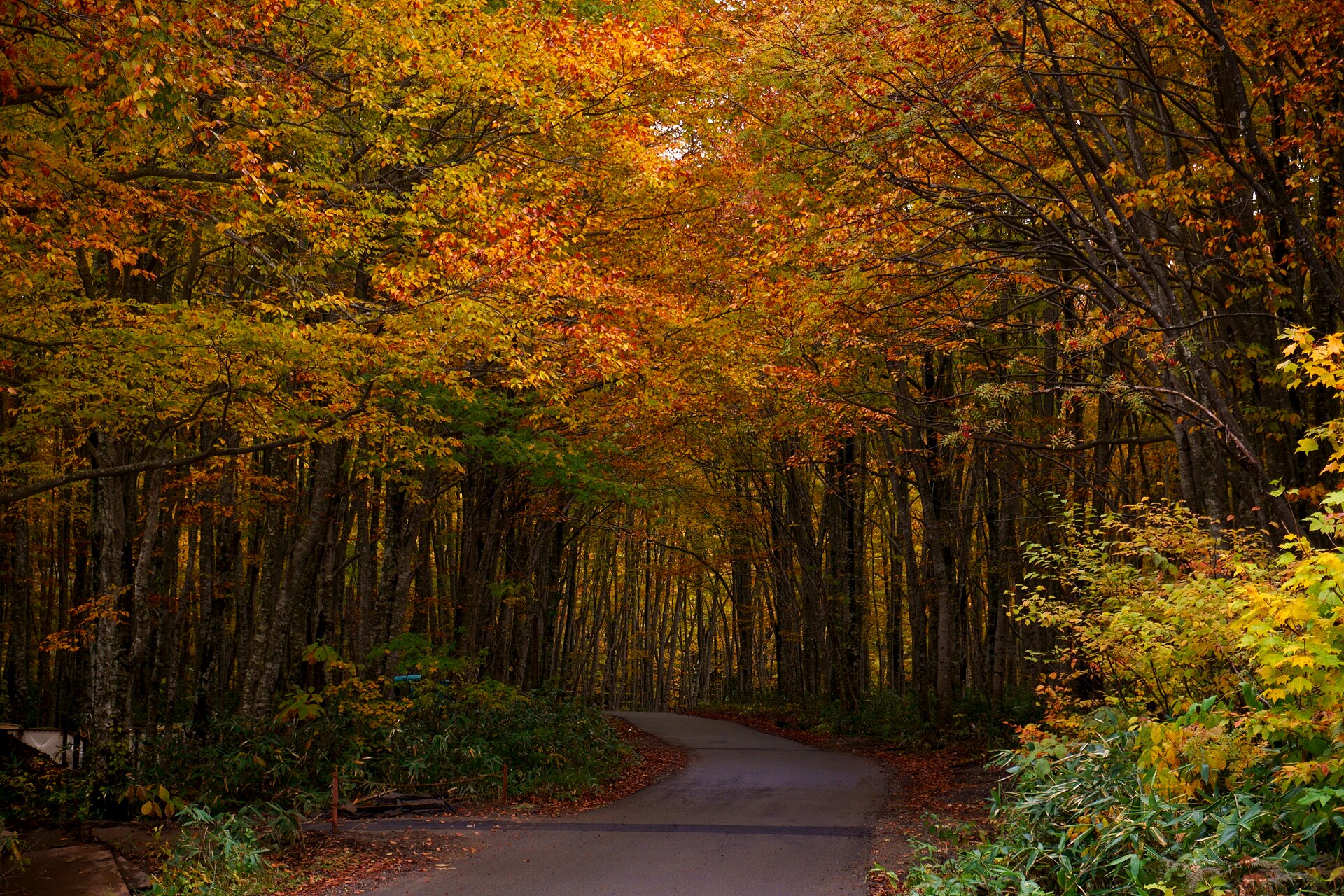
- The beech lane to Kuroyu and Magorokua forest track from the Kyukamura stop in to the two innermost springs
- Tsurunoyuthe oldest inn of the group, with the thatched honjin row and a milky open-air bath
How to actually get there
- Tazawako Station → Nyuto Ganiba Onsen (Ugo Kotsu Nyuto Line, about 50 min; roughly eleven departures a day).
- From the terminus, walk down the road to Okama Onsen and Taenoyu, a few minutes apart.
- From the Kyukamura-mae stop, take the beech lane in to Kuroyu and Magoroku, about 15 min on foot.
- For Tsurunoyu, get off at Arupa Komakusa and use the inn's shuttle, arranged with the inn in advance.
- Nyuto line bus from Tazawako Station
- Tazawako Station →(Ugo Kotsu Nyuto Line, about 50 min)→ Nyuto Ganiba Onsen, the terminus. Buses leave the station roughly hourly from just before seven in the morning until early evening, about eleven times a day, and the route runs along the east shore of Lake Tazawa on the way up. A taxi from the station takes about thirty minutes.
- Coming back down
- The last bus down leaves the Ganiba terminus at 18:15 and reaches Tazawako Station just after seven in the evening; there is nothing after it. Plan your day backwards from that departure rather than from the closing time of the last bath, because the walk between the inner springs and the road takes noticeably longer on snow.
About the place
Nyuto Onsenkyo is not a town but a scattering: seven inns on and just off one road climbing into the beech woods below Mt Nyuto, inside Towada-Hachimantai National Park. Six are single-inn hot springs of the old kind, joined by the publicly run Kyukamura lodge. Between them they draw on more than ten separate sources, so the water changes from milky sulphur to clear within a few hundred metres of road. The inns run a joint association, and the area carries the Ministry of the Environment's designation as a National Health Resort Hot Spring. One bus line from Tazawako Station serves the whole road.
How to enjoy it
The day-bathing windows are narrow — most inns take visitors from around nine or ten in the morning until mid-afternoon — so two or three baths is a realistic day here, not seven. Riding up on the 9:40 bus and back on the 15:40 leaves a comfortable margin at either end. Kuroyu is the one worth the extra walk in the green months, and Okama the reliable choice in deep winter.
Background & history
Tsurunoyu is the oldest of the seven and the reason the others followed. The local telling has a matagi hunter finding a crane bathing in the water, which is where the name comes from, and a lord of the Akita domain later took the cure here. The thatched row that housed his guards still stands and is still called the honjin. The others grew up as working cure villages through the Edo period — plank and thatch huts set over steaming ground — and Kuroyu, at the far end of the road, still looks the part.
Before you go
- Cash
- Day bathing is charged inn by inn, and the association publishes each fee and each opening window on its site. Overnight guests can instead buy the yumeguri-cho pass, 2,500 yen for adults, which covers one visit to each of the seven; it is sold to staying guests only, at the inn front desks, and paid in cash.
- Before you go
- Kuroyu closes for the winter, from about mid-November until early April, and the lane in to it is not cleared. The road and the buses run all year, but snow here is measured in metres and services are delayed by it. Several inns also set a weekly rest day for day bathers, so check the association's list before fixing a route.
- Another way
- From Akita Airport the Airport Liner shared van runs straight to the onsen in a little over two hours. By car it is roughly an hour from the Morioka interchange on the Tohoku Expressway, via Route 341.
- After you get off
- From the Nyuto Ganiba Onsen terminus the inn is a moment away; Okama Onsen and then Taenoyu lie a few minutes back down the road, in that order.