South Sapporo · JozankeiNo.704★★★Open in map →
Jozankei Onsen
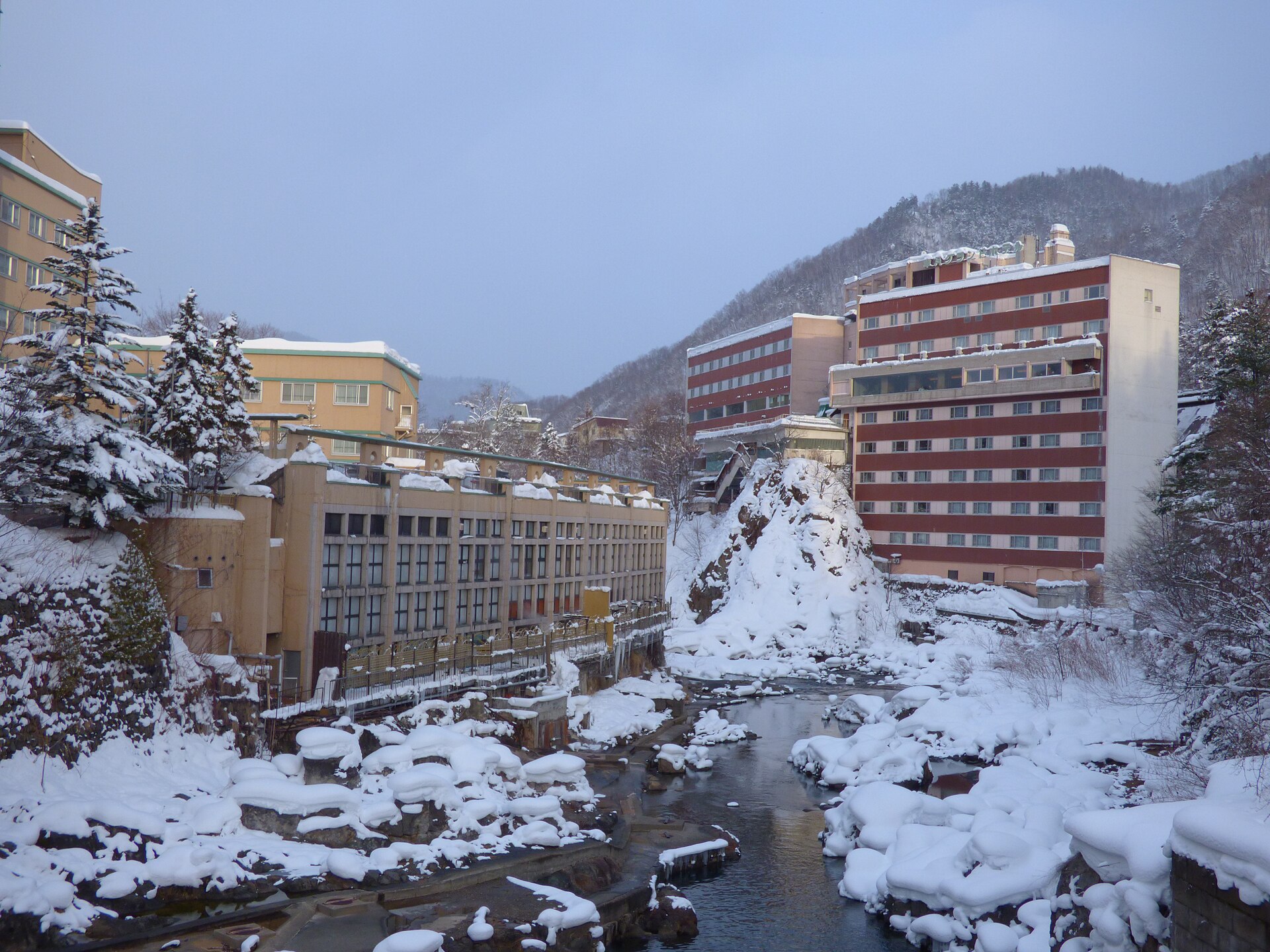
A hot-spring town in a river gorge inside Sapporo's city limits, reached by direct bus from the main station. The public side of it — footbaths, a hand bath, a spring for boiling eggs — is free, and riverside paths string them into one short loop.
- FromSapporo Station
- ~60 minJotetsu Bus, direct
- Get off atJozankei Yunomachi (Jotetsu Bus)
- On foot
- Jozankei Onsen
Where it is
102 more notes in Hokkaido · open the map →What to look for — in walking order
- Yukemuri-zaka slopethe sloping street through the spa quarter, with the Yu-no-taki hot-spring fall beside the road
- Ontama-no-yua free public spring set up for boiling your own eggs in the hot water
- Kappa Family Wish-Granting Hand Batha covered hand bath on the same slope, built around the town's kappa legend
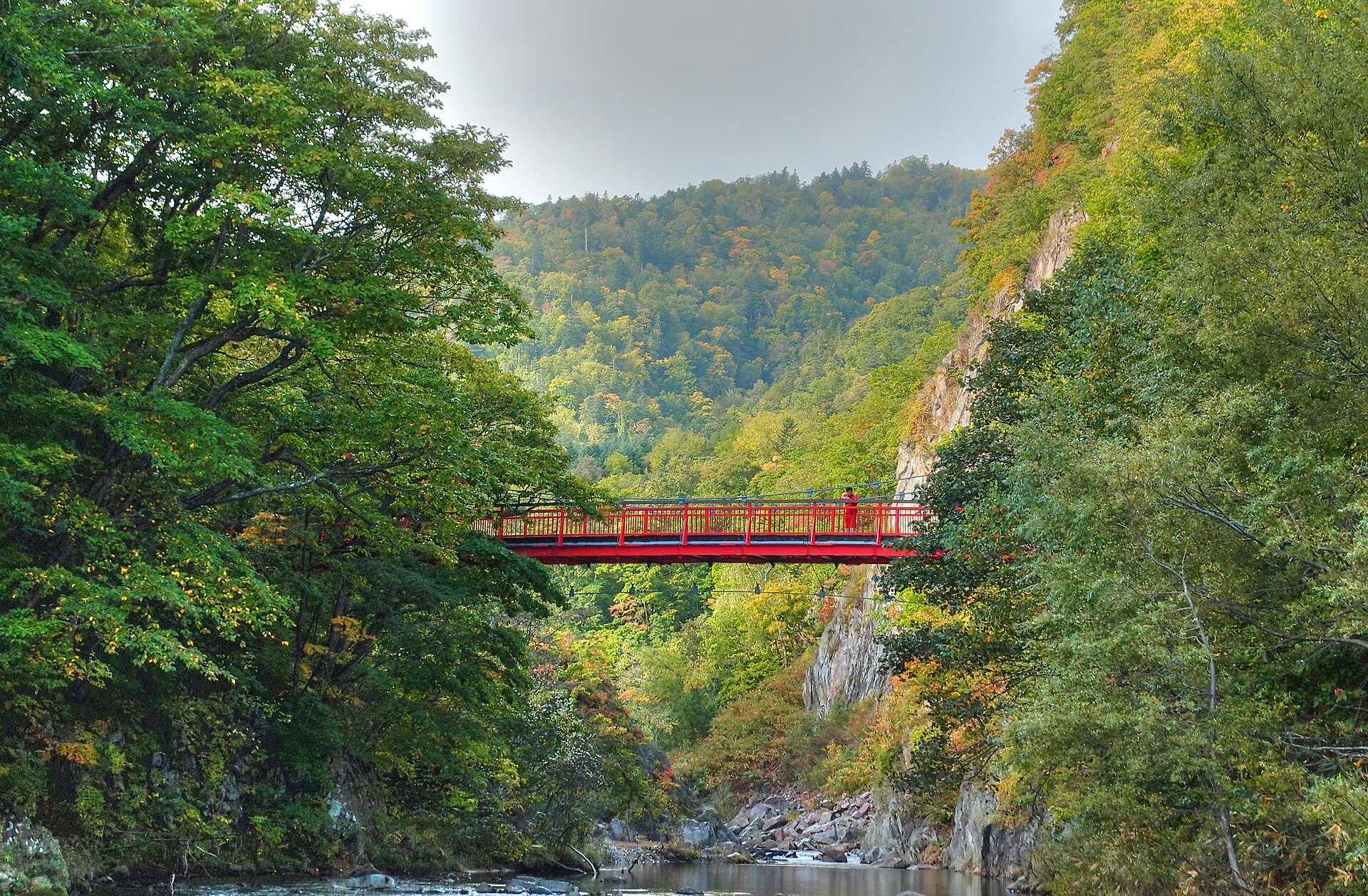
- Futami Suspension Bridgea footbridge across the Toyohira gorge and the town's autumn-colour viewpoint
- Kappa-buchi poolthe deep river pool below the bridge that the kappa legend is fixed to
How to actually get there
- Sapporo Station → Jozankei by Jotetsu Bus (about 60 minutes; the Kappa Liner is reserved-seat only).
- Get off at Jozankei Yunomachi and walk down the Yukemuri-zaka slope past the free hand bath and the egg-boiling spring.
- Carry on to the Futami Suspension Bridge and the Kappa-buchi pool below it, then loop back up to the stop.
- Jotetsu Bus, direct from Sapporo Station
- Jotetsu Bus runs from Sapporo Station to Jozankei in about 60 minutes. The Kappa Liner is the quickest of these services but is fully reserved — seats are booked ahead, up to the evening before travel. The ordinary route buses need no reservation and take longer.
- Return to Sapporo Station
- The same Jotetsu route runs back to Sapporo Station through the day. Services thin out in the evening, so read the posted return times at the stop before you settle into a long bath. This is a mountain valley, and it goes dark earlier here than in the city.
About the place
Jozankei lies in Minami Ward of Sapporo, where the Toyohira River cuts a gorge on its way down to the city. Fifty-six springs feed the town, delivering about 8,600 litres a minute of sodium chloride water. Ryokan and hotels line both banks, but the parts of the town anyone can use — the footbaths, the hand bath, the egg-boiling spring — are free. The gorge is roughly 26 kilometres from central Sapporo, which makes it an ordinary afternoon out for people who live in the city rather than a journey. Statues of kappa, the river spirits of local legend, stand along the streets.
How to enjoy it
Take a morning bus, walk the gorge paths and the free footbaths first, then warm up with a day-use bath at one of the inns before the return service. Colour peaks in the second half of October, when the tourist association puts on extra buses to the foliage spots. Winter is the town's other season, once the valley fills with snow.
Background & history
A mountain ascetic named Miizumi Jozan opened the springs as a bathing place in 1866, in the closing years of the Tokugawa shogunate, and the town still carries his name. He is said to have gone into the valley following reports of a hidden spring where deer healed their wounds. The kappa legend attached itself later and now shapes the street furniture, from the name of the hand bath to the figures along the road. Sapporo then grew outward around the valley, and what began as a remote cure station ended up inside the city's own boundaries.
Before you go
- Cash
- The footbaths, the hand bath and the riverside paths are free. Day-use bathing at the inns is charged separately and the rate differs from house to house. Jotetsu buses accept IC cards as well as cash.
- Before you go
- Snow lies deep from December, and the riverside paths and the suspension bridge are walked in winter conditions — grip on your boots matters more than an umbrella. Northern daylight is short, and the gorge falls into shadow early in the afternoon.
- Another way
- Donan Bus runs the Sapporo–Lake Toya service over Nakayama Pass and calls at Jozankei, which is useful if you are carrying on south instead of returning to the city. The tourist association also warns that transfers to local buses at Makomanai subway station do not connect reliably.
- After you get off
- From the Jozankei Yunomachi stop, walk down the Yukemuri-zaka slope. The hand bath and the egg-boiling spring are on the way down, and the suspension bridge is a few minutes further on toward the river.