Yamagata · ObanazawaNo.556★★★Open in map →
Ginzan Onsen
— A wooden inn street in the Yamagata hills
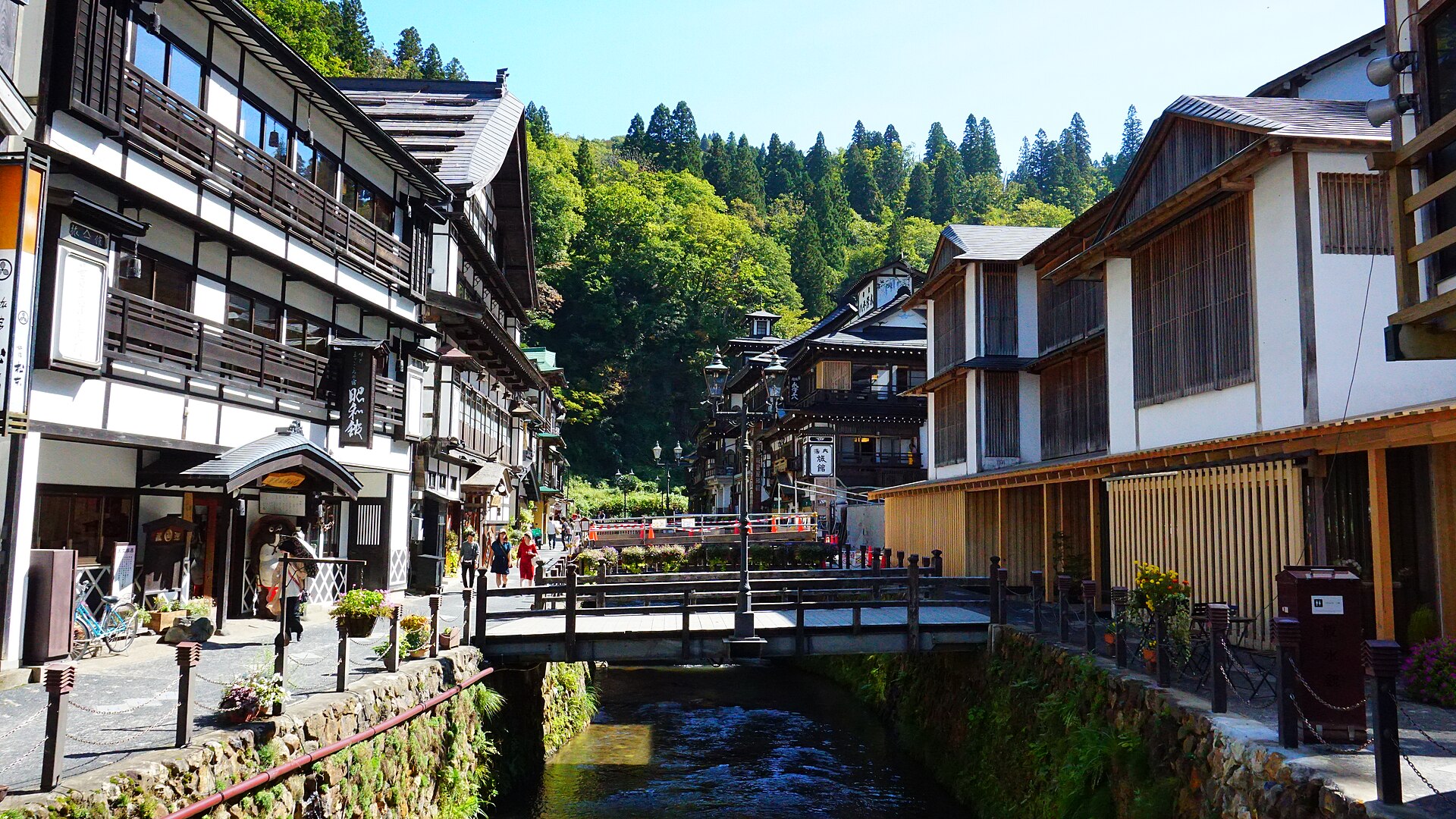
A single pedestrian street of wooden inns facing each other across a river in the Yamagata hills, lit by gas lamps at dusk. Private cars are restricted, so the city bus from Oishida Station is the way in.
- FromOishida Station (Yamagata Shinkansen)
- ~40 minCity bus, ~40 min
- Ginzan Onsen
Where it is
9 more notes in Yamagata · open the map →What to look for — in walking order
- Shirogane Bridgethe bridge at the entrance, where the two facing rows of inns first open up
- Shirogane-yu bathhousea public bathhouse on the street itself, separate from any of the inns
- Waraku footbathan open footbath at the riverside, fed from the town's own source
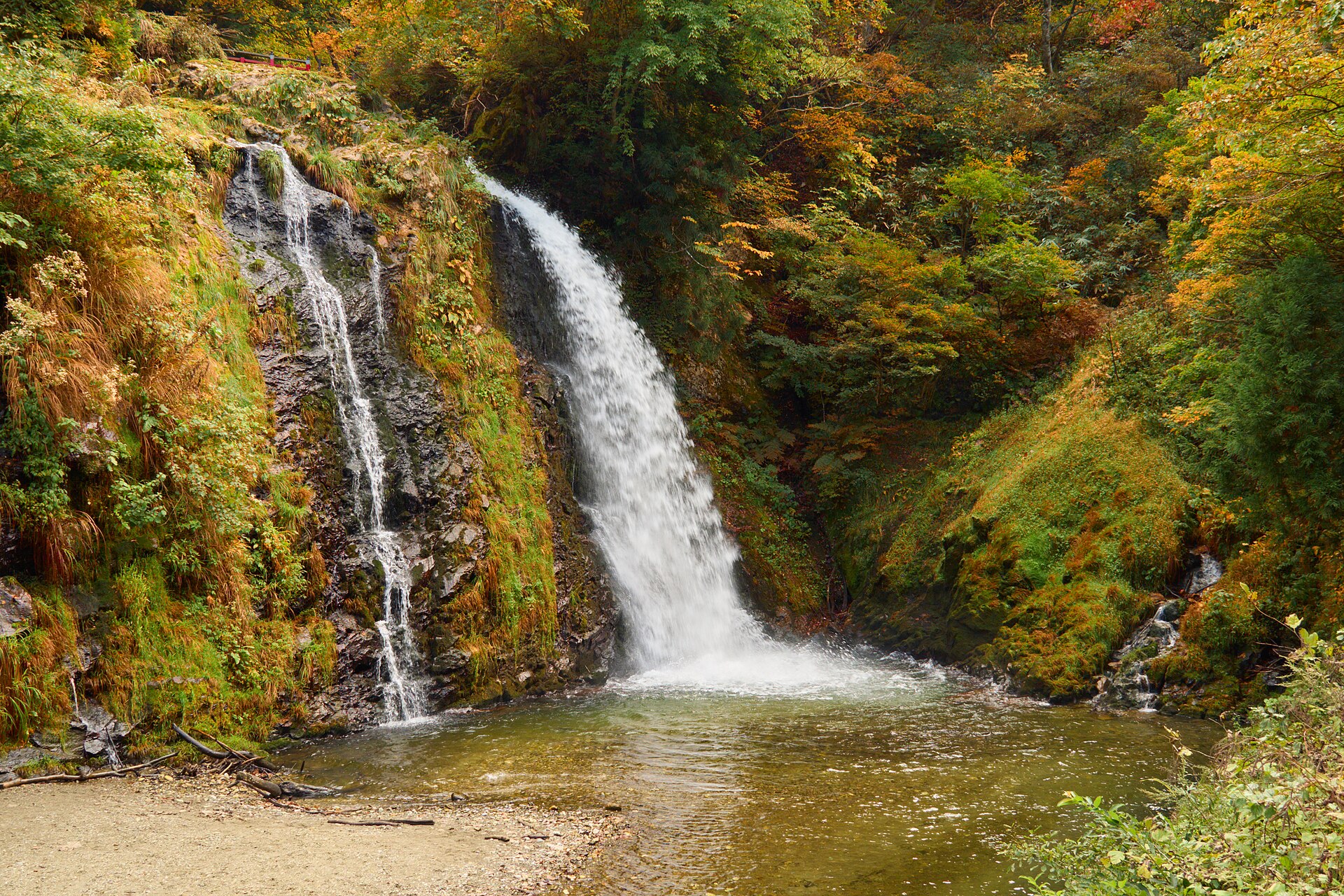
- Shirogane-no-taki Fallsthe waterfall that closes the head of the valley, inside Shirogane Park
- Ginkodo mine tunnelsthe old silver workings above the park, open only outside the snow months
How to actually get there
- Yamagata Shinkansen to Oishida Station.
- Oishida Station → Ginzan Onsen on the Obanazawa city Ginzan Line bus, about 40 minutes to the terminus.
- Walk the street upstream past the bathhouses and the footbath to Shirogane Park and the waterfall.
- Come back down for the gas lamps, then take the bus back to Oishida.
- City bus from Oishida Station
- The Yamagata Shinkansen stops at Oishida. From the station Obanazawa city runs its own Ginzan Line bus to the hot-spring terminus, about 40 minutes. It is a municipal service rather than a private operator's route, and it is the way in that the town itself now points visitors to.
- Back down to Oishida
- Return on the same Ginzan Line bus to Oishida Station and pick up the Shinkansen there. This is a rural municipal route with few runs in the day, so read the return time on the board at the terminus before you settle into the street.
About the place
Ginzan Onsen fills a narrow valley in Obanazawa, in the hills of northern Yamagata. The inns stand shoulder to shoulder along both banks of the Ginzan river, three and four wooden storeys high, their fronts finished in coloured plaster relief. A pedestrian street runs between them with gas lamps set along the parapet. Above the last inn the valley narrows into Shirogane Park, where a 22-metre waterfall drops beside the path and the old silver workings begin. The name is literal. The settlement grew on the Nobesawa silver mine, and the mine gave the place both its hot water and the word on the sign.
How to enjoy it
Two versions of this street exist inside one day. Arrive in the afternoon and you get the plaster fronts and the river in plain daylight; wait until the gas lamps are lit and the same buildings read as something else entirely. The city's winter car restriction has run through the day and into the evening, so build the visit around the bus timetable rather than a parking space.
Background & history
The Nobesawa silver mine drew people into this valley first, and when the ore gave out the settlement lived on the bathers who came for the springs. A flood on the Ginzan river in 1913 swept away almost every inn. A borehole in the following decade brought hot water up in volume, and the inns were rebuilt through the 1920s as the wooden blocks that still line the street. The mine remains are now a national historic site, and the town has protected the look of the street under a preservation ordinance since 1986.
Before you go
- Cash
- The street itself is a public road and costs nothing to walk. The public bathhouses, Shirogane-yu and Kajika-yu, and the Waraku footbath are run separately from the inns, so check their charges and their days off at the information office beside the bus terminus.
- Before you go
- The mine trail above the town, the Ginkodo workings, is closed from the first snowfall until early May, so a winter visit means the street and the park below it. Snow lies deep here through those months, and the town's own guidance is to plan around the bus rather than a car.
- Another way
- From Sendai there is an express bus toward Shinjo; change at Obanazawa for the Ginzan bus. Drivers should know the park-and-ride arrangement — cars are held below the town and the last stretch is covered by shuttle, which is why the bus from Oishida usually costs less trouble.
- After you get off
- The Ginzan Line bus ends at the entrance to the hot-spring street, next to the tourist information office. From there the street runs upstream along the river with inns on both banks, and Shirogane Park and the falls close the far end.