Shonai · YuzaNo.569★★Open in map →
Maruike-sama
— A spring-fed pond worshipped as a deity in Yuza
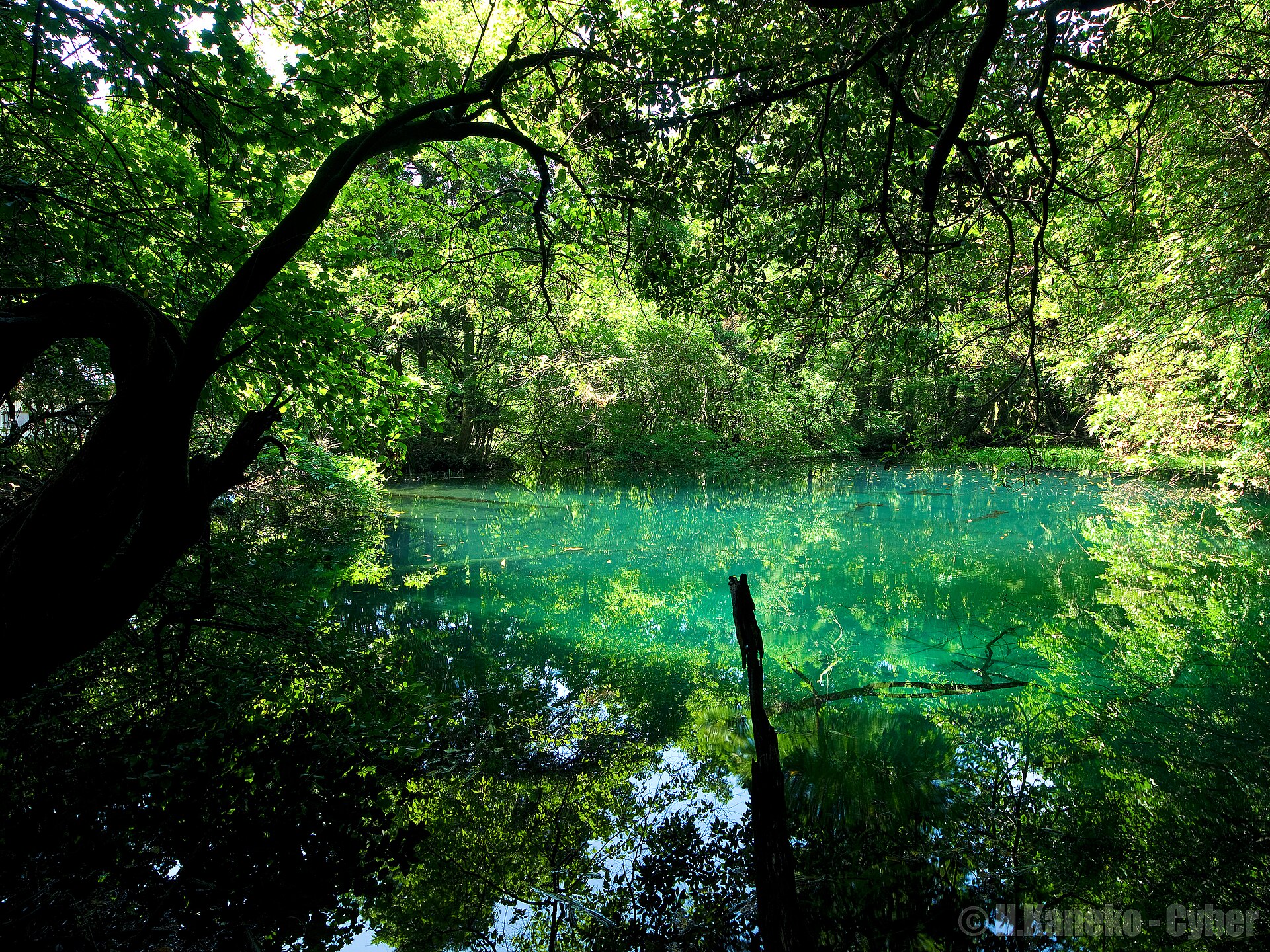
A small pond in the cedar shade of northern Yuza, filled entirely by groundwater off Mount Chokai. It stands inside a shrine precinct, and the water here is less a view than the object of worship itself.
- FromFukura Station (JR Uetsu Main Line)
- ~20 minJR local train, then 20 min on foot
- Maruike-sama
The sweet spot
This is not an undiscovered place. Photographs of it circulate widely in Japan, and it appears on the prefecture's own tourism pages. What is missing is any English account of it. It also holds few people at a time, because the site amounts to a car park, a short path and the water, and there is nothing here to keep you longer.
Where it is
9 more notes in Yamagata · open the map →What to look for — in walking order
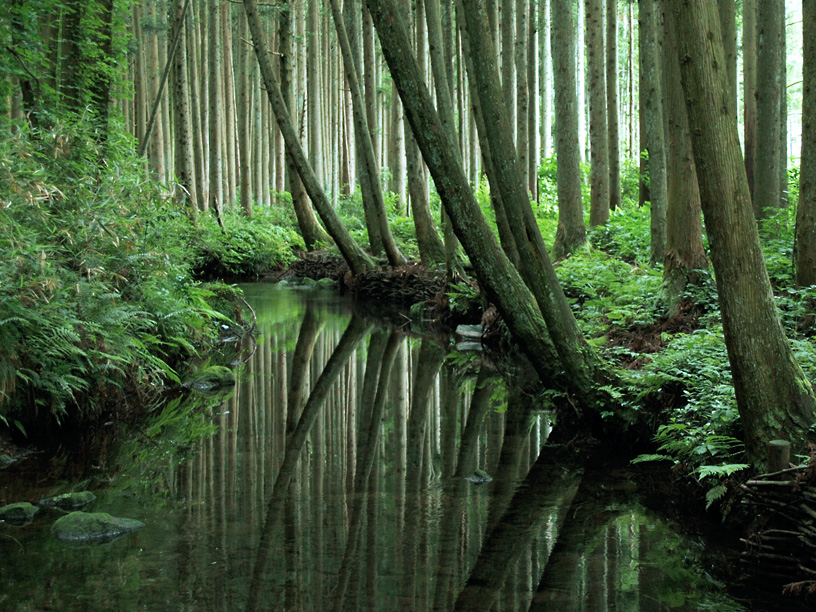
- Ushiwatari Rivera stream fed almost wholly by spring water, crossed on the way in, with baikamo flowering in early summer and salmon running up it in autumn
- Maruike Shrinea small shrine on the bank that takes the pond, rather than a building, as its deity
- The pondstill water shifting from emerald to deep blue as the light moves over the surface
- The surrounding groveuncut woodland ringing the water, left standing because the ground is sacred
How to actually get there
- Sakata Station → Fukura Station (JR Uetsu Main Line, local service only).
- Fukura Station → the site entrance (about 20 minutes east on foot, or five minutes by car).
- From the car park, cross the Ushiwatari River and follow the path up to the shrine and the pond.
- JR Uetsu Main Line to Fukura, then walk
- From Sakata, ride the JR Uetsu Main Line north to Fukura Station. Local trains only stop here and the service is thin, so fix your return before you set out. From the station the pond is about twenty minutes on foot to the east, or five minutes by car.
- Return from Fukura Station
- Walk back the same way to Fukura Station and take the JR Uetsu Main Line south to Sakata, which connects onward to Tsuruoka and Niigata. This is a rural stretch of a trunk line with long gaps between local trains, so read the departure board before you linger at the water.
About the place
Maruike-sama lies in the Naose district of Yuza, at the foot of Mount Chokai. The volcano holds rain and snowmelt in the gaps of its buried lava, lets it move slowly downhill underground, and returns it here. The pond measures about twenty metres across and three and a half metres deep, and no stream runs into it. Light decides its colour, which reads emerald one moment and a deeper blue the next as the sun crosses the trees. The grove around the water has never been cleared. On the bank stands Maruike Shrine, which takes the pond itself as its deity, and the whole site sits within the precinct of Chokaisan Omonoimi Shrine.
How to enjoy it
Colour is the whole point, so come when the sun is high enough to reach the water through the trees rather than at either end of the day. The walk in from Fukura Station takes roughly twenty minutes and follows the spring-fed river, which is worth as much time as the pond itself. Early summer puts baikamo flowers in the current; autumn brings salmon up the same water.
Background & history
The pond carries a legend from the Zenkunen War. Kamakura Gongoro Kagemasa, a warrior of that campaign, is said to have taken an arrow through the eye, hunted his attacker for three days and nights, killed him, and then washed the wound in this water. From that grew the local belief that every fish living in the pond has one eye, out of deference to him. Villagers have held the place sacred for as long as the story has been told, which is why the grove around it was left standing while the woods nearby were worked.
Before you go
- Cash
- There is no admission, no gate and no ticket office at the pond. Nor is there anything to buy on site: the facilities run to a car park, a coach bay and a temporary toilet, so carry your own food and water from Sakata or Fukura.
- Before you go
- The temporary toilet at the coach bay is closed through the winter. This is the Sea of Japan snow belt and the approach is a narrow country road, so from December to March treat the visit as weather-dependent and go in daylight.
- Another way
- By car it is about twenty-five minutes from the Sakata-Minato interchange on the Nihonkai-Tohoku Expressway. There is a car park at the entrance with a separate bay for coaches.
- After you get off
- From Fukura Station, walk east about twenty minutes on the road toward Naose. The car park is at the entrance to the site, and the path to the water crosses the Ushiwatari River.