Yamagata · ZaoNo.585★★★Open in map →
Zao Onsen and the Snow Monsters
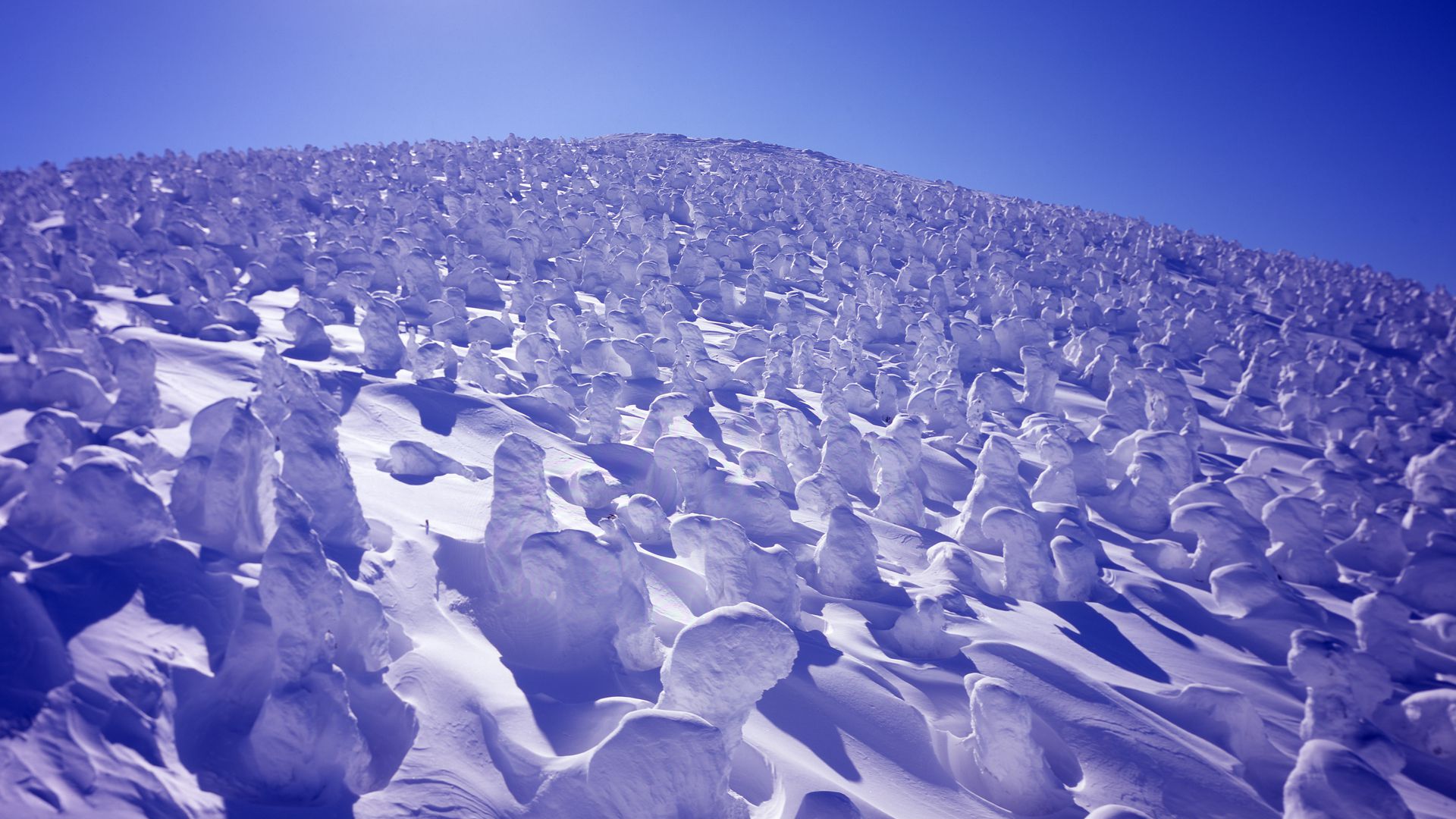
A sulphur spa village on the western flank of the Zao range, with water acidic enough to sting a cut. Above it a two-stage ropeway climbs to a plateau where winter storms case whole fir trees in ice.
- FromYamagata Station
- ~45 minBus, 40–50 min
- Get off atZao Onsen Bus Terminal (Yamako bus)
- From there
- Zao Onsen and the Snow Monsters
Where it is
9 more notes in Yamagata · open the map →What to look for — in walking order
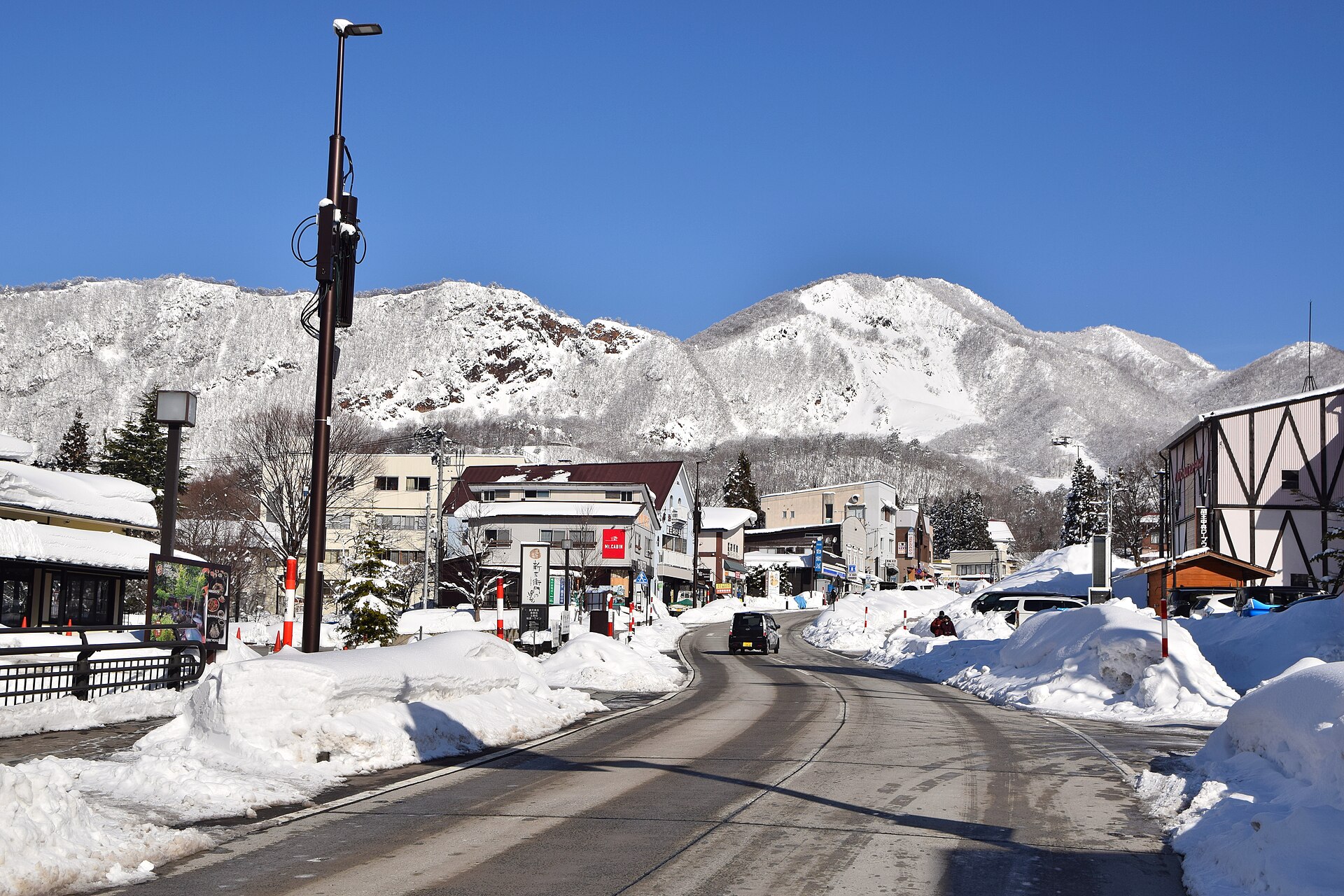
- The village lanessteep streets of inns, shops and bathhouses running from the bus terminal up to the ropeway
- Kamiyu, Shimoyu and Kawarayuthe three public bathhouses, all within a few minutes of each other, with a footbath outside Shimoyu
- Zao Onsen Dai-rotenburoa large open-air bath built along the stream above the village, for the warm half of the year
- Zao Ropeway Sanroku Stationthe lower station at the top edge of the village, where the two-stage ride begins
- Jizo Sancho Station and the juhyo fieldthe upper station at 1,661 metres, standing in the ice-encased firs
How to actually get there
- Yamagata Shinkansen to Yamagata Station.
- Yamagata Station → Zao Onsen Bus Terminal (Yamako bus, 40 to 50 minutes).
- Walk up through the village to the ropeway's lower station, taking the bathhouses on the way.
- Ride both ropeway sections to Jizo Sancho Station for the juhyo field.
- Yamako bus from Yamagata Station
- From Yamagata Station take the Yamako bus signed for Zao Onsen and stay on to the last stop, Zao Onsen Bus Terminal. Official sources put the ride at 40 to 50 minutes. Yamagata Station is on the Yamagata Shinkansen, so the whole approach from Tokyo fits into a morning. There is no railway to the village; the bus is the way in.
- Back down to Yamagata
- The same buses run from the terminal back to Yamagata Station, and the terminal is where to check the final departure. The light-up evenings end late and there is nothing to catch afterwards, so if you want the illuminated ice, take a room in the village rather than gamble on the timetable.
About the place
Zao Onsen sits in the southeast corner of Yamagata city, on the western flank of the Zao range. It is a working spa village rather than a resort strip: three public bathhouses, footbaths open to the street, and inns of every size stacked up the slope. The water is sulphurous and strongly acidic, close to pH 1.6, and it comes out of the ground at about 5,700 litres a minute — enough that most buildings here have a bath of their own. It runs cloudy white and announces itself by smell before you see it.
How to enjoy it
February is when the ice on the firs is thickest, and the ropeway runs a light-up on selected evenings through the season — find out which nights before you commit to a late return. The bathhouses are open all year and take payment into a box at the door, so a soak needs neither booking nor reception. Pair the two and the day has a shape: ice above, hot sulphur below.
Background & history
Tradition puts the discovery of the spring at about 1,900 years ago, during the eastern campaign of Prince Yamato Takeru, when a retainer named Kibi no Tagayu is said to have found the water. For most of its life the place was called Takayu, the high hot water, and it was counted among the three Takayu of the Ou mountains. In the Edo period it served as the western climbing route to the Zao shrine. Ski runs, ropeways and a mountain road arrived in the twentieth century and turned the spa into a resort.
Before you go
- Cash
- The three public bathhouses are paid by dropping the fee into a box at the door rather than at a counter, so carry coins. Ropeway tickets are bought at the lower station, and in winter a combined bus-and-ropeway ticket from Yamagata Station is sold. The village's larger day-use bath houses charge separately at reception.
- Before you go
- The big open-air bath beside the stream is closed for the winter, roughly from late November to the middle of April, and reopens for the warm months. The snow monsters run on the opposite calendar: they thicken through midwinter and vanish within weeks of the first warm spring wind. High wind stops the ropeway at short notice, and the upper station is far colder than the lanes below.
- Another way
- In winter there is also a direct bus from the east exit of Sendai Station to Zao Onsen, which saves the change at Yamagata. By car the approaches are the Yamagata-Zao interchange on the Yamagata Expressway and the Yamagata-Kaminoyama interchange on the Tohoku-Chuo Expressway.
- After you get off
- The bus terminal sits at the lower edge of the village. The bathhouses and footbaths are along the lanes uphill from it and the ropeway's lower station is at the top of the same climb, so everything is walkable — but it is a slope, and in winter a snow-packed one.