North Miyagi · NarukoNo.1224★★Open in map →
Miyagi Traditional Kokeshi
— Wooden dolls from the hot-spring valleys
Wooden dolls turned on a lathe. Five lineages carry Miyagi's national craft designation, and the one made in this valley squeaks when you turn its head. A hall above the spa town gathers the trade federation, the workshop and the display cases under one roof.
- FromSendai Station
- ~2 hrJR local lines, one change
- Get off atNaruko-Onsen Station (JR Rikuu East Line)
- From there
- Miyagi Traditional Kokeshi
The sweet spot
Kokeshi themselves are not obscure. They sit on souvenir shelves nationwide and have been through three separate collecting booms. What stays quiet is the valley that makes them. Naruko is a bathing town first, so most visitors give the day to the water and never walk the road up the gorge to the hall where the craft is actually laid out.
Where it is
23 more notes in Miyagi · open the map →What to look for — in walking order
- Naruko-Onsen Stationthe Rikuu East Line stop, with a cypress footbath and a tourist desk inside the building
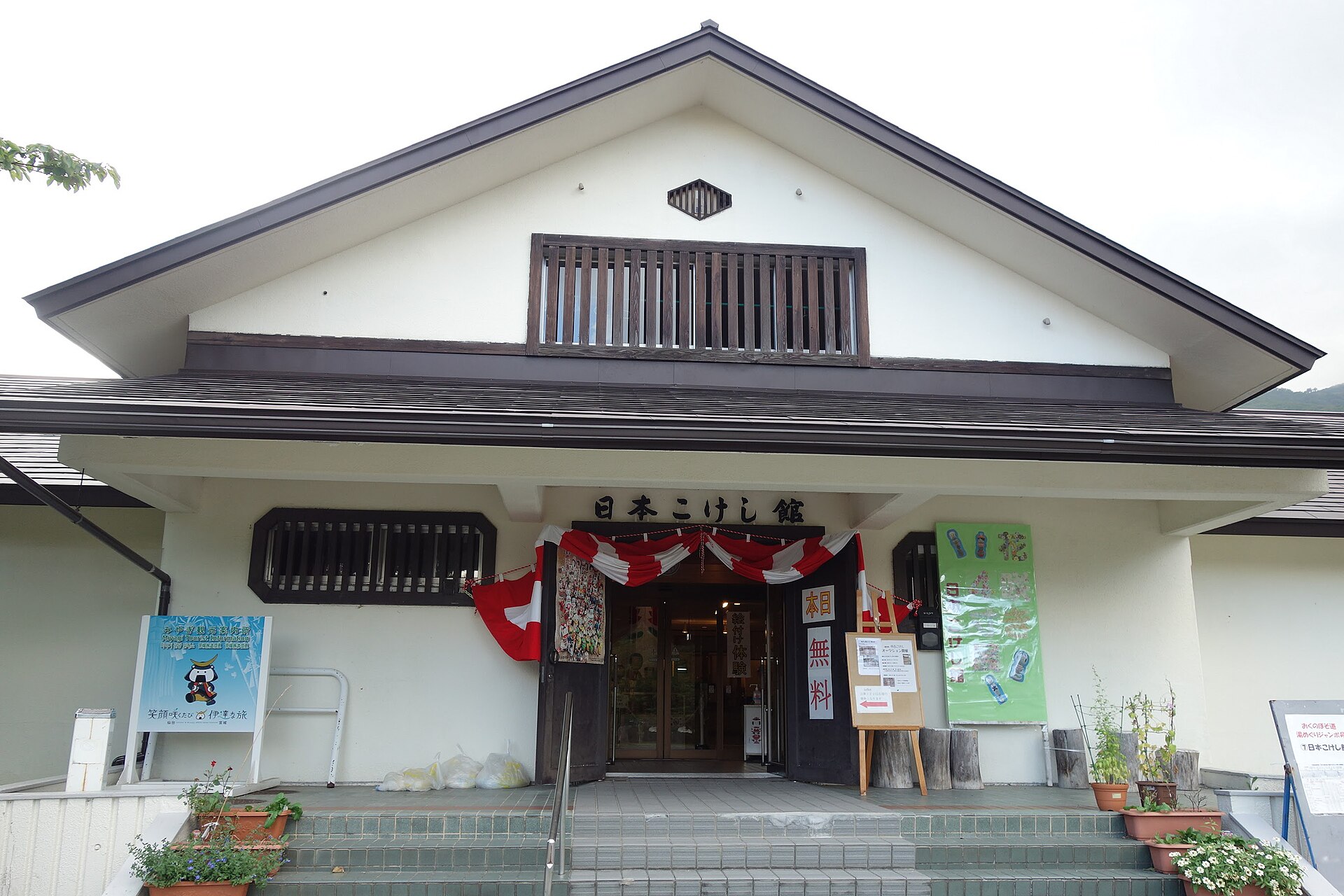
- Japan Kokeshi Museumthe hall up the valley, which also houses the producers' federation office
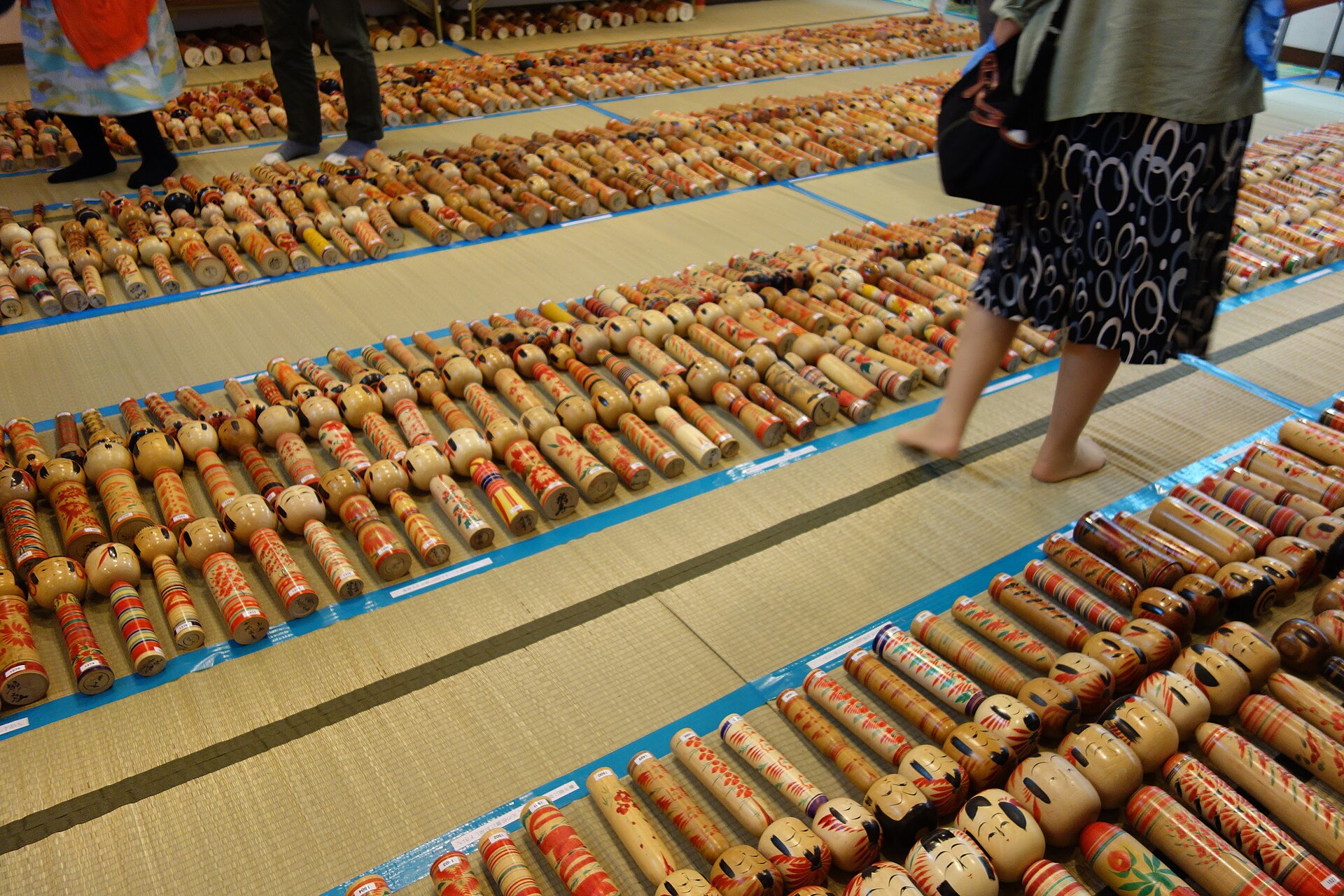
- The display roomabout 5,000 traditional dolls gathered from lineages across the north
- The demonstration cornerturners at the lathe and at the brush, staffed mainly at weekends and on holidays
- The painting cornera blank turned doll and a brush, for a face and a pattern of your own
How to actually get there
- Sendai Station → Kogota (JR Tohoku Main Line).
- Kogota → Naruko-Onsen Station (JR Rikuu East Line).
- Naruko-Onsen Station → Japan Kokeshi Museum (about 25 min on foot up the valley, or about 5 min by taxi).
- Display room → demonstration corner → painting corner, then back down to the station.
- JR from Sendai, one change at Kogota
- Sendai Station →(JR Tohoku Main Line)→ Kogota →(JR Rikuu East Line)→ Naruko-Onsen Station, then up the valley to the museum. The branch runs local services only, spaced an hour or more apart, so fix the connection before leaving Sendai.
- Return from Naruko-Onsen Station
- The same pair of lines runs back to Sendai with one change at Kogota. The Rikuu East Line is single track with long gaps between services, so choose the return train before you start walking back down. The station building has a staffed tourist desk if the timetable is hard to read.
About the place
A kokeshi is one piece of hardwood turned on a lathe, fitted head to body, then given a face and a painted pattern. Nothing else. Five lineages carry the national designation: Naruko, Togatta, Yajiro, Sakunami and Hijiori. Each fixes its own head shape, body profile and painting vocabulary, so a collector reads a doll the way a reader reads handwriting. Naruko is the lineage of this valley, and the one whose head is driven into the body rather than pinned into it, which is why turning it squeaks. The federation representing all five keeps its office inside the Japan Kokeshi Museum, up the road from the spa town.
How to enjoy it
Demonstrations are staffed mainly at weekends and on public holidays, so choose one of those if you want to watch hands work rather than only look at cases. The first Saturday and Sunday of September bring the National Kokeshi Festival to the spa town, with a dedication rite, a nationwide competition and a parade of papier-mache kokeshi. The painting session is charged and the paint needs time to dry, so take a seat early and work back from your train.
Background & history
Woodturners in the Tohoku mountains began making the dolls in the Bunka and Bunsei eras, between 1804 and 1830, selling them to people who came to the hot springs for a cure. The written record points to a turner at Sakunami Onsen as the first. The craft travelled from spa town to spa town, each settling into its own shapes and patterns, and the five Miyagi lineages were designated a national traditional craft in 1981. The museum itself grew out of a collection left to the old town of Naruko by the writer Fukazawa Kaname, and dolls dedicated at the annual festival have been added to it ever since.
Before you go
- Cash
- The museum charges admission, and the painting session is charged separately at the desk. JR stations along the route take IC cards such as Suica as well as cash.
- Before you go
- The museum is shut through the winter, from 1 January to 31 March, so this is an April-to-December stop. The Rikuu East Line is also cut west of Nakayamadaira-Onsen after storm damage and covered by replacement buses, so any approach from the Yamagata side has to be checked first.
- Another way
- The Tohoku Shinkansen stops at Furukawa, where the Rikuu East Line begins, and that is the standard approach from Tokyo. Miyagi Kotsu also runs a bus between Sendai and Naruko Onsen.
- After you get off
- From Naruko-Onsen Station the museum lies west, up the valley: about 25 minutes on foot along the main road, or about 5 minutes by taxi from the station rank.