Fukui · Echizen ImadateNo.973★★★Open in map →
Echizen Washi
— Handmade paper from the Goka villages of Fukui
A working papermaking valley in Echizen, Fukui, where five hamlets along the Okamoto river have shaped bark fibre into sheets for some fifteen centuries. Three halls stand on one street: a hands-on workshop, a restored Edo-period paper house, and a museum.
- FromFukui Station
- ~1 hrHapi-Line train + local bus
- Get off atTakefu Station (Hapi-Line Fukui)
- From there
- Echizen Washi
Where it is
28 more notes in Fukui · open the map →What to look for — in walking order
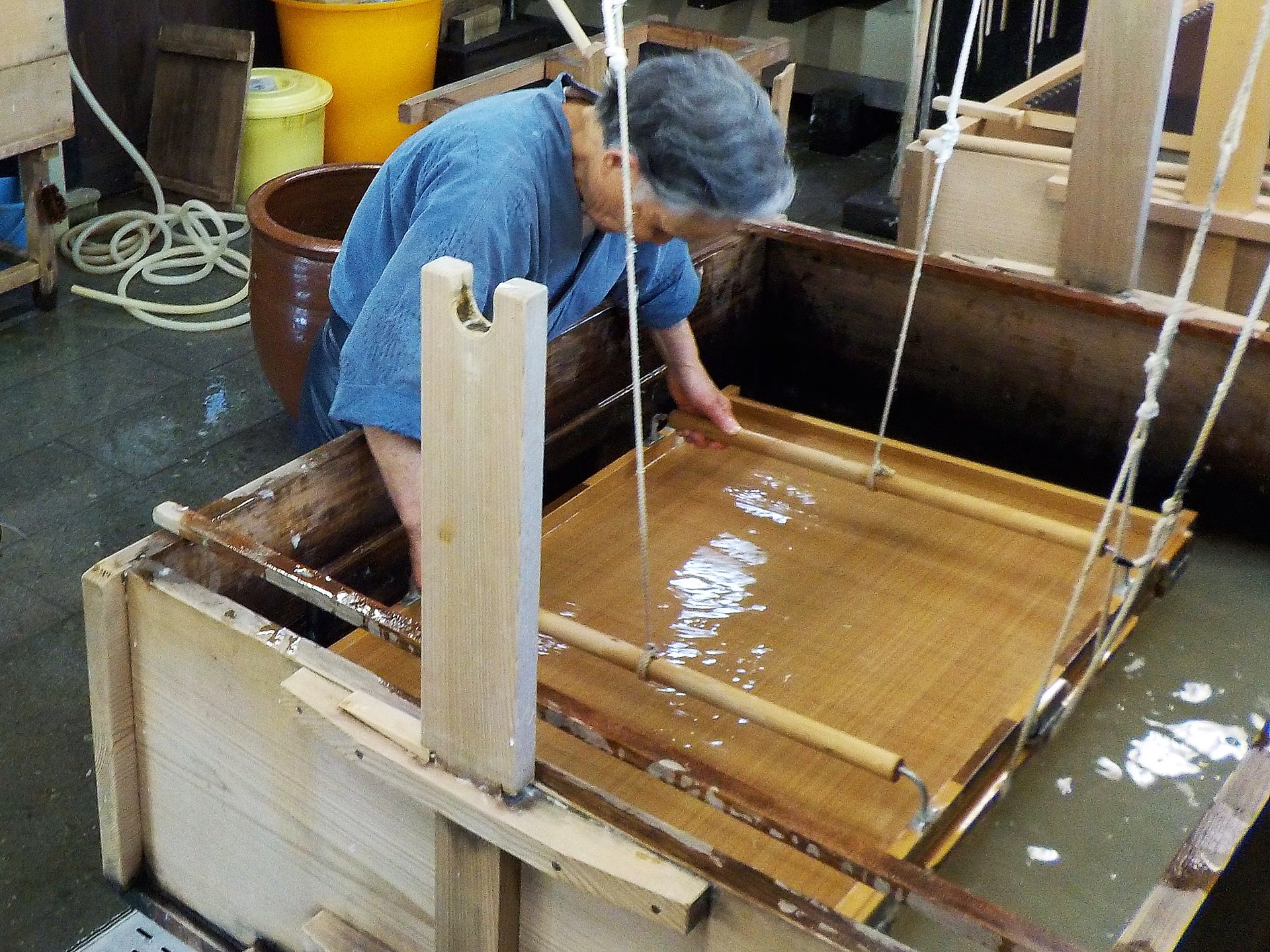
- Papyrus Hallthe hands-on workshop at the near end of the row, where a seat at the vat needs no booking
- Udatsu Craft Museuma mid-Edo papermaking house moved here and restored, with artisans working the full sequence
- Paper Culture Museumfilm and panels on where the paper began and how it travelled out of the valley
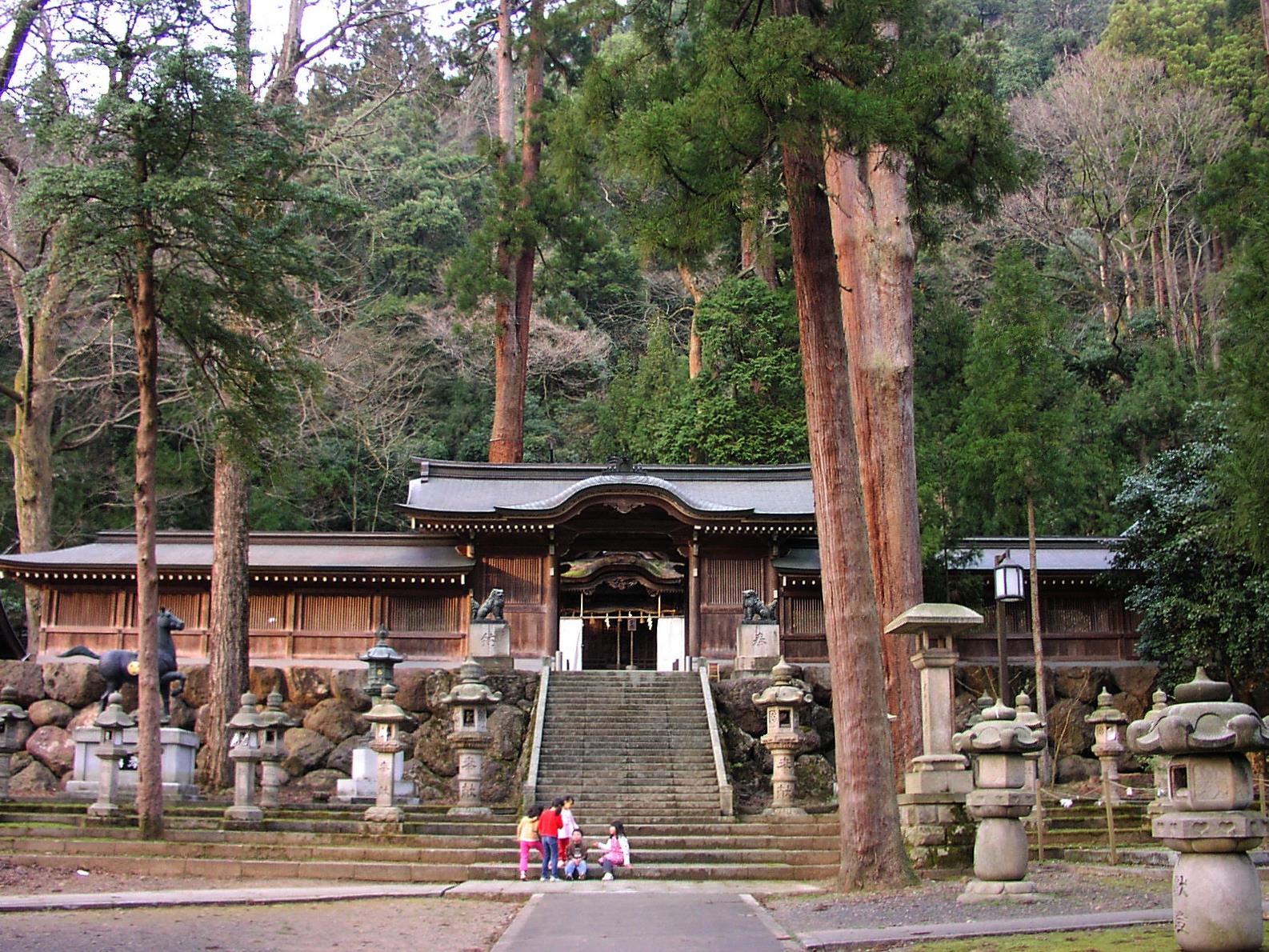
- Otaki and Okamoto Shrinesa kilometre south, layered cypress bark roofing the hall of the paper deity Kawakami Gozen
How to actually get there
- Fukui Station → Takefu Station (Hapi-Line Fukui, southbound).
- Takefu Station → the Fukutetsu bus stop in front of it; board the Nan-etsu line heading east.
- Ride to the terminus, Washi-no-Sato (about thirty minutes), and begin at Papyrus Hall.
- Walk the row as far as the Paper Culture Museum, then carry on south down the valley to Otaki and Okamoto Shrines.
- Hapi-Line Fukui south, then the Fukutetsu bus
- Fukui Station →(Hapi-Line Fukui, southbound)→ Takefu Station. Leave the building, find the Fukutetsu bus stop in front of it, and ride the Nan-etsu line east to its terminus, Washi-no-Sato — about thirty minutes. Train and bus together come to roughly an hour, longer if the connection is slack. Buy the rail ticket from the machine or tap a transport IC card.
- Return from Washi-no-Sato
- The Nan-etsu bus goes back to Takefu Station from the same stop, and Hapi-Line Fukui runs north from there to Fukui. The bus is what limits the day, not the train: this is a country route with a thin timetable, so read the return times on the board at the stop when you arrive rather than when you are ready to leave.
About the place
Echizen Washi comes from the Imadate district of Echizen City, where five hamlets — Otaki, Iwamoto, Furo, Shinzaike and Sadatomo, known together as Goka — line the Okamoto river. Paper has been made along this water for about 1,500 years, from the inner bark of kozo, mitsumata and ganpi rather than from wood pulp. The valley is a production area first and a sight second: the mills along the road take orders and work to them. Its public face is Echizen Washi no Sato in Shinzaike, where three halls stand in a row on one street. One of them sets out a mould and a vat for visitors.
How to enjoy it
The three halls keep one rhythm: nine in the morning to four in the afternoon, closed Tuesdays and over the New Year, with the last workshop slot taken well before the doors shut. A sheet at Papyrus Hall takes twenty to forty minutes, and it has to dry before it can travel. Add an hour if you mean to walk south to the shrines rather than turn back at the museum.
Background & history
The oldest surviving paper linked to this valley is a provincial tax ledger of 730, kept in the Shosoin repository at Nara. Local telling supplies a founder rather than a date. A woman appeared upstream on the Okamoto river, taught the villagers to make paper, and when asked her name said only that she came from the upper reaches. She is worshipped as Kawakami Gozen at Okamoto Shrine, which shares its ground with Otaki Shrine; the lower shrine hall was raised in 1843 and designated a National Important Cultural Property in 1984. Echizen Washi itself became a nationally designated traditional craft in 1976.
Before you go
- Cash
- Hapi-Line Fukui takes cash and transport IC cards, and Takefu Station has both ticket machines and IC gates. The Fukutetsu bus is a local route, so keep coins on you. The papermaking workshop and the museum admission are charged, and the current rates are posted at the counters.
- Before you go
- The three halls are closed on Tuesdays and over the New Year period. The mills spread through the valley are working businesses, not places to wander into. Otaki and Okamoto Shrines, a kilometre south, sit in a cedar grove at the foot of the mountain and are reached on foot from the row or by car.
- Another way
- From Kyoto or Osaka, take a limited express to Tsuruga and change to Hapi-Line Fukui for Takefu. Arriving on the Hokuriku Shinkansen, get off at Echizen-Takefu Station instead and continue by taxi, rental car or rental cycle.
- After you get off
- Takefu Station is a transfer point, not the destination — the valley is another six or seven kilometres east. Cross to the bus stop in front of the station and take the Fukutetsu Nan-etsu line to the end of the line, a stop named Washi-no-Sato.