Fukui · EchizenNo.1081★★Open in map →
Echizen Forged Blades
— The cooperative forge at Takefu Knife Village
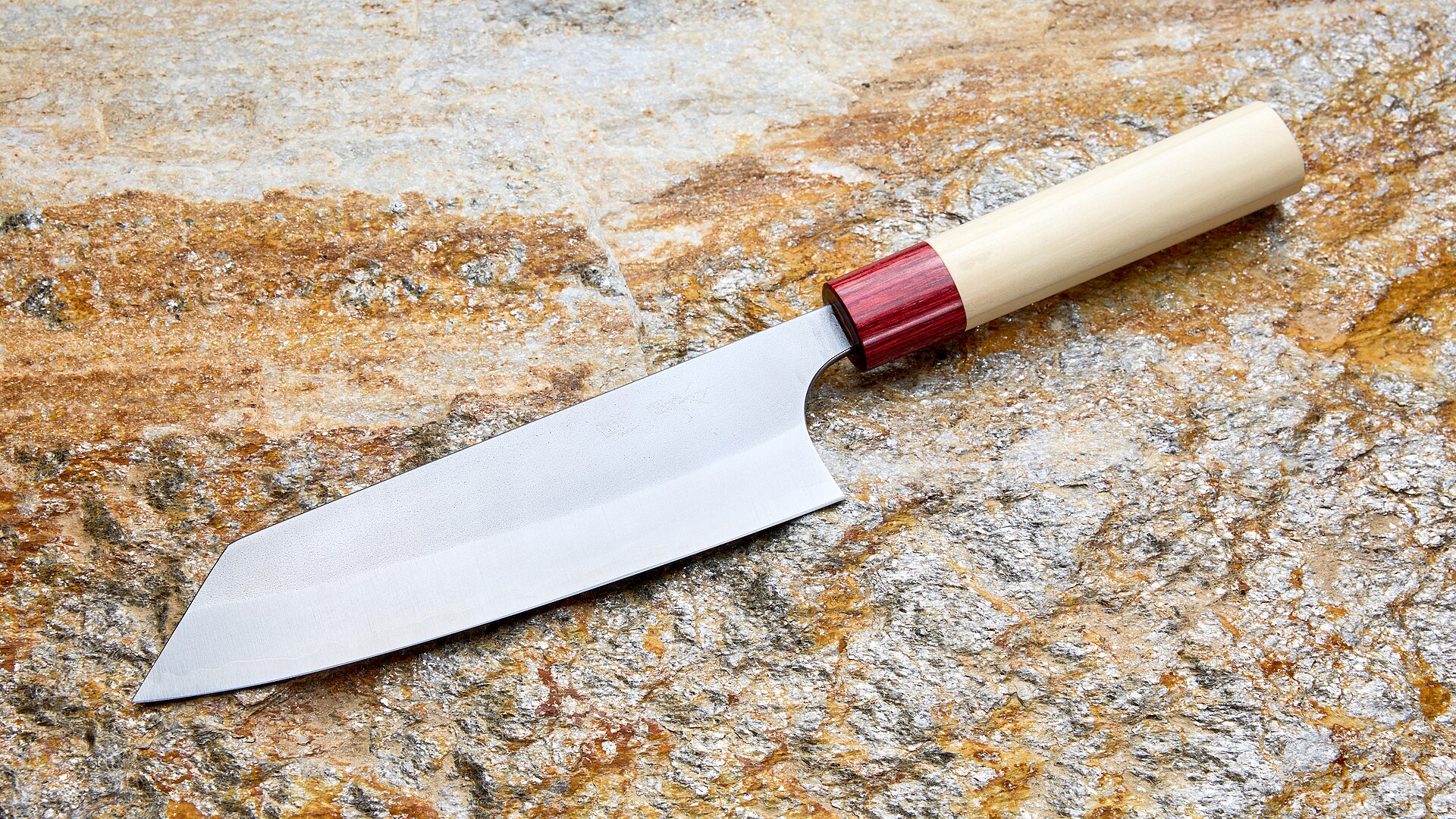
A cooperative forge in the hills east of Echizen City, where the makers of Echizen blades work one shared floor. A ramp above it is open to visitors without charge, and the shop below carries the members' knives, sickles and shears.
- FromFukui Station
- ~1 hLocal train, then a village bus
- Get off atAjimano-jinja-mae bus stop (Fukutetsu Bus, Iritani line)
- From there
- Echizen Forged Blades
The sweet spot
This is a known craft centre rather than a hidden one. The government's factory-visit guide lists it, and coach parties do come. What changes the visit is the day of the week: the association publishes that its craftsmen are off on Sundays and public holidays, so the difference between a full forge and an empty one is simply which day you pick.
Where it is
28 more notes in Fukui · open the map →What to look for — in walking order
- The viewing rampa walkway built over the shared forge floor, open without charge
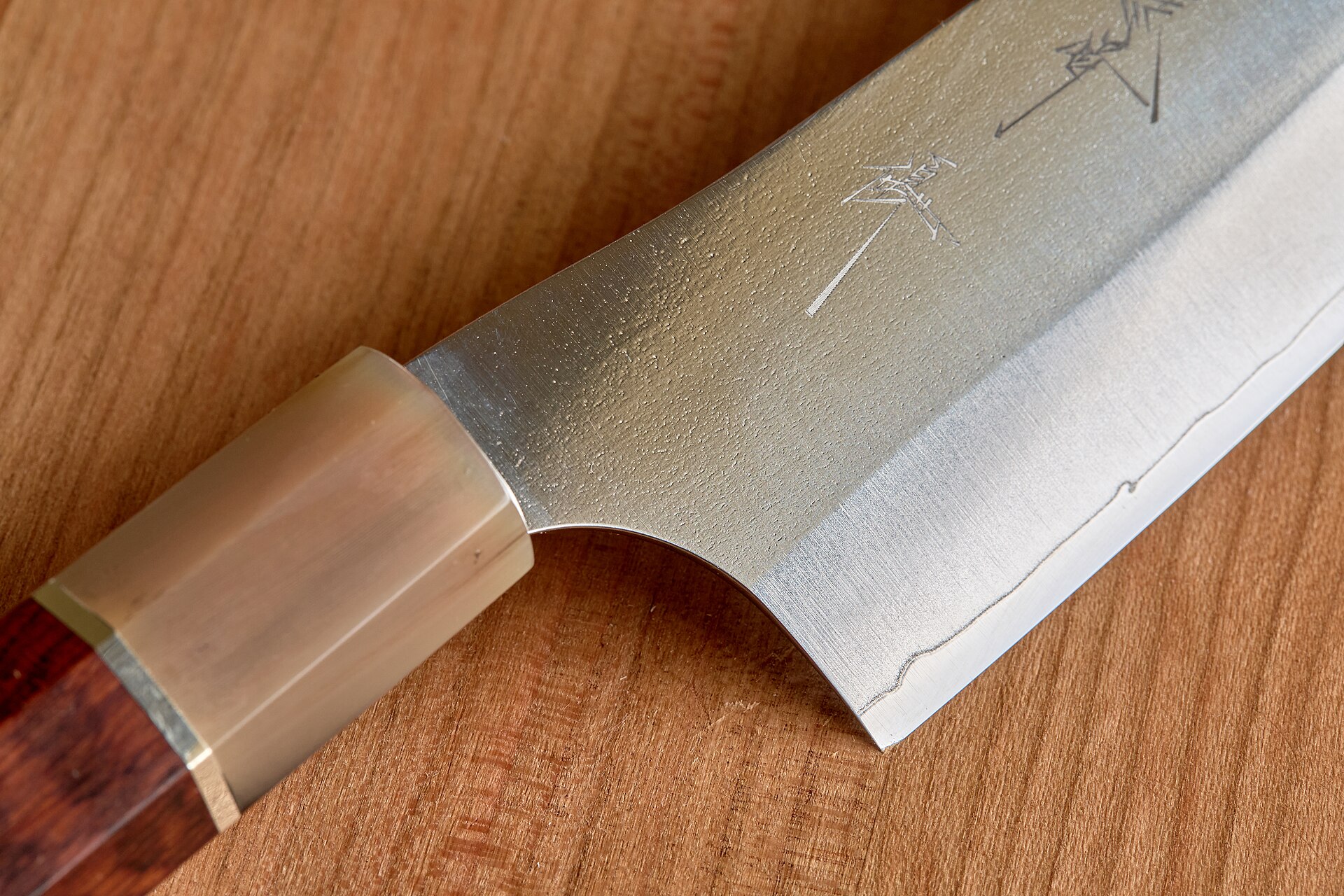
- The forging floorbelt hammers and coal fire, where paired blades are spread thin from both faces
- The grinding bencheswheels where the edge is put on and the surface is brought up by hand
- The shopkitchen knives, sickles, hatchets and hedge shears from the member makers
- The class roomthe space used for the booked knife-making and paper-knife sessions
How to actually get there
- Fukui Station → Takefu Station (Hapi-Line Fukui, southbound).
- Takefu Station bus stop → Ajimano-jinja-mae (Fukutetsu Bus, Iritani line toward Iritani).
- Ajimano-jinja-mae → Takefu Knife Village (walk, roughly three minutes).
- Walk the ramp over the forge floor first, then go down to the shop and the sharpening counter.
- Hapi-Line Fukui to Takefu, then the Iritani-line bus
- Fukui Station →(Hapi-Line Fukui, southbound)→ Takefu Station. From the stop in front of Takefu Station take the Fukutetsu Bus Iritani line toward Iritani and get off at Ajimano-jinja-mae. This is a thin country timetable, so read the operator's times before you set out rather than at the stop. A taxi from Takefu Station covers the same ground when the bus does not line up.
- Return from Ajimano-jinja-mae
- Take the Iritani-line bus back toward Takefu Station and change there to Hapi-Line Fukui for Fukui. Country services stop early in the evening, so read the last departure on the pole when you arrive, not when you want to leave. If it has gone, the workshop can call a taxi for you.
About the place
Takefu Knife Village sits in Yokawa, on the eastern edge of Echizen City, where the rice fields run up against the hills. It is not a museum but a working cooperative. Fourteen blade companies share the site, and their craftsmen work one common floor rather than each in a separate shed. A ramp runs above that floor, so the whole workshop can be read from end to end without stepping into it. Below the ramp are a shop carrying the members' blades, a counter that takes in sharpening, and a room used for booked classes. A newer wing has since been added to the site.
How to enjoy it
The association lists 9am to 5pm and says weekdays are the better bet, because its craftsmen take Sundays and public holidays off. Sharpening and repairs are taken in at the counter, and the classes have to be booked before you come. English leaflets and English signs inside are listed by the government's factory-visit guide, so the sequence of the work can be followed without a guide.
Background & history
The craft is traced to a swordsmith from Kyoto, Chiyozuru Kuniyasu, who is said to have settled in Fuchu — today's Echizen City — in the early fourteenth century and to have made sickles for the farmers around him alongside his blades. Echizen sickles later travelled the country with the itinerant lacquer-tappers, who bought them for their own work and carried orders home. In 1979 Echizen forged blades became the first cutlery in Japan designated a national traditional craft, the listing covering kitchen knives, sickles, hatchets and hedge shears.
Before you go
- Cash
- The workshop and its viewing ramp are free, and the city tourism association and the government's factory-visit guide both list them that way. Takefu Station on Hapi-Line Fukui has ticket machines and IC gates. Fukutetsu buses accept transport IC cards such as ICOCA; paying cash means taking a numbered ticket as you board by the rear door, and the on-board change machine does not handle large notes.
- Before you go
- This is a workplace rather than an exhibition, so what is happening depends on the day, and Sundays and public holidays are when the craftsmen are away. Closing days are written differently across the association's own pages, so a phone call is worth it before a long trip. The last stretch is an open country road with little shelter.
- Another way
- From Echizen-Takefu Station on the Hokuriku Shinkansen a taxi or the station's share-cycle reaches Yokawa directly, which suits arrivals from Tokyo or Kanazawa. By car it is about ten minutes from the Takefu interchange on the Hokuriku Expressway, and there is parking on site.
- After you get off
- Ajimano-jinja-mae stands beside Ajimano Shrine. The workshop is roughly a three-minute walk from there on the Yokawa side, along the same prefectural road the bus uses.