Miyagi · Sendai StationNo.450★★★Open in map →
Sendai Grilled Beef Tongue
— Miyagi's postwar dish, served as a set
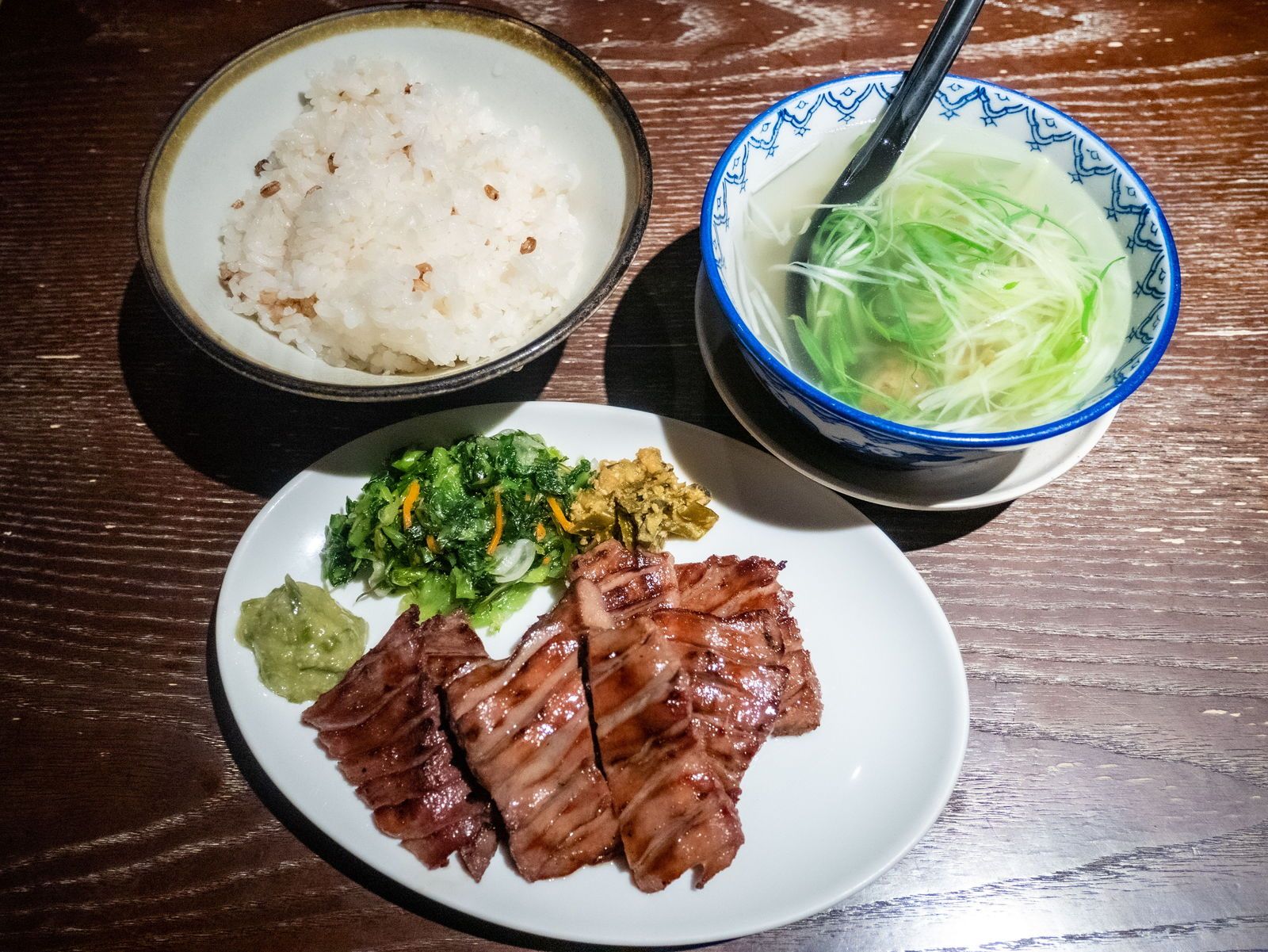
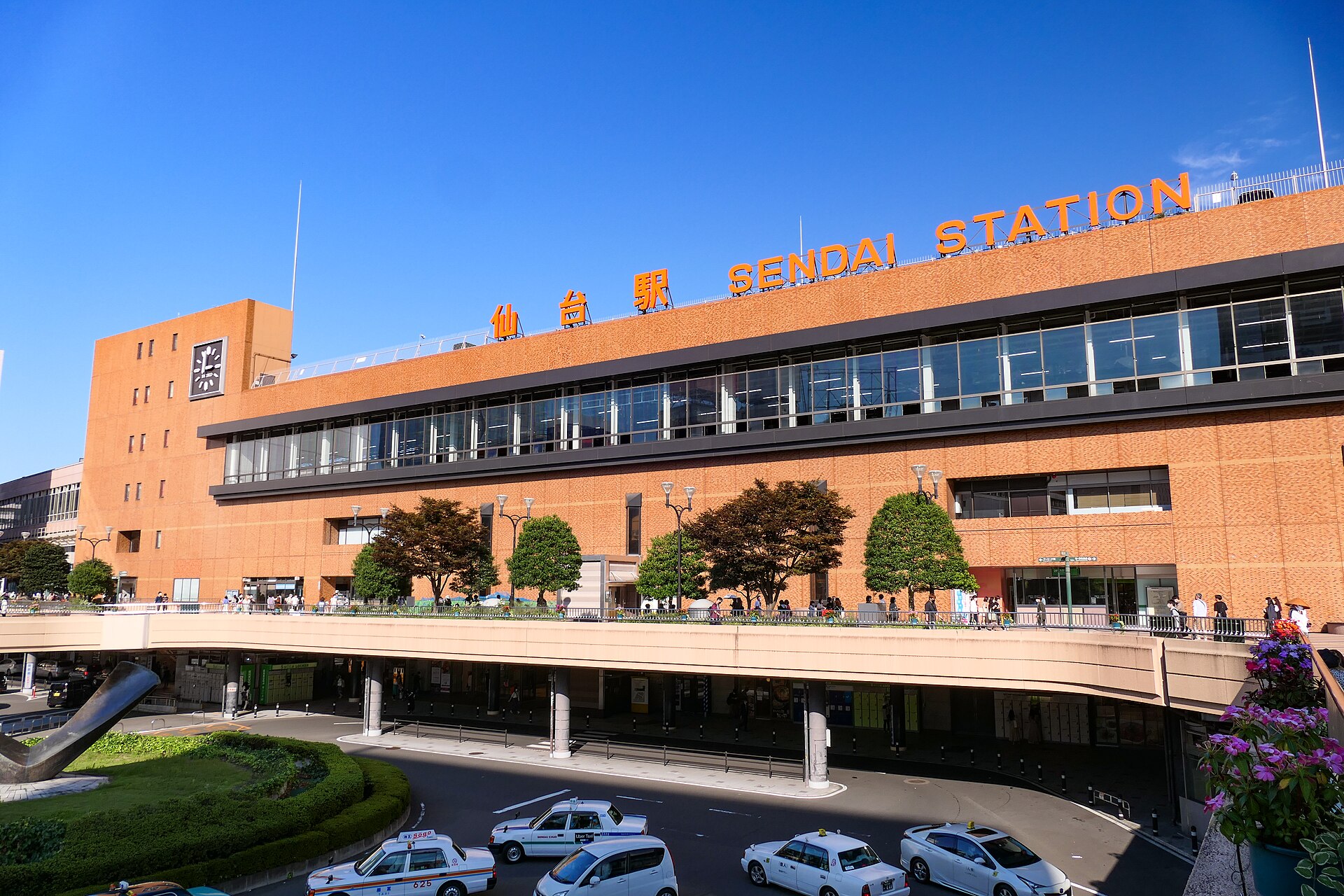
Charcoal-grilled beef tongue, salted and rested for days and served with barley rice and oxtail soup. The specialists sit on a purpose-built street on the third floor of Sendai Station, alongside a sushi street of the same design.
- FromSendai Station Shinkansen gates
- ~1 minInside the station, third floor
- Get off atSendai Station (JR lines and Tohoku Shinkansen)
- From there
- Sendai Grilled Beef Tongue
Where it is
23 more notes in Miyagi · open the map →What to look for — in walking order
- Gyutan Dorithe beef tongue street itself, lower walls finished as castle stonework under warm lantern-like light
- The wall graphic panelsboards on the roots of Sendai beef tongue, with codes that open short films
- The mounted Date Masamune statuea photo spot at the far end of the street, its backdrop changed through the year
- Sushi Dorithe neighbouring street of counters working fish from the Sanriku coast
- Zunda Komichia short run of edamame-paste sweets and shakes just beyond the two streets
How to actually get there
- Tohoku Shinkansen or a JR local line → Sendai Station.
- Station concourse → third floor, the same level as the Shinkansen gates.
- Walk the length of Gyutan Dori, past the graphic panels to the Date Masamune statue at the end, then choose a door.
- Sushi Dori and Zunda Komichi continue from the same floor if you want a second stop.
- Arriving by Shinkansen
- The street sits on the third floor, the same level as the Shinkansen ticket gates, so you walk to it in about a minute without leaving the building. Arriving on a JR local line, go up one level from the concourse below. Lifts and escalators reach the floor from both the station concourse and the street outside.
- Straight back to the platforms
- You are already inside the station, so it is a minute back to the gates. Trains toward Tokyo run through the day and into the evening, and the last Shinkansen leaves well before midnight. Check the departure board before you sit down if you are eating late.
About the place
Beef tongue in Sendai is a trade rather than a menu item. The tongue is skinned, sliced and scored by hand, salted by hand as well, rested cold for several days, then seared over charcoal so the outside crisps and the inside stays juicy. What arrives is a set: grilled tongue, barley rice, oxtail soup, pickles and a chilli-miso condiment. Gyutan Dori, the beef tongue street, was rebuilt on the same level as the Shinkansen gates with its lower walls finished as castle stonework, and a sushi street of matching design runs alongside it.
How to enjoy it
Restaurants here set their own hours, so check the operator's page for the shop you want before you commit to a train. Walk the whole street once before choosing — the panels near the entrance explain what you are about to eat, and the queues differ from door to door. Order the set rather than the tongue alone, because the barley rice and the oxtail soup are half of what the dish is.
Background & history
A cook from Yamagata, Sano Keishiro, opened a small grill in central Sendai after the war and worked at turning beef tongue into something suited to Japanese tastes, settling on salt and charcoal. His shop, Tasuke, had it on the menu by about 1948. Craftsmen trained under him went independent, and one of the shops that followed began billing the dish as a Sendai speciality outright. The name travelled nationally once the Tohoku Shinkansen reached the city in 1982.
Before you go
- Cash
- There is no admission of any kind — this is a shopping street inside the station. Shops take cash, credit cards, transport IC cards and QR payments, and the operator also lists its own points scheme, but not every outlet accepts every method. Confirm at the counter before you order.
- Before you go
- The whole floor is non-smoking. Each restaurant keeps its own days off, so a shop chosen in advance can be shut on the day you arrive. Nothing here depends on the weather, which makes it a reliable stop in rain or deep winter.
- Another way
- Coming from the city side, walk in from the Ichibancho arcades where the first specialist shop opened, cross to the station on the second-floor pedestrian deck, then go up one more level. Boxed versions of the dish are sold as ekiben in the station if you would rather eat on the train.
- After you get off
- You never leave the station. From the Shinkansen gates on the third floor the street runs straight off the concourse; from the JR local lines, take the stairs, escalator or lift up one level.