East Nagasaki · Shimabara PeninsulaNo.788★★★Open in map →
Unzen Jigoku
— A geothermal hell field in Japan's first national park
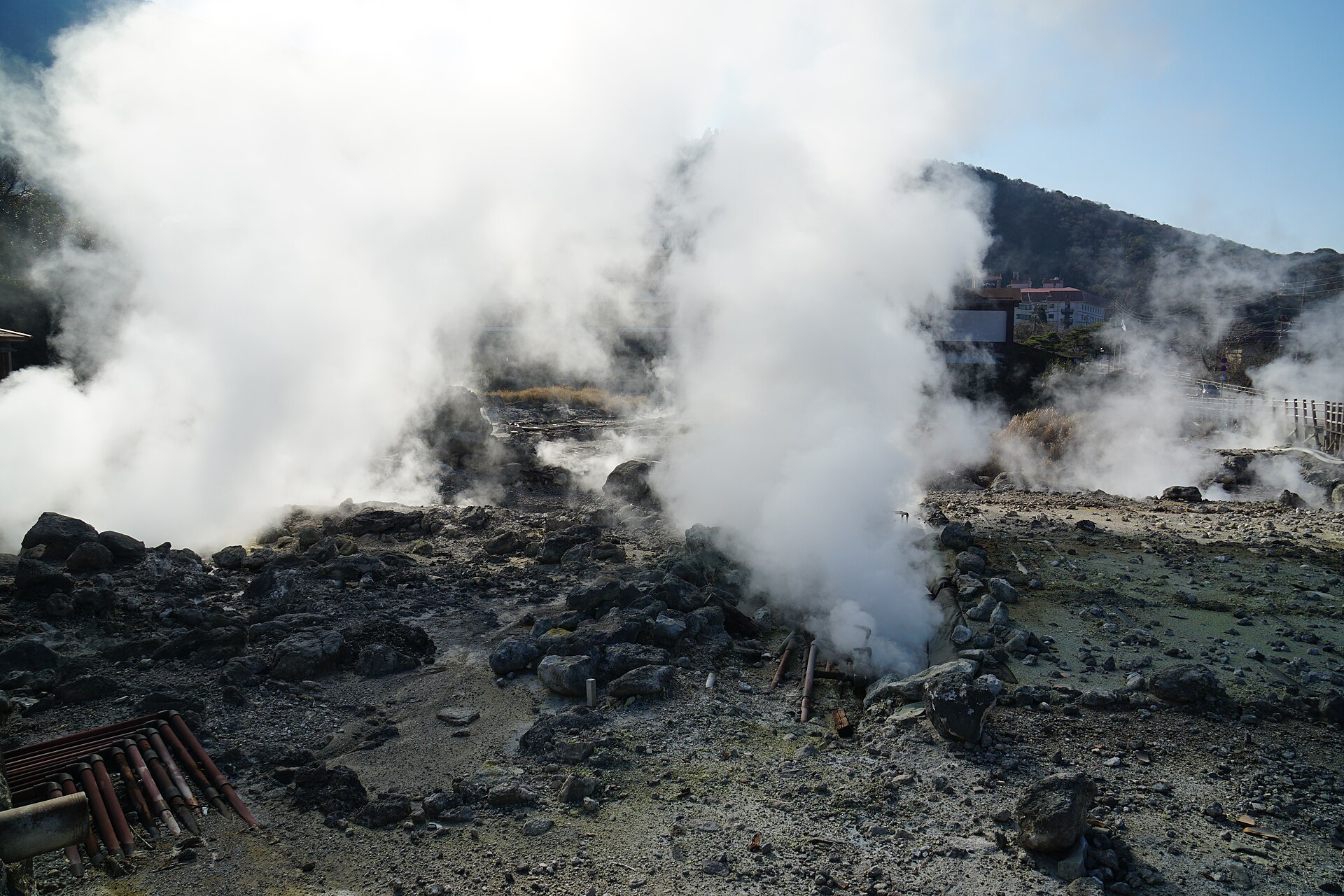
A field of some thirty steaming vents in the middle of a hot-spring town on the Shimabara Peninsula, crossed by free wooden boardwalks. Bare pale ground, sulphur in the air, and a memorial to seventeenth-century martyrs standing among them.
- FromIsahaya Station
- ~70 minShimatetsu bus, ~70 min
- Get off atUnzen bus stop (Shimatetsu Bus)
- On foot
- Unzen Jigoku
Where it is
20 more notes in Nagasaki · open the map →What to look for
- Daishokan Jigokuthe loudest of the vents, named after one of the Buddhist hells
- Oito Jigokua vent known by a personal name, as several of the hells here are
- Seishichi Jigokuanother named vent, set among bleached clay and standing dead trunks
- The boardwalk through the ventsraised timber walkways that bring you close to the steam without leaving marked ground
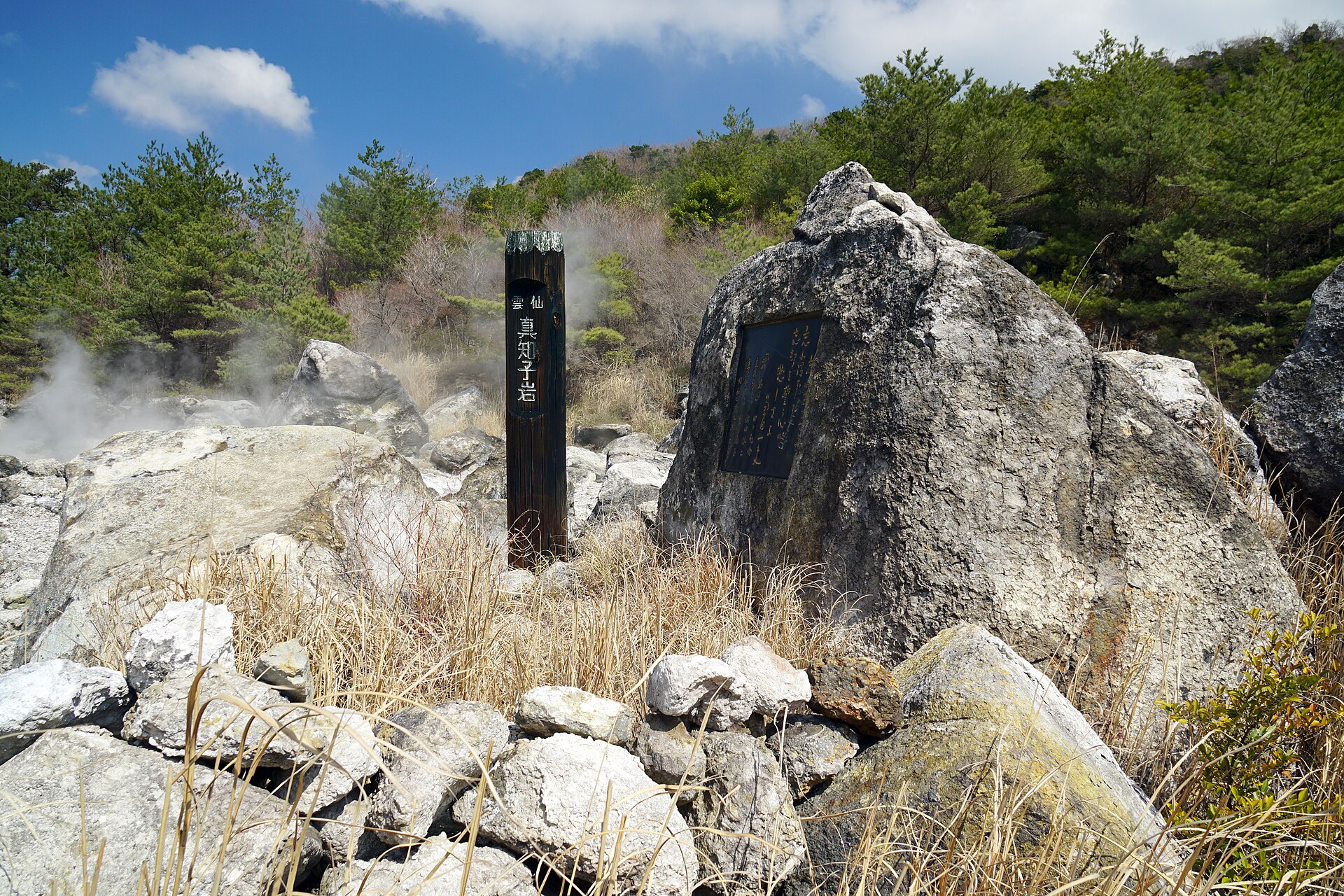
- The martyrs' memoriala stone monument to the Christians who died here under the ban on their faith
How to actually get there
- Isahaya Station → Unzen (Shimabara Railway bus, about 70 minutes).
- Unzen bus stop → the boardwalk entrance in the onsen town (a few minutes on foot).
- Walk the boardwalk loop between the vents, then return the same way for the bus.
- Before leaving, detour to the martyrs' memorial standing within the field.
- Shimatetsu bus from Isahaya Station
- Isahaya Station →(Shimabara Railway bus, about 70 minutes)→ Unzen. The road climbs steadily onto the peninsula, so this is a mountain route rather than a shuttle. From the Unzen stop the vents are a few minutes on foot.
- Return from the Unzen stop
- Buses back toward Isahaya leave from the same stop in the middle of the onsen town. Services are spaced out rather than frequent, so photograph the timetable when you arrive instead of assuming a late option exists.
About the place
Unzen Onsen sits high on the Shimabara Peninsula, and the ground at its centre never settles. About thirty separate vents — each one called a jigoku, a hell — push steam and hot water up through bare, pale clay. Sulphur has bleached the soil and killed the trees across the open patches, so the field reads grey and white against the forest that rings it. Wooden boardwalks run between the vents, and the whole area is free to enter, because it is part of the town rather than a fenced attraction. Steam drifts across the walkways depending on the wind.
How to enjoy it
Walk the boardwalks rather than looking from the road — the crusts on the ground and the colour changes only read up close. Because there is no gate, you can slip in before or after the coach parties instead of queuing with them, and the steam shows strongest in cold air. On the way out, buy a hot-spring egg cooked in the vent steam from one of the stalls.
Background & history
Unzen was made Japan's first national park in 1934, and the hot springs here had already been drawing visitors, foreign residents among them, for decades before that. The older history is darker. Under the ban on Christianity, the local lord Matsukura Shigemasa used the boiling ground as a place of torture and execution for believers from the peninsula. A memorial to those killed now stands within the field, and the site is treated as a place of remembrance as much as a geothermal one.
Before you go
- Cash
- The boardwalks through the vents are free to walk. The paid parts of the day are the bus and whichever bathhouse you choose in the town.
- Before you go
- There is no lighting after dark, and the field is open ground at altitude — wind carries the steam and the sulphur smell straight across the walkways. In cold weather the steam thickens enough to hide the far side of the field.
- Another way
- From Nagasaki, prefectural express buses run from the terminal in front of Nagasaki Station to Unzen in about one hour and forty minutes, three times a day.
- After you get off
- From the Unzen stop, walk into the onsen town along the main street; the boardwalk entrances open off it within a few minutes on foot.