Akita · KakunodateNo.563★★★Open in map →
Kakunodate Samurai District
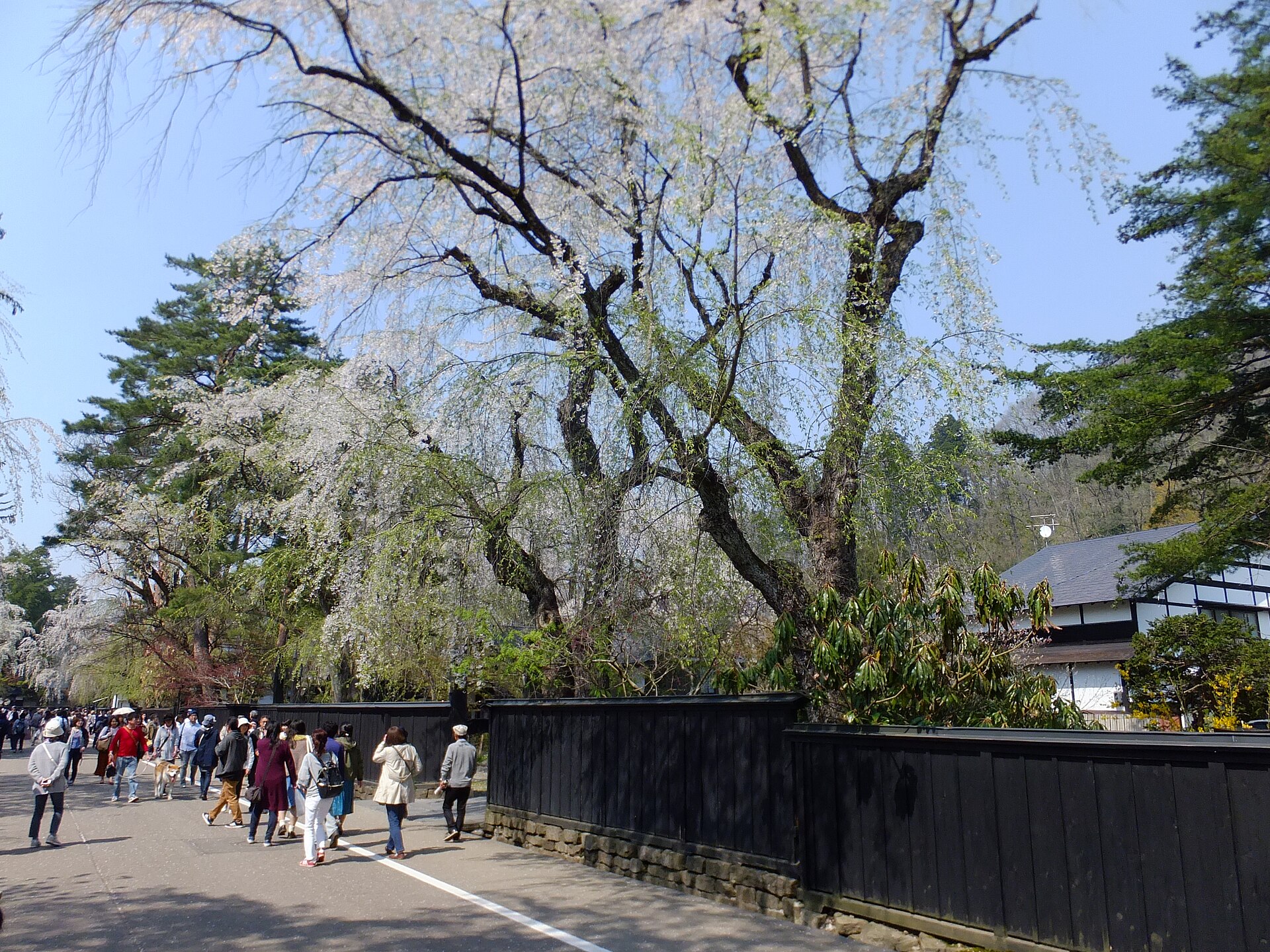
One street in the old castle town of Kakunodate, lined on both sides with black board fences and the weeping cherries that hang over them. Six former samurai houses still stand behind those fences, and five of them open their gates.
- FromAkita Station
- ~1 h 5 minAkita Shinkansen, ~15 a day
- Get off atKakunodate Station (Akita Shinkansen / Akita Nairiku Line)
- From there
- Kakunodate Samurai District
Where it is
34 more notes in Akita · open the map →What to look for — in walking order
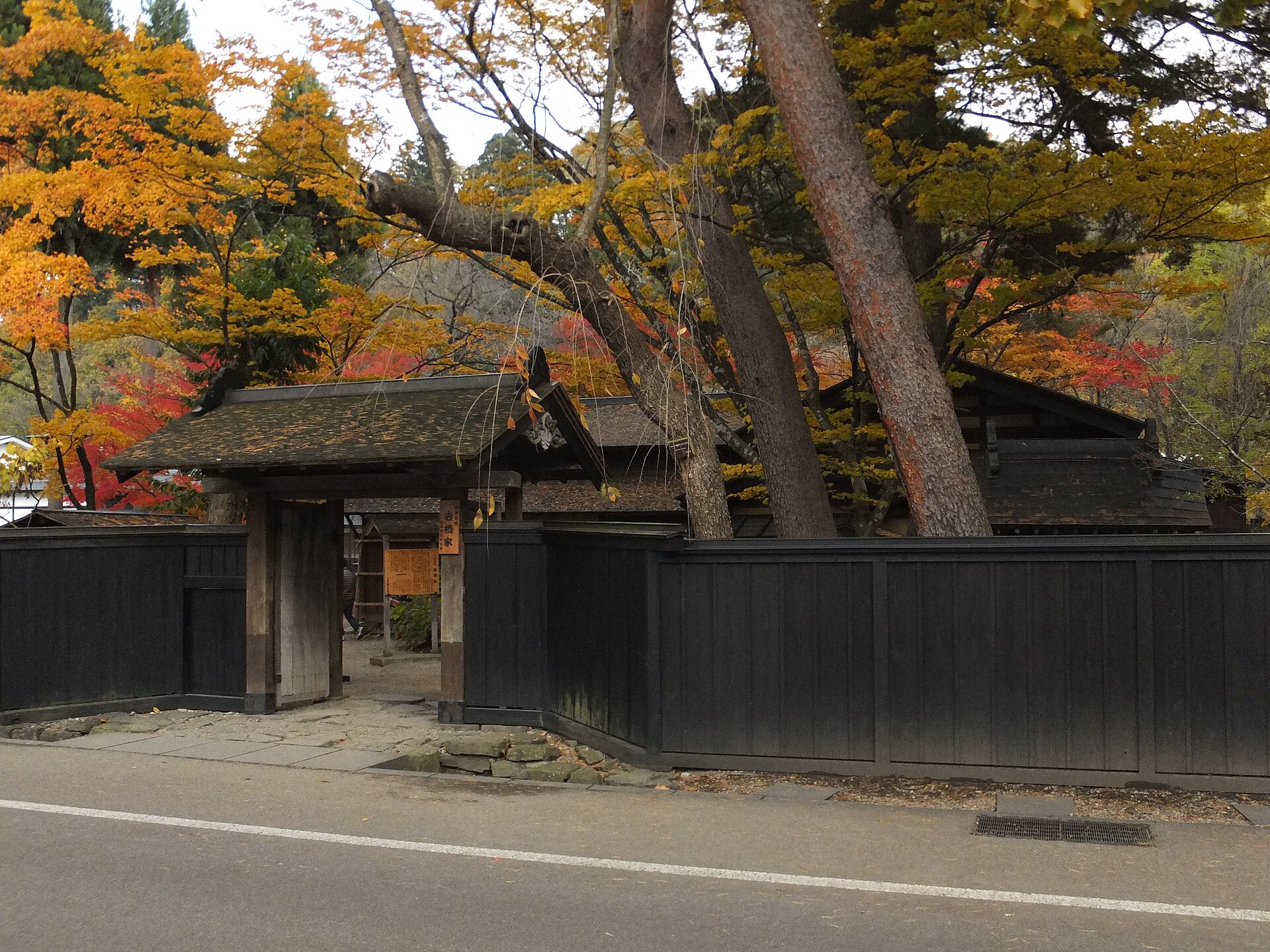
- Iwahashi Housea thatched upper-samurai house with an oak reckoned at about three hundred years old
- Kawarada Housea four-room main house of Meiji date, reopened to visitors after a long restoration
- Odano Housea front garden of fir, maple and dwarf bamboo set out in the Kyoto manner
- Aoyagi Housea yakuimon gate behind a black sasarako fence pierced with peep windows
- Ishiguro Housethe oldest of the surviving samurai dwellings, thatched, with a rock-and-fir garden
How to actually get there
- Akita Station → Kakunodate Station (Akita Shinkansen Komachi, about 45 min).
- Kakunodate Station → the Iwahashi House end of the samurai street (walk about 15 min northwest).
- Walk north past the Kawarada, Odano and Aoyagi houses to the Ishiguro House at the far end, about ten minutes more.
- Carry on west to the Hinokinai embankment, or turn back to the station through the old merchant quarter.
- Akita Shinkansen, direct from Akita Station
- Akita Station →(Akita Shinkansen Komachi, about 45 min)→ Kakunodate Station, then about 15 minutes on foot to the near end of the samurai street and about 25 minutes to the far end. Komachi trains call here roughly fifteen times a day in each direction. From Tokyo the same train reaches Kakunodate in a little over three hours.
- Return from Kakunodate Station
- Walk back to Kakunodate Station and take the Komachi west to Akita or east to Morioka, about fifty minutes either way. Services thin out late: one Komachi round trip a day runs through without stopping, so read the departure board before planning an evening train. The Akita Nairiku Line, which ends at the same station, runs far fewer services.
About the place
Kakunodate was laid out in the north of the Senboku plain, with an earthen firebreak splitting the town into the samurai quarter of Uchimachi and the merchant quarter of Tomachi. The samurai street runs south from the foot of Kojoyama, the hill that once carried the castle, and it is still an ordinary road you can walk at any hour. Behind the black plank fences stand six former residences of middle- and lower-ranking retainers, five of which admit visitors. Halfway along, the road jogs left then right in a masugata bend — a castle-building device applied to a town plan. The quarter kept that Edo layout through every later era, which is why the fences still line up.
How to enjoy it
The houses open at nine, so an early Komachi gives you the empty street first and the interiors afterwards. Cherry season falls in the second half of April, when the weeping cherries here and the roughly two kilometres of Somei-yoshino along the Hinokinai embankment flower within days of each other. Autumn works the same trick in reverse, black fences under red maples.
Background & history
The castle town in its present form dates from 1620, when Ashina Yoshikatsu — younger brother of the Akita lord Satake Yoshinobu — moved it south of the old castle hill after repeated flooding. When the Ashina line ended in 1656 a branch of the Satake family took over and held the district until the domains were abolished. The weeping cherries are said to have come from Kyoto with a Satake bride, and they are now a National Natural Monument. The street was selected as an Important Preservation District for Groups of Traditional Buildings in 1976.
Before you go
- Cash
- The street is a public road and free to walk. The houses that open to visitors charge admission at their own gates, and the small counters in the district are more likely to take cash than cards. The city publishes current hours and fees house by house.
- Before you go
- Snow lies deep from December through March; the street is cleared but slippery underfoot. The Iwahashi, Odano and Matsumoto houses open only in the warmer half of the year, while the Aoyagi, Ishiguro and Kawarada houses stay open through winter on shorter hours. For a few weeks in late winter the Iwahashi gate is lit after dark, viewed from the street.
- Another way
- From Morioka the Komachi reaches Kakunodate in about fifty minutes, which makes the town a natural stop between Morioka and Akita. From Akita Airport the Airport Liner shared van runs to the Kabazaiku Denshokan stop inside the district in about an hour.
- After you get off
- From Kakunodate Station, walk northwest for about 15 minutes; the black fences begin at the Iwahashi House and continue north from there.