Akita · NakadoriNo.427★★★Open in map →
Kiritanpo
— Akita's grilled rice sticks, simmered in chicken hotpot
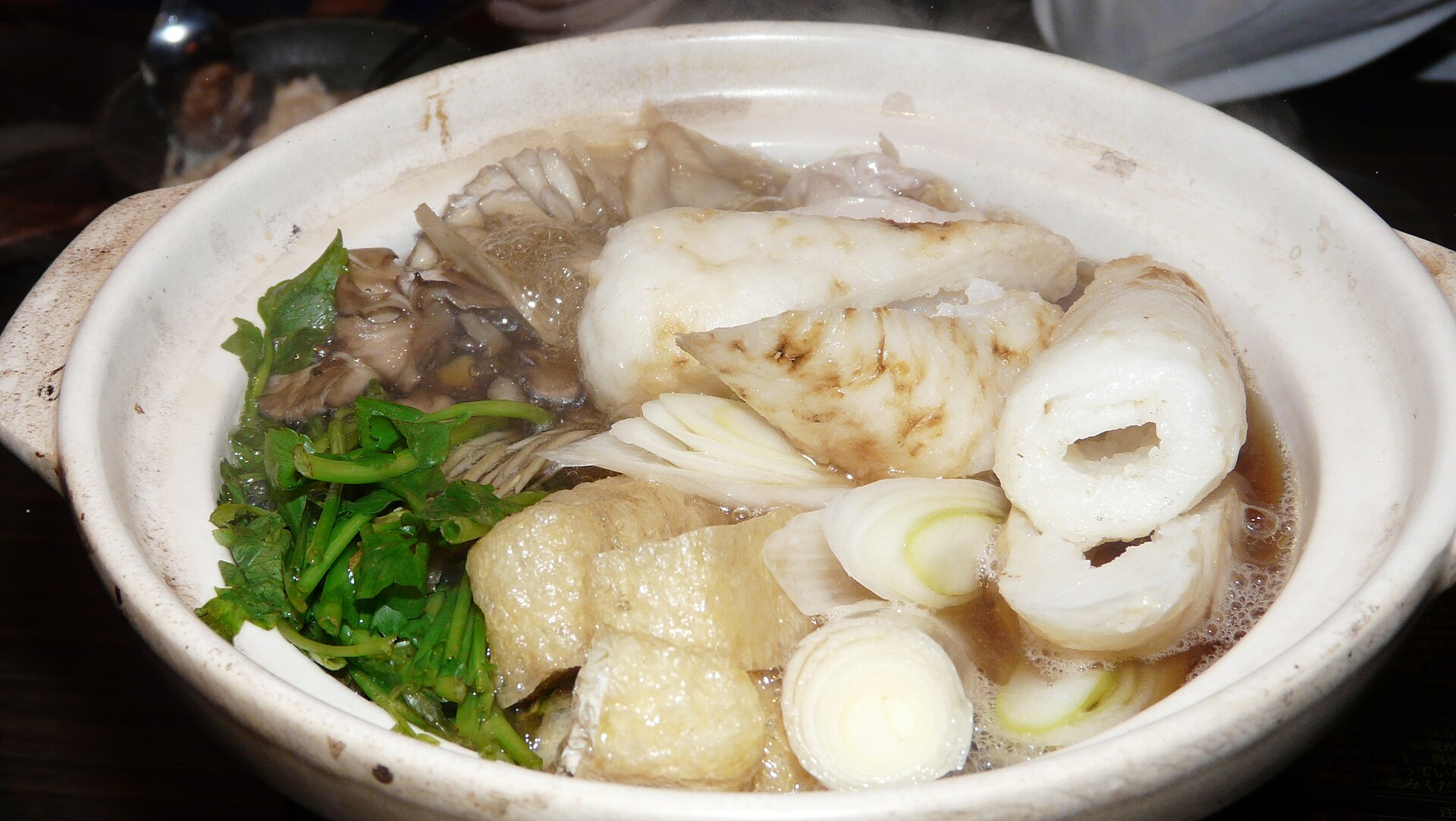
Pounded rice grilled on a cedar skewer, then cut into a chicken hotpot: northern Akita's harvest dish. The Akita Municipal Market, five minutes from the station, opens before dawn and sells every part of the pot in a single hall.
- FromAkita Station (Akita Shinkansen and JR lines)
- ~5 min5 min walk from Akita Station
- Kiritanpo
Where it is
34 more notes in Akita · open the map →What to look for — in walking order
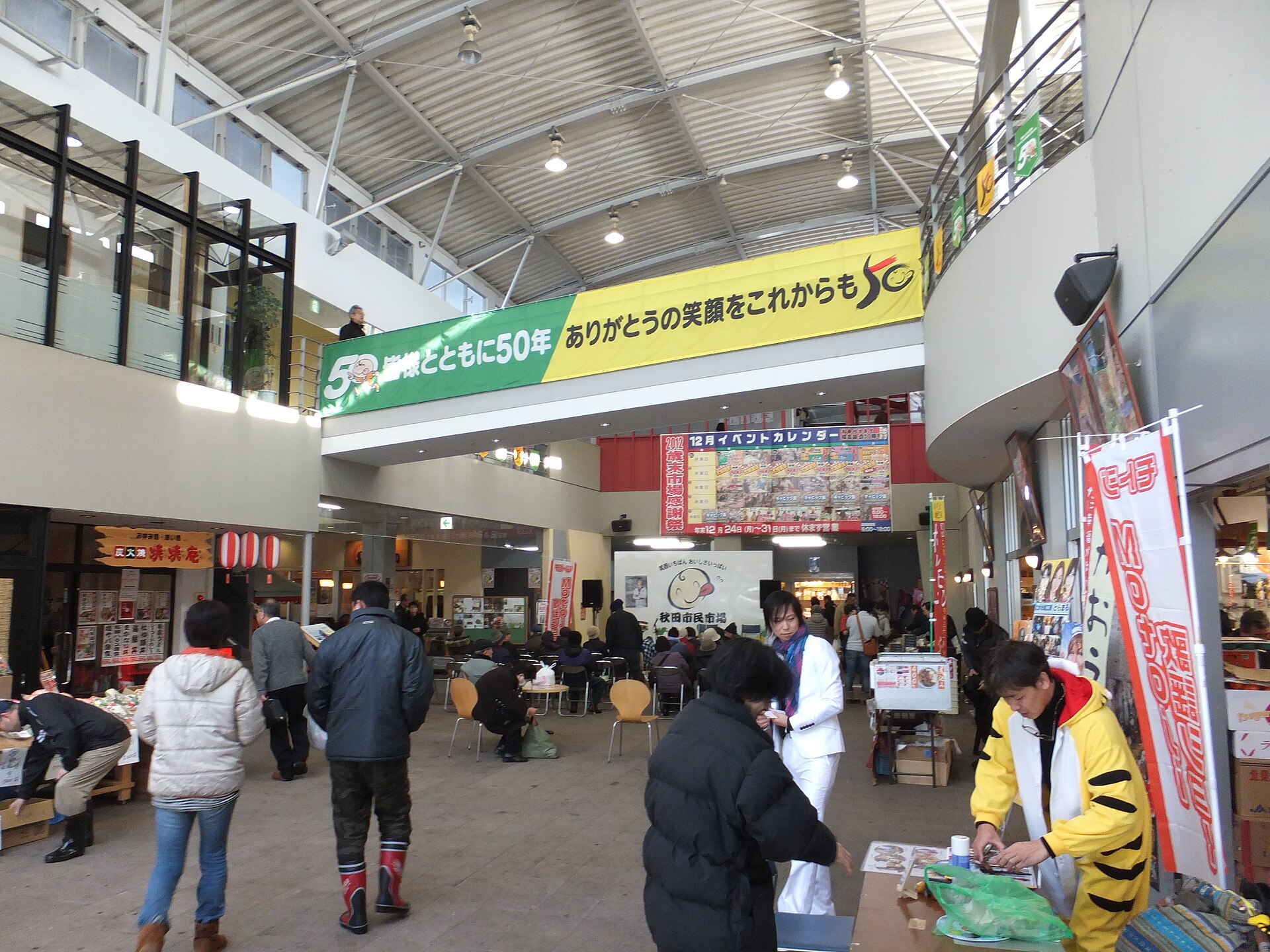
- The fish rowsnear-shore catch on ice, with salted salmon roe and cod roe sold by weight
- The chicken and tanpo countersHinai-jidori and packaged tanpo, the two parts of the pot hardest to find outside the prefecture
- Mountain vegetables and mushroomsseasonal sansai, mushrooms and local produce, the stock changing week by week
- Dry goods and local drinktsukudani, dried foods, sake from prefecture breweries and the usual Akita souvenirs
- Senshu Parkthe Kubota Castle grounds a short walk north, with a rebuilt corner turret and main gate
How to actually get there
- Tokyo → Akita Station (Akita Shinkansen Komachi, no change).
- Akita Station → Akita Municipal Market (walk about 5 minutes).
- Work the hall in order: fish, then chicken and tanpo, then mountain vegetables, then dry goods.
- Walk on to Senshu Park, the Kubota Castle site, northwest of the station.
- On foot from Akita Station
- Akita Station → the Akita Municipal Market, a walk of about 5 minutes. Akita Station is the terminus of the Akita Shinkansen from Tokyo and the meeting point of the JR Ou, Uetsu and Oga lines, so nearly everyone arrives at the same platform. No local transfer is needed and no fare beyond the one that brought you into the city.
- Back to Akita Station
- Walk the same 5 minutes back. Trains keep running into the evening long after the market has closed, so the hall's hours, not the timetable, decide when the visit ends. The shinkansen and the local lines share one concourse, so a bag of chilled shopping does not have to cross the city to reach a platform.
About the place
Kiritanpo begins as freshly cooked rice, pounded until it is half smooth, packed around a cedar skewer and turned over charcoal until the surface browns. Pulled off the stick and cut into pot lengths, it goes in with Hinai-jidori chicken, burdock, spring onion, maitake, seri and shirataki. The dish is tied to the rice harvest rather than to a travel season, and it belongs to the northern half of the prefecture. In Akita city the market is where the parts come together: the chicken, the mushrooms, the seri and the tanpo themselves are sold within a few steps of one another.
How to enjoy it
Come early. Stalls begin opening at 5:00 and the hall is at its fullest before the offices do, while several rows are packing up well before the 18:00 close. Autumn, when the new rice and the seri are in, is the season the dish is built around. If you have no pot to cook in, vacuum-packed tanpo travel well and are sold in the same aisles.
Background & history
The dish is traced to the mountains of northern Akita, to hunters and to the men who worked the charcoal kilns and the timber, who packed leftover rice onto sticks, grilled it at the fire and dropped it into a bird stew. The name comes from tanpo, the padded head of a practice spear, which rice wound onto a stick was thought to resemble; kiri is the cutting of it into pot lengths. Hinai-jidori, the chicken that makes the broth, had nearly vanished from tables before local effort brought it back under that name. The market itself opened in the post-war years and was later rebuilt on the same block.
Before you go
- Cash
- There is no admission. This is a working market rather than a paid attraction, and the stalls are small, so cash is the safe assumption. Salted roe and cod roe are sold by weight rather than in fixed packs, so the price depends on how much you ask for.
- Before you go
- Closed on Sundays, with occasional extra closures and extra opening days around the year end. Stalls set their own hours inside the posted 5:00 to 18:00, so the earliest rows may be shut while the hall is still open.
- Another way
- Coming from Odate or Kazuno in the north, where the dish began, the JR Ou Line runs down to Akita Station, so the market can be the last stop of the trip rather than the first.
- After you get off
- From Akita Station, walk about 5 minutes into the Nakadori district. The market is a low hall set back from the street, with its own entrance off the pavement.