Akita City · NakadoriNo.1252★★Open in map →
Akita Museum of Art
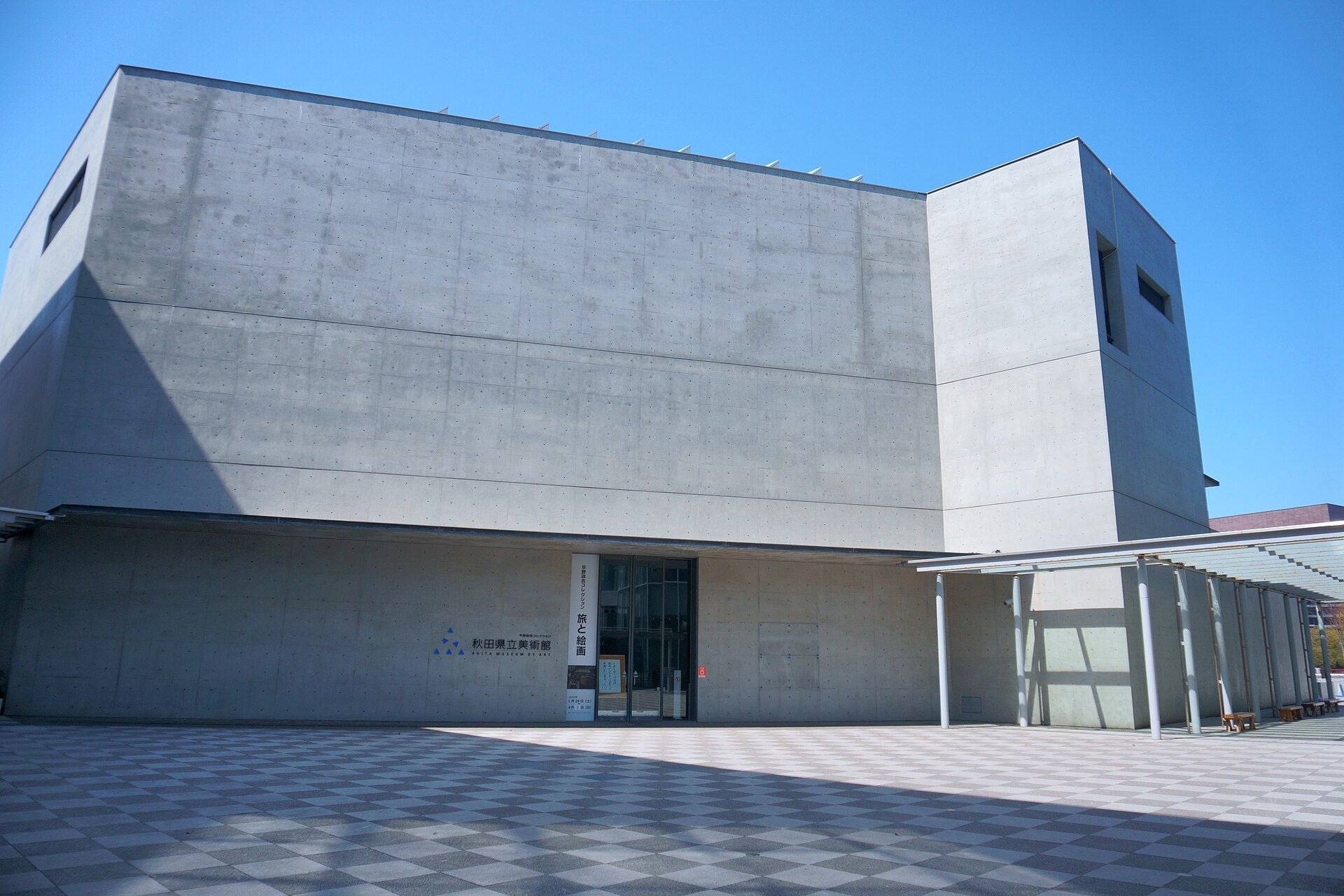
A concrete museum by Tadao Ando, a short walk from Akita Station, built to show Tsuguharu Foujita's mural Events of Akita. The painting sets the prefecture's festivals, trades and winter life side by side on one long canvas.
- FromAkita Station (Akita Shinkansen and JR lines)
- ~10 min on footWalk from Akita Station west exit
- Akita Museum of Art
The sweet spot
The mural is the museum's symbol, and the building was made for it, so none of this is hidden. The part worth adding is the Museum Lounge on the same floor. Its window frames a water garden, Senshu Park, and the roof of the old museum. That roof and its round window were designed on Foujita's advice, to let daylight fall on this very painting.
Where it is
34 more notes in Akita · open the map →What to look for — in walking order
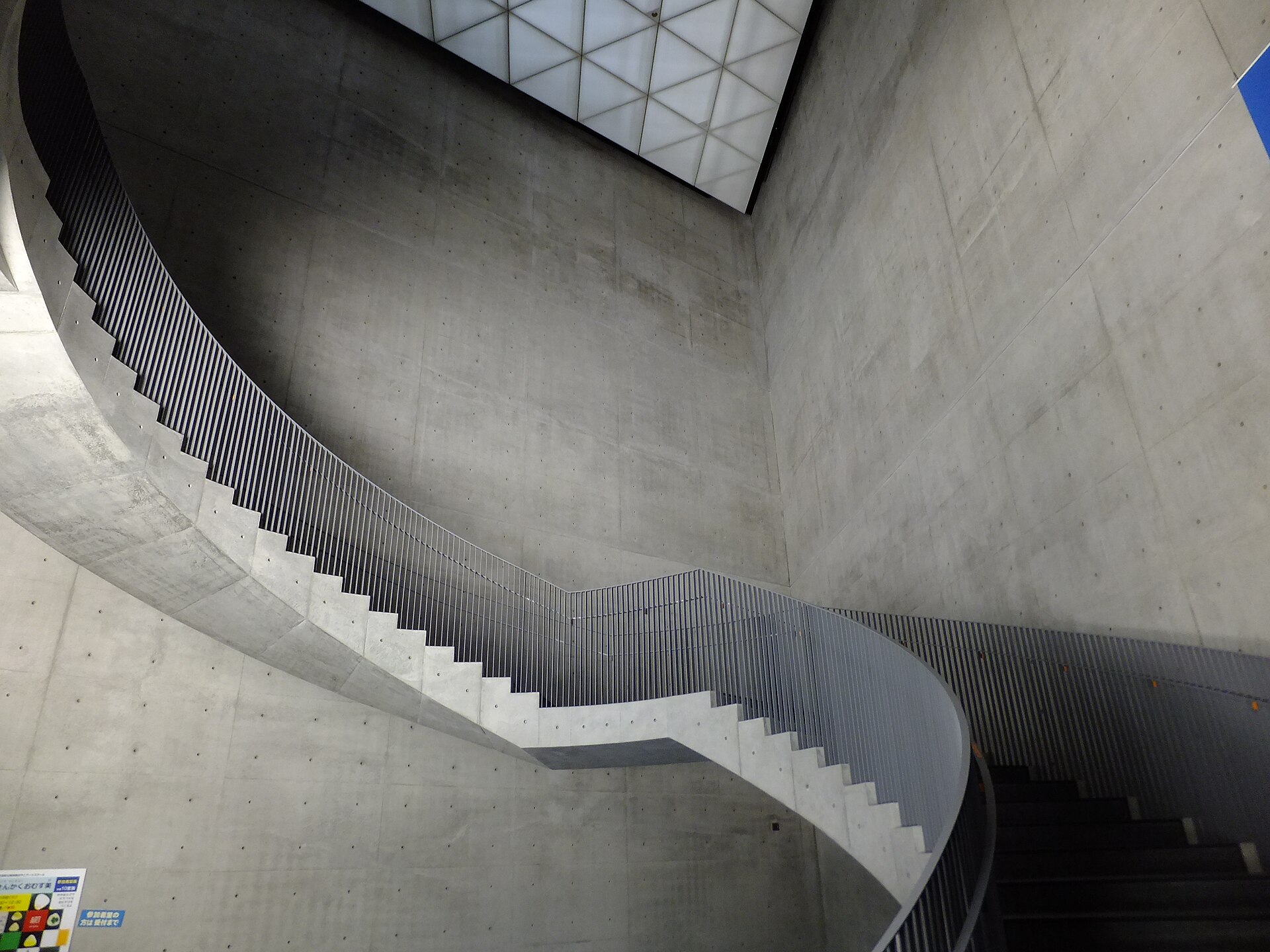
- Entrance hall staircasea spiral stair with no pillar or wall support, under a triangular skylight
- Mural gallerya two-storey gallery for Events of Akita, which measures 3.65 by 20.5 metres
- Museum Loungesofas facing the water garden, with coffee served in Kawatsura lacquer cups
- Akita City Culture Creation Centerthe former museum across the street, now a city arts centre
- Senshu Parkthe park across the street whose seasons fill the lounge window
How to actually get there
- Tokyo Station → Akita Station (Akita Shinkansen Komachi, no change).
- Akita Station west exit → Area Nakaichi (walk west ~10 min, about 700 m).
- Entrance hall → the mural gallery and Museum Lounge upstairs.
- Cross the street to the old museum and Senshu Park.
- On foot from Akita Station
- Akita Station is the terminus of the Akita Shinkansen Komachi, and the JR Ou, Uetsu and Oga lines meet here too. Leave by the west exit and walk straight west along Nakakoji street. The museum is about 700 metres away, roughly 10 minutes on foot.
- Back to Akita Station
- Retrace the walk east. The Shinkansen, local trains and the airport limousine bus all leave from Akita Station, so there is no second connection to find.
About the place
The museum stands in Area Nakaichi, west of Akita Station. Tadao Ando built it in bare concrete and shaped it around the triangle, answering the triangular roof of the older museum across the street. In the entrance hall, a spiral staircase climbs the atrium with no pillar or wall to hold it. The building exists for what waits on the second floor. There, a gallery two storeys high was made for one long canvas. Tsuguharu Foujita painted Events of Akita on the theme of the whole of Akita, and it runs from festival crowds to winter street life.
How to enjoy it
See the mural first, then take a sofa in the lounge, facing the water garden. Before leaving, the museum shop is worth a look for Akita crafts: cherry-bark ware, bentwood boxes and local lacquerware. Then cross the street to the old museum and walk on into Senshu Park.
Background & history
The mural began with a friendship. Masakichi Hirano, a wealthy Akita merchant and collector, met Foujita in Tokyo. After the sudden death of Foujita's wife Madeleine in 1936, the two agreed to build a museum in Akita. Foujita painted Events of Akita in 1937, in a storehouse Hirano lent him as a studio. War halted the museum plan. It finally opened in 1967 as the prefectural art museum in Senshu Park, showing Hirano's collection, and moved into this building in 2013. The old building reopened in 2021 as a city culture centre.
Before you go
- Cash
- Admission is charged. Special exhibitions have their own price, and visitors of high-school age and younger enter free.
- Before you go
- The museum closes on irregular days for maintenance and exhibition changes, and the mural can be off view at those times, so check the official site first. There is no museum car park; drivers use paid parking nearby. Opening hours are sometimes extended during the Kanto festival.
- Another way
- Flying in, take the limousine bus from Akita Airport to the west exit of Akita Station, about 40 minutes; IC cards are accepted. From there it is the same walk west.
- After you get off
- From the west exit, head straight west. The museum is inside Area Nakaichi, facing Senshu Park across the street.