Fukuoka · HakataNo.758★★★Open in map →
Kushida Shrine
— Hakata's tutelary shrine and its festival float
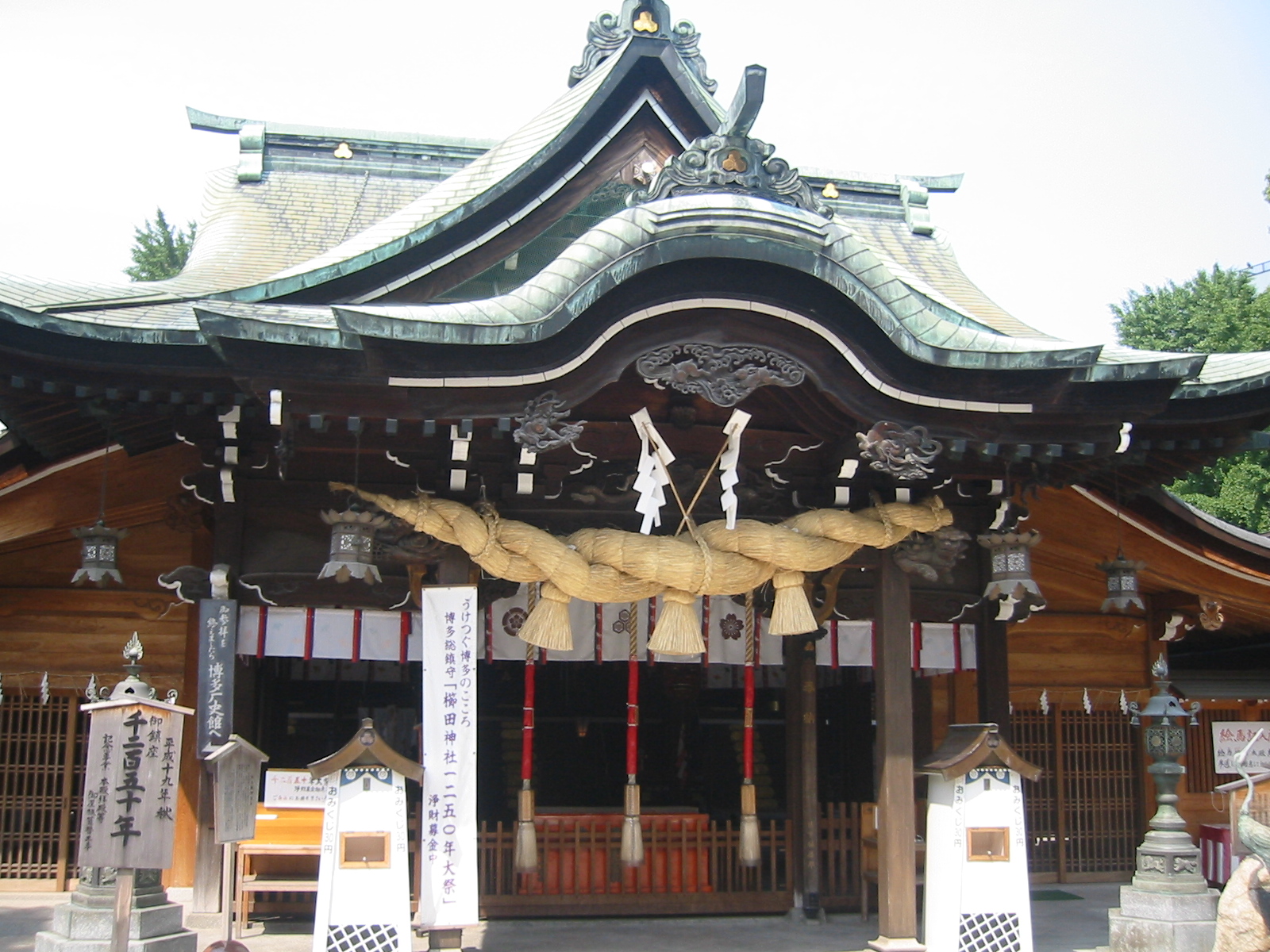
The tutelary shrine of Hakata, a few blocks in from the river in central Fukuoka. Its gates open at four in the morning, and a full-height festival float stands in the precinct for most of the year rather than only in July.
- FromHakata Station
- 6 min on foot from GionSubway Kuko Line
- Get off atGion Station (Subway Kuko Line)
- On foot
- Kushida Shrine
Where it is
28 more notes in Fukuoka · open the map →What to look for — in walking order
- The three-hall sanctuarythree deities enshrined side by side, with the Gion deity of the summer festival in the right hall
- The decorative floata festival float 13 metres tall, kept standing in the precinct for most of the year
- The Kushida ginkgothe shrine's sacred tree, said to be a thousand years old and listed as a prefectural natural monument
- The Mongol anchor stonesstone anchor shafts held to have come from the invasion fleet that reached Hakata Bay
- Hakata Historical Museumthe shrine's own museum, with festival screens and painted votive tablets
How to actually get there
- Hakata Station to Gion Station (Fukuoka City Subway, Kuko Line).
- Walk west through the Hakata blocks to the stone torii on the shrine's main approach.
- Enter the precinct and pay respects at the three-hall sanctuary.
- See the float, the ginkgo and the museum, then leave through the Kawabata arcade.
- Subway Kuko Line from Hakata Station
- From Hakata Station take the Fukuoka City Subway Kuko Line and get off at Gion. From the exit it is a short, flat walk west through the Hakata blocks to the shrine's main approach. Fares are payable by IC card or at the machine.
- Return from Gion or Nakasu-Kawabata
- Walk back to Gion for the Kuko Line toward Hakata Station, or carry on west through the Kawabata shopping arcade to Nakasu-Kawabata Station, which lies a similar distance from the precinct and puts you on the Hakozaki Line as well.
About the place
The shrine sits inside Hakata, the old merchant half of Fukuoka, a few blocks back from the Nakasu waterfront and one turn off the Kawabata shopping arcade. Three deities are enshrined in three halls under one roof, and the one on the right is the Gion deity who gives the summer festival its name. Because the festival floats are dedicated here, the precinct is not only a place of worship but the working ground of Hakata's calendar. Local people call it Okushida-san rather than by its full name. It is small enough to walk in a few minutes and dense enough to spend longer.
How to enjoy it
The gates open at four in the morning and close at ten at night, as confirmed at the time of writing, so the precinct can be walked long before Hakata is awake. The shrine office keeps ordinary daytime hours from nine, which splits the visit cleanly: come at first light for the quiet, and come back later if you want a seal or a charm.
Background & history
The shrine records its founding in 757, in the Nara period, when the deity Ohatanushi was enshrined on this ground. Hakata was wrecked in the wars of the sixteenth century, and the halls standing today were built when Toyotomi Hideyoshi rebuilt the merchant town and laid out the street grid that still shapes the district. Through all of it the July festival kept its dedication here, and the shrine kept its role as the guardian of the whole merchant quarter rather than of one street.
Before you go
- Cash
- The precinct itself is free to enter and there is no gate charge. The Hakata Historical Museum stands inside the grounds and is handled at its own counter. The shrine office deals with seals and charms during daytime hours only, so an early visit and a later errand can be two separate trips.
- Before you go
- The precinct is mostly open ground with little shelter in rain. The decorative float stands under its own roof, but it is taken down and rebuilt in June, so that one month is the gap in the year.
- Another way
- The Nanakuma subway line reaches the shrine more directly than the Kuko Line: Kushida-jinja-mae Station is about two minutes on foot from the precinct.
- After you get off
- From Gion Station, walk west through the Hakata blocks toward the river. A stone torii on the main approach marks the entrance, set back between the office buildings.