Fukuoka · Jotenji-doriNo.1159★★Open in map →
Hakata-ori Textile
— Fukuoka's silk obi weave
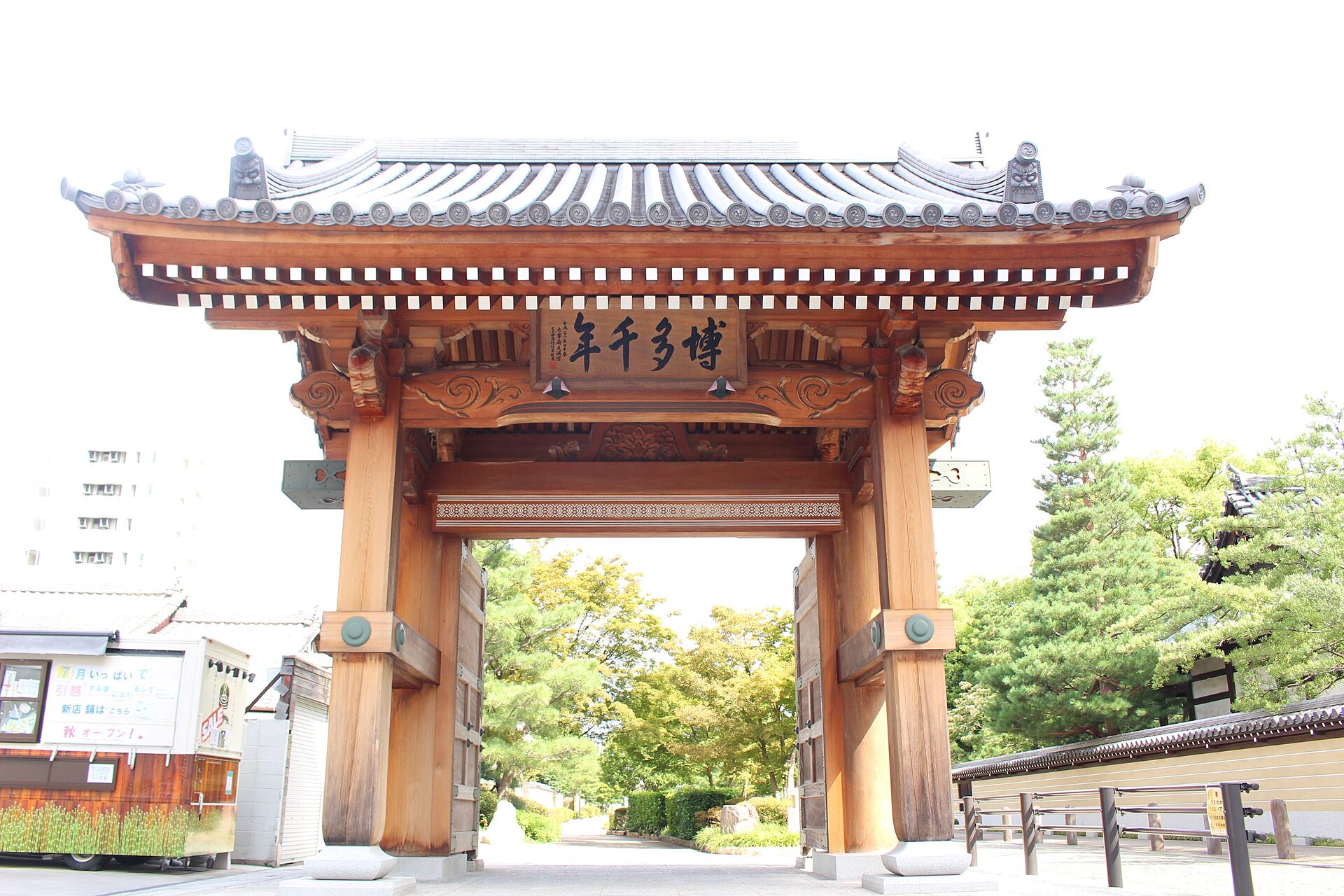
A short lane northwest of Hakata Station where Fukuoka's silk obi weave has an address. A city craft museum occupies a ground floor on one side of it, and at the far end a wooden gate carries the weave's own pattern in its carving.
- FromHakata Station (JR and Fukuoka City Subway)
- ~6 minOn foot from Hakata Station
- Hakata-ori Textile
The sweet spot
Hakata-ori is not a hidden craft. Its obi are sold across the city and the name is known nationally. What gets missed is the address. The museum that shows the cloth moved onto this lane only recently, so older guidebooks still send readers to its former home across town, and the founder's stone stands in a working temple precinct rather than behind glass.
Where it is
28 more notes in Fukuoka · open the map →What to look for — in walking order
- Hakata Traditional Craft and Design Museuma city museum on the ground floor of a building along the lane, where woven Hakata-ori is shown
- The nine Hakata craftsthe same rooms, holding Hakata dolls, bentwood ware, spinning tops, scissors and papier-mache
- Jotenji-dorithe short lane that links the museum to the temple, walkable end to end
- Hakata Sennen-no-mon Gatea wooden four-legged gate on the lane, its transom carved with the kenjo pattern
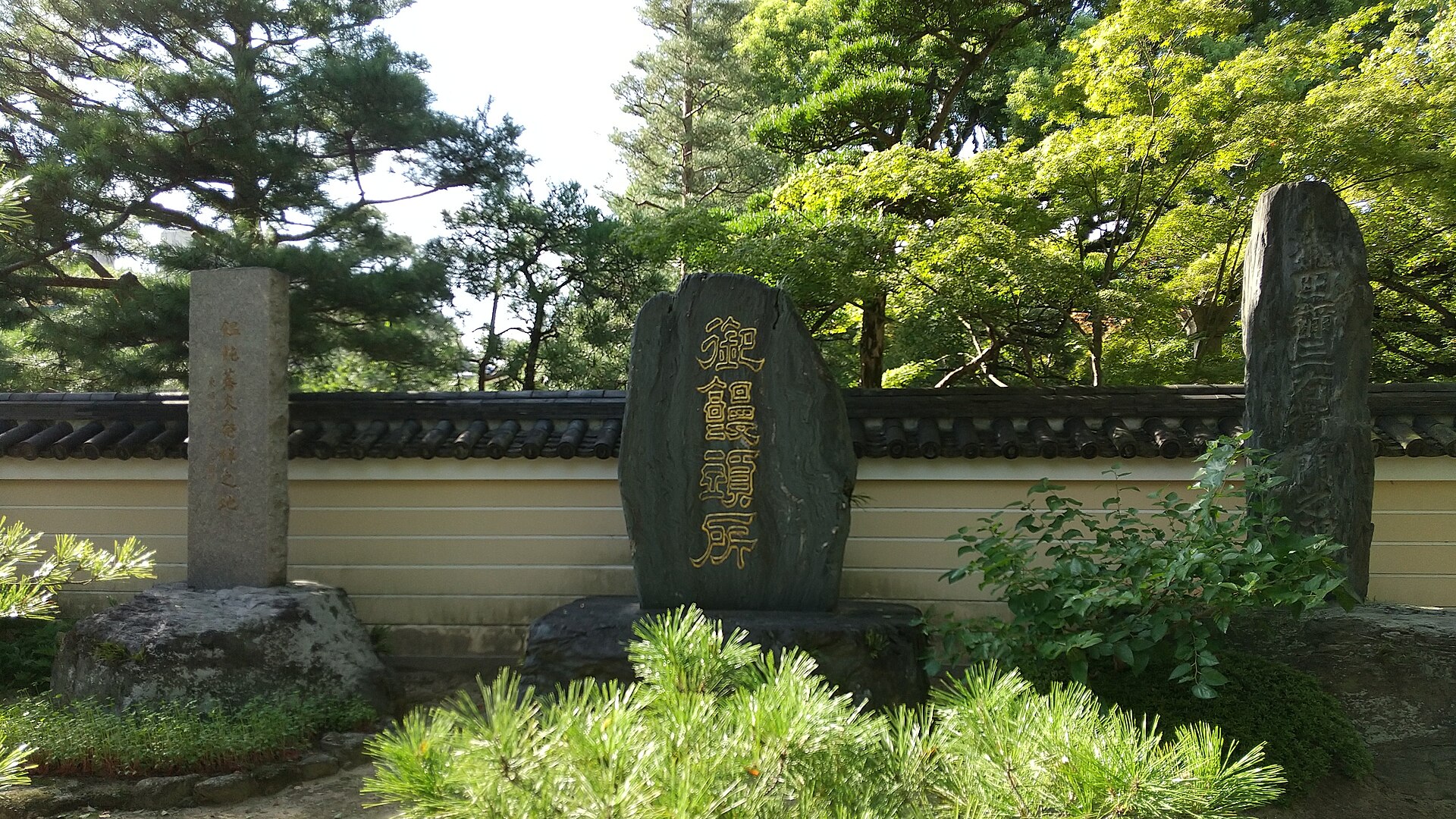
- Mitsuta Yazaemon monumenta stone in the temple precinct naming the merchant regarded as the founder of the weave
How to actually get there
- Hakata Station (Hakata exit) → Jotenji-dori (walk northwest, about 6 min).
- Hakata Traditional Craft and Design Museum: see the woven Hakata-ori and the other Hakata crafts.
- Continue northwest along the lane to Hakata Sennen-no-mon Gate and look up at the carved transom.
- Jotenji at the top of the lane, and the founder's stone in its precinct.
- A walk from Hakata Station
- Leave Hakata Station by the Hakata exit and walk northwest toward Jotenji-dori, about 6 minutes. There is no transfer and no extra fare on this leg. From the Hakata Bus Terminal the museum is listed as a 5 minute walk.
- Back to Hakata Station
- Retrace the lane southeast and you are at Hakata Station, where the shinkansen, JR local lines and both subway lines meet. The museum shuts in the evening, so see it before you head back rather than after. Because this leg is on foot, there is no last-train timing to plan around.
About the place
Hakata-ori is a silk weave from the Hakata district of Fukuoka City. Fine warp threads are set close together and a thicker weft is driven home with the reed, producing a firm cloth that holds a knot without slipping. That property made it the standard material for the obi sash, and the weave still carries the district's name. Jotenji-dori, the lane running northwest from Hakata Station, is where the craft sits in the city rather than in a shop window. The municipal craft museum occupies a ground floor along it, and the Zen temple at the far end keeps the memorial stone for the merchant credited with bringing the technique to Hakata.
How to enjoy it
Do it in one direction rather than doubling back: the museum first, then the lane, the gate and the temple precinct at the top. The museum keeps daytime hours and shuts earlier than the street does, so arriving in the first half of the afternoon lets both halves fit into a single walk.
Background & history
The weave is traced to 1241, when the Hakata merchant Mitsuta Yazaemon returned from Song China with the priest Enni and passed on the textile techniques he had learned. Enni later founded Jotenji, the temple at the head of this lane, and the memorial stone to Mitsuta stands in its precinct. Under the Kuroda lords of Fukuoka the cloth was chosen as tribute to the shogunate in Edo, which is why its signature design is still called kenjo, meaning presented. Hakata-ori was designated a national traditional craft in 1976, and the city's craft museum moved onto this lane in 2025.
Before you go
- Cash
- Admission to the craft museum was listed as free when checked. Hands-on classes are also held there, but check the official notice for their content and cost before you go. Seeing the monuments in the temple precinct costs nothing.
- Before you go
- The museum's listed closing day is Wednesday, moving to the next weekday when Wednesday is a public holiday, with a year-end break as well. Listed hours are 10:00 to 18:00, with last entry at 17:30. The museum is indoors, but the gate and the temple stones stand in the open.
- Another way
- By subway the museum is also about 6 minutes on foot from Gion Station on the Kuko Line. From Tenjin it is two stops to Gion, which puts you at the northwest end of the lane, so you see the temple and the gate first and finish at the museum.
- After you get off
- From the Hakata exit of Hakata Station, head northwest into Jotenji-dori. The museum occupies the ground floor of a building on the lane.