Akita · TamagawaNo.1075★★Open in map →
Tamagawa Onsen
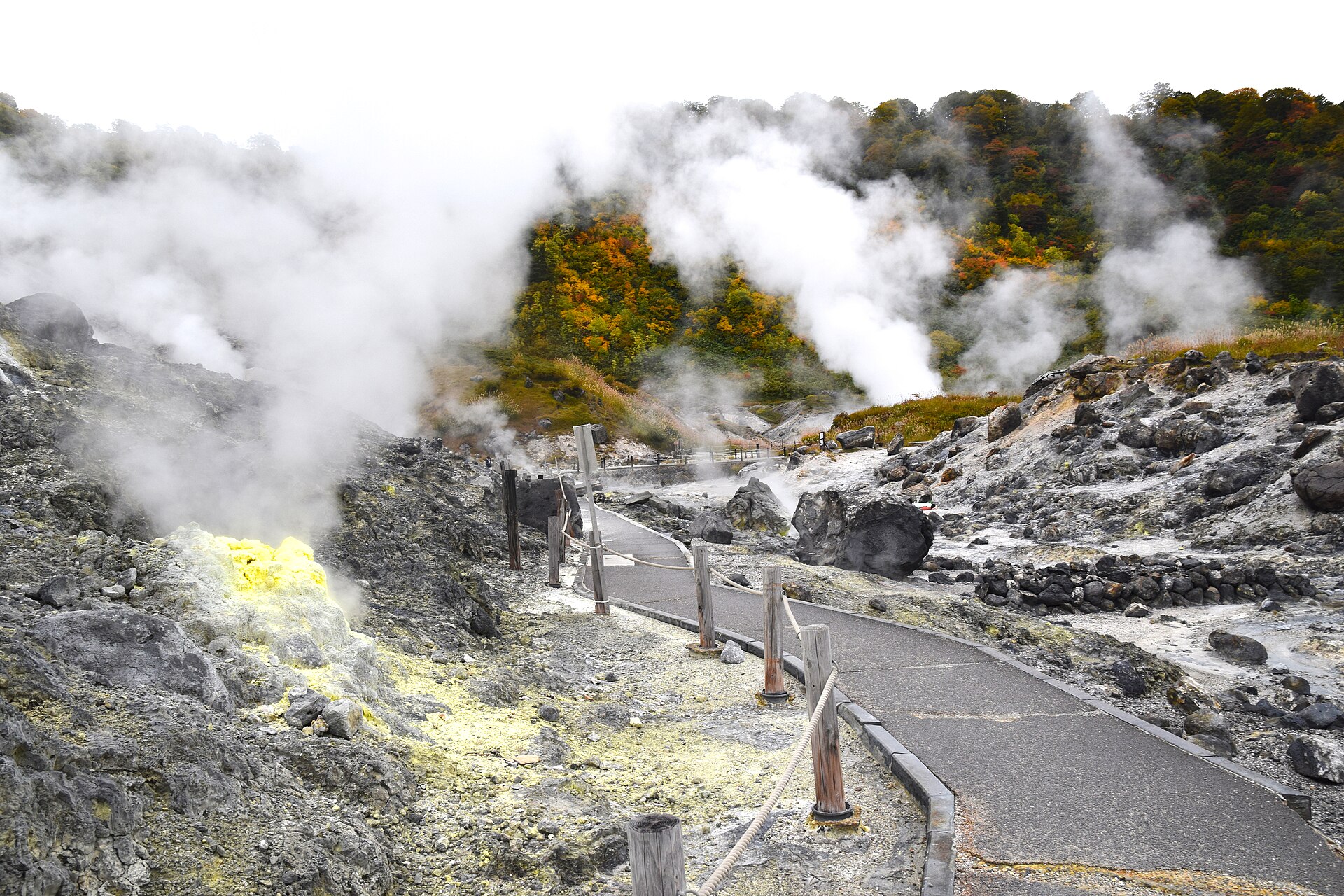
A geothermal hollow in northern Akita where one vent releases more hot water than any single spring in the country. A paved study trail loops out from the lodging past fumaroles, yellow sulfur crusts and the warm ground people lie down on.
- FromTazawako Station
- ~75 minSeasonal bus, ~75 min
- Get off atTamagawa Onsen bus stop (Ugo Kotsu Tamagawa Line)
- From there
- Tamagawa Onsen
The sweet spot
This is a named spring on every Akita list, so it is not a hidden place. What is easy to miss is that the walk is the point. The vents, the crusts and the warm ground are outside the bath, on a public trail, and anyone who arrives in daylight can walk it.
Where it is
34 more notes in Akita · open the map →What to look for — in walking order
- The toji lodging and bathsthe trailhead of the loop, and the reason people book weeks here rather than a night
- Obuke, the source ventthe single opening the whole valley works around, loud and never still
- Jigokudanithe steaming hollow the trail crosses, fumaroles opening beside the paving
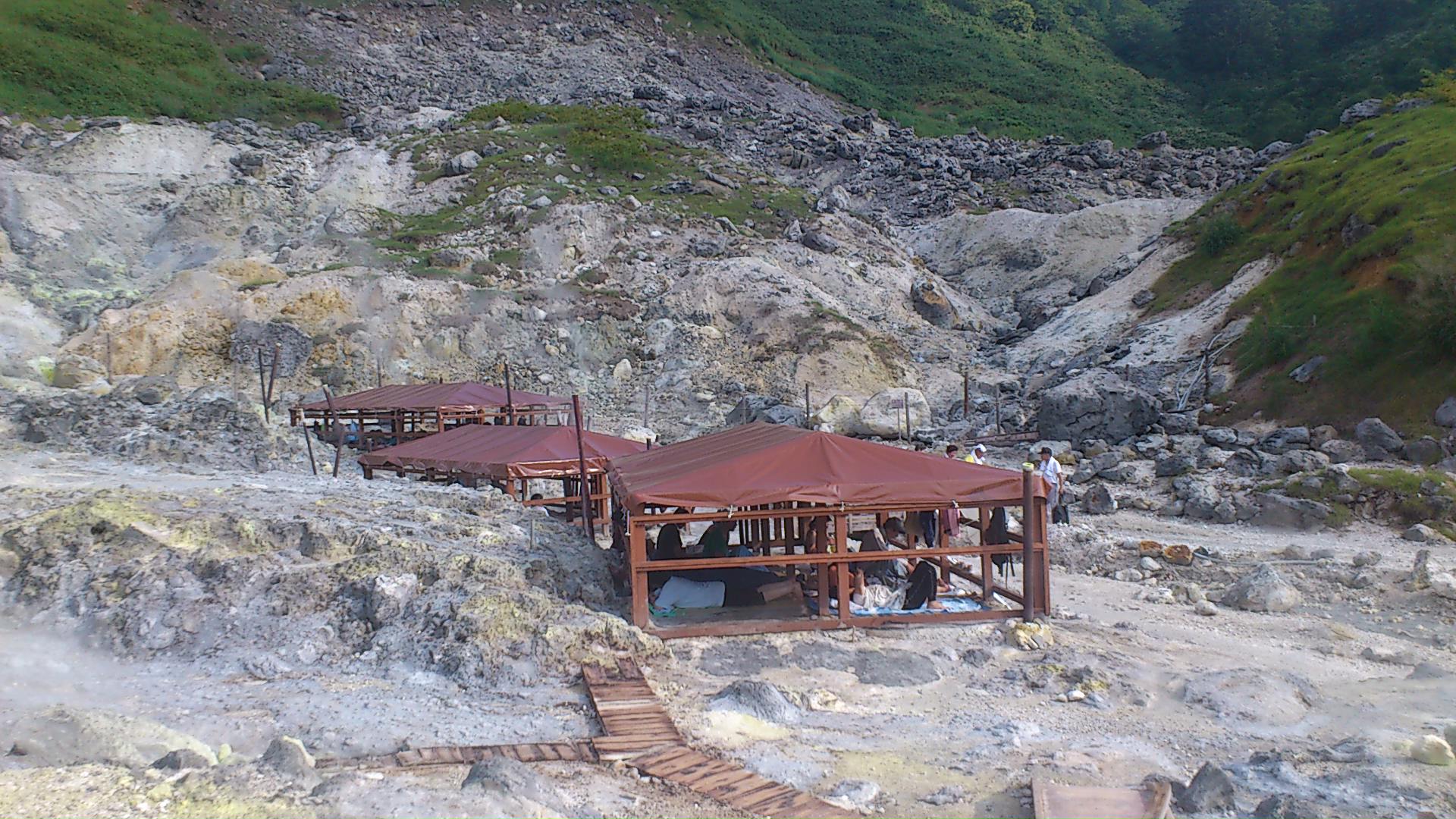
- The natural ganbanyoku groundbare rock warmed from below under low open shelters, where people lie down to heat through
- Shin-Tamagawa Onsena second bathhouse further along the road, drawing on the same source
How to actually get there
- Tokyo → Tazawako Station (Akita Shinkansen Komachi, no change).
- Tazawako Station → Tamagawa Onsen (Ugo Kotsu express Tamagawa Line, about 75 minutes, seasonal service).
- Walk the study trail from the lodging: Obuke first, then Jigokudani, then the warm ground.
- Return on the same line, or carry on along the road to Shin-Tamagawa Onsen.
- Ugo Kotsu bus from Tazawako Station
- Tazawako Station →(Ugo Kotsu express Tamagawa Line)→ Tamagawa Onsen, about 75 minutes. Tazawako is a stop on the Akita Shinkansen, so the change from train to bus happens in front of one station building. The line is seasonal rather than year-round, and its timetable moves with the road. Check the operator or the inn before fixing a date.
- Back down to Tazawako Station
- The same line returns to Tazawako Station, but with a handful of departures a day rather than a steady service. Decide the return before you start walking the field, because missing it means a taxi down a mountain road. In the months when the bus is not running, the return is by car.
About the place
Tamagawa Onsen lies in a hollow of Towada-Hachimantai National Park, in the mountains of Senboku, Akita. Its source vent is called Obuke. Water leaves it at 98 degrees Celsius, at roughly 9,000 litres a minute, which is more than any other single vent in Japan. The water is hydrochloric in character and is described as the most acidic in the country. From the lodging a paved study trail runs out among the vents and the sulfur crusts, with rope handrails along the edge. The inn is a toji house, built for guests who stay for weeks of bathing rather than for a night.
How to enjoy it
The study trail is a loop of about thirty minutes, so it sits either side of a bath rather than filling a day. Steam reads strongest against cold air, and autumn colour arrives early at this altitude. Lying on the warm ground is done on a mat rather than on bare rock, so ask at the facility how that is handled before you count on it.
Background & history
What made this valley known beyond Akita is a mineral. Where the hot water meets the stream, thick crusts build up that are a lead-bearing form of barite, and they occur in only two places on earth — here, and Beitou in Taiwan, which gave the mineral its name, hokutolite. The crusts here were designated a natural monument in 1922 and later raised to the top rank, special natural monument. Collecting them is prohibited, so what forms on the ground stays there.
Before you go
- Cash
- The study trail itself has no gate. Bathing and the indoor facilities are charged separately and the rates are set by the inn, so read the official site for the current figures. This is a mountain site well away from a town, so do not assume every counter takes cards.
- Before you go
- The main inn closes over winter and opens for the warm half of the year, so a midwinter visit here is not possible. National Route 341 into the valley is also subject to seasonal and night-time restriction. Beside the trail the ground is hot and the vents give off gas, so the paving and the rope are not decoration.
- Another way
- From the Iwate side the approach is by car from Morioka, over the Hachimantai roads. That crossing runs high, so the months it is open are fewer than the calendar year.
- After you get off
- The bus sets down at the onsen itself rather than in a village. From the stop the lodging is in front of you, and the study trail begins at its edge.