North Oita · Beppu KannawaNo.854★★★Open in map →
Hells of Beppu
— Beppu's boiling springs kept as gardens to look at
Beppu's Kannawa slope is full of springs that run far too hot to bathe in. Instead the town fenced them, planted them and sells tickets to look: cobalt water, iron-red clay, grey mud domes and a geyser under a stone roof.
- FromBeppu Station
- ~20 minKamenoi Bus, several routes
- Get off atUmi Jigoku-mae (Kamenoi Bus)
- On foot
- Hells of Beppu
Where it is
12 more notes in Oita · open the map →What to look for — in walking order
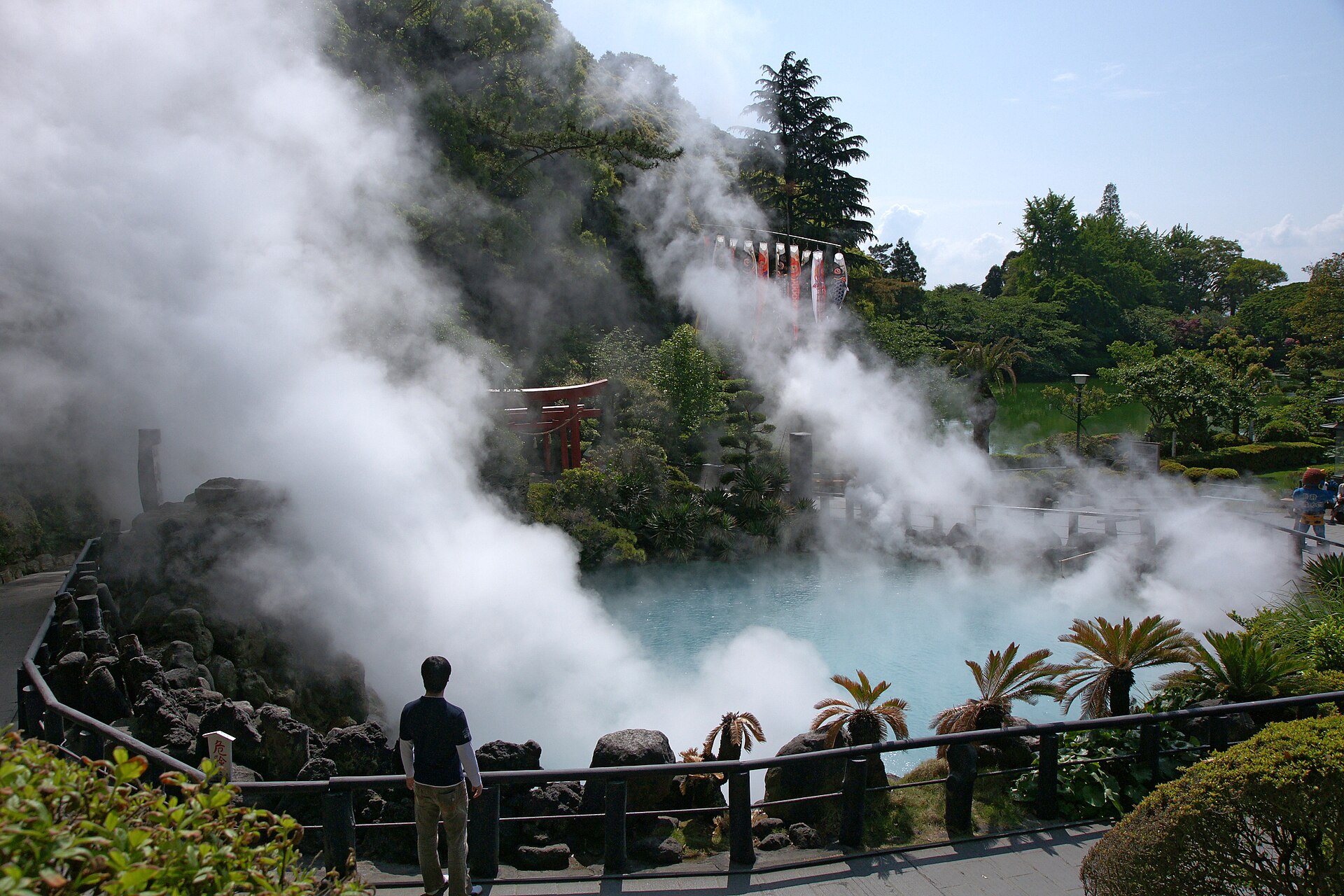
- Umi Jigokua cobalt-blue pond held at about 98°C, and the widest of the group
- Oniishibozu Jigokugrey mud swelling and bursting in domes named after shaven heads
- Kamado Jigokuone garden holding a run of small vents, each numbered like a street address
- Shiraike Jigokuclear water at about 95°C that turns milky white as it cools in the pond
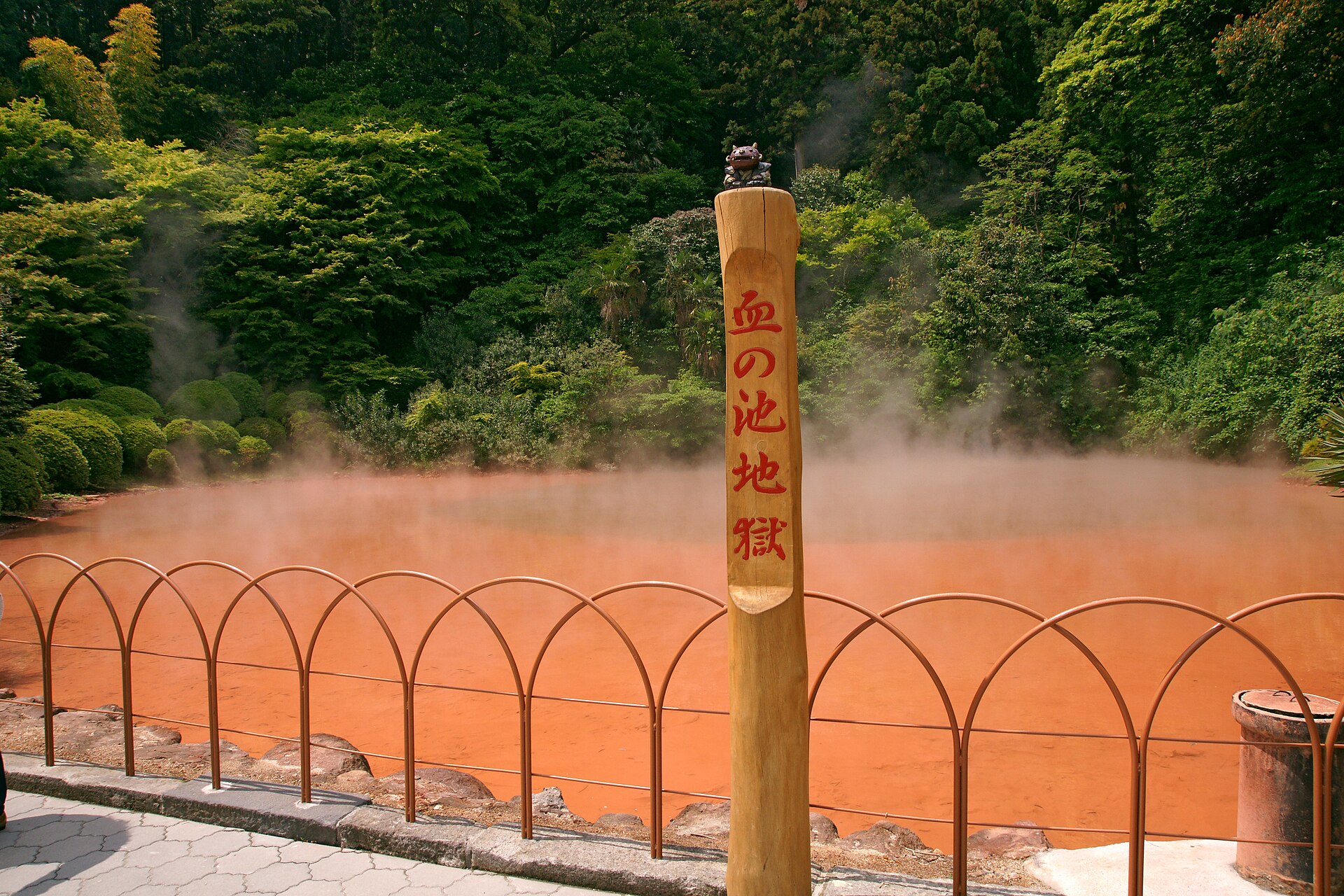
- Chinoike Jigokuiron-red clay at about 78°C, a bus ride down the hill from the Kannawa cluster
How to actually get there
- Beppu Station west exit to Kannawa on Kamenoi Bus (about 20 minutes).
- Buy the combination ticket at Umi Jigoku and walk the Kannawa gates in order.
- Take the bus down to Chinoike Jigoku-mae for the far pair.
- Walk between Chinoike and Tatsumaki, then pick up the return bus at the same stop.
- Kamenoi Bus from Beppu Station
- Beppu Station west exit to Kannawa, about 20 minutes on Kamenoi Bus. Several numbered routes run the same road, so you rarely wait long. Get off at Umi Jigoku-mae, or at Kannawa and walk back a minute.
- Back from Umi Jigoku-mae
- Buses for Beppu Station leave from the stop on the far side of the road. Services thin out once the hells close, so read the posted timetable when you arrive rather than after the last gate.
About the place
Jigoku means hell, and in Beppu it is the local word for a spring that vents rather than fills a bath. Seven of them are run together as one ticketed circuit by an association of owners. Five sit close enough in Kannawa that you walk between them, past ticket huts, souvenir counters and foot baths. The other two lie further down the hill toward Kamegawa and need a bus or a car. Each has been landscaped in its own way, one around a pond, one around a crocodile pen, one around a greenhouse of tropical fish, so the visit is as much about how a hot spring gets presented as about the water itself.
How to enjoy it
Go in the first part of the morning. The gates open well before the coach schedules bite, and the steam reads thickest while the air is still cool. Do the Kannawa gates on foot as one loop, then take the bus down to Chinoike and Tatsumaki rather than doubling back, and bring a towel for the foot baths that come with the ticket.
Background & history
An old provincial record of Bungo already describes this ground as steaming and dangerous, and the word jigoku stuck to it. For centuries it was avoided rather than visited. Umi Jigoku is said to have formed about 1200 years ago in an eruption of Mount Tsurumi, and paid viewing began only once owners fenced the pools and laid gardens around them. In 2009 four of the springs, Umi, Chinoike, Tatsumaki and Shiraike, were designated together as a national Place of Scenic Beauty for the range of colour and form in their water.
Before you go
- Cash
- One combination ticket covers every hell and costs 2,400 yen for adults and 1,200 yen for primary and junior high school children, bought at whichever gate you reach first. Buses are extra.
- Before you go
- Wind decides how much steam crosses the paths, and the ground is open, so cold days show the vents best but bite hardest. The geyser at Tatsumaki runs on its own interval rather than the clock.
- Another way
- From Kamegawa Station on the JR Nippo Line a Kamenoi bus runs to Chinoike Jigoku-mae, which lets you start at the far pair and finish with the Kannawa gates.
- After you get off
- From Umi Jigoku-mae the entrance is a minute away on the uphill side of the road, and the remaining Kannawa gates follow the same road east.