Oita East · SaganosekiNo.449★★Open in map →
Seki Aji and Seki Saba
— Oita's line-caught brand mackerel
A shop and dining hall on the Saganoseki coast, where the brand mackerel and horse mackerel of the strait are sold dried and served over rice. There is a bath behind the main building and the sea outside the upstairs windows.
- FromOita Station
- ~1 hrJR Nippo Line, then taxi
- Get off atKozaki Station (JR Nippo Main Line)
- From there
- Seki Aji and Seki Saba
The sweet spot
These are famous fish with a famous price, so there is nothing obscure about them. What is easy to miss is that the coast they come from has a building open to anyone. Most visitors meet seki saba on a plate in a city restaurant and never see the shoreline it belongs to.
Where it is
12 more notes in Oita · open the map →What to look for — in walking order
- The ground-floor shopone-night-dried seki saba, local tofu from Kisagami and goat's-milk ice cream
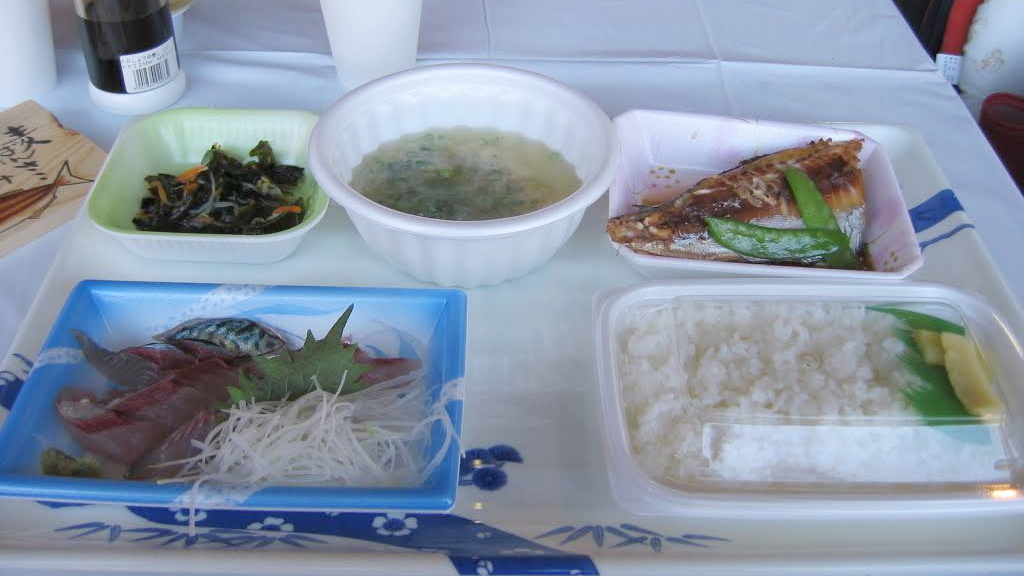
- The upstairs dining roomsea-facing tables and the house kaisen-don of local fish
- The bath housean onsen bath on the same site, with a private two-person tub
- Shirakiana separate café and shop building on the grounds, open on its own schedule
- The RV parkovernight vehicle bays at the back, checked in from mid-afternoon
How to actually get there
- Oita Station to Kozaki Station on the JR Nippo Main Line.
- From Kozaki, take a taxi east along the coast road to Shiraki, or drive.
- Start in the ground-floor shop, then go up to the sea-facing dining room.
- Finish at the bath house behind the main building before heading back.
- Oita Station to Kozaki, then by road
- Take the JR Nippo Main Line south-east from Oita Station to Kozaki, calling at Tsurusaki and Sakanoichi on the way. Kozaki is the last station before the Saganoseki peninsula proper. From there the coast road runs east to Shiraki. Allow about an hour door to door and settle the road leg before you travel.
- Return from Kozaki
- Come back to Kozaki Station by the same road and take the Nippo Main Line north-west toward Oita. Local services on this stretch thin out after dark, so decide the return before evening. If you have lost track of time in the bath, the last train is the constraint, not the building.
About the place
Seki aji and seki saba are not species but a place. The tidal race between Kyushu and Shikoku runs hard past the Saganoseki peninsula, and horse mackerel and mackerel that hold in that current build firm, lean flesh. Only fish taken there on a single hand line, with a lure or a lugworm, and landed at Saganoseki may be sold under the names. Buyers judge them by tsuragai, reading size and condition from the swimming fish at the surface without lifting them out of the water. The catch is then bled and iced whole. Amabe no Sato, on the peninsula's coast at Shiraki, is where it reaches anyone who turns up.
How to enjoy it
The shop keeps daytime hours, the dining room stays open into the evening and the bath runs latest of the three, so a late lunch upstairs followed by a soak is the natural order. Oita Prefecture's own produce page puts the peak of the season in late February, when landings are heaviest. If the fresh fish will not travel with you, the one-night-dried seki saba downstairs will.
Background & history
The names began as trade shorthand in the Saganoseki fishing town, where boats worked the strait one line at a time long before anyone marketed them. Reputation was built on handling rather than volume: hand line, no crush of a net, no weighing out of the water. Legal protection followed the practice rather than creating it. The pair were registered as a regional collective trademark in October 2006, which fixed in law the rule the port had kept by custom, that only Saganoseki landings may use the names.
Before you go
- Cash
- Walking into the shop and the dining room costs nothing; the bath and the meals are paid separately at their own counters. Bring cash as well as a card, since this is a rural coastal facility and acceptance is not uniform across every counter.
- Before you go
- The site runs year round, but the separate Shirakian building closes on irregular days. Winds off the water are strong on this coast in winter. The fish is a seasonal catch, so what is on the counter changes with the landings rather than with a menu.
- Another way
- By car, the run from the Miyagawachi interchange is about twenty-five minutes on the prefectural tourism board's reckoning. A rental car out of Oita city makes sense here, because the peninsula's other sights are spread thin along the coast.
- After you get off
- Kozaki Station sits about seven kilometres west of the site along the coast road, which is not a walk. Take a taxi from the station, or drive. Buses bound for Saganoseki from Oita city also run this shoreline.