Shizuoka · FujinomiyaNo.743★★★Open in map →
Fujisan Hongu Sengen Taisha
— Head shrine of the Sengen shrines of Mount Fuji
The head shrine of the Sengen shrines stands where a Fuji lava flow ends. Its pond, Wakutama-ike, is the mountain's own water surfacing between the lava layers, and the precinct is free to enter with no closing day.
- FromFuji Station
- ~20 minJR Minobu Line, ~20 min
- Get off atFujinomiya Station (JR Minobu Line)
- On foot
- Fujisan Hongu Sengen Taisha
Where it is
16 more notes in Shizuoka · open the map →What to look for — in walking order
- Great torii and approachthe wide entrance from the town side, with Mount Fuji standing behind it on a clear day
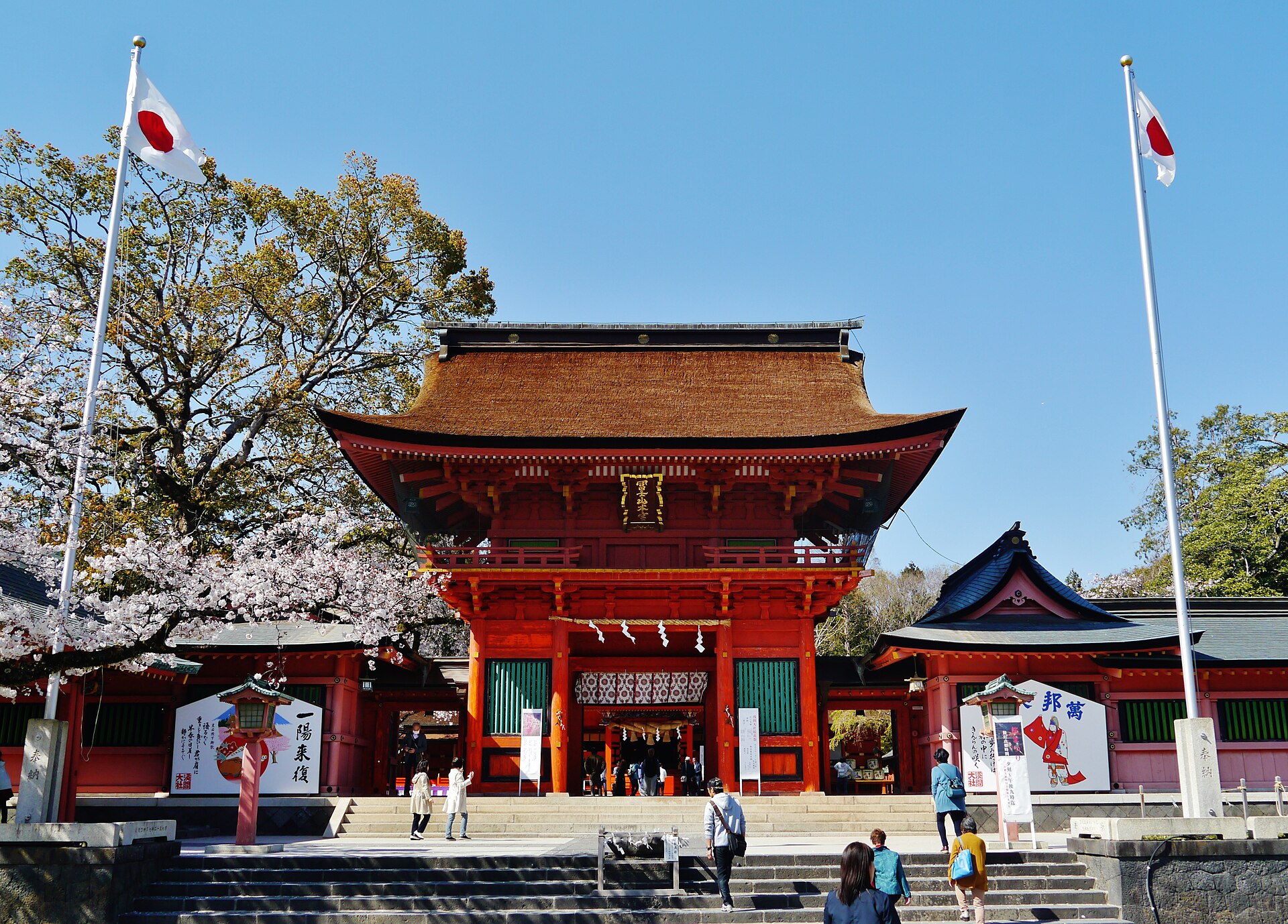
- Romon gatethe two-storey gate, guardian figures in its side bays and the halberd stone at the foot of its steps
- Hondenthe main hall, its upper storey visible over the openwork fence that rings it
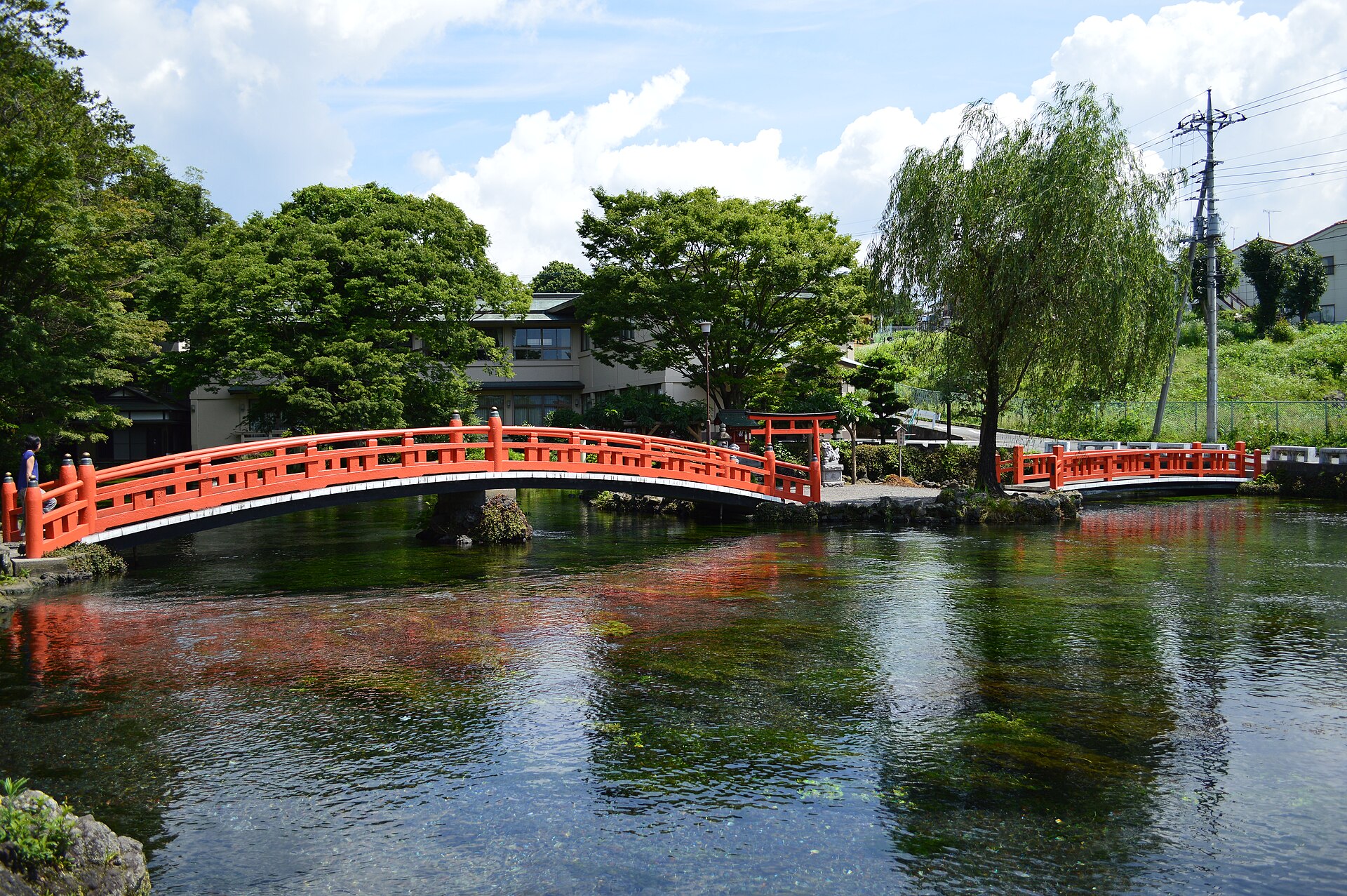
- Wakutama-ikethe spring-fed pond east of the hall, a Special Natural Monument, divided into an upper and a lower basin
- Misogi-jo washing placethe point between the two basins where climbers purified themselves before going up
How to actually get there
- Tokyo or Nagoya → Shin-Fuji (Tokaido Shinkansen), then bus across to Fuji Station.
- Fuji → Fujinomiya Station (JR Minobu Line).
- Walk north from the station to the great torii and in through the two-storey gate.
- Take the main hall first, then cross east to Wakutama-ike and the washing place.
- Minobu Line from Fuji
- Fuji Station on the Tokaido Line is the interchange. The JR Minobu Line runs north from there to Fujinomiya in about twenty minutes. From Tokyo the usual chain is the Shinkansen to Shin-Fuji, a bus across to Fuji Station, then the Minobu Line.
- Back to Fuji Station
- The Minobu Line returns the same way to Fuji for the Tokaido Line, and by bus for Shin-Fuji. It is a branch rather than a trunk route, so look at the departures for the way back before you settle into the precinct.
About the place
Sengen shrines worship the volcano itself, and were founded to quiet its eruptions. This one is reckoned the earliest of them and the head of the rest. It stands at the end of a Fuji lava flow, which is why it is here rather than anywhere else: rain and snow that fell on the mountain travel underground between the lava layers and surface at this point as Wakutama-ike, the pond inside the precinct. The city's account is that the shrine was placed beside the water because water was what settled the fire. As pilgrimage grew, this became the starting point of the Omiya-Murayama ascent, and the shrine still holds the ground above the eighth station.
How to enjoy it
The city publishes the gate: five in the morning to eight at night from April to September, half past five to half past seven in March and October, six to seven from November to February. The station is close enough that the first hour after opening is genuinely reachable, and there is no ticket to buy on the way in. Take the hall first and the pond second — the water is the part that rewards standing still.
Background & history
A shrine record puts the move to this site in 806, from older ground at Yamamiya Sengen Shrine further up the slope. What stands here now is Tokugawa work. Ieyasu endowed the present buildings, and the main hall took the two-storey form called Sengen-zukuri, a hipped roof below carrying a three-bay nagare roof above. The gate went up in 1614, with guardian figures seated in its side bays and a rough stone at the foot of its steps that once held the sacred halberd at rest. The main hall is an Important Cultural Property.
Before you go
- Cash
- Entry is free and the city states that the shrine is open every day of the year. Nothing inside the precinct is ticketed, and there is no gate to pay at.
- Before you go
- There is no closing day, but the gate hours move with the season and everything worth seeing is outdoors. The shrine keeps a full festival calendar, and on those days the precinct and the streets around it fill, so a plain weekday morning is the easier visit.
- Another way
- A city bus leaves stand 4 at Fujinomiya Station on the Awakura-Manno line and sets down at a stop named for the pond, Wakutama-no-ike, for 150 yen. By car the city puts the shrine three minutes from the station and about ten from the Shin-Fuji interchange.
- After you get off
- From Fujinomiya Station the shrine is a ten-minute walk north and slightly uphill; the city gives the same figure. The great torii on the approach is the marker. The pond is not on the way in — it lies east of the main hall, past the gate.