East Nagano · UedaNo.1238★★Open in map →
Ueda Castle Ruins Park
— The Sanada clan's stronghold in eastern Nagano
A city park laid out on the ruins of the castle the Sanada family raised at the centre of the Ueda basin. Three turrets, a reconstructed gate and the lines of the old moats survive, and the park itself keeps no opening hours.
- FromUeda Station (Hokuriku Shinkansen / Shinano Railway)
- ~12 minOn foot from Ueda Station
- Ueda Castle Ruins Park
The sweet spot
Ueda Castle is a well known name, carried by the Sanada story and by the spring cherry festival, so it is not a quiet corner. What most visitors miss is the lower half. Almost everyone enters through the reconstructed gate on the station side, crosses the honmaru and leaves the same way, without going down to Amagafuchi, where the stonework and the cliff together explain why a castle was put here at all.
Where it is
27 more notes in Nagano · open the map →What to look for — in walking order
- Keyaki-namiki walkwaya sunken zelkova-lined path in the bed of the filled-in ninomaru moat, which carried a railway line in the early Showa years
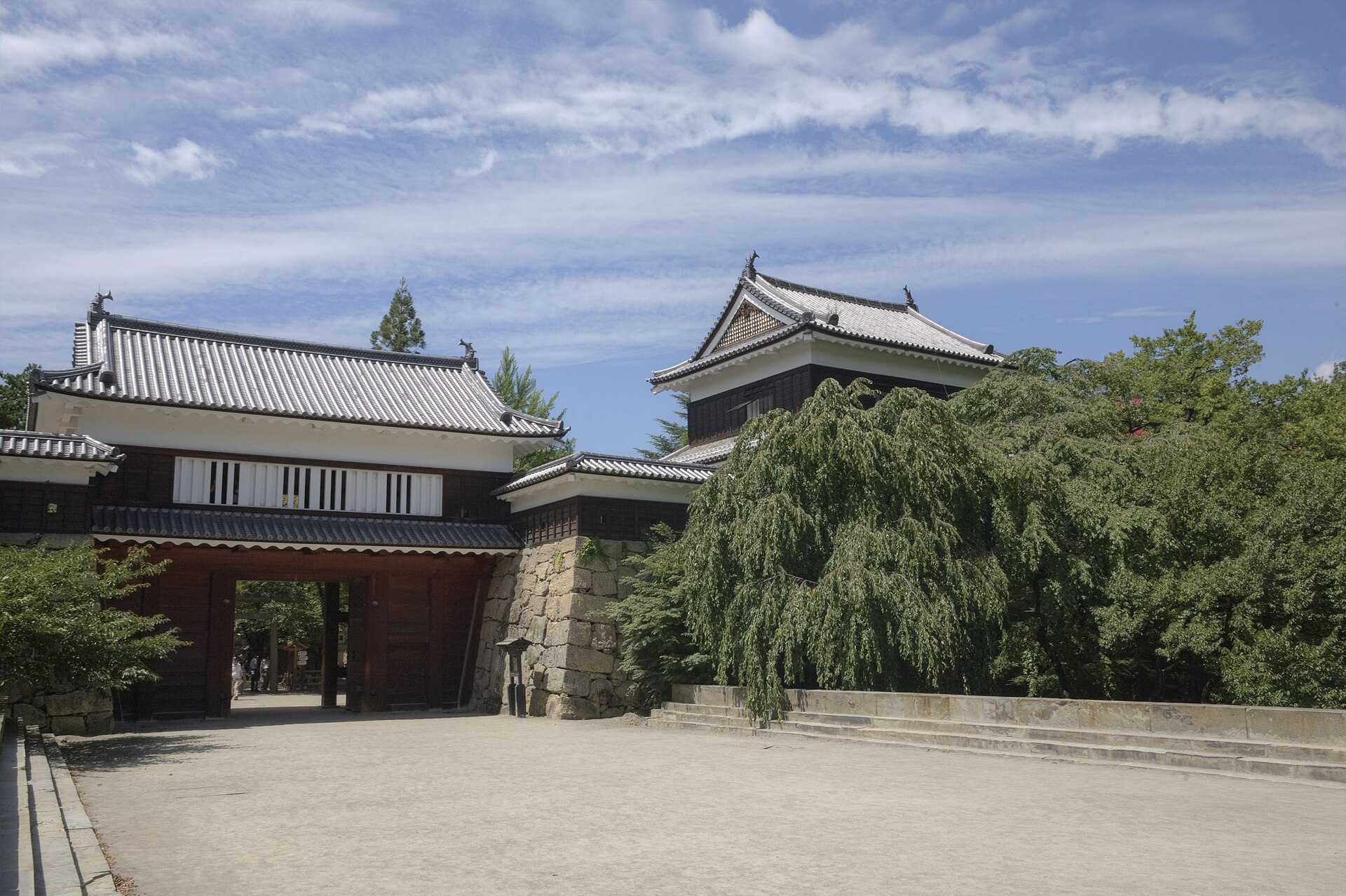
- Higashi-Koguchi Yaguramonthe timber main gate on the east side of the honmaru, rebuilt from old photographs and dig records
- South and North Turretsthe pair flanking the gate, returned to their stone bases after years away from the site
- Sanada Wella broad well inside the honmaru, attached to a long-standing legend of an escape tunnel
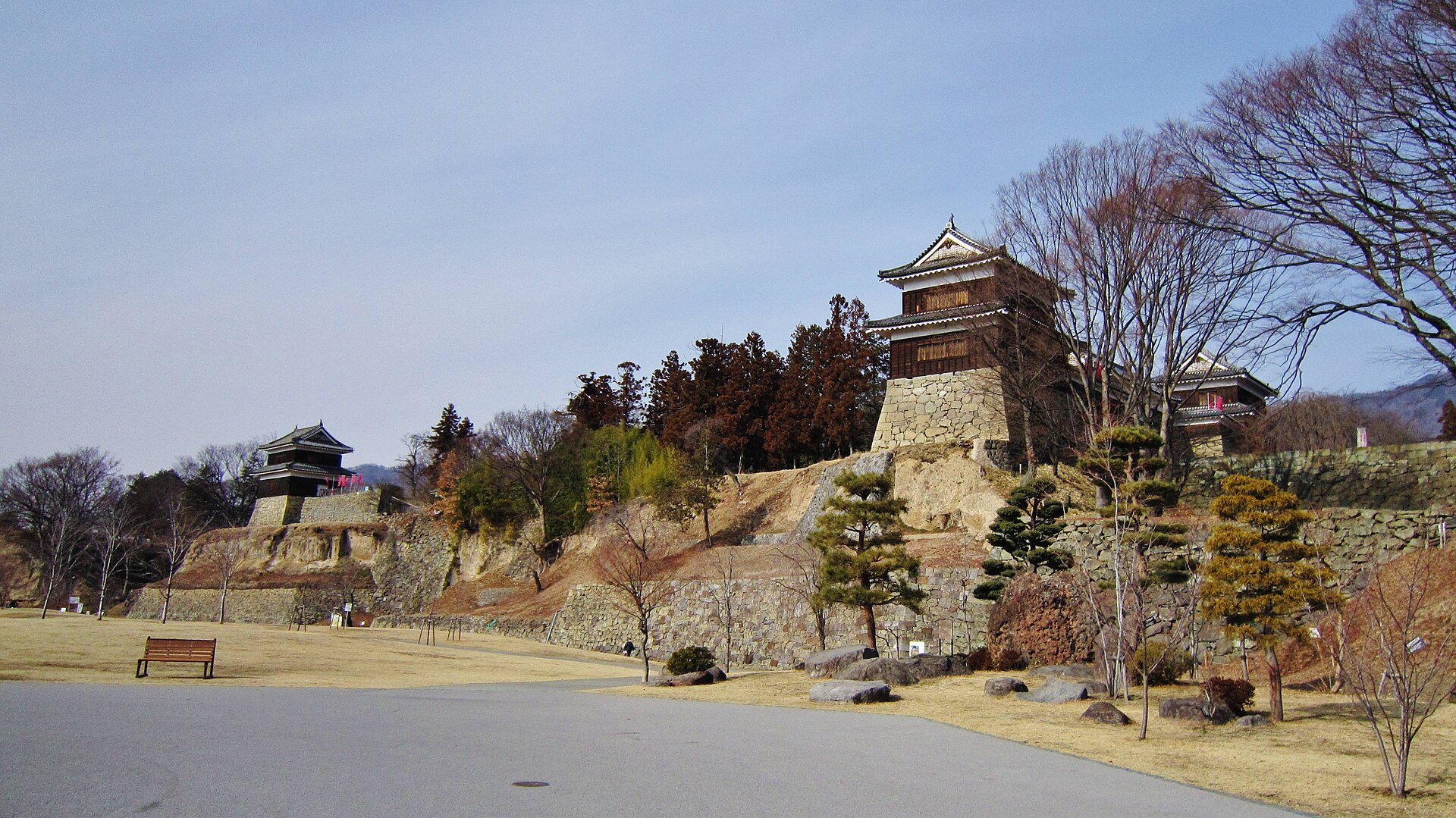
- Amagafuchi and the Nishi Yagurathe cliff under the south wall, and the one turret left standing on its original spot since the Edo period
How to actually get there
- Ueda Station (castle-side exit) → Ueda Castle Ruins Park east gate (walk about 12 minutes).
- East gate → honmaru → Sanada Well → Nishi Yagura, keeping the turrets on your left.
- Drop to the south side and walk the base of the Amagafuchi cliff, then return to the station.
- On foot from Ueda Station
- Ueda Station is served by the Hokuriku Shinkansen from Tokyo and Nagano, by the Shinano Railway line, and by the Ueda Dentetsu Bessho line. Leave by the castle-side exit on the north and walk north-west for about 12 minutes on flat city streets to the ninomaru bridge and the east gate.
- Back to Ueda Station
- Retrace the same twelve-minute walk, or come out on the south side by Amagafuchi and follow the road east to the station. Shinkansen services toward Tokyo and Nagano run into the evening, but the Bessho line and the local buses thin out earlier, so check those departures before planning a late finish.
About the place
The park occupies the honmaru and ninomaru of the old castle, a short walk north-west of Ueda Station. The site was chosen for its ground rather than its height. The south side drops away to a cliff called Amagafuchi, a former channel of the Chikuma River that worked as a natural moat. Of the seven corner turrets that once stood on the honmaru, three are standing today. Around a thousand cherry trees are planted through the grounds, and a sunken walkway lined with zelkova follows the bed of the filled-in ninomaru moat. The Ueda City Museum sits inside the walls.
How to enjoy it
The park has no gate and no closing time, so the stonework, the moat lines and the zelkova walkway can be seen at any hour; the turret interiors and the city museum keep their own opening days and charge admission separately. Save Amagafuchi for the end and walk the length of the cliff base rather than looking down from the wall above. The spring cherry festival and the autumn foliage festival are the two busiest windows of the year.
Background & history
Sanada Masayuki built the castle in 1583. Twice it held against Tokugawa armies far larger than its garrison, in 1585 and again in 1600, and that record is what carried the name. The castle was pulled down after the second siege; the Sengoku family, who took over the domain, began rebuilding the turrets in 1626. The honmaru and most of the ninomaru were designated a National Historic Site in 1934, and the east gate was rebuilt in timber in 1994, worked out from old photographs and excavation records.
Before you go
- Cash
- Walking the park costs nothing and needs no ticket. The turret interiors and the Ueda City Museum charge admission and open on set days, so check the current schedule if you want to go inside. Bring some cash for those counters.
- Before you go
- The grounds stay open in every season and after dark, but the paths down to Amagafuchi are unlit. The spring cherry festival and the autumn foliage festival draw the heaviest crowds. In midwinter, snow and ice make the stone steps between the levels slippery.
- Another way
- From Nagano, both Shinano Railway local trains and the Hokuriku Shinkansen reach Ueda; the local train is slower but cheaper. Coming from Bessho Onsen, the Ueda Dentetsu Bessho line terminates at the same station.
- After you get off
- Leave Ueda Station by the castle-side (Oshiro-guchi) exit on the north. Walk north-west along the main street, cross the ninomaru bridge over the zelkova walkway, and the east gate stands directly ahead.