Northwest Gunma · Tsumagoi HighlandsNo.1123★★Open in map →
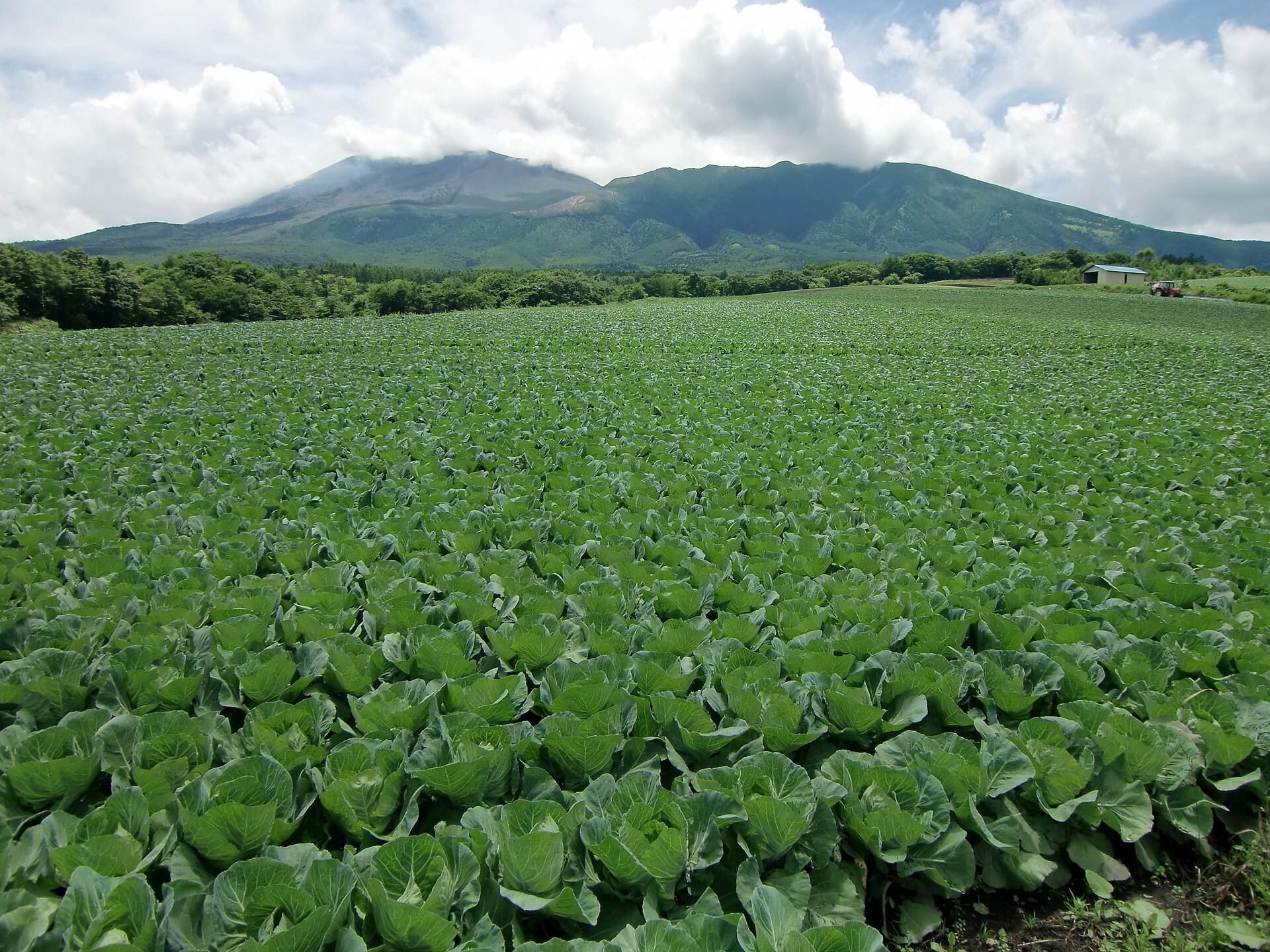
Tsumagoi Highland Cabbage
Japan's largest producer of summer-and-autumn cabbage, seen from a built viewpoint on the farm road that crosses it. Steps lead up a planted mound to a deck, a bell and a long view to Mount Asama.
- FromKaruizawa Station
- ~1 hrRental car, Panorama Line
- Get off atAisai no Oka roadside parking (Tsumagoi Panorama Line)
- On foot
- Tsumagoi Highland Cabbage
The sweet spot
Nothing here is hidden. The mound has a road sign, a place to pull in and a village event attached to it. What keeps it calm is that almost everyone arrives by car and does not stay long. The fields themselves carry no visitors at all, because they are working farmland and the looking is done from the road.
Where it is
20 more notes in Gunma · open the map →What to look for — in walking order
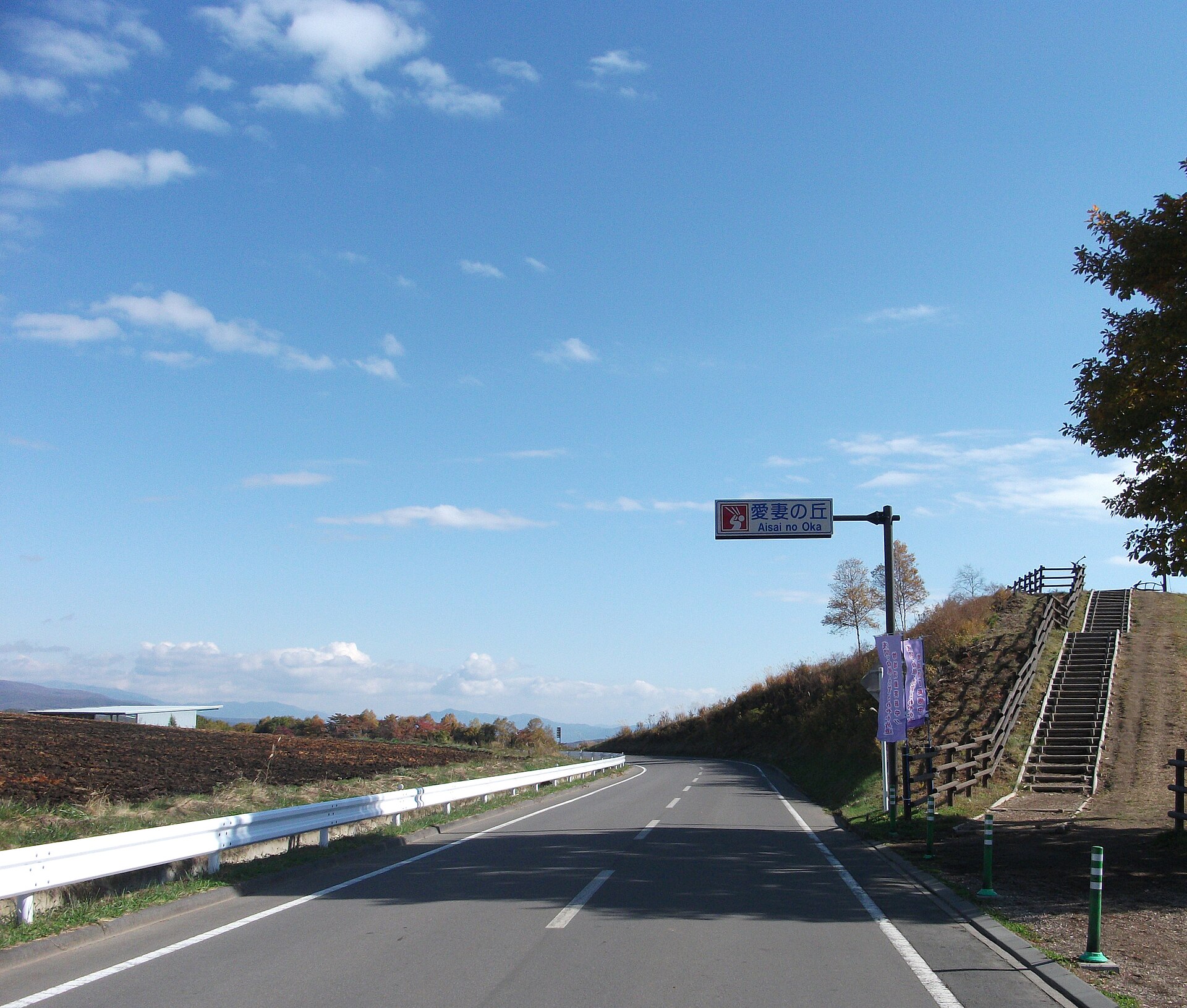
- The roadside sign and stepsa marked pull-in on the Panorama Line, with a stair climbing the bank
- The shouting decka wooden platform on the crown, turned to face the volcano
- The beloved-wife bella bell standing on the same crown as the deck
- The flower bed and sculptureplanting beside the benches, with a piece by a village artist
- The view to Asama and Lake Tashirocabbage rows in the foreground, the volcano and the reservoir beyond them
How to actually get there
- Karuizawa Station into Tsumagoi by car, roughly an hour over the pass.
- Join the north route of the Tsumagoi Panorama Line and follow it between the cabbage fields to the signed pull-in.
- Climb the steps to the deck, the bell and the benches, and look out to Mount Asama and Lake Tashiro.
- Drive up from Karuizawa Station
- Karuizawa is the Hokuriku Shinkansen stop most people pick a car up at, and the run north over the pass into Tsumagoi takes roughly an hour. The last stretch is the north route of the Panorama Line, which climbs between the fields. Published drive times from the Usui-Karuizawa interchange sit in the same range.
- The way back down
- There is no bus and no station within walking distance, so the return is the same drive. The Panorama Line has no lighting and the fields offer no landmarks once it is dark, so turn back while you can still read the road. Karuizawa puts you on the Shinkansen for Tokyo or Nagano.
About the place
The crop decides what this place looks like. Tsumagoi ships more cabbage in the summer-to-autumn season than any other producer in the country, and its fields climb to 1,400 metres, high enough to hold the plants in the 15 to 20 degree band they want while the lowlands cook. The farm roads that serve those fields were opened to drivers as the Tsumagoi Panorama Line, and the north route runs through the middle of the growing ground. Aisai no Oka is a small mound raised beside that road, planted, benched and fitted with a wooden deck. The name comes from the men who came here to shout at the volcano.
How to enjoy it
The fields are green from summer into autumn, and the road shuts for the winter, so this is a warm-season stop. Give it half an hour rather than five minutes, because the light changes fast at this height and the volcano goes in and out of cloud. Stand with the sun behind you if you want the rows and the mountain in one frame.
Background & history
The village name carries a legend older than the crop. Yamato Takeru, returning from his eastern campaign, is said to have stood on Torii Pass and called out for Ototachibana-hime, the wife who had thrown herself into the sea to calm it, and the cry gave Tsumagoi its name. The modern mound borrows that story. A small gathering in which men shouted their thanks to their wives from a borrowed cabbage field became popular enough that the prefecture built the rise into a proper viewpoint.
Before you go
- Cash
- There is no gate and no admission to pay. Bring your own drinks: the farm stands and the village's day-use hot spring are down on the valley roads, and those are where money gets spent in season.
- Before you go
- The Panorama Line shuts for the winter and the mound cannot be reached while it is closed. Published closing dates differ between sources, so check with the village before a shoulder-season trip. There is no shelter on the crown, and at this altitude wind and cloud move quickly.
- Another way
- The nearest railway station is Manza-Kazawaguchi on the JR Agatsuma Line, down in the valley, but no bus climbs to the fields and the distance is well past walking. Drivers coming from the north can join the Panorama Line from the Kusatsu side instead of crossing from Karuizawa.
- After you get off
- The pull-in is on the road shoulder beside the sign, and a flight of steps climbs the bank from there to the deck and the bell. The climb is short but it is a climb, and the crown is open grass with no shade on it.