North Nagano · TogakushiNo.785★★★Open in map →
Togakushi Shrine
— A mountain sanctuary at the end of a cedar avenue
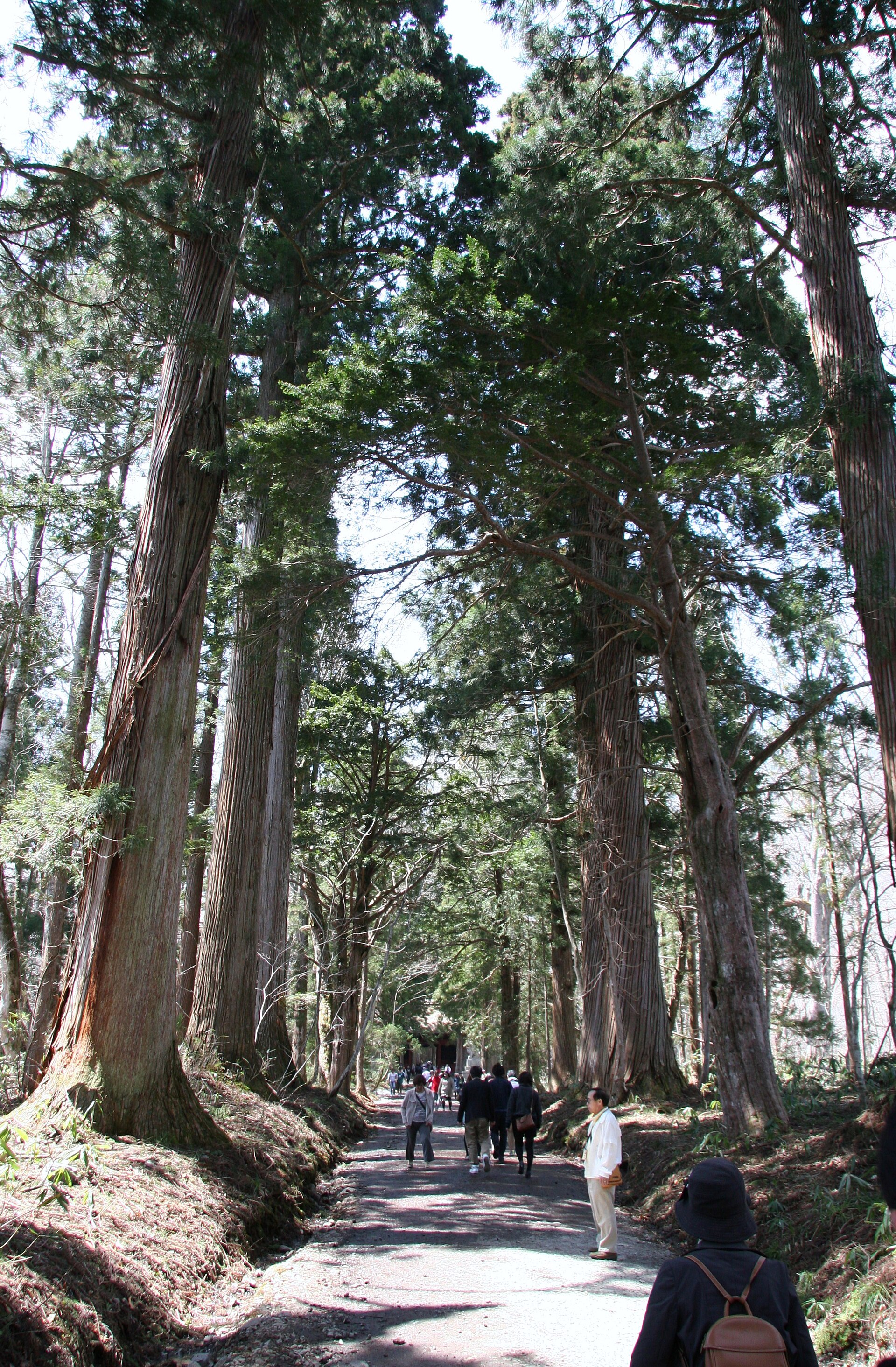
A mountain shrine north of Nagano made up of five separate sanctuaries. The walk to the innermost one runs through an avenue of four-hundred-year-old cedars, and the walk is the point rather than the destination.
- FromNagano Station
- ~60 minReserved express bus from Nagano
- Get off atTogakushi Okusha-iriguchi stop (Alpico Togakushi Line)
- From there
- Togakushi Shrine
Where it is
27 more notes in Nagano · open the map →What to look for — in walking order
- Okusha entrance archthe torii on the highland road where the approach leaves the tarmac and the walking begins
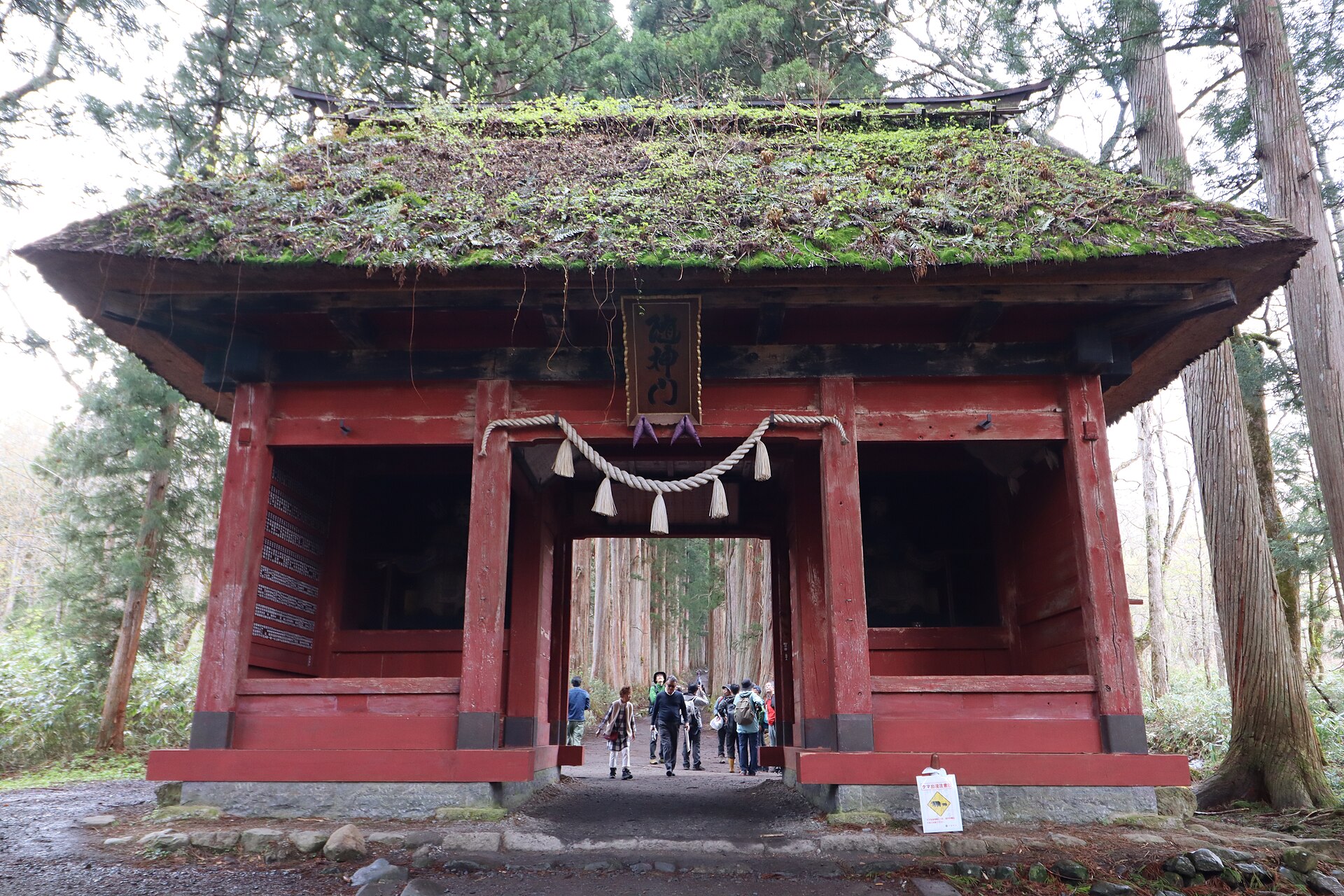
- Zuishinmon gatethe vermilion gate at the midpoint, flanked by seated guardian figures, marking where the avenue starts
- The cedar avenuekuma-sugi cedars over four hundred years old in two ranks, designated a prefectural natural monument
- Okushathe innermost sanctuary, small and set hard against the rock wall of the mountain
- Kuzuryushathe shrine of the local water deity, standing immediately beside the innermost sanctuary
How to actually get there
- Nagano Station bus terminal → Togakushi Okusha-iriguchi stop (Alpico Togakushi line, about an hour).
- Walk in from the entrance arch across the open first section of the approach.
- Pass through the red gate at the midpoint — the cedar avenue starts here and the climb begins.
- Finish at the innermost sanctuary and the water-deity shrine beside it, then return the same way.
- If time allows, take the bus one stage down and add the middle shrine before heading back.
- Express bus from Nagano Station
- Alpico Kotsu runs the Togakushi line up from the bus terminal outside Nagano Station, climbing to the highland and calling at each of the shrine villages in turn. Allow about an hour to the Okusha entrance stop. The sightseeing express on this line is a reserved service, so book rather than turn up, and check which departure is a reserved run and which is an ordinary route bus.
- Back down to Nagano Station
- The return uses the same line from the stop on the highland road. Mountain services are not frequent and the last useful departures are earlier than city timetables suggest, so read the return board when you get off, not when you come back out of the trees.
About the place
Togakushi Shrine is five sanctuaries, not one. They sit at different heights on the flank of Mount Togakushi — Hokosha lowest, then Hinomikosha, then Chusha where most of the village is, and Okusha with Kuzuryusha highest of all, tucked against the rock. The approach to Okusha is the one everybody comes for: about two kilometres on foot from the highland road, level at first through open ground, then rising once you pass the red gate at its midpoint. From the gate onward the path runs between two ranks of enormous cedars, and the light drops. Cars stop at the road. Everything past that point is walked.
How to enjoy it
Take the earliest departure you can. The avenue faces the light well in the morning, the coach parties arrive later, and the shrine notes that around the old markers of winter's start and spring's start the sun rises straight along the line of the approach. Budget the return walk honestly — the way in is the easy half and the last stretch is stairs and roots. Autumn colour and fresh snow are the two conditions people plan around, but the second of those closes the bus.
Background & history
The mountain comes first in the story. In the myth of the heavenly rock cave, the deity Ame-no-Tajikarao pushed the cave door open and flung it away, and the door is said to have landed here as Mount Togakushi. Tendai esoteric Buddhism arrived later and fused with the mountain cult as the temple-shrine complex of Kenkoji, which trained ascetics on these slopes for centuries; Hinomikosha, one of the five, is dated to around 1098. The separation of Buddhism and Shinto in the early Meiji years broke that arrangement apart, and what remained was reorganised as the shrine of five sanctuaries visitors walk today.
Before you go
- Cash
- There is no charge to walk the approach or to reach the sanctuaries. Amulets, seals and the small museums in the shrine villages are handled at each site, and a mountain village is easier with cash than without.
- Before you go
- Snow closes this landscape down. The reserved express bus does not run all year, the shrine's own parking can be unusable when the road is under snow, and the upper approach becomes winter walking rather than sightseeing. Even in summer the path is unpaved and roots run across it, so shoes matter more than they would at a city shrine.
- Another way
- By car it is roughly an hour up from the Nagano interchange, or about half that from the Shinanomachi interchange on the northern side. That is the practical option outside the bus season, weather allowing.
- After you get off
- The bus stop sits on the highland road at the mouth of the approach — step off and the entrance arch is in front of you. From there it is all walking, first across open ground and then into the trees; there is no vehicle access beyond this point.