Nagano · Lake SuwaNo.784★★★Open in map →
Suwa Taisha Shimosha
— The two lower shrines of a four-shrine complex
Suwa Taisha is a single shrine spread across four sites around Lake Suwa. The two lower ones, Akimiya and Harumiya, sit within an easy walk of Shimosuwa Station, and neither of them has an inner sanctuary building to enter.
- FromShimosuwa Station (JR Chuo Line)
- ~10 minJR Chuo Line, then 10 min on foot
- Suwa Taisha Shimosha
Where it is
27 more notes in Nagano · open the map →What to look for — in walking order
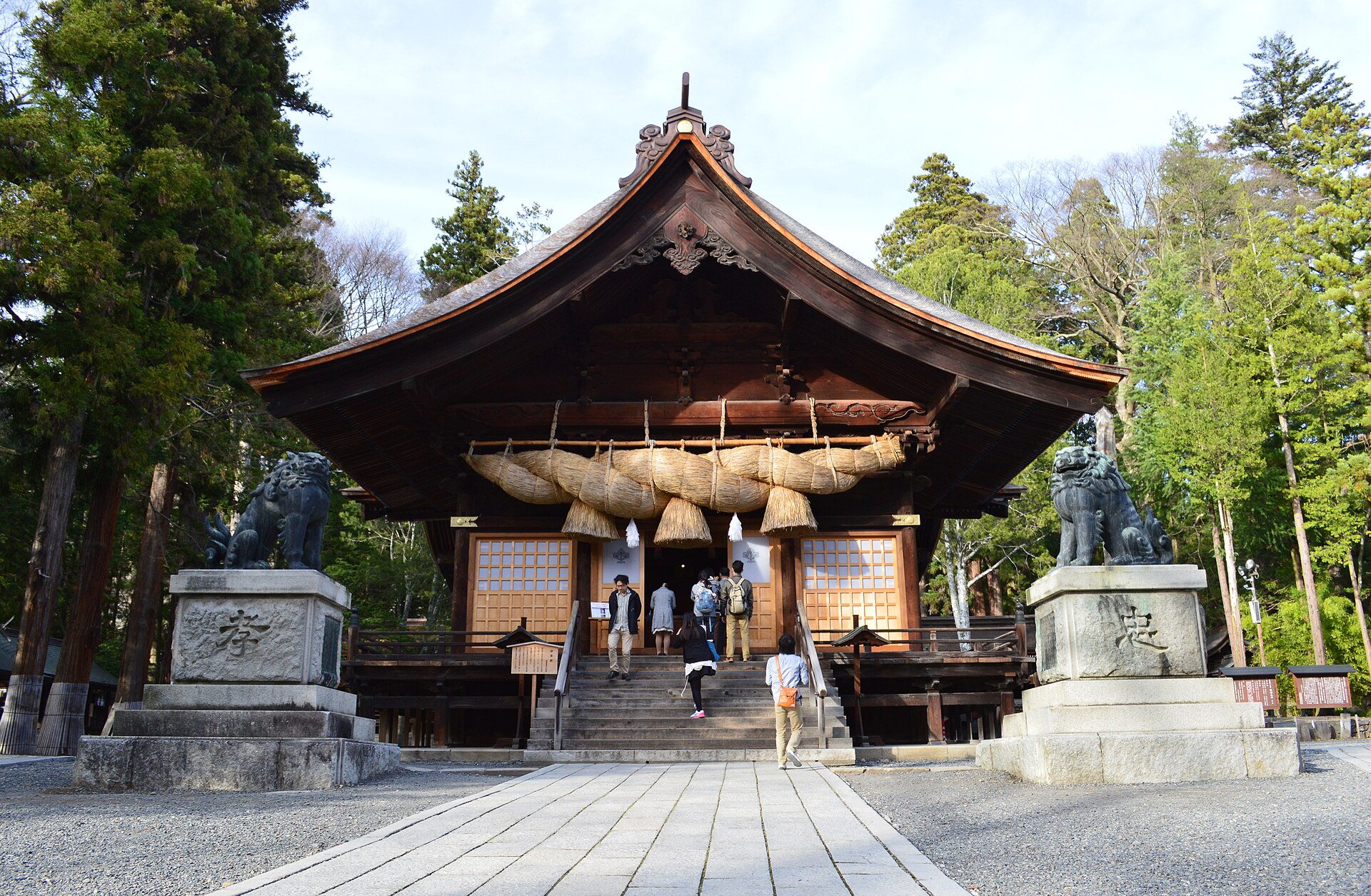
- Akimiya kaguradenthe sacred dance hall, its front hung with a thick plaited rope of rice straw, bronze lions on stone plinths either side
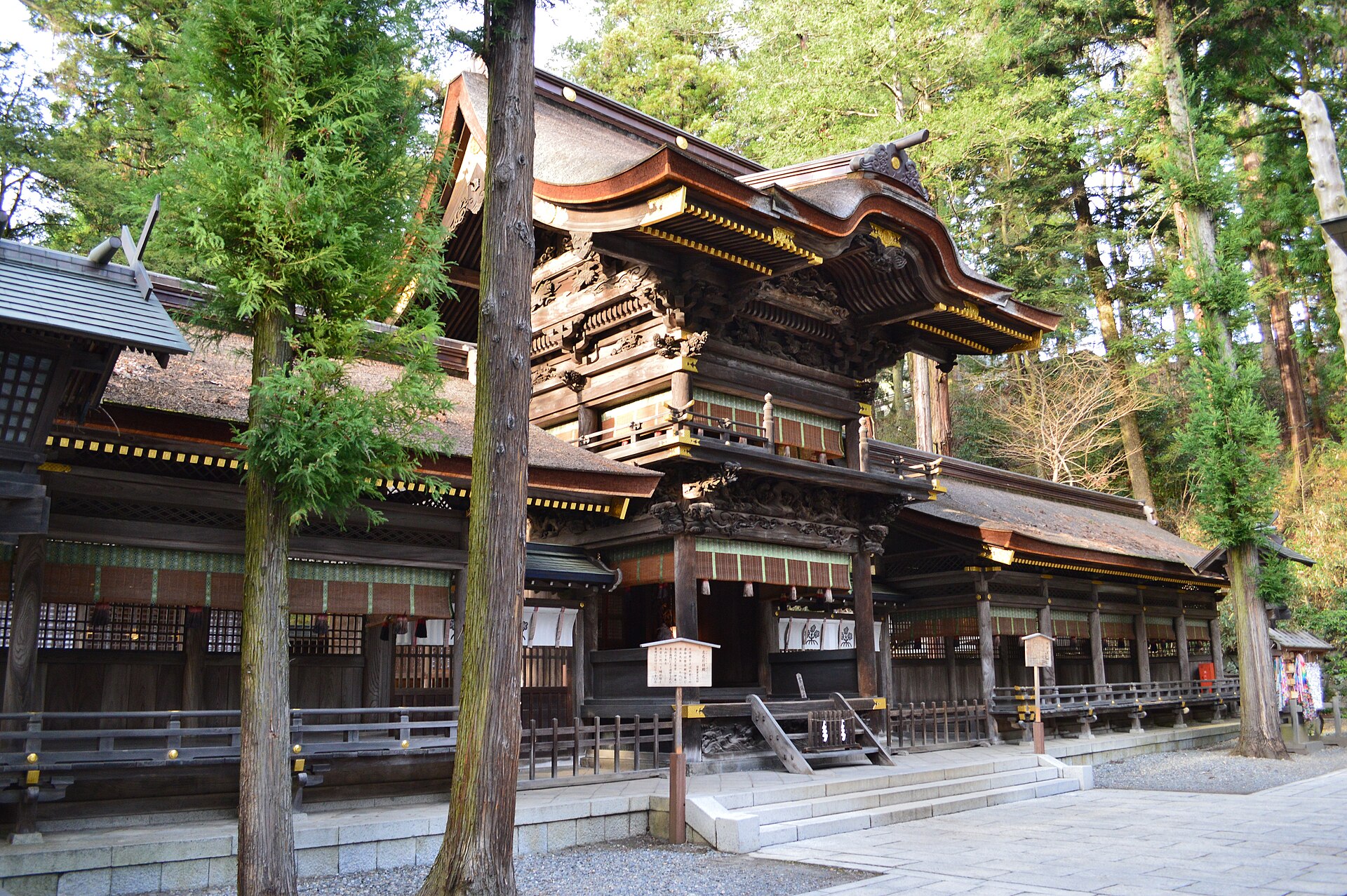
- Akimiya heihaidenthe hall of offerings behind the kaguraden, an Important Cultural Property
- The yew of Akimiyathe old tree that stands in place of an inner sanctuary building
- The road out to Harumiyathe straight old approach linking the two lower shrines through the town
- Harumiya heihaidenthe same arrangement at the spring shrine, also an Important Cultural Property, with a cedar as its sacred tree
How to actually get there
- Take the JR Chuo Line to Shimosuwa Station.
- Walk north-east through the town to Suwa Taisha Shimosha Akimiya, about ten minutes.
- Follow the road on to Harumiya, the other lower shrine, about ten minutes further.
- Walk back to Shimosuwa Station through the hot-spring streets.
- JR Chuo Line to Shimosuwa Station
- Shimosuwa is a stop on the Chuo Line between Okaya and Kami-Suwa. Some Azusa limited expresses call here and locals fill in the rest, so a change at Kami-Suwa or Okaya is often the practical route. From the station Akimiya is a walk of about ten minutes through the town. Highway buses from Shinjuku also serve Shimosuwa.
- Back to Shimosuwa Station
- The return is the same walk in reverse and it is level the whole way. Trains run along the Chuo Line into the evening, but limited expresses skip Shimosuwa more often than they stop, so a local towards Kami-Suwa or Okaya is the connection to count on. Check the last departure before spending the late afternoon out at Harumiya.
About the place
Suwa Taisha is not one shrine but four, split across the basin that holds Lake Suwa: the upper pair on the south side, the lower pair — Akimiya and Harumiya — on the north. Akimiya stands in Shimosuwa, a hot-spring town that was also a post town on the old highway, with the honjin inn still standing a few streets away. The first building you meet is the kaguraden, a squat hall under dark shingle with a plaited rope of rice straw slung across its front and a bronze guardian lion on each side. Behind it is the hall of offerings. There is no inner sanctuary to look for, and that is the point.
How to enjoy it
Shimosuwa Station puts Akimiya about ten minutes away on foot and Harumiya about twenty, so the two lower shrines make one flat walk with the town in between. Take them in that order — Akimiya, the road out to Harumiya, then back through the hot-spring streets — and the second shrine reads as the other half of the first rather than a repeat. Which of the two is holding the god depends on the date you come, and knowing that before you set out changes what you are looking at.
Background & history
The Suwa shrines are counted among the oldest in Japan, dedicated to Takeminakata and Yasakatome. Nowhere in the complex is there a main sanctuary building: at Akimiya the object of worship is an old yew, at Harumiya a cedar, and at the upper shrine the mountain itself. The god of the lower shrine does not stay put either. A procession carries the sacred emblem to Harumiya on the first of February and back to Akimiya on the first of August, so which hall is occupied depends on the month. In the years of the tiger and the monkey, great fir trunks are hauled down from the hills and raised at the corners of all four shrines.
Before you go
- Cash
- All four precincts are free and there is no gate to close. The treasure halls at Akimiya and at the upper shrine charge their own admission and keep their own shorter hours. Amulet counters open in the morning and shut before the light goes.
- Before you go
- With no gate, the grounds can be entered at any hour, but the counters and the treasure hall run on daytime hours and close well before that. Snow is normal in the basin through the coldest months, and the stone steps up to Akimiya ice over. Volunteer guides are on the grounds at weekends through the warmer half of the year.
- Another way
- The upper shrines are the other half of Suwa Taisha: Honmiya in Suwa city and Maemiya in Chino, on the south side of the lake. Neither is walkable from Shimosuwa; they are normally reached from Chino or Kami-Suwa by bus or taxi. Taking in all four in one day needs a car or a well-built plan.
- After you get off
- From Shimosuwa Station the shrine lies to the north-east, and the old highway through the town runs towards it. Akimiya's torii stands where that street reaches the foot of the shrine approach, and the steps up to the kaguraden start there.