South Nagano · Lake SuwaNo.760★★Open in map →
Lake Suwa
A wide, shallow highland lake in southern Nagano, best met from the Kamisuwa shore, where hot springs surface a few minutes from the station. A bathhouse, a footbath and a lakeside promenade sit inside one walk.
- FromKamisuwa Station (JR Chuo Main Line)
- ~10 minOn foot from Kamisuwa Station
- Lake Suwa
The sweet spot
This is not an undiscovered lake. It carries a city on each shore and one of the country's better-known firework nights. What is worth knowing is which shore, and in what order. The Kamisuwa side puts the hot water, the park and the station inside one walk, and the terrace above the town turns the whole basin into a single view at the end of it.
Where it is
27 more notes in Nagano · open the map →What to look for — in walking order
- KatakurakanWestern-style bathhouse built by a silk-reeling family, its halls listed as an Important Cultural Property, with a standing bath 1.1 metres deep
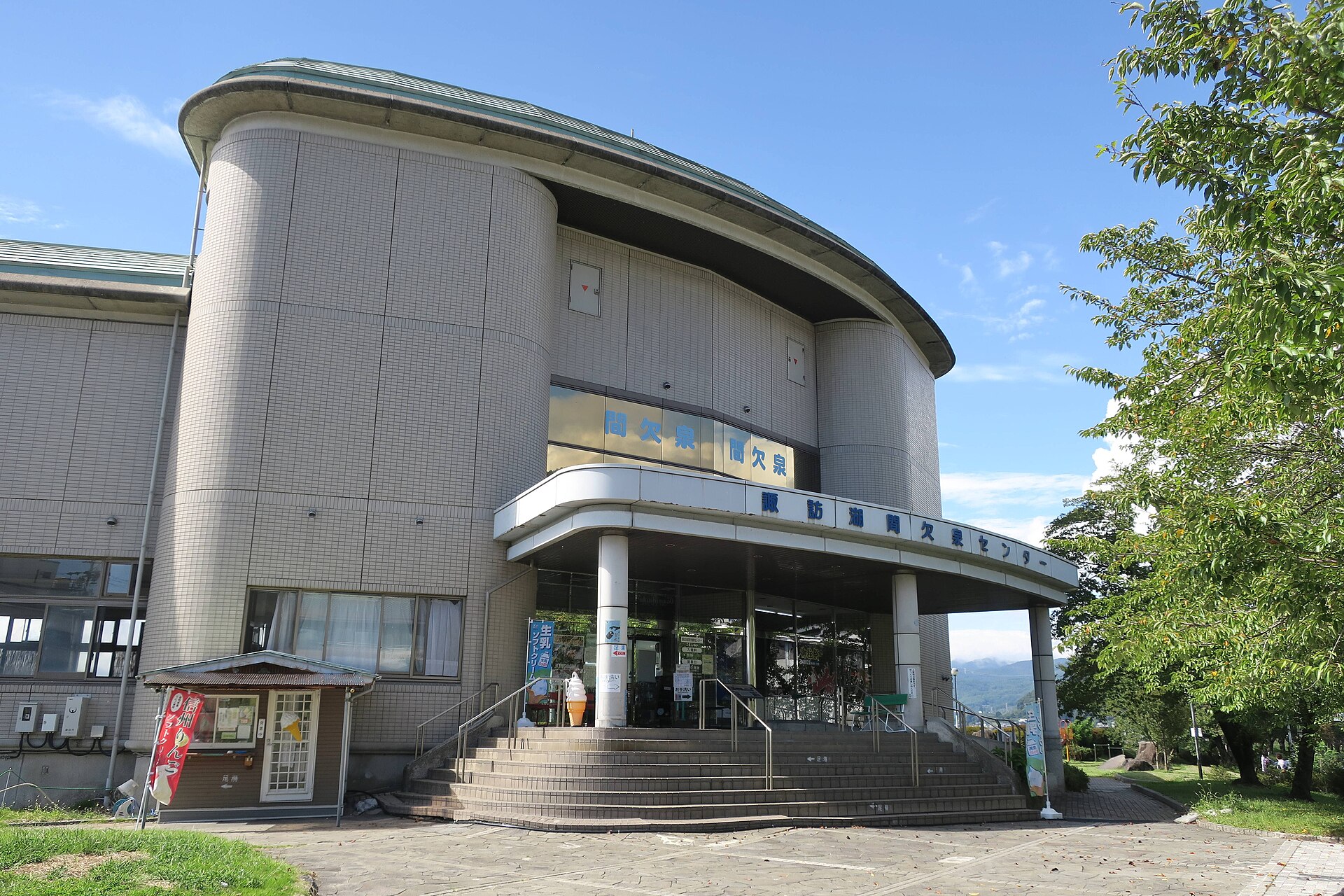
- Lake Suwa Geyser Centerlakeside hall where steam lifts from the Nanatsugama vents, with an upper floor given over to the fireworks
- The lakeside footbathopen-air foot soak beside the geyser hall, facing straight out across the water
- Kohan Park promenadepaved walking and running path following the shoreline, flat from end to end
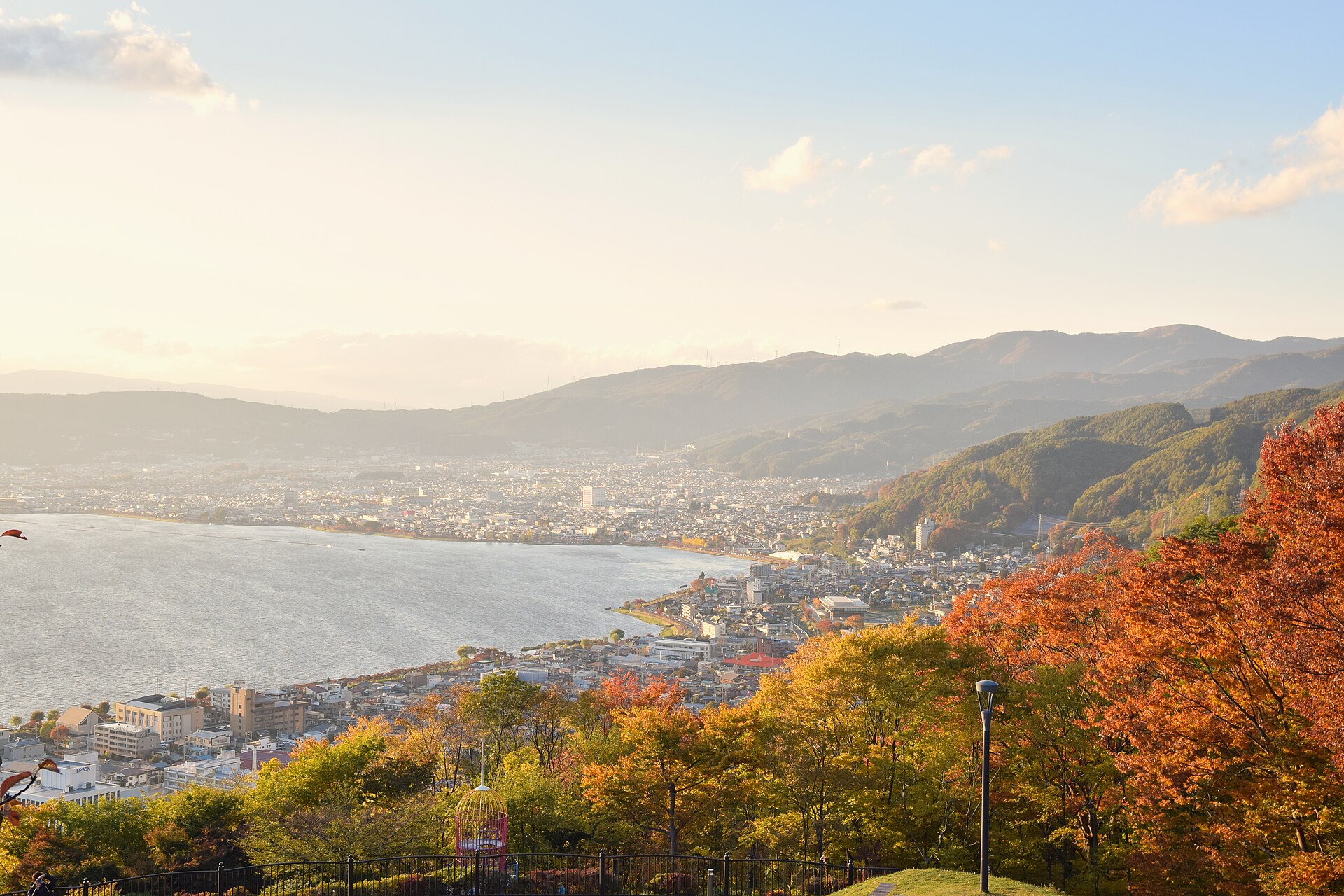
- Tateishi Parkhillside terrace above the town holding the whole basin and the ranges beyond in one frame
How to actually get there
- Kamisuwa Station, lake-side exit, then straight down to the shore.
- Katakurakan first for a proper soak, or the open-air footbath if you only want your feet in.
- Walk the shoreline path past the geyser hall and its steam vents.
- Take a taxi up to Tateishi Park for the view back down over the basin.
- JR Chuo Main Line to Kamisuwa
- Kamisuwa sits on the JR Chuo Main Line, the trunk route running west out of Tokyo toward Shiojiri and Matsumoto, so the lake is a station stop rather than a detour. Leave by the lake-side exit and the shore is a flat walk of well under a kilometre through the hot-spring quarter.
- Back to Kamisuwa Station
- The same walk in reverse, rising very slightly. Services thin out through the evening, so read the departure board on your way down to the water rather than after dinner. In winter the wind off the ice makes the return leg feel longer than it is.
About the place
Lake Suwa lies at 759 metres in a basin closed in by mountains, and it is wide rather than deep, so the far shore reads as a low line instead of a bank. Hot springs rise along the eastern edge at Kamisuwa, which is why the lake's most walkable frontage is also its bathing quarter. Within a few hundred metres of one another sit a heritage-listed bathhouse, a hall of steam vents, an open-air footbath and a paved path at the water's edge. None of it needs a boat or a car.
How to enjoy it
The big night is 15 August, when the water itself becomes the launch platform and the city fills; across late July and August there is also a short nightly display from 20:30 lasting about ten minutes, which asks nothing of you but a place on the bank. On an ordinary day, come in the late afternoon and take it in this order: bath or footbath, promenade as the light drops, then the climb to the terrace for the sunset. Winter is the other season worth choosing, cold and clear, and the one time the state of the ice is a live question.
Background & history
Winter used to write on this lake. When the surface froze right across, the ice buckled into a ridge running shore to shore, and the ridge was read as the track of a male deity crossing to the goddess of the lower shrine. Yatsurugi Shrine still keeps the observation: the ice is examined, a viewing rite is held, and the finding is reported to the Imperial Household Agency and the Meteorological Agency. A winter that produces no ridge has its own name, the open sea, and it is declared with the same ceremony.
Before you go
- Cash
- The footbath and the promenade cost nothing. The bathhouse and the geyser hall each set their own admission, published by the operators and revised from time to time, so confirm the figure on the day. Small lakeside counters are still easier with cash.
- Before you go
- The geyser hall keeps seasonal hours, 9:00 to 18:00 from April to September and 9:00 to 17:00 from October to March, and the bathhouse takes fixed closing days each month. The promenade is exposed for its whole length and the basin wind is cold from autumn onward.
- Another way
- Coming from the Japan Alps rather than from Tokyo, the same line reaches Kamisuwa through Shiojiri and Matsumoto, which is the practical approach after a few days in the mountains. Drivers use the lakeside car parks; the hillside terrace above town has only a small lot, and it is shut off around the fireworks.
- After you get off
- Take the lake-side exit at Kamisuwa Station and walk straight ahead and downhill across the main road. The water appears at the end of the street, and the bathhouse and the geyser hall stand along the bank from there. The route is level and paved the whole way.