Iwate · Morioka TsunagiNo.1171★★Open in map →
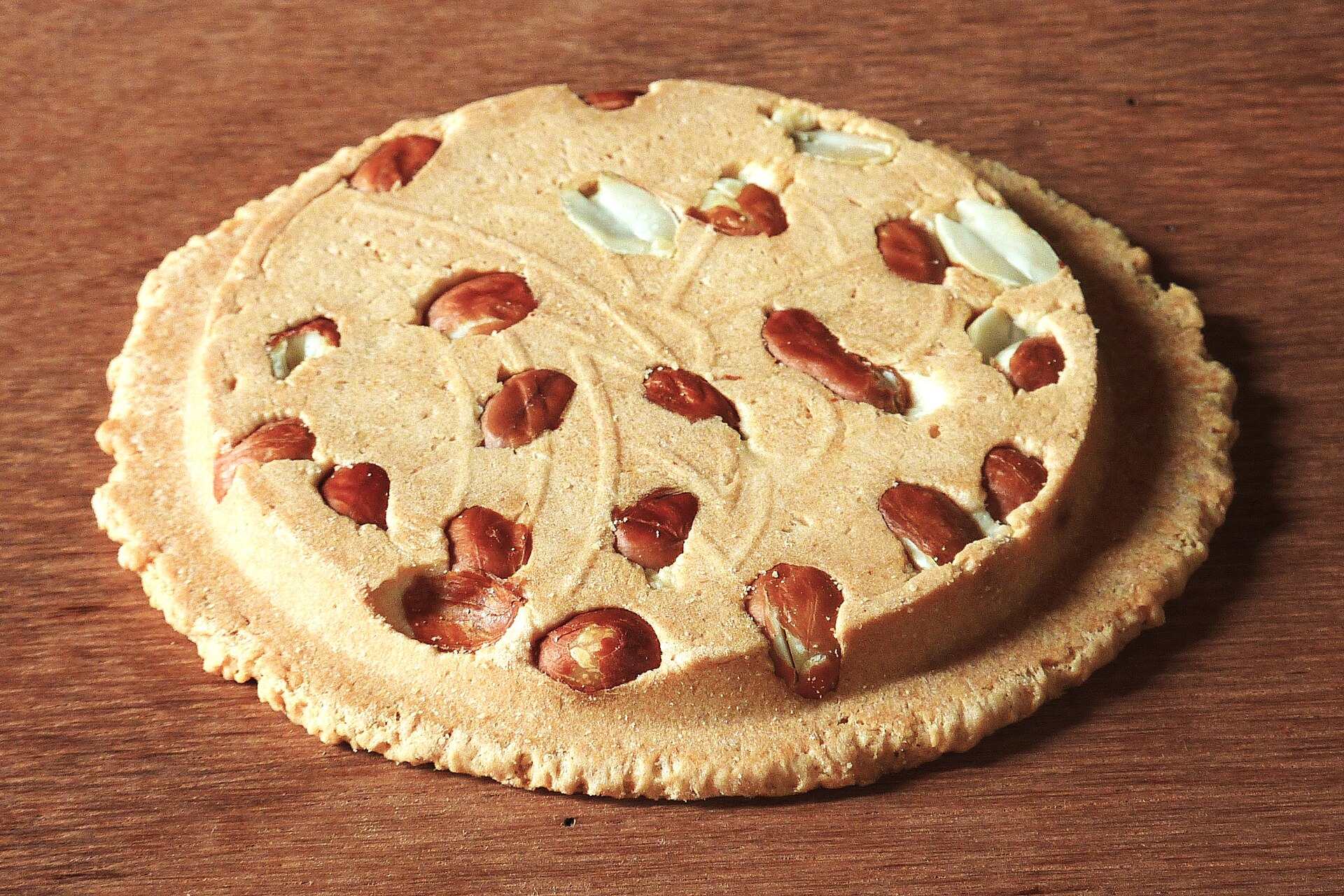
Nambu Senbei
— Iwate's wheat cracker baked in iron moulds
A flat wheat cracker pressed between round iron moulds, from the old Nanbu lands of northern Iwate and south-eastern Aomori. West of Morioka, a free-entry craft village keeps a studio where the discs are still turned over the fire by hand.
- FromMorioka Station
- ~35 minIwate Kenkotsu bus, ~30 min
- Get off atMorioka Tezukuri-mura mae (Iwate Kenkotsu Tsunagi Onsen line)
- On foot
- Nambu Senbei
The sweet spot
Nambu senbei is a well-known regional food rather than a hidden one; boxes of it sit in every station shop in Iwate. What is easy to miss is that the studios inside the village each keep their own opening days, so the senbei studio can be shut on a weekday when the village itself is open.
Where it is
17 more notes in Iwate · open the map →What to look for — in walking order
- The sales hallthe ground floor of the regional-industry centre, stocked with ironware, noodles, sake and boxed senbei
- The exhibition rooman upstairs room on local industry, with the ironware-casting process shown on film
- The craft studio rowworking studios for ironware, indigo dyeing, bamboo, straw work and pottery
- Morioka Senbei-tenthe senbei studio, where the mould is loaded and turned on the baking bed
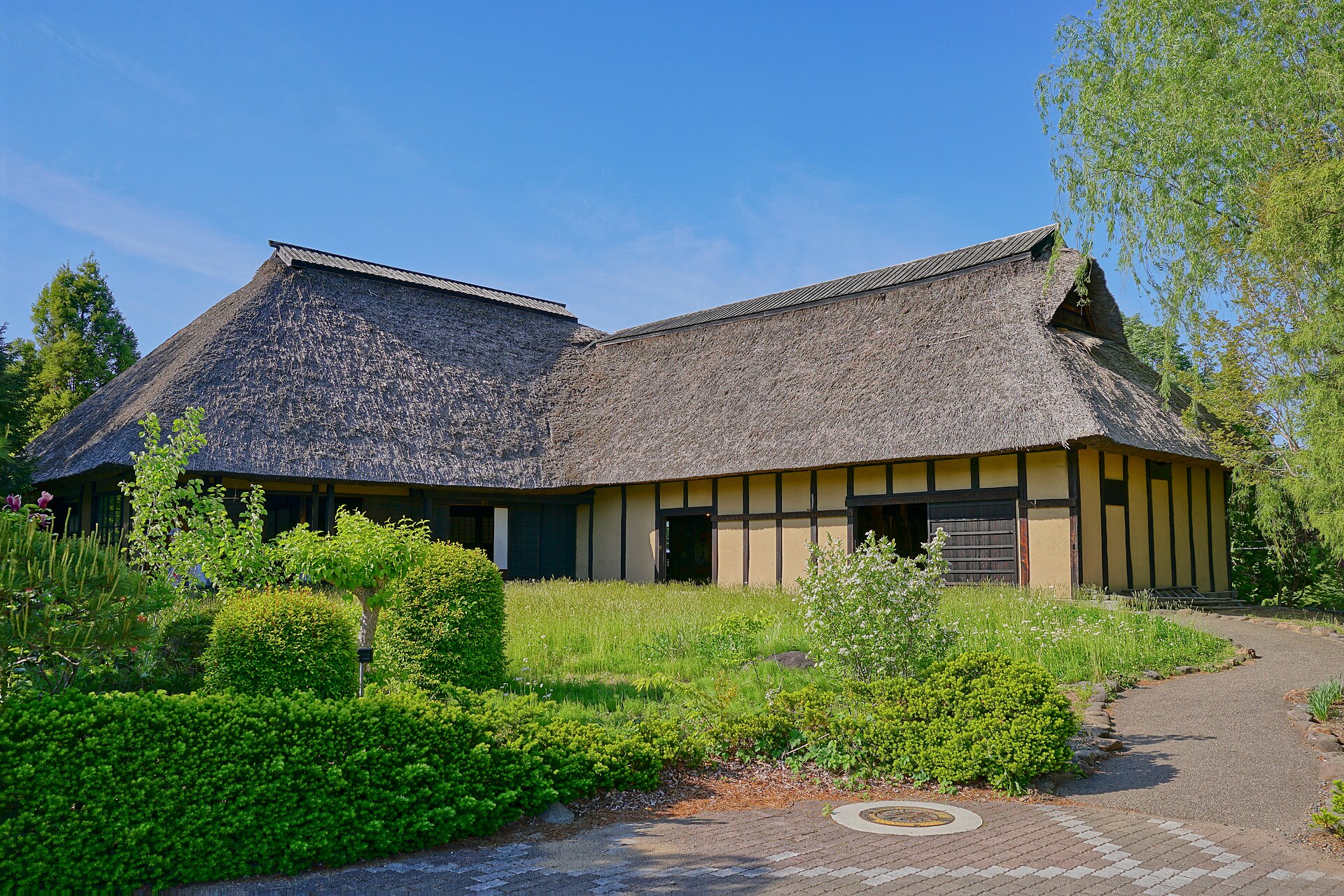
- The Nambu magariyaa relocated L-shaped farmhouse from a horse-breeding district, hung with old farm and craft tools
How to actually get there
- Morioka Station → Morioka Tezukuri-mura mae (Iwate Kenkotsu Tsunagi Onsen line, about 26 min, 620 yen at the operator's fare search).
- Bus stop → the regional-industry centre entrance (walk 2-3 min).
- Sales hall and exhibition room → the craft studio row, stopping at Morioka Senbei-ten.
- Craft row → the Nambu magariya at the back of the site, then back to the same stop.
- Iwate Kenkotsu bus from Morioka Station
- Morioka Station → (Iwate Kenkotsu Tsunagi Onsen line, bound for Morioka Tsunagi Onsen) → Morioka Tezukuri-mura mae, with no change. The operator's own route search gives about 26 minutes and 620 yen for the 12.3 km run; the village's access page rounds the ride to about 30 minutes. Buses are spaced out rather than frequent, so the outward departure is worth fixing before you leave.
- Back to Morioka Station
- The same Tsunagi Onsen line returns from Morioka Tezukuri-mura mae toward Morioka Bus Center and the station, again about 26 minutes. Departures are thinly spaced through the day, so photograph the timetable on the pole when you arrive rather than working it out on the way out.
About the place
Morioka Handi-Works Square stands at the western edge of the city, next to the Tsunagi Onsen hot-spring district. It is laid out in three parts. A row of working studios turns out ironware, indigo cloth, bamboo baskets, pottery and noodles. A regional-industry centre carries more than 4,000 products from around Iwate in its sales hall. Behind them sits a Nambu magariya, the L-shaped farmhouse of a horse-breeding district, moved here with its old farm and craft tools. Nambu senbei has its own studio in the craft row, where dough goes into a hinged iron mould and is turned over the heat until the disc sets.
How to enjoy it
The village runs 8:40 to 17:00 and closes around the New Year, but the studio days matter more than the village hours: the senbei studio's own listing gives Friday to Sunday and public holidays, and the village posts each studio's days a month at a time. Hand-baking is first-come and the studio takes no bookings at all, for groups or individuals, so head there early in the visit rather than on the way out. If it is shut, the sales hall still carries the crackers, and the magariya and exhibition room fill the time.
Background & history
The cracker belongs to the old Nanbu domain, whose territory reached from south-eastern Aomori into northern Iwate. Cold summer winds off the Pacific made rice harvests unreliable there, so wheat and buckwheat were grown instead. Before the war most farm households owned an iron mould of their own, and the baked discs kept well enough to serve as a reserve food. Several origin stories circulate — one has a fourteenth-century emperor served a cracker baked in a retainer's iron helmet — and none of them is settled.
Before you go
- Cash
- Entry to the village grounds costs nothing. The second-floor exhibition room is charged separately at 100 yen, and the hands-on sessions in the studios are paid. The bus fare is settled on board, so carry coins and small notes.
- Before you go
- The village closes over the New Year. Individual studios rest on their own days and can also shut temporarily while the craftspeople are on a job, so the craft row is not guaranteed to be fully open on any given day.
- Another way
- By car it is about 25 minutes from Morioka Station along National Route 46 toward Akita, or about 10 minutes down from the Morioka interchange on the Tohoku Expressway. There is a large car park on site, and Tsunagi Onsen, where the same bus route ends, is a few minutes further on.
- After you get off
- From the Morioka Tezukuri-mura mae stop the site entrance opens straight off the prefectural road; it is a two- or three-minute walk in to the regional-industry centre, the building that holds the sales hall.