Iwate · ShizukuishiNo.1169★★Open in map →
Koiwai Farm
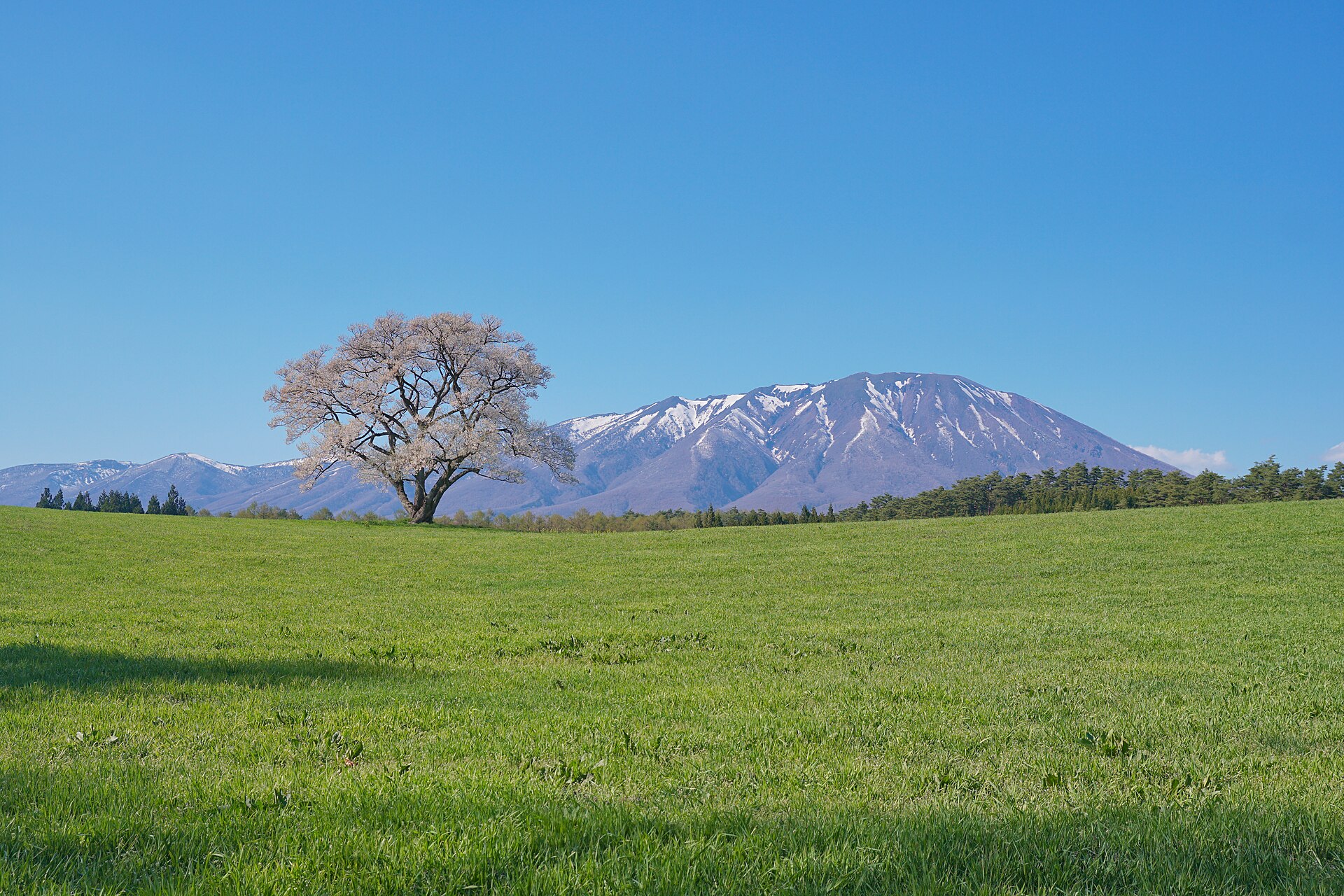
A privately held dairy estate on the southern slope of Mount Iwate, with one corner open to visitors. Its working barns are nationally designated Important Cultural Properties, and a lone cherry in its hayfield has become one of Tohoku's best-known spring images.
- FromMorioka Station
- ~30-35 minDirect bus from Morioka
- Get off atKoiwai Farm Makiba-en (Iwate Kenkotsu bus)
- From there
- Koiwai Farm
The sweet spot
This is a famous name in Japan, not a hidden place, and the cherry draws crowds for a short season each spring. What stays calm is everything else — the heritage barns, the path out to them, the long view across grass. Most day-trippers never walk that far.
Where it is
17 more notes in Iwate · open the map →What to look for — in walking order
- Makiba-enthe open visitor area just inside the gate, with lawns, sheep paddocks and the main lodge
- Koiwai Farm Museumthe estate's own museum inside the park, on how the farm was built and what it does
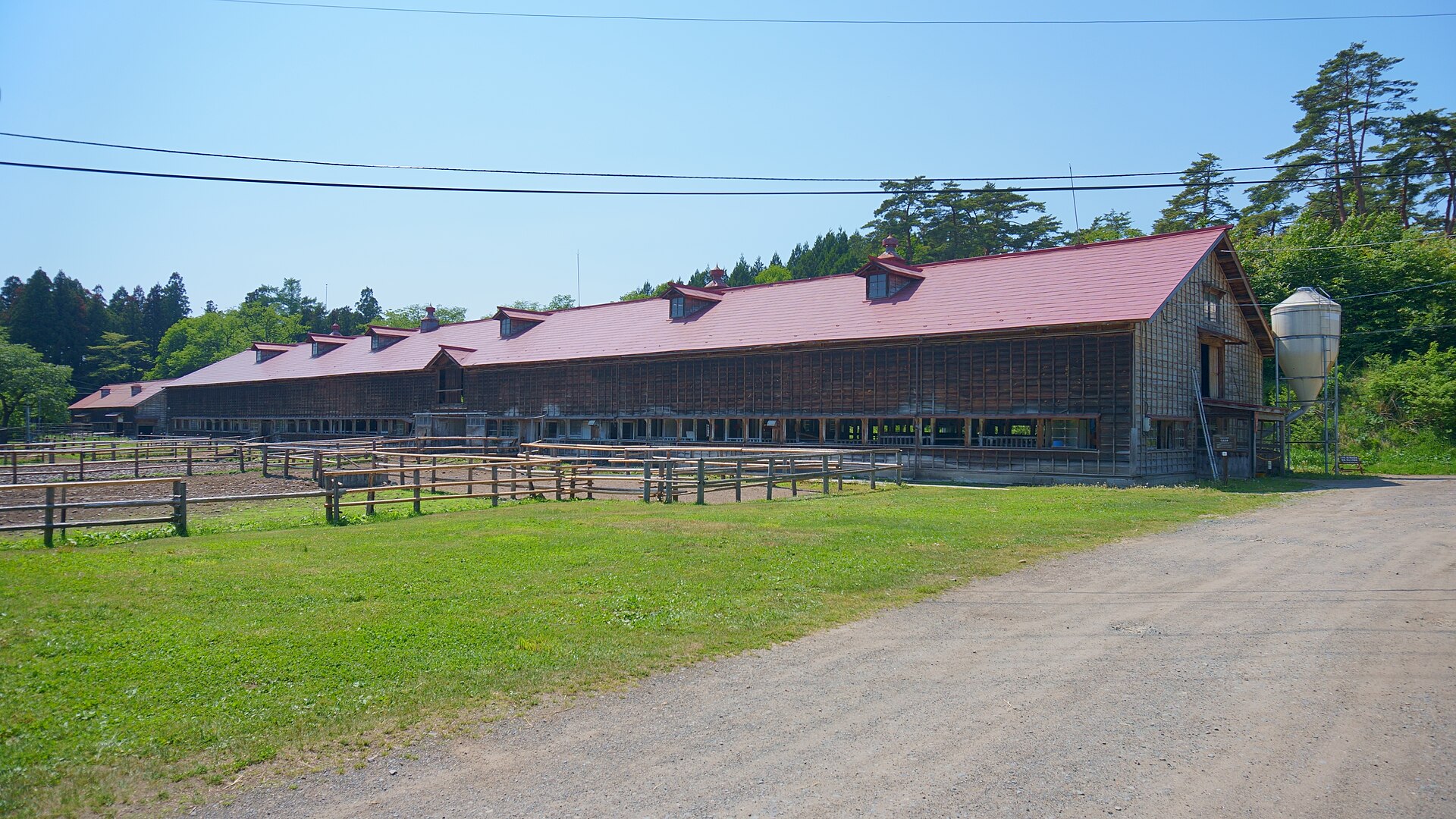
- Kamimaru barnsthe heritage yard north of the park, where cattle still live in the designated buildings
- Miyazawa Kenji poem monumenta stone behind the barns carved with a passage from his long poem about this farm
- The lone cherryone Edohigan out in hayfield beyond the gate, with Mount Iwate rising behind it
How to actually get there
- Morioka Station east exit, stand 10 → Koiwai Farm Makiba-en (Iwate Kenkotsu bus, about 30-35 min).
- Enter Makiba-en and walk north through the park to the Kamimaru yard and the heritage barns.
- Return to the entrance, then follow the farm road out to the lone cherry, which has its own small roadside car park.
- Take the same route back from the Makiba-en stop to Morioka Station.
- One bus from Morioka Station
- Morioka Station east exit, stand 10 → Iwate Kenkotsu 'Koiwai Nojo' route to the last stop, Koiwai Farm Makiba-en. About 30-35 minutes, and the fare was listed at around 750 yen when checked. The terminus is the entrance itself, so there is no transfer and no walk from a station.
- Back to Morioka from Makiba-en
- The same route returns from the Makiba-en stop to Morioka Station. Departures are not frequent, so read the board at the stop when you arrive and fix your return before you walk out to Kamimaru. If you miss it, a taxi to Koiwai Station on the JR Tazawako Line is the fallback.
About the place
Koiwai spreads over roughly 3,000 hectares on the volcanic skirt south of Mount Iwate, which makes it one of the largest privately owned farms in the country. Only a small share of that is open to the public, as a visitor park called Makiba-en, with lawns, sheep paddocks and places to eat. The rest is a working operation — dairy herds, forestry, breeding stock. Walk north from the entrance and you reach Kamimaru, the yard where the oldest buildings stand and where cattle still live. Beyond the farm gate, along the road toward Shizukuishi, one cherry tree stands in open hayfield with the mountain behind it.
How to enjoy it
The cherry is usually at its best from late April into early May, and the farm road beside it fills with cars in that window. Outside that season the barns are the reason to come, and the walk out to them is the better half of the visit. Note that Kamimaru has no exit of its own, so you return through Makiba-en to reach the bus stop.
Background & history
The farm was founded in 1891 by three men — Ono Giman, Iwasaki Yanosuke and Inoue Masaru — and its name is built from one character of each. In February 2017, twenty-one of its structures were designated Important Cultural Properties, among them cattle barns still in daily use and silos said to be the oldest surviving in Japan. The lone cherry is an Edohigan, planted in the late Meiji years as a shade tree for grazing cattle rather than for the view.
Before you go
- Cash
- Makiba-en charges admission, and both the fee and the operating season shift with the calendar, so check the farm's own site before you set out. The bus fare is settled when you get off, so carry cash.
- Before you go
- The park runs on a seasonal calendar and some areas shut in winter. The route up to Kamimaru is open ground with no shelter, and the hayfield around the cherry takes the wind straight off the mountain.
- Another way
- By car it is about fifteen minutes from Morioka IC on the Tohoku Expressway, and the farm keeps large free car parks. From JR Koiwai Station on the Tazawako Line a taxi takes roughly ten to fifteen minutes.
- After you get off
- The bus terminates in front of the entrance, so the ticket window is a minute from where you step down. Kamimaru is entered on foot from inside the park, and there is no way out to the public road from that end — plan to come back the way you went in.