Gifu · GujoNo.474★★★Open in map →
Gujo Hachiman
— A castle town laid out around its water channels
A castle town in the upper Nagara valley where channels of spring water run beside the houses and a preserved district of craft streets climbs toward a wooden keep. The lanes are open at any hour and cost nothing to walk.
- FromGifu Station
- ~1 hr 50 minGifu Bus, no reservation
- Get off atGujo Hachiman Jokamachi Plaza (Gifu Bus)
- From there
- Gujo Hachiman
Where it is
18 more notes in Gifu · open the map →What to look for — in walking order
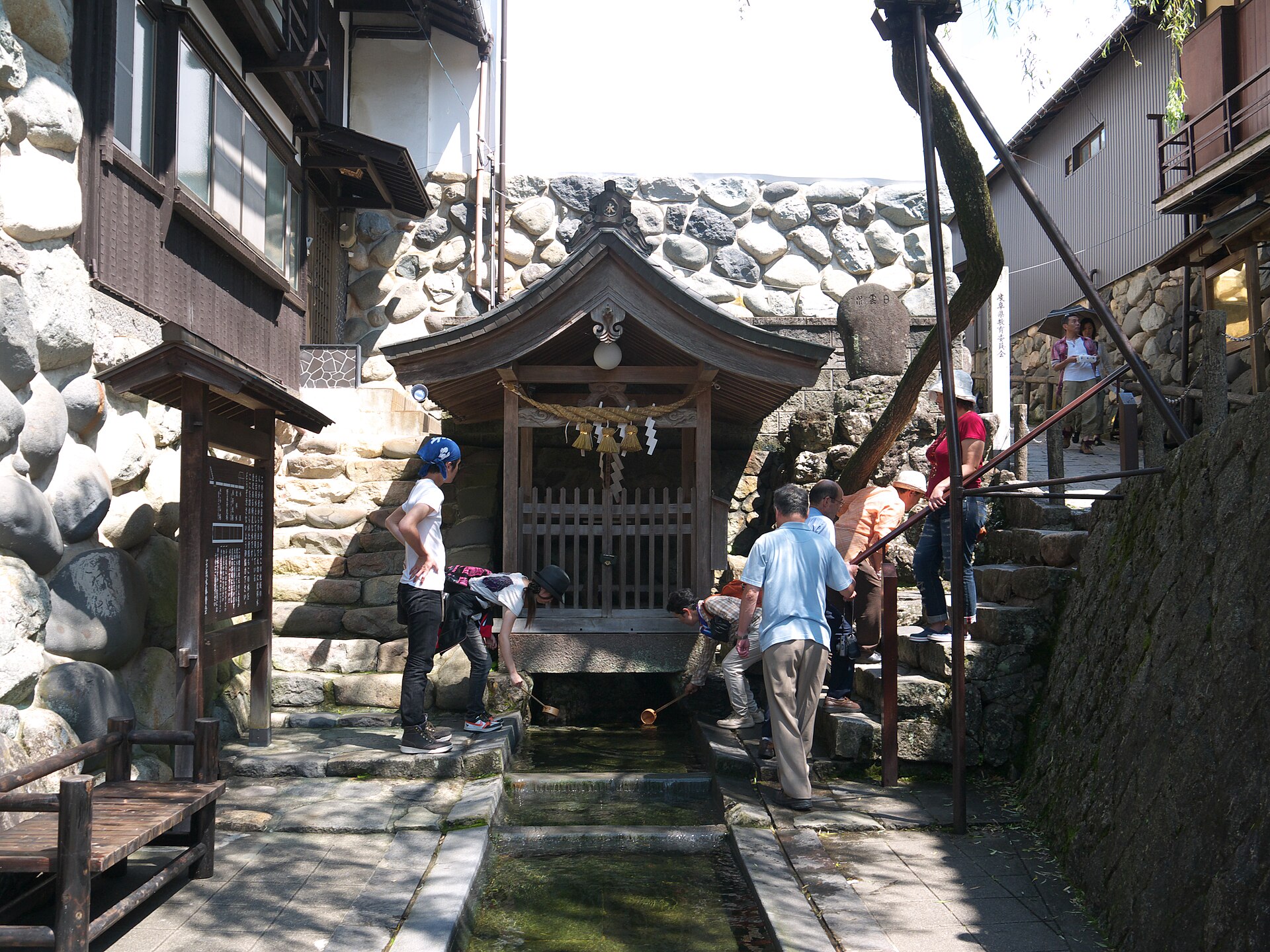
- Yanaka Mizu-no-Komichia short cobbled lane beside a water channel at the Shinmachi end of the old quarters
- Sogi-sui springthe spring named for the poet Sogi, first on the Environment Ministry's list of Japan's finest waters
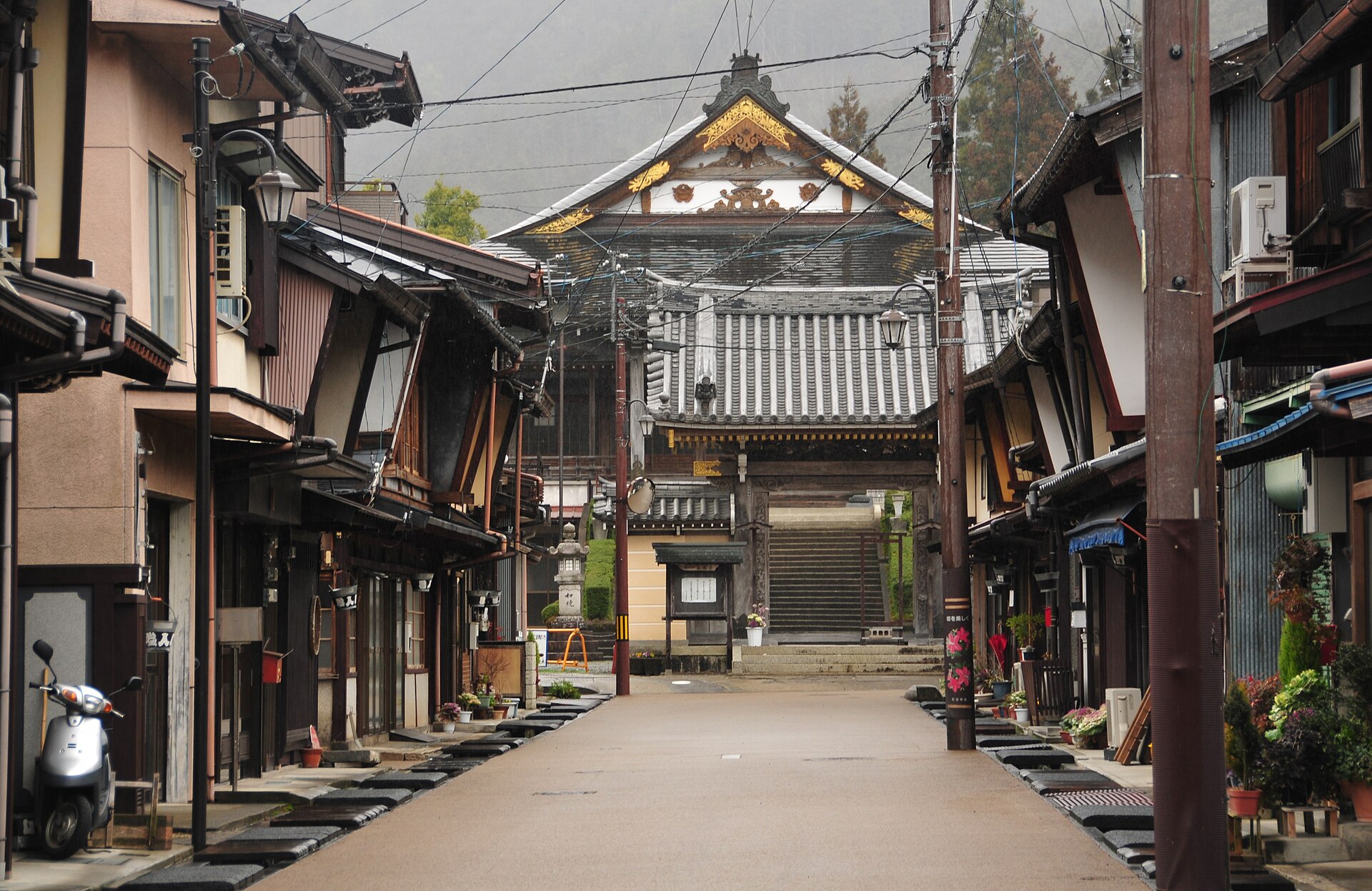
- Shokunin-machi and Kajiya-machithe nationally preserved craft streets, with channels running along both sides of the road
- Gujo Hachiman Hakurankana museum on Yanagi-machi where the steps of the Gujo Odori are demonstrated
- Gujo Hachiman Castlethe hilltop keep above the town, rebuilt in timber, with the roofs and rivers laid out below
How to actually get there
- JR Gifu Station, bay 14 → Gujo Hachiman (Gifu Bus, Gifu-Hachiman line, about 1 hr 27 min, 1,800 yen, no reservation).
- Get off at Jokamachi Plaza to start inside the old quarters (the last stop is by Gujo-Hachiman Station, farther from the lanes).
- From Jokamachi Plaza the preserved lanes start on foot straight away; from Gujo-Hachiman Station it is about 20 minutes north, or take the Mame Bus red route.
- Follow the water lanes north from Yanaka Mizu-no-Komichi as far as Kajiya-machi, then climb to the castle.
- Gifu Bus, Gifu-Hachiman line, direct from JR Gifu
- JR Gifu Station (bay 14) →(Gifu Bus, Gifu-Hachiman highway line, about 1 hr 27 min)→ Gujo Hachiman. The fare is 1,800 yen, paid on board, and IC cards are accepted. This line takes no reservations. Get off at Jokamachi Plaza for the preserved district, or stay on to the last stop beside Gujo-Hachiman Station.
- Return from Gujo Hachiman
- Buses back to Gifu leave from the same stops. A return ticket at 3,200 yen is sold at the Gifu Bus terminal and at Jokamachi Plaza, so buy it before you set out if you are coming back the same day. Departures are fewer in the evening than in the middle of the day, so check the board when you arrive rather than after dark.
About the place
Gujo Hachiman lies in the mountains north of Gifu, where the Yoshida River joins the Nagara. Fire took the castle town in the Edo period, and the lords who rebuilt it cut a grid of channels through the streets so that water would always be at hand. Those channels still run, and households along them still use them. The preserved district of Shokunin-machi and Kajiya-machi, protected by national designation, keeps the low eaves and narrow frontages of the craft quarters, and a wooden keep stands on the hill above. The town is known across Japan for its summer dance, but what fills the streets the rest of the year is the sound of moving water.
How to enjoy it
Walk the water lanes early, while households are still using the channels and before the shops open. The Gujo Odori runs from mid-July to early September on nights that move around the town, and on 13-16 August it goes from 20:00 until four or five in the morning. Anyone can step into the circle, which is the point of it: this is a dance to join, not to watch.
Background & history
A castle was raised on the hill above the town in 1559 by Endo Morikazu, and the keep standing there now is a wooden reconstruction of 1933. Earlier still, in 1471, the renga poet Iio Sogi is said to have taken leave of his teacher beside a spring in the town, and the spring has carried his name since. The Gujo Odori, the dance held here every summer, was inscribed on the UNESCO list of intangible cultural heritage in 2022.
Before you go
- Cash
- The lanes, the channels and the Sogi-sui spring cost nothing. The castle and the town museums each charge their own admission, confirmed on site. Bus fares are paid on board in cash or by IC card.
- Before you go
- The streets are open at any hour, but the museums and the castle keep daytime hours only. Snow is normal here in winter and the channels run cold and fast after rain. In the dance season the venue moves from quarter to quarter, so a different part of town is crowded each night.
- Another way
- From Nagoya, the highway bus on the Nagoya-Gujo-Hirugano line leaves Meitetsu Bus Center for Gujo Hachiman Jokamachi Plaza at 2,400 yen. Unlike the Gifu line, this one must be reserved in advance.
- After you get off
- Jokamachi Plaza sits at the edge of the preserved district, so the lanes begin on foot from the stop. If you come by Nagaragawa Railway instead, Gujo-Hachiman Station is about 1.4 km south, roughly 20 minutes on foot along the river; the local Mame Bus red route covers the same ground to Jokamachi Plaza in 13 minutes.