Toyama · HimiNo.417★★Open in map →
Himi Winter Yellowtail
— Toyama Bay's cold-season fish at the port market
Yellowtail taken from Toyama Bay in the cold months, when the fat is heaviest. The nets are offshore and the auction is closed, so the place to meet it is the market beside Himi's fishing port, open all year with the fish halls trading from early morning.
- FromHimi Station
- ~12 minKaetsuno bus, stop at the door
- Get off atHimi Banyagai bus stop (Kaetsuno Bus)
- On foot
- Himi Winter Yellowtail
The sweet spot
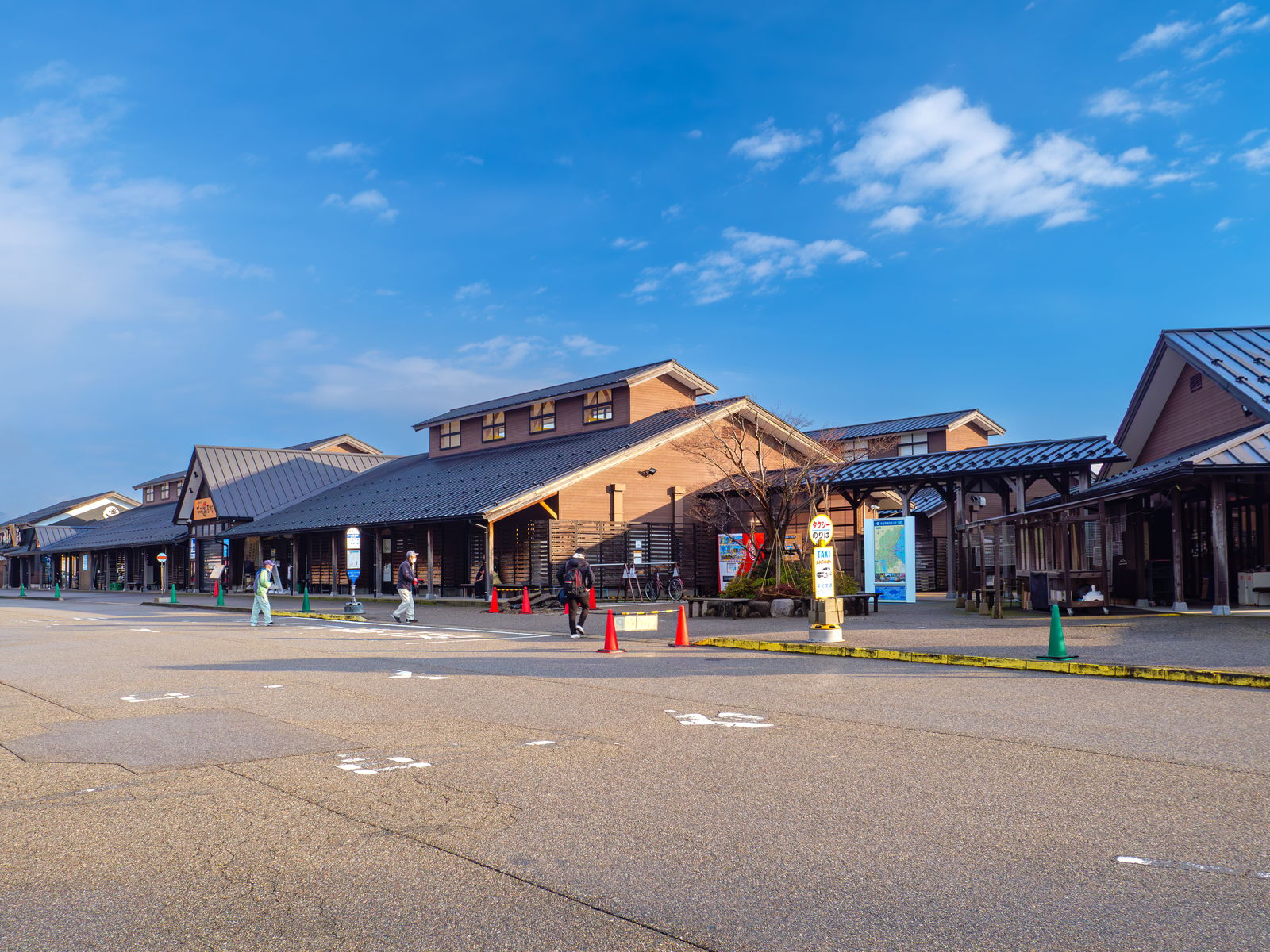
This is a famous fish and a busy market, not a quiet corner. What the site gives you is access without a booking: the fish halls open at half past eight and price by the piece, the food court sits between them, and the foot bath at the sea end costs nothing. In a region where the good yellowtail otherwise arrives as a set course at an inn, that is the difference.
Where it is
8 more notes in Toyama · open the map →What to look for — in walking order
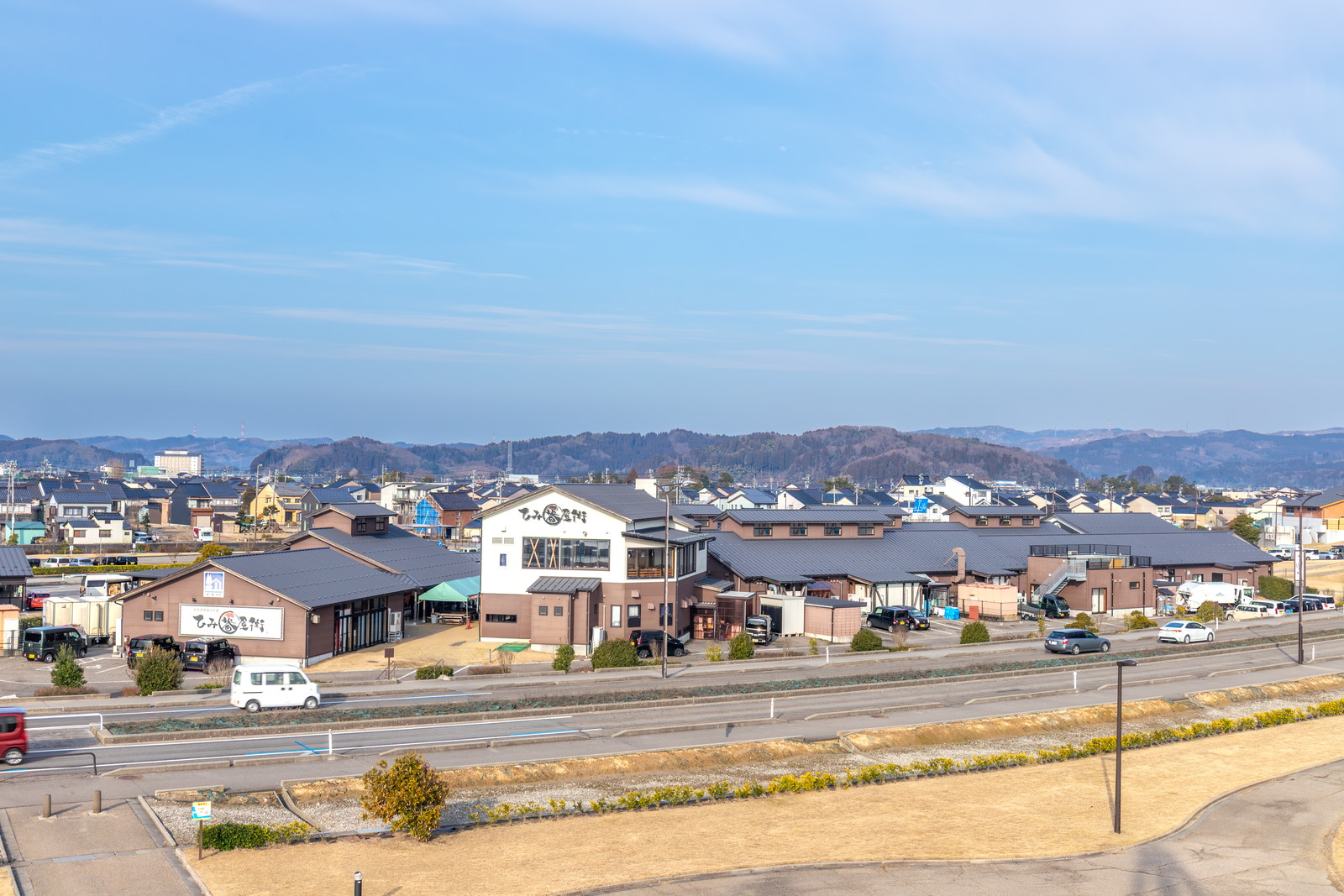
- The fish hallthe market's front room, trading from 8:30 and closing when the day's fish is gone
- The shop hallsHimi udon, dried fish, Himi beef and preserved goods, on the same 8:30 to 18:00 hours
- The food courtcounters between the halls, open from morning rather than only at lunch
- The conveyor-belt sushithe market's own sushi hall, running from 10:00 through to 20:00 when the rest has shut
- The free foot bath and Himi Onsen-go Soyuan open foot bath at the sea end of the site, with a full hot-spring bathhouse alongside it
How to actually get there
- Takaoka Station → Himi Station (JR Himi Line, roughly one train an hour).
- Himi Station → Himi Banyagai (Kaetsuno bus, about 12 minutes; or a little over twenty minutes on foot).
- Start in the fish hall, which trades from 8:30 and stops when it sells out.
- Work along the row through the food court and the sushi counter, and finish at the free foot bath.
- Kaetsuno bus from Himi Station
- Himi Station → Himi Banyagai, about 12 minutes on the Kaetsuno bus route named for the market; the stop is at the front of the site, so there is no walk at the far end. Himi Station itself is the end of the JR Himi Line from Takaoka, which runs to a roughly hourly timetable.
- Return from Himi Banyagai
- The same bus back to Himi Station, or a walk of a little over twenty minutes if the timing does not suit. Trains on the Himi Line come about once an hour, so read the return before you sit down — the market's restaurants can absorb an hour without you noticing.
About the place
Yellowtail passes down the Sea of Japan in autumn and winter, and Toyama Bay catches it in fixed nets set off Himi. Only part of that catch earns the name: himi kanburi covers fish taken in the bay's fixed nets during a window that a local committee opens and closes each year, and auctioned at the Himi fish market. Fish that miss the window, or the size, are simply yellowtail. The nets and the market are working operations, so the way in for a visitor is the market's public side — a roadside station built next to the port, laid out as a row of low halls that the site calls banya, after the fishermen's huts of this coast.
How to enjoy it
Come in the morning. The fish hall opens at 8:30 and closes as soon as the day's fish has gone, which is the one part of the site that will not wait for you; everything else runs to 18:00, and the sushi hall to 20:00. Yellowtail is worked hard here from November and December onward, once the winter thunder the fishermen call buri-okoshi has passed, so a cold-month visit is the one that matches the name — and the foot bath at the end of the row is the right way to finish it.
Background & history
Himi's fishing rests on a technique rather than a boat. Fixed netting took hold along this coast in the Tenshō era of the late sixteenth century, working the shallow shelf that runs out from the town, and the local form of it came to be known as the Etchu-style fixed net. Later generations reworked the trap so that fish entering it were less likely to find their way out again. The market on the shore is much newer, but the reason it stands where it does is that four centuries of nets have been hauled a few hundred metres away.
Before you go
- Cash
- There is no entrance fee; you pay hall by hall and stall by stall. The foot bath is free. The hot-spring bathhouse next to the market charges separately, and the shops are the usual mix for card acceptance, so keep some cash.
- Before you go
- The market closes on 1 January, with the fish hall following the port's first-auction day. Opening hours differ by building — fish and shops from 8:30, the food court the same, restaurants from 11:00 and the conveyor-belt sushi from 10:00 to 20:00. The fish hall also closes when it sells out.
- Another way
- By car it is about 8 minutes from the Himi interchange on the Noetsu Expressway, with free parking for 220 cars and 10 coaches — the practical option if you are driving the bay road between Takaoka and Noto.
- After you get off
- The Himi Banyagai stop is on the road directly in front of the site, and the halls begin a few paces from it. The port itself is over the sea wall on the far side, and the foot bath sits at the seaward end of the row.