Toyama · GokayamaNo.473★★★Open in map →
Ainokura Gassho Village
— A World Heritage hamlet of steep thatched roofs
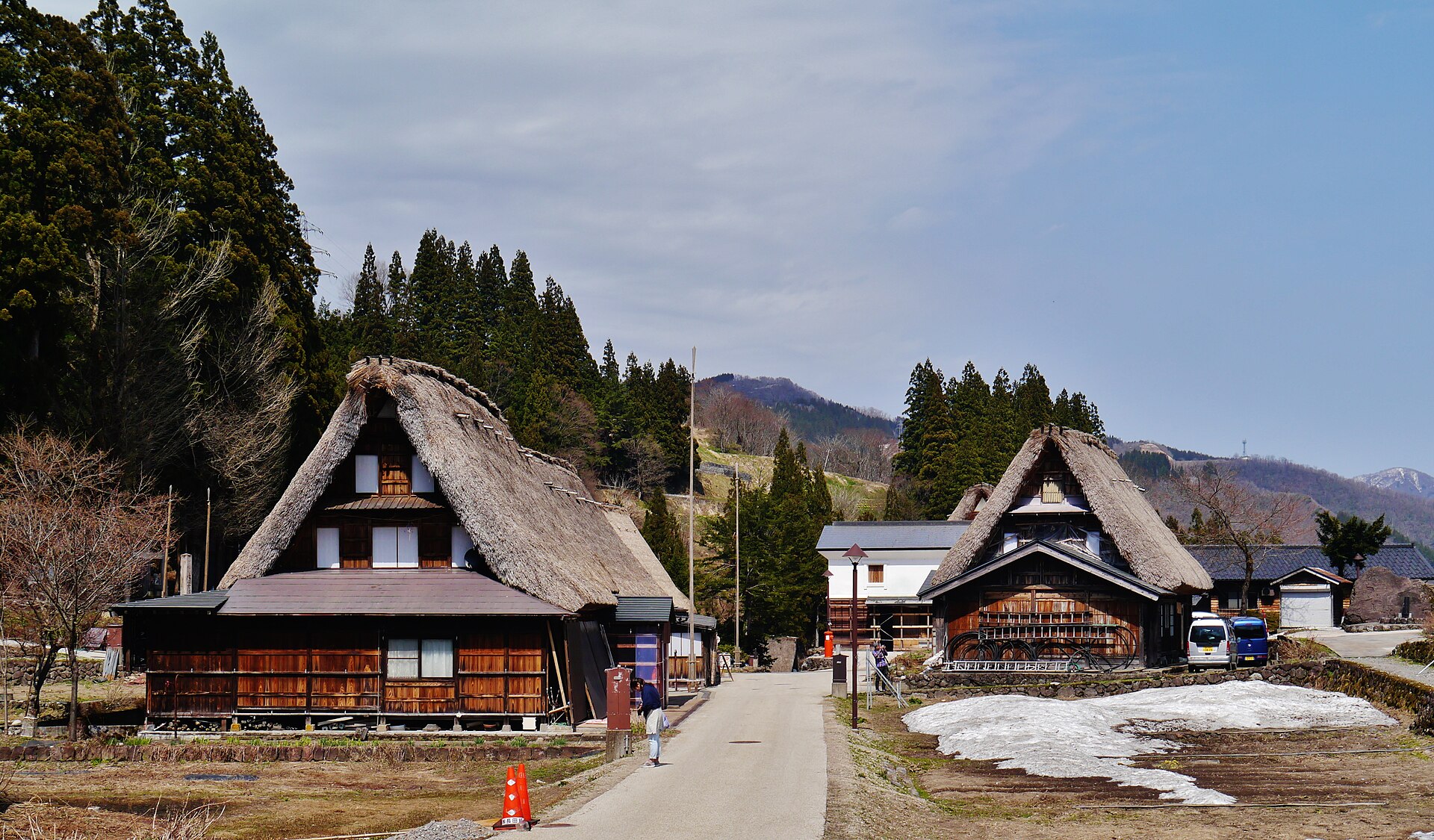
A hamlet of steep thatched farmhouses on a terrace above the Gokayama valley, inscribed as World Heritage alongside Suganuma and Shirakawa-go. It is still lived in, which is why it opens and closes at set hours.
- FromJohana Station
- ~25 minWorld Heritage Bus, 5 min walk
- Get off atGokayama Ainokuraguchi bus stop (Kaetsuno Bus)
- On foot
- Ainokura Gassho Village
Where it is
8 more notes in Toyama · open the map →What to look for — in walking order
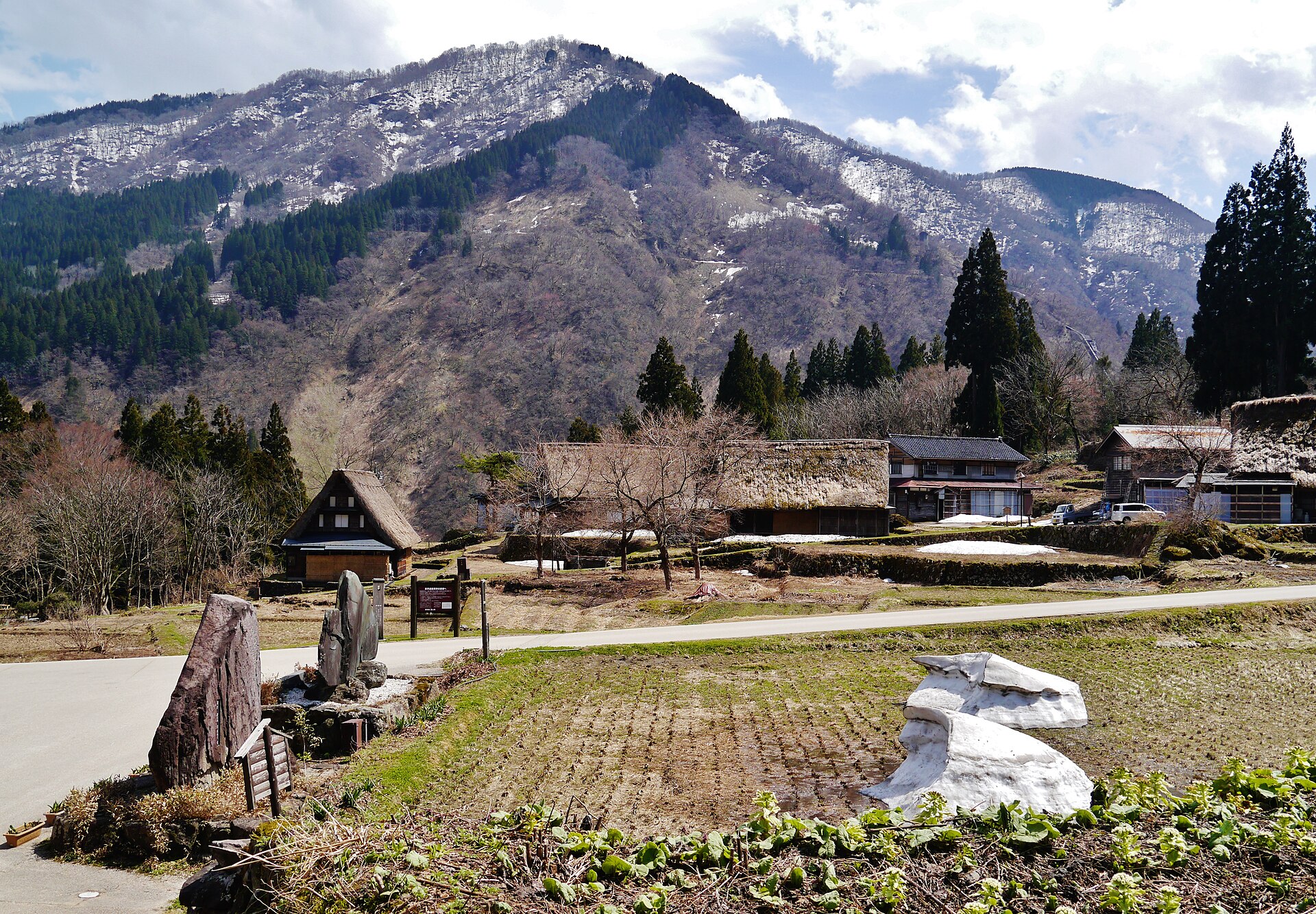
- The path up from Ainokuraguchia short signposted climb from the road to the edge of the houses
- The village lanethe single street through the hamlet, with worked fields on both sides
- Ainokura Folk Museuma gassho house opened up to show the tools and trades of the valley
- Gokayama washi paper halla hands-on workshop for the thick handmade paper the valley once sold
- The viewpoint above the villagea designated Toyama viewpoint on the slope, looking down on the roofs
How to actually get there
- Shin-Takaoka or Takaoka → Johana on the JR Johana Line.
- Johana Station → Gokayama Ainokuraguchi on the Kaetsuno World Heritage Bus, about 25 minutes.
- Ainokuraguchi → the village, about five minutes uphill on foot.
- Walk the lane, then climb to the viewpoint; the same bus continues to Suganuma and Shirakawa-go.
- World Heritage Bus from Johana Station
- Johana is the end of the JR Johana Line from Takaoka and Shin-Takaoka, and the Kaetsuno World Heritage Bus leaves from in front of the station. Ainokuraguchi is the stop; the village sits up the slope from the road. The same service starts back at Takaoka and Shin-Takaoka, so it can also be ridden the whole way without changing.
- Leaving Ainokura
- This is a rural route with a limited timetable rather than an hourly service, so the return departure decides how long you stay. Read it at the stop before you walk up, and plan the visit backwards from it. The connection onward to Shirakawa-go runs from the same roadside.
About the place
Twenty gassho-zukuri houses stand at Ainokura, spread over a terrace above the valley with small fields worked between them. Gassho means palms pressed together, and the word describes the roof: a steep thatched gable pitched to shed the snow that buries this valley every winter. The thatch does not last forever, and renewing it is done collectively rather than bought in — the practice is part of what the World Heritage listing protects, not a performance staged for visitors. Some houses take guests or open as museums. The lane between them is still the way home.
How to enjoy it
Climb to the viewpoint first and the village explains itself from above — one lane, the fields, every roof pitched the same way. Then walk back down through it slowly. Visiting starts at half past eight, and thatch takes light best early and late in the day. If Shirakawa-go is also on the list, take Ainokura first: the bus runs in that direction, and the small village reads better before the large one.
Background & history
Gokayama was poor farming country and hard to reach, so it paid its way by making things. Households refined saltpetre for gunpowder and beat out thick, strong washi paper, and the cavernous roof spaces of the gassho houses were the workrooms where that happened. Three villages were inscribed on the World Heritage list together in 1995 — Ogimachi in Shirakawa-go, and Suganuma and Ainokura here — on the grounds that the architecture and the livelihood explain each other.
Before you go
- Cash
- There is no admission to the village itself, and the museums inside charge separately. Parking for a car was listed at 1,000 yen at the time of checking. Kaetsuno also sells a two-day Gokayama and Shirakawa-go bus pass at 4,000 yen for an adult, worth comparing against single fares if both valleys are on the plan.
- Before you go
- The village is open to visitors from 8:30 to 17:00 and does not shut for the season, but it is a residential hamlet: houses, gardens and fields either side of the lane are private. Snow is heavy here from December onward, and both the bus timetable and the footing change with it.
- Another way
- Suganuma, the other Gokayama village on the World Heritage list, is nine houses on the riverbank a few stops further along the same bus route, with a saltpetre museum and a folk museum. Doing both in a day works on the same ticket. By car, Ainokura is about 20 minutes from the Gokayama interchange.
- After you get off
- The Ainokuraguchi stop is on the main road below the village. The signposted path up takes about five minutes and comes out at the car park on the edge of the houses; from there the lane runs level through the hamlet.