East Kanazawa · HigashiyamaNo.984★★★Open in map →
Kanazawa Gold Leaf
— Japan's only museum for gold leaf, in Higashiyama
Gold beaten between sheets of handmade paper until it becomes a film, in the city that makes nearly all of Japan's supply. The municipal museum in Higashiyama is the only one in the country given over to the craft, a few streets from the teahouse district.
- FromKanazawa Station
- ~15 minLoop bus, every ~15 min
- Get off atHashiba-cho (Castle Town Kanazawa Loop Bus, right route)
- On foot
- Kanazawa Gold Leaf
Where it is
16 more notes in Ishikawa · open the map →What to look for — in walking order
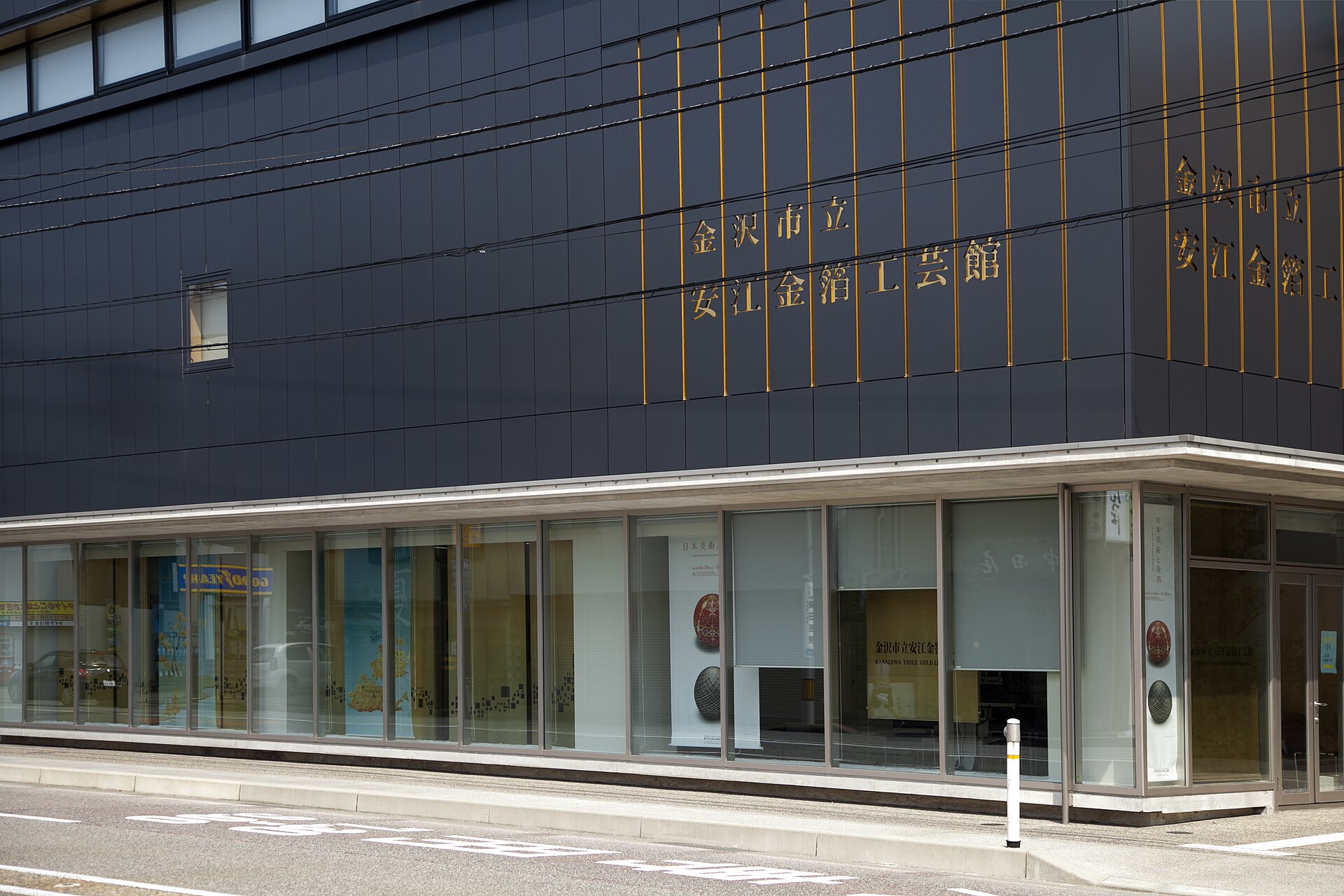
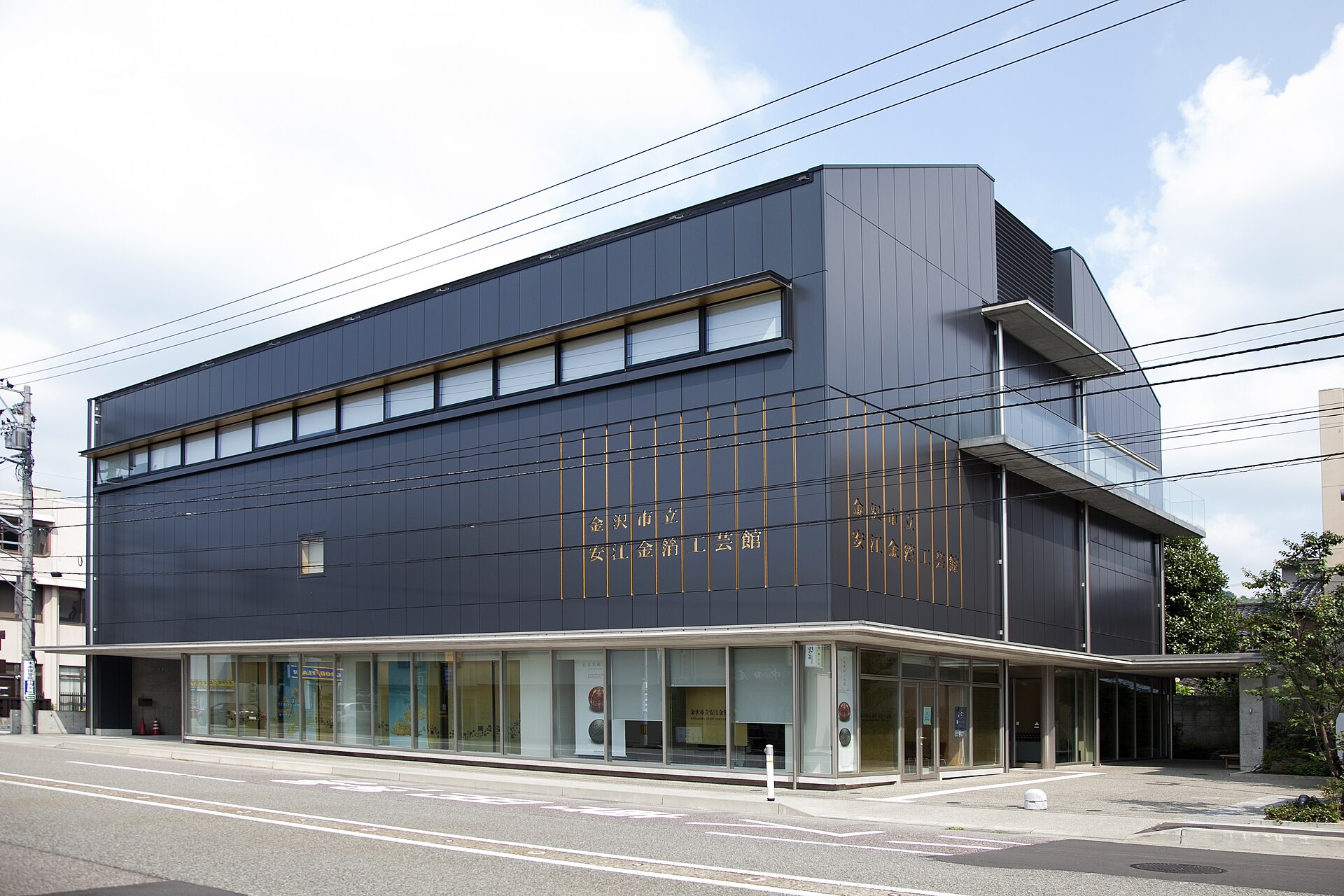
- The name on the outer wallthe museum's own name laid onto the dark facade in gold leaf, with the entrance logo done the same way
- Multipurpose exhibition hallthe ground-floor hall, its ceiling dome faced in gold leaf
- Permanent gallerythe properties of gold leaf and the stages of beating it, tools included
- Special exhibition gallerytwenty to thirty pieces shown at a time, rotated out of a collection of about four hundred
How to actually get there
- Kanazawa Station east exit, stand 7 → Hashiba-cho (Castle Town Kanazawa Loop Bus, right route, about 12 min, 220 yen).
- Hashiba-cho → the museum (about 3 min on foot, away from the river).
- Start in the ground-floor hall, then take the two galleries upstairs.
- Return from the same stop on the left route, or by an ordinary route bus once the loop buses have finished.
- Castle Town Kanazawa Loop Bus, right route
- The loop bus leaves from stand 7 at the east exit of Kanazawa Station. Take the right route and get off at Hashiba-cho, about twelve minutes out; the adult fare is 220 yen. Ordinary Hokutetsu route buses and West JR buses call at the same stop, so the service is denser than the loop timetable alone suggests.
- Back to the station from Hashiba-cho
- The loop runs one way, so the return is either the rest of the right route through Kenrokuen and Korinbo, or the left route picked up across the street. Both finish at Kanazawa Station. The loop buses stop in the early evening — the last ones leave the station at around six — so later in the day take an ordinary route bus instead.
About the place
Gold leaf is gold beaten out until it is a film one ten-thousandth of a millimetre thick, thin enough that it can only be lifted with bamboo tools. Two methods are in use here. The older one, entsuke, beats the gold between sheets of handmade gampi paper cured in straw lye and persimmon tannin. The modern one, tachikiri, uses industrial glassine paper instead. Entsuke is the leaf reached for when a national treasure or an important cultural property has to be repaired, and because nothing synthetic goes into it, it is also the leaf that is eaten.
How to enjoy it
The museum opens at 9:30 and closes at 17:00, and the desk takes the last entry at 16:30. Official guides put a visit at about thirty minutes, which makes it a workable first stop before the teahouse streets fill through the middle of the day. Going in first also means the gold in the shop windows afterwards is something you can read.
Background & history
Beating was under way here by the close of the sixteenth century. In 1593, writing from his camp at Hizen Nagoya during the Korean campaign, the first Kaga lord Maeda Toshiie ordered gold leaf to be beaten at Nanao and silver leaf at Kanazawa. In 1696 the shogunate opened a leaf office in Edo and banned the making and selling of gold and silver leaf everywhere else, and the Kanazawa workshops went dark. Beating was licensed again only in 1864, and then only for repairs to the castle and for domain use. The entsuke method was inscribed by UNESCO in 2020, among a group of traditional building crafts.
Before you go
- Cash
- Admission was 310 yen for adults when checked, with high school students and younger admitted free and a reduced rate for visitors aged 65 and over. The buses take ICa cards and contactless credit cards. The one-day bus pass costs 800 yen and is not sold on board, so buy it at a station window or a hotel before you set out.
- Before you go
- The museum closes on Tuesdays, and on the following weekday when a Tuesday falls on a public holiday. It also closes over the new year and while exhibitions are being changed over. Those changeover dates move from year to year and are posted on the museum's own site, so check before making the trip.
- Another way
- The Kanazawa Flat Bus on the Zaimoku route stops at Asanogawa Ohashi, about five minutes on foot. There is no visitor car park at the museum beyond a single accessible space, so drivers use the paid lots around Higashiyama.
- After you get off
- Hashiba-cho sits by the Asano River bridge, at the entrance to the Higashi and Kazuemachi teahouse quarters. From there it is about three minutes on foot, heading away from the river along the main road. The museum is the dark grey block on the corner with its name in gold down the wall.