East Hiroshima · KumanoNo.988★★★Open in map →
Kumano Brushes
— Japan's brush town, east of Hiroshima
A hill town east of Hiroshima that makes most of Japan's brushes, though it grows neither the hair nor the bamboo they are built from. Its museum lays the craft out end to end, from a giant display brush to a maker at the bench.
- FromHiroshima Bus Center
- ~45 minHiroden bus, ~45 min
- Get off atNakamizo (Hiroden Bus)
- On foot
- Kumano Brushes
Where it is
25 more notes in Hiroshima · open the map →What to look for — in walking order
- Sakakiyama Shrinehillside shrine whose precinct holds the mound where worn-out brushes are laid up
- The shrine approachthe lane hung with brushes for the autumn-equinox festival, with a brush market alongside
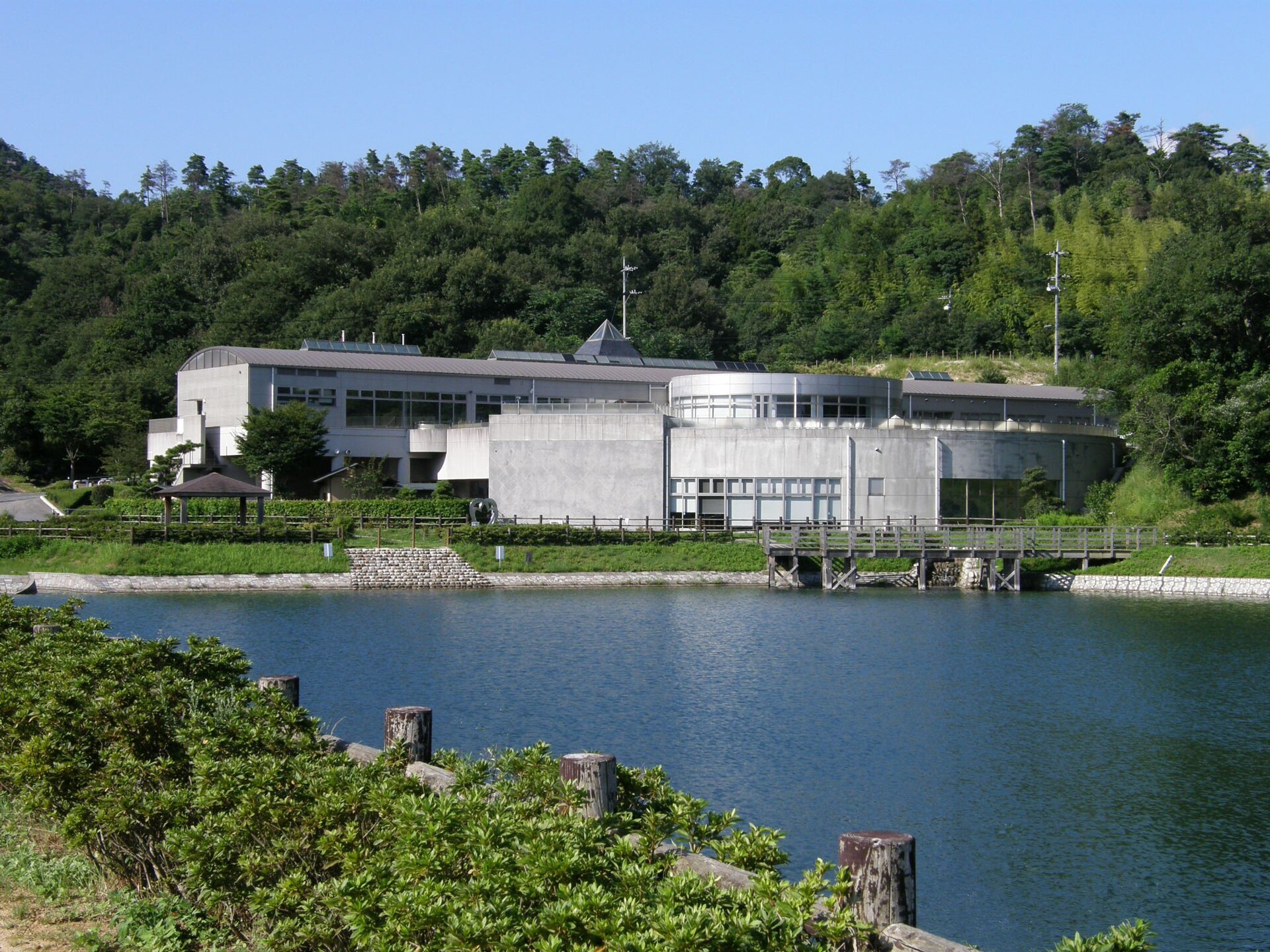
- Fude no Sato Kobolow grey museum buildings on a wooded rise above a still pond
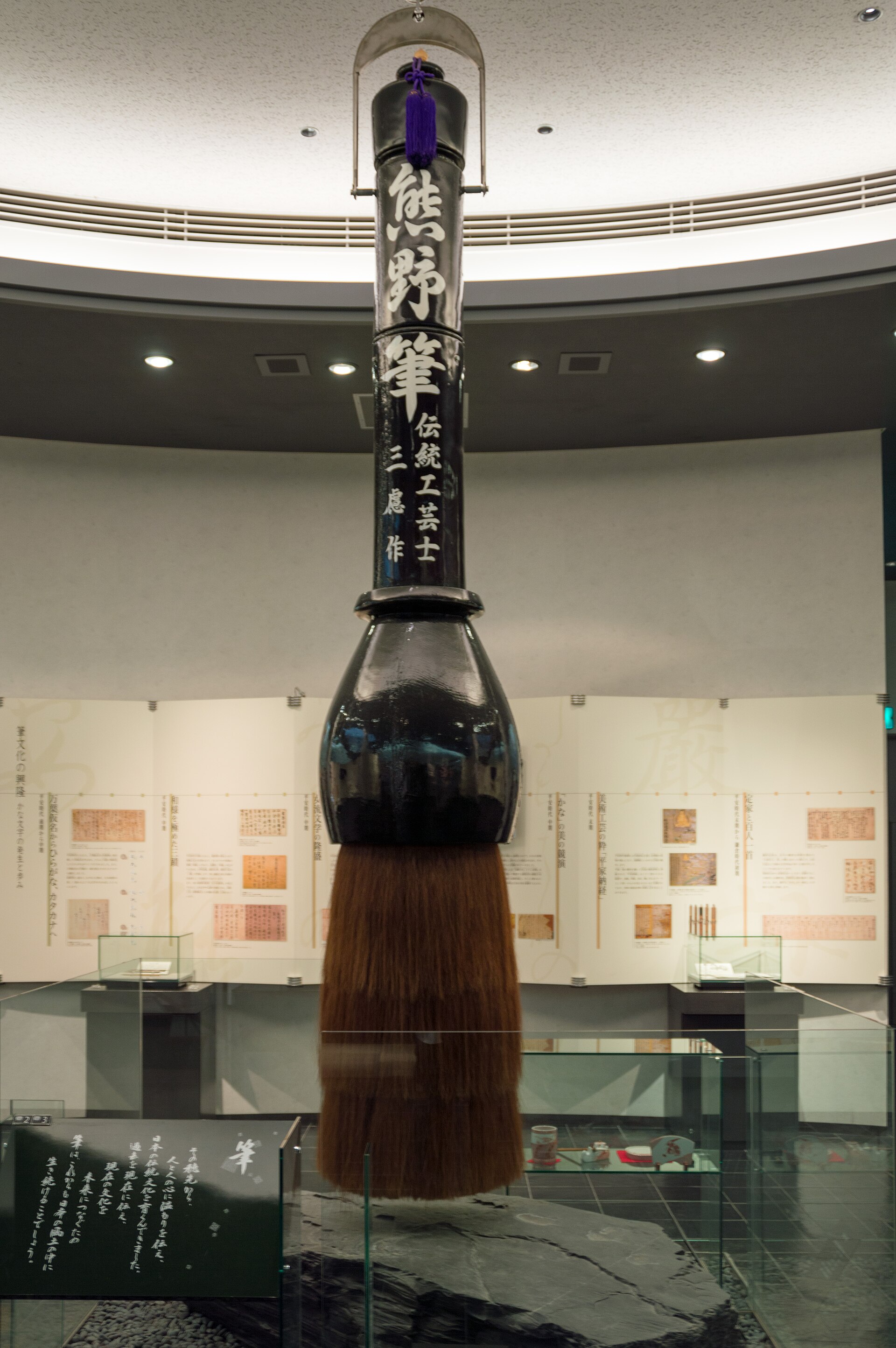
- The round permanent halla giant display brush hung from the ceiling, signed on the shaft by a certified master
- The maker's room and museum shopbrush-making shown at a working bench, and a counter of the town's own brushes
How to actually get there
- Hiroshima Bus Center or JR Hiroshima Station → Nakamizo (Hiroden bus for Kumano Hagiwara or Kumano Depot, about 45 min).
- Nakamizo → up the slope towards Sakakiyama Shrine, following the walking map the museum publishes.
- Shrine → Fude no Sato Kobo on the hill above the pond; the round permanent hall first, then the maker's room and the shop.
- Back down to Nakamizo for the bus into Hiroshima; check the evening departures before you go up.
- Hiroden bus from central Hiroshima
- Hiroshima Bus Center or JR Hiroshima Station →(Hiroden bus bound for Kumano Hagiwara or Kumano Depot, about 45 minutes)→ Nakamizo. Services for the depot do not call at Dekiniwa. From Nakamizo the museum publishes a walking map for the climb up to the hill.
- Same bus back into Hiroshima
- Pick up the return service on the far side of the road at Nakamizo and ride back into the city. This is a local commuter route, not a tourist line, so the evening gaps matter. Check the return times before you walk up.
About the place
Kumano sits in a basin south-east of Hiroshima, closed in by wooded ridges. Nothing a brush needs grows here — no goat or horse hair, no bamboo for the handle. What the town holds is the technique, carried home by farmers who once left in the slack season to peddle brushes and ink bought in Nara and Hyogo. Roughly one resident in ten still works in the trade, across writing brushes, artists' brushes and the cosmetic brushes sold abroad. Most of the brushes made in Japan come from this one town. The museum on the hill above the pond is the single place set up to show an outsider how the work is done.
How to enjoy it
The museum opens in the morning and stops admitting visitors before it closes, so an early arrival leaves time for the maker's room. The brush festival falls on the autumn equinox and centres on the shrine, when the approach is hung with brushes and a market takes over; that is the one day the place is crowded. Buses here are the ordinary town service, so read the return timetable before you set off.
Background & history
Brush-making took hold here around 1830, at the end of the Edo period, in a village with too little farmland to live off. Men who had been peddling brushes and ink on the way back from seasonal work went to Arima and Nara to learn the craft, and Sasaki Tameji and Inoue Jihei are the names the town still keeps. School calligraphy after the Meiji reforms turned the sideline into an industry. In 1975 Kumano became the first brush-making trade named a national traditional craft, and the shrine festival on the hill is older still, first held in 1935.
Before you go
- Cash
- The museum charges admission and the shop takes payment at its counter. Carry cash for the bus, which is an ordinary town service. Fares and admission are set locally and change, so confirm on the day rather than in advance.
- Before you go
- The museum publishes a calendar of open days and closes between exhibitions, so check it before travelling. The site stands on a hill and the climb up from the road is a real one. On festival day both the shrine and the buses fill.
- Another way
- From the JR side the same Hiroden buses run from Yano Station in about fifteen minutes and from Kure Station in about thirty-five. If you end up at Kumano Depot instead, the museum gives a taxi from there as about seven minutes. By car it is roughly thirty-five minutes from central Hiroshima, with parking on the site.
- After you get off
- Get off at Nakamizo and walk up away from the main road; the museum's own walking map covers this stretch. Sakakiyama Shrine stands on the slope on the way, and the museum buildings come into view above the pond at the top.