Ishikawa · Central KanazawaNo.983★★★Open in map →
Kanazawa Castle Park
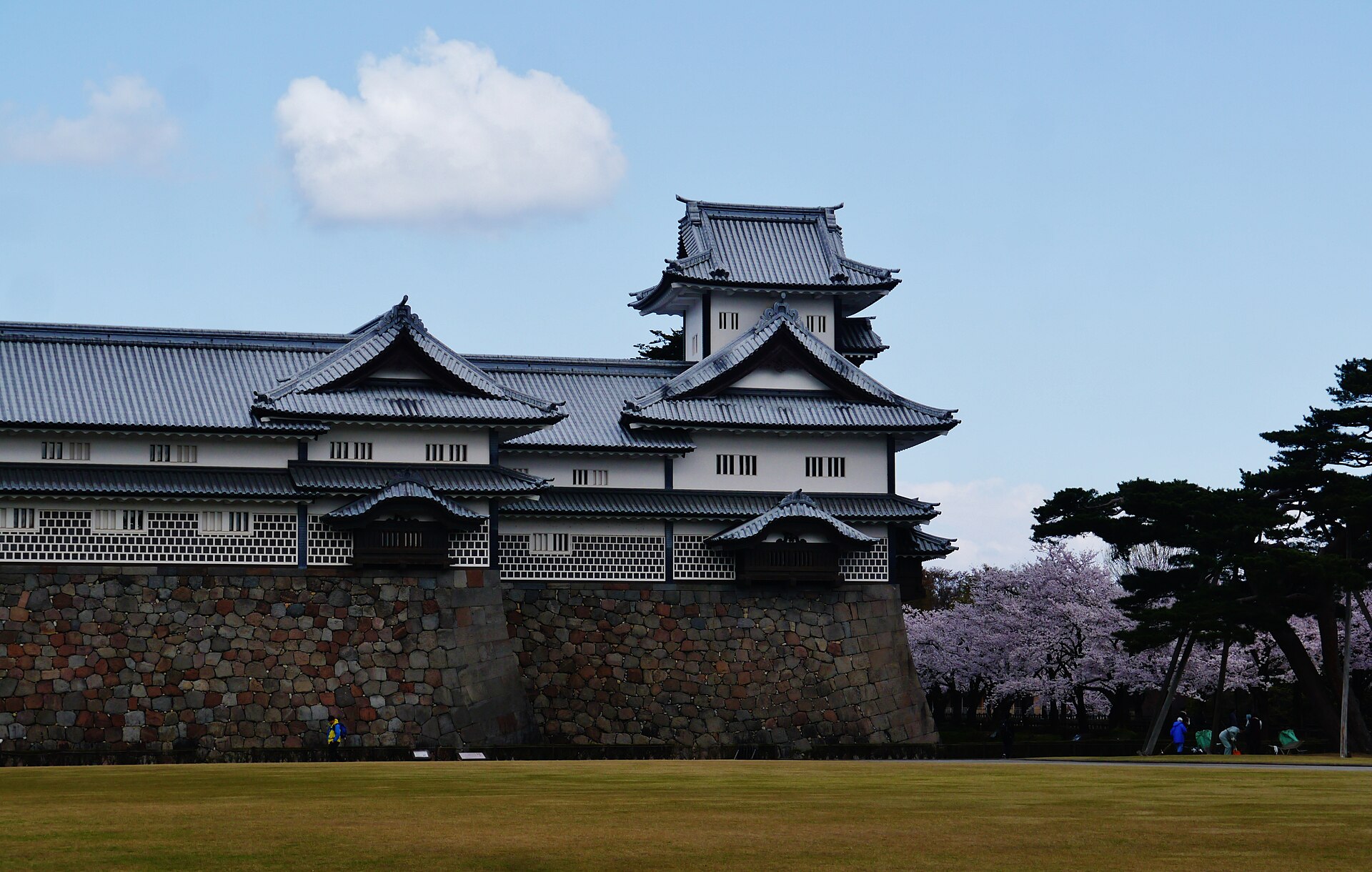
Ishikawa Prefecture keeps the Maeda family's castle grounds open as a free public park. Two Edo-period buildings outlived the fires that took the rest, and the long white range facing the main lawn is a timber reconstruction built by traditional methods.
- FromKanazawa Station
- ~18 minKanazawa Loop Bus, every ~15 min
- Get off atKenrokuen-shita · Kanazawa-jo (Hokutetsu bus)
- On foot
- Kanazawa Castle Park
Where it is
16 more notes in Ishikawa · open the map →What to look for — in walking order
- Ishikawa Gatean Edo-period gate of white plaster, tiled namako walls and pale lead roofs, one of the few buildings the fires spared
- Sannomaru lawnthe open ground the reconstructed range faces across, and the widest view of the castle front
- Hishi Yagura and Gojikken Nagayaa corner turret and the long storehouse range beside it, rebuilt in timber and open to walk through inside
- Sanjikken Nagayaa two-storey Edo storehouse on a wall cut in the kanaba-torinokoshi manner, with the chisel marks left showing
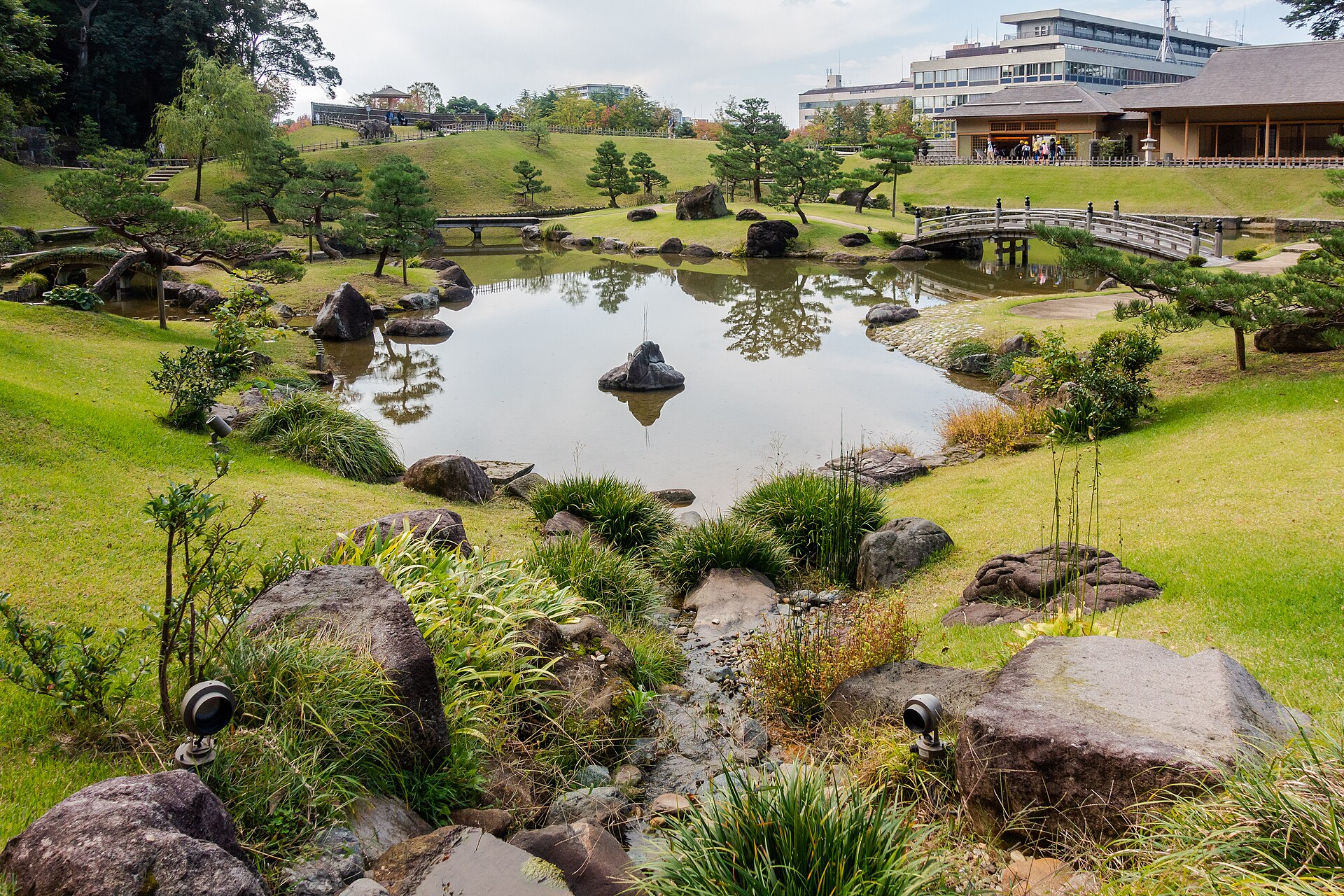
- Gyokusen'inmaru Gardena pond garden in a hollow below the walls, laid out again on the plan of the lords' private garden
How to actually get there
- Kanazawa Station east exit, stand 7 → Kenrokuen-shita · Kanazawa-jo by the Kanazawa Loop Bus, clockwise route.
- Cross Ishikawa Bridge and go in through the Ishikawa Gate, the entrance nearest the stop.
- Sannomaru lawn → Hashizumemon → Ninomaru → Sanjikken Nagaya, then down the west slope to Gyokusen'inmaru Garden.
- Leave by the Nezumitamon Gate for Oyama Shrine, or by the Gyokusen'inmaru exit for the museum quarter.
- Kanazawa Loop Bus from the station east exit
- Kanazawa Station east exit, stand 7 →(Kanazawa Loop Bus, clockwise route, about 18 min)→ Kenrokuen-shita · Kanazawa-jo. The clockwise route runs about every 15 min; the anticlockwise route about every 20 min and takes about 27 min. A single ride was 220 yen for adults when checked. The one-day pass is not sold on board, only at counters and hotels.
- Back from the same stop
- Ordinary Hokutetsu route buses also call at Kenrokuen-shita · Kanazawa-jo, which matters because the loop bus finishes early: the last clockwise departure was 18:00 and the last anticlockwise one 17:58 when checked. On evening-opening nights the park stays open until 21:00, so settle the ride back before you go in.
About the place
The castle sits on the nose of a plateau between the Sai and the Asano rivers, which is why the ground inside the walls keeps climbing and dropping. Its look is easy to read once you know it: white plaster walls set with a diamond lattice of tile, and roofs sheathed in lead weathered to pale grey. The stonework is the other reason to come. The prefecture calls the site a museum of stone walls, because rough walls from the castle's first decades and walls cut square for show both survive here, a few minutes' walk apart. Everything above the stone is either a survivor of the last great fire or a reconstruction built by traditional timber methods.
How to enjoy it
The entrances open before the staffed day: from 4:00 between April and August, 5:00 in March and from September to October, and 6:00 from November through February. Ticketed buildings keep their own hours, 9:00 to 16:30 with last entry at 16:00. Take the Sannomaru lawn at first light, then buy a ticket once the range opens and walk the inside of it.
Background & history
The hill was a fortified temple of the Ikko sect until Oda's forces took it in 1580. Maeda Toshiie moved in three years later, and his family held Kanazawa from here for the rest of the Edo period. Lightning burned the keep in 1602 and it was never replaced; fire came again in 1759, and in 1881 a blaze from an army barracks left only the Ishikawa Gate, the Sanjikken Nagaya and the Tsurumaru storehouse. Ishikawa Prefecture bought the site in 1996 and finished its first timber reconstruction in 2001.
Before you go
- Cash
- The park itself is free and open every day of the year. The ticketed part is the reconstructed range — Hishi Yagura, Gojikken Nagaya, Hashizumemon Tsuzuki Yagura and Hashizumemon — at 320 yen for adults when checked, with a combined ticket for Kenrokuen also sold. Kahokumon, Nezumitamon and the Tsurumaru rest house are free to enter. Cash, credit cards and the usual transport IC money are all taken.
- Before you go
- Open all year. The park runs 7:00-18:00 from 1 March to 15 October and 8:00-17:00 from 16 October to the end of February, with evening openings until 21:00 on set dates. Stone walls damaged in the 2024 Noto earthquake are still being repaired, and the prefecture has opened a viewing route at the Imoribori grounds where the recovered stones are laid out and catalogued before being put back in their original places.
- Another way
- Four other entrances have their own stops: the Gyokusen'inmaru exit from Hirosaka · 21st Century Museum (5 min on foot), the Otemon exit from Owaricho (5 min), the Kuromon exit from Musashigatsuji · Omicho Market (7 min), and the Nezumitamon exit from Minamicho · Oyama Shrine (5 min). A taxi from Kanazawa Station takes about 10 min.
- After you get off
- Get off at Kenrokuen-shita · Kanazawa-jo and cross Ishikawa Bridge to the Ishikawa Gate; the park's own guide gives 5 min on foot from the stop. Through the gate the path climbs, and the Sannomaru lawn opens out with the reconstructed range standing along its far side.