Ishikawa · Kanazawa HigashiyamaNo.475★★★Open in map →
Higashi Chaya District
— Kanazawa's largest teahouse quarter
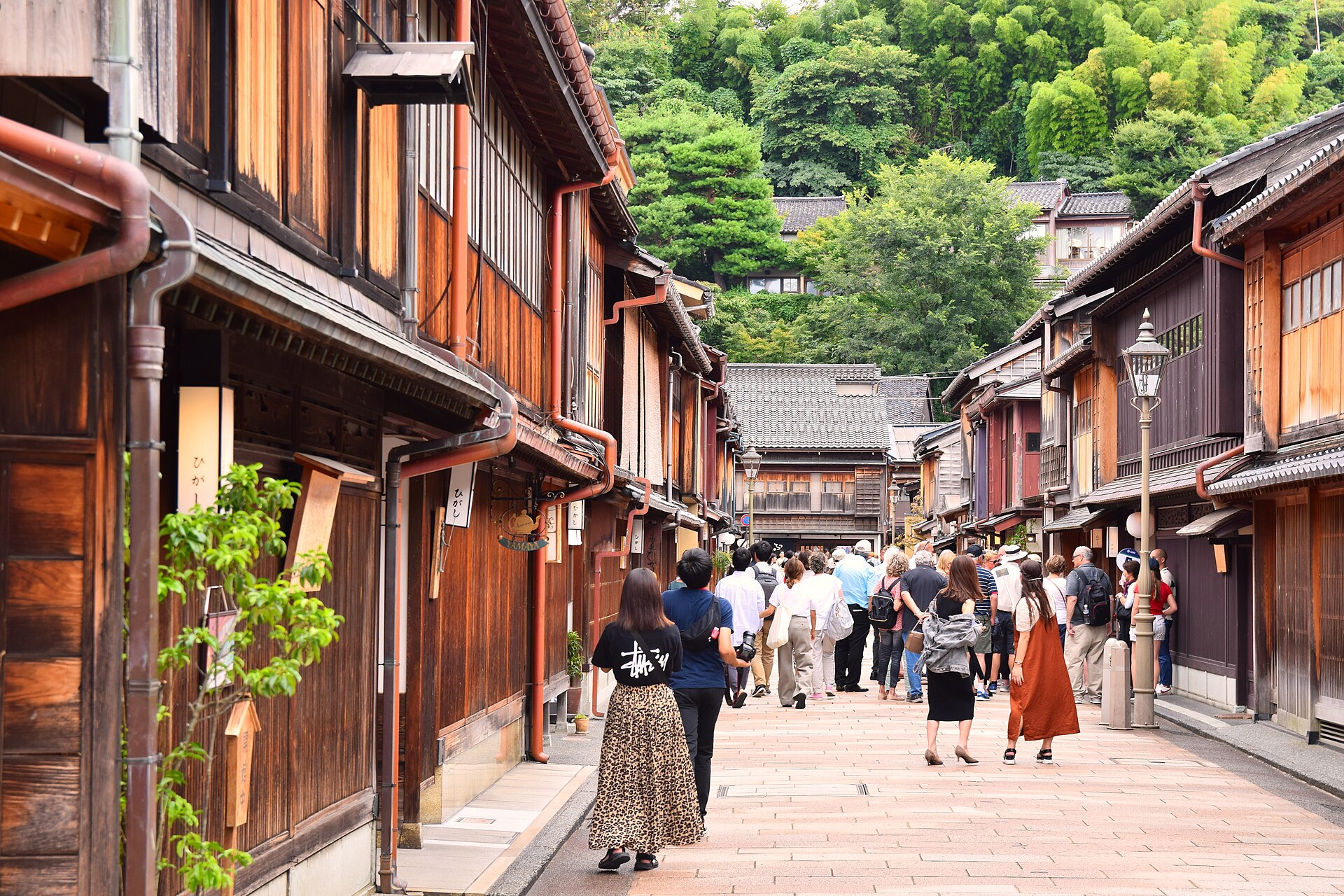
Kanazawa's east bank keeps a complete quarter of teahouses: dark timber fronts, fine slatted screens at street level, and lanes narrow enough to feel like rooms. The state protects it as a preservation district, and the street itself is free to walk.
- FromKanazawa Station
- ~20 minLoop bus, every ~15 min
- Get off atHashiba-cho (Kanazawa Loop Bus)
- On foot
- Higashi Chaya District
Where it is
16 more notes in Ishikawa · open the map →What to look for — in walking order
- Asanogawa Ohashi Bridgethe balustraded bridge from the castle side onto the east bank
- Kanazawa Yasue Gold-Leaf Museuma city museum of gold-leaf craft, standing just short of the teahouse lane
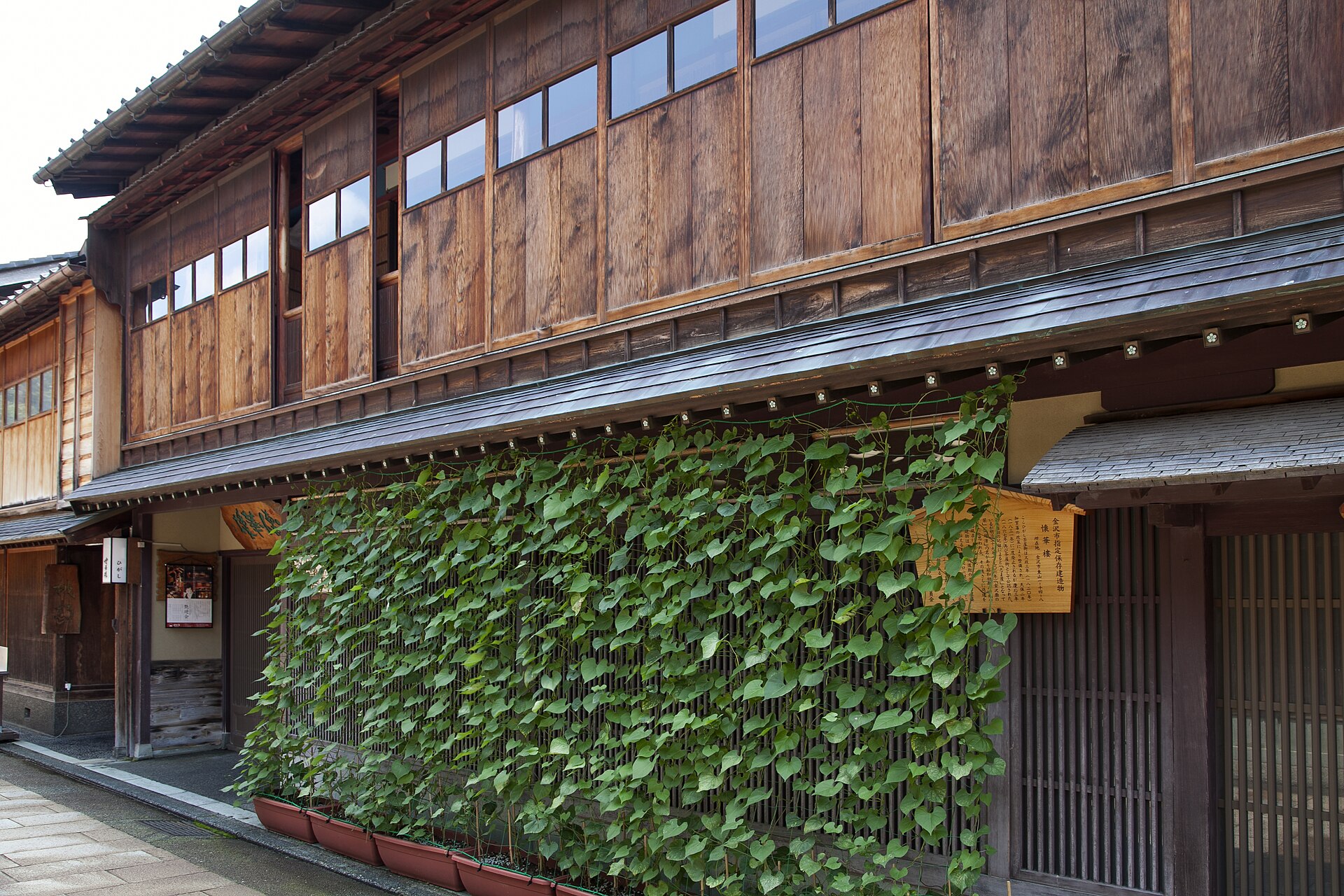
- The main teahouse lanematched two-storey fronts with kimusuko lattice, the stretch every photograph is taken on
- Kaikaroa teahouse still in working use, opened to visitors during the day
- Shimaan original guest house kept in its old layout, rooms and stairs unchanged
How to actually get there
- Kanazawa Station east exit, stand 7 → Hashiba-cho by the Kanazawa Loop Bus (right loop, about 12 min).
- Hashiba-cho → cross the Asano River into Higashiyama on foot (about 5 min).
- Walk the main lane end to end, then the two quieter side streets behind it.
- Cross back for Kazuemachi on the west bank, or climb to the Utatsuyama temple slopes above the quarter.
- Kanazawa Loop Bus, right loop
- Kanazawa Station east exit, stand 7 →(Kanazawa Loop Bus, right loop, about 12 min)→ Hashiba-cho. The right loop leaves about every 15 minutes through the day. Ordinary Hokutetsu and JR buses call at the same stop, so almost any eastbound service works.
- Back from Hashiba-cho
- Stay on the right loop to complete the circle to the station, or take the left loop if you want Kenrokuen and Korinbo on the way. The loop service finishes in the early evening; after that the ordinary city buses and taxis still work the Hashiba-cho stop.
About the place
Chaya were licensed houses where guests were entertained with music and dance, and this quarter was laid out for that trade in one planned move rather than growing lane by lane. The result is unusually consistent. Two-storey fronts stand shoulder to shoulder along a main lane and the side streets behind it, each with a screen of thin vertical slats called kimusuko at ground level and a guest room on the floor above. The protected area covers 1.8 hectares, small enough to cross in a few minutes and dense enough that the walking is the point. Some of the houses are now shops, cafes and gold-leaf studios; a few still open their rooms.
How to enjoy it
The lane is a public street, so the hour after sunrise is walkable and unhurried; the shops and teahouses open later, generally from mid-morning. Come back after dark and the same fronts read differently under the lamps. Geisha performances fall on set Saturdays and are announced in advance rather than found by chance.
Background & history
The quarter dates from 1820, when the Kaga domain allowed the scattered teahouses of the castle town to be gathered into planned districts, one east of the Asano River and one west of the Sai. The east quarter kept its street plan and most of its building stock through the two centuries that followed, and in 2001 the state selected it as an Important Preservation District for Groups of Traditional Buildings in the teahouse-town category. Shima, one of the original houses, is a National Important Cultural Property.
Before you go
- Cash
- The street costs nothing at any hour. The houses that show their interiors charge at the door, and gold-leaf or tea sessions are booked shop by shop. Loop bus rides are a flat fare per boarding, with a one-day pass sold for repeated hops.
- Before you go
- Individual houses and museums keep their own closing days, and the gold-leaf museum shuts on Tuesdays. Everything between the doors is outdoors, so Hokuriku rain and winter weather are part of the walk.
- Another way
- From the Kenrokuen and Kanazawa Castle side it is roughly a 20-minute walk down to the east bank. Kazuemachi, the smaller teahouse quarter, lies on the near side of the same bridge, so the two can be joined in one loop on foot.
- After you get off
- From Hashiba-cho, walk northeast over the Asano River and bear right past the row of riverside houses. The teahouse lane opens on the left after about five minutes.