Aizu · HigashiyamaNo.1102★★Open in map →
Higashiyama Onsen
— Aizu-Wakamatsu's hot-spring town on the Yugawa
A hot-spring town in a wooded valley southeast of Aizu-Wakamatsu, with inns crowded along both banks of the Yugawa. A foot bath, two poem steles and a long shrine stairway all lie within a short walk of the bus stop.
- FromAizu-Wakamatsu Station
- ~15 minLoop bus, every 30 min
- Get off atHigashiyama Onsen-eki (Machinaka loop bus)
- From there
- Higashiyama Onsen
The sweet spot
This is a well-known name in Aizu, not a hidden valley, and the inns fill on weekends and through the autumn colour. What visitors tend to miss is that the town is walkable end to end. The foot bath, the verse stones by the river and the shrine stairway above the roofs all sit outside the inns, on public ground, and stay quiet even when every room is taken.
Where it is
20 more notes in Fukushima · open the map →What to look for — in walking order
- Higashiyama Onsen-eki bus stopthe loop-bus stop and the tourism association office at the mouth of the town
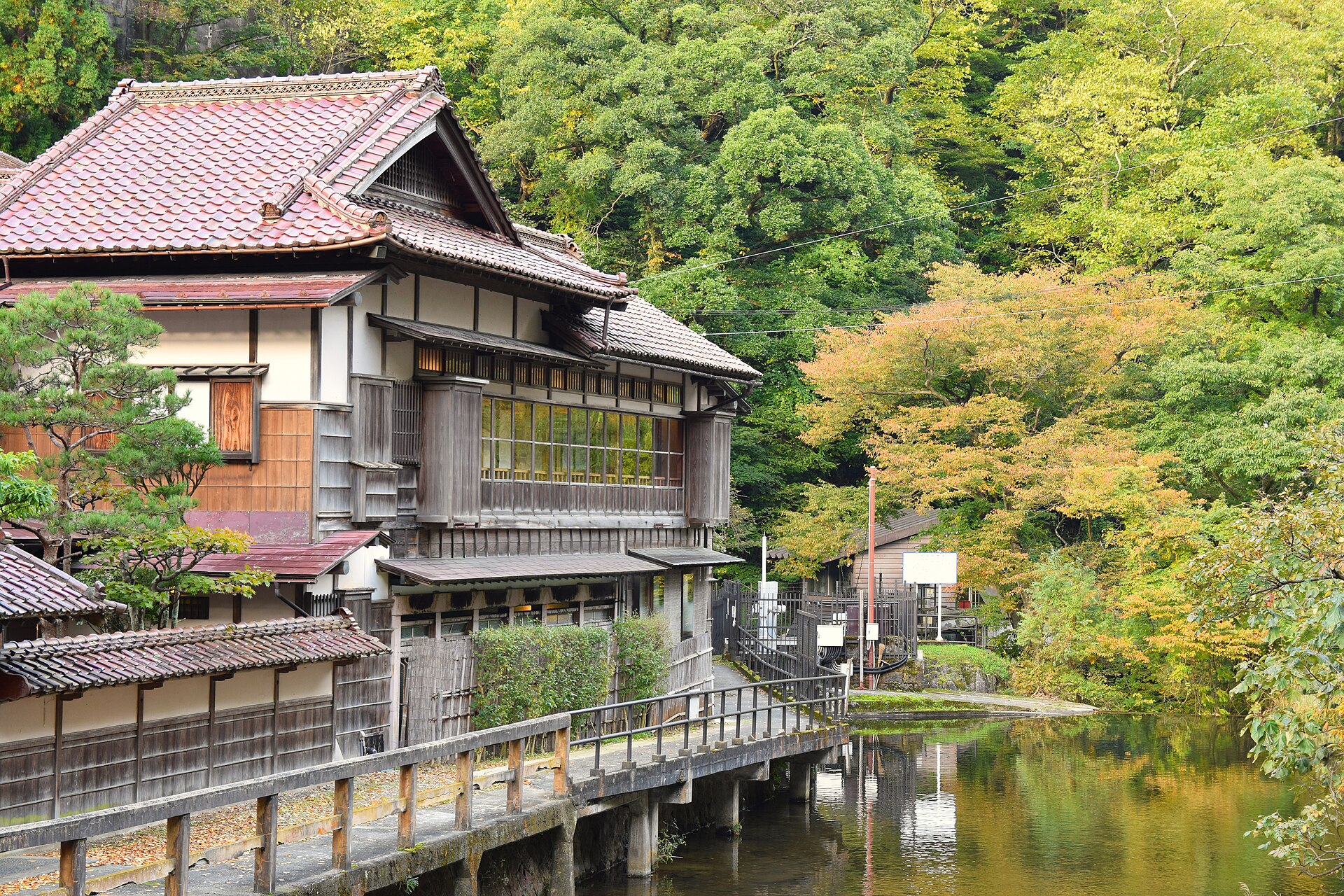
- The inns along the Yugawawooden ryokan on both banks, built up hard against the walls of the valley
- The public foot bathan open ashiyu on the riverside lane, free to use without staying
- The Yosano Akiko and Takehisa Yumeji verse stonestwo poem steles by the Shintaki bridge, one on each side of the water
- Haguro-san Yugami Shrinea hillside shrine above the roofs, reached by 1,225 stone steps from the town
How to actually get there
- Aizu-Wakamatsu Station → Higashiyama Onsen-eki (Machinaka loop bus 'Akabe', about 15 min).
- Walk upstream along the Yugawa from the bus stop, past the inns on both banks.
- Stop at the foot bath, then carry on to the two verse stones by the Shintaki bridge.
- Climb the stone steps to Haguro-san Yugami Shrine and come back down to the same stop.
- Akabe loop bus from Aizu-Wakamatsu Station
- Aizu-Wakamatsu Station →(Machinaka loop bus 'Akabe', about 15 min)→ Higashiyama Onsen-eki. Akabe turns straight out toward Iimoriyama and the Bukeyashiki and drops into the valley early on its circuit. Its twin, 'Haikara-san', runs the same loop the other way round via Nanukamachi and Tsurugajo castle and needs roughly 35 min to reach the same stop, for the same flat fare.
- Return from Higashiyama Onsen-eki
- The same stop serves the return leg, and the direction that was slow on the way out is now the quick one: from the valley, Haikara-san runs back past Iimoriyama to the station, while Akabe carries on round by the castle. Services end in the early evening, so read the last departure posted at the stop rather than assuming a late bus.
About the place
The Yugawa river cuts down out of the hills southeast of Aizu-Wakamatsu, and the town is built into the gap it leaves. Inns stand on both banks, stacked against the slope, some of them old timber buildings with galleries hanging over the water. The baths run on sulphate water. Aizu people have long called the place the oku-zashiki, the back parlour, of the castle town: the room you take guests to once the formal business is finished. Geigi still work here, and their song and dance are booked through the inns rather than watched from the street.
How to enjoy it
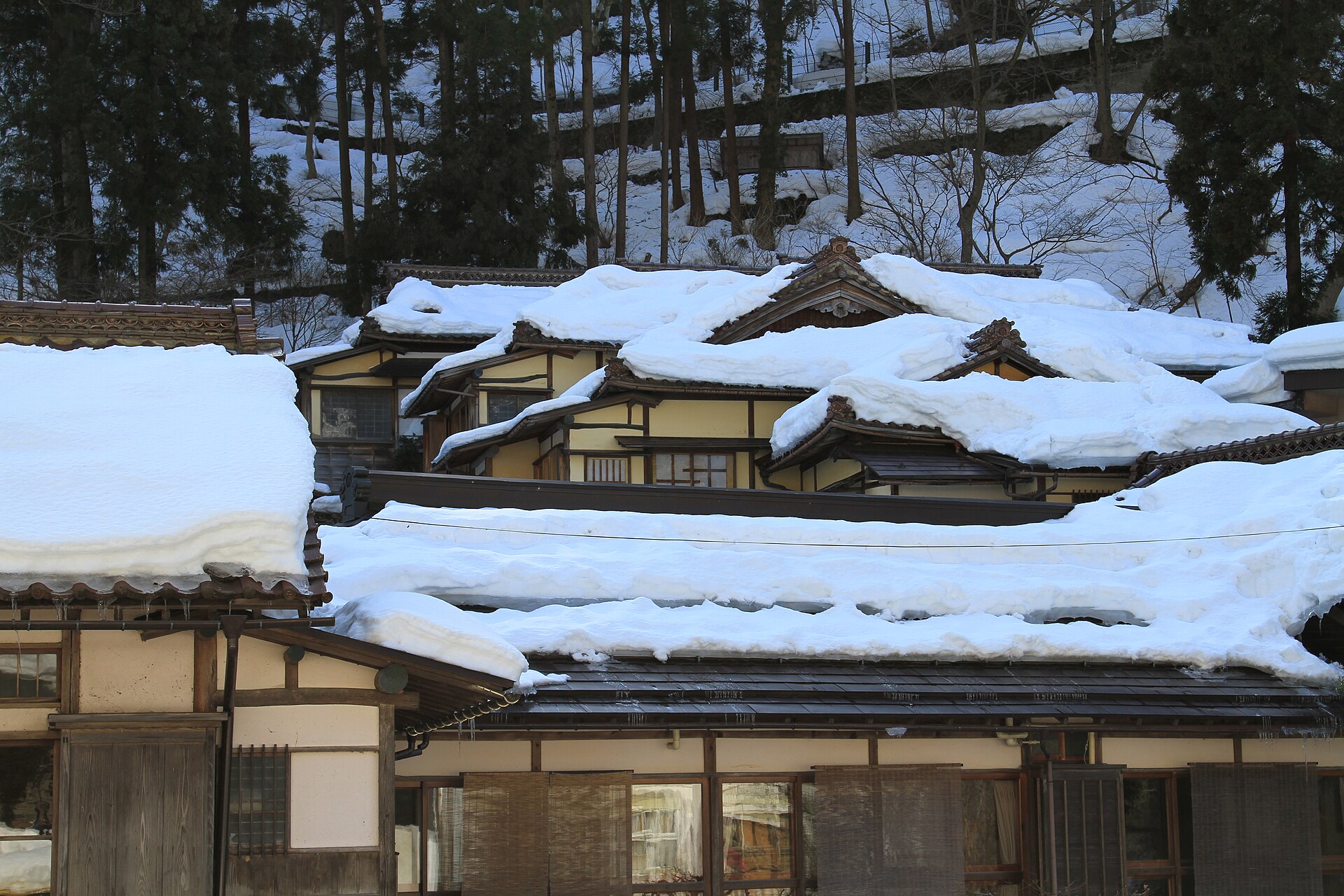
Give the stairway its own slot. The climb to the shrine takes about half an hour at a steady pace, and it is the one part of the town that needs daylight. Buses come every 30 min in each direction, so you can arrive, walk the lane, soak your feet and leave again without a long wait. Autumn colour is the busiest season; winter turns the same roofs into a snow scene.
Background & history
Tradition traces the spring to the monk Gyoki in the eighth century, guided, the story goes, by a three-legged crow. By its own reckoning the town is more than 1,300 years old. Under the Aizu domain in the Edo period it served as the cure resort of the castle town, and it was later counted among the Ou Sanrakugo, the three pleasure towns of the north. Writers followed the water: the poet Yosano Akiko and the artist Takehisa Yumeji both left verses that now stand as stones by the river.
Before you go
- Cash
- The lane, the foot bath and the shrine stairway cost nothing to walk. Both loop buses take a flat fare paid as you get off, and a one-day pass is sold for them, but the fares have been revised more than once — take the current figure from the driver or a ticket counter rather than from a printed guide.
- Before you go
- The stone stairway to the shrine is long and unlit, so treat it as a daylight climb. Aizu winters are deep-snow winters and the valley road narrows under it. Autumn colour brings the town's heaviest traffic, and rooms go early in that season.
- Another way
- By car or taxi the town is about ten minutes from the centre of Aizu-Wakamatsu, which is the quicker way in if you arrive late or are carrying luggage.
- After you get off
- The bus sets you down at Higashiyama Onsen-eki, in the middle of the town. The tourism association office stands beside the stop and the riverside lane begins there; the foot bath and the foot of the shrine steps are both a few minutes upstream.