Kumamoto City · SuizenjiNo.1191★★Open in map →
Suizenji Jojuen Garden
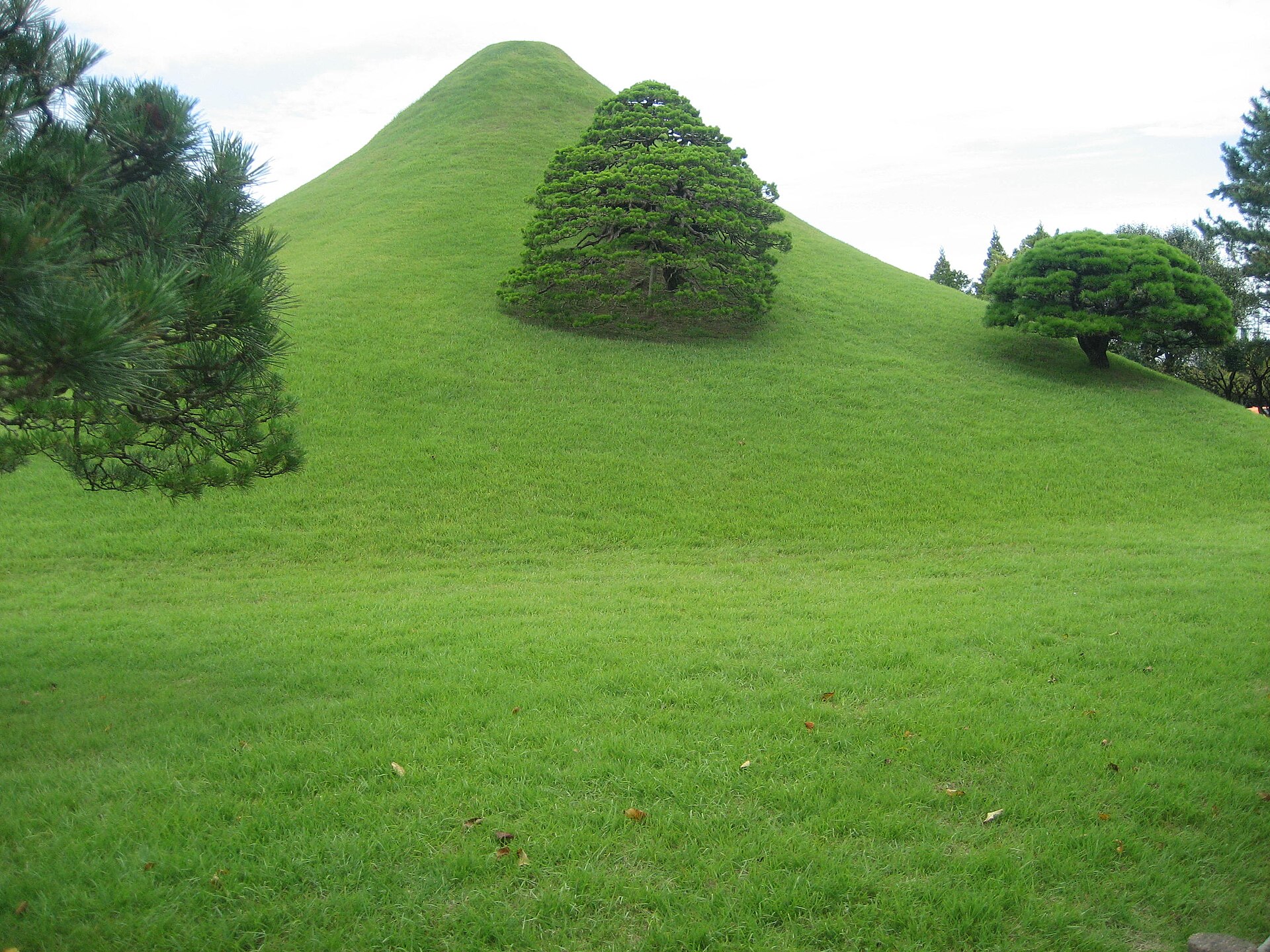
A walled circuit garden in central Kumamoto, built around a pond that fills from groundwater out of Aso. A grass cone stands in for Mount Fuji, and the loop is said to compress the old Tokaido road into a single short walk.
- FromKumamoto Station
- ~25 minJR Hohi Line, then a walk
- Get off atShin-Suizenji Station (JR Hohi Line)
- On foot
- Suizenji Jojuen Garden
The sweet spot
This is one of Kumamoto's two headline sights, not a hidden one. Because the garden is walled and ticketed, there is no dawn window and no evening window at all. The only lever you have is which hour of the opening day you choose.
Where it is
18 more notes in Kumamoto · open the map →What to look for — in walking order
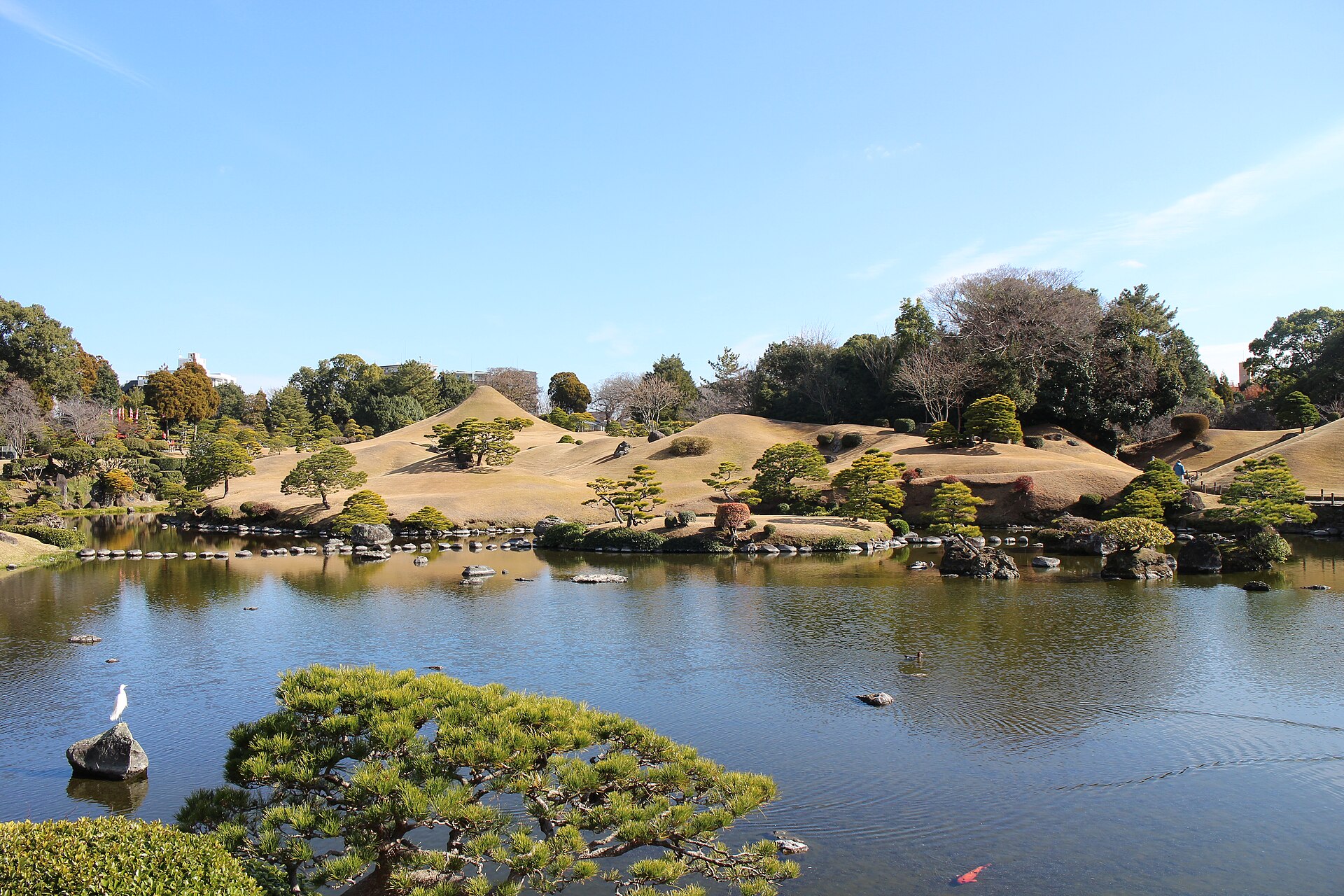
- The spring-fed pondclear water rising from Aso groundwater, with low stones set across the shallows
- The Fuji mounda turf cone read as Mount Fuji, and the set piece of the view across the water
- Kokin Denju no Maa room moved from the Kyoto Imperial Palace, held to give the best view in the garden
- Izumi Shrinethe shrine to the Hosokawa lords, raised in the grounds after the castle town burned
- The Noh stagean open-fronted stage on the lawn, near the end of the circuit
How to actually get there
- Kumamoto Station → Shin-Suizenji Station (JR Hohi Line, a few stops east).
- Shin-Suizenji Station → the main gate on foot, southeast.
- Main gate → the pond, then round the circuit past the Fuji mound to the Kokin Denju no Ma.
- Kokin Denju no Ma → Izumi Shrine and the Noh stage, then back to the gate.
- JR Hohi Line from Kumamoto Station
- Kumamoto Station →(JR Hohi Line, a few stops east)→ Shin-Suizenji Station, then on foot to the main gate. The garden's own access page gives that walk as about ten minutes; the prefectural tourism guide puts it nearer twelve. This is a local line rather than a metro, so read the platform timetable instead of assuming a fixed interval.
- Return from Shin-Suizenji Station
- Walk back the same way and take the JR Hohi Line west to Kumamoto Station. Departures thin out on this line in the evening, so if you have a train or a flight later, check the board before you settle in at the garden. A footbridge links the station directly to the tram stop of the same name, which is the fallback if you miss a connection.
About the place
Suizenji Jojuen sits behind a wall in the middle of Kumamoto City, a few streets from a JR station and a tram stop. The pond at its centre is not piped in. It fills from groundwater that has travelled underground from the Aso volcano, and the garden marks the spring on its own map as the water of long life. Around the water the ground rises into low grass mounds, the largest of them a cone read as Mount Fuji. The circuit that links them is said to compress scenes from the Tokaido, the old road between Kyoto and Edo. This is a designed landscape rather than a public park, and it is gated and ticketed accordingly.
How to enjoy it
The gate opens at 8:30 and the last entry is at 16:30, so this is a daytime stop with no dawn or dusk option — arriving near opening is the way to get the pond before the middle of the day. Budget an hour: the loop is short, and the reason to linger is the view out from the Kokin Denju no Ma rather than the distance covered. Kumamoto Castle sits on the same tram line, so the two fit into one day.
Background & history
The site began in 1632, when Hosokawa Tadatoshi, the first Hosokawa lord of Kumamoto, put a tea house beside the spring; the garden was completed as a landscape under his grandson Tsunatoshi. The name Jojuen is taken from a poem by the Chinese poet Tao Yuanming. Izumi Shrine, inside the grounds, was raised by former retainers of the domain after the Satsuma Rebellion of 1877 burned the castle town. The Kokin Denju no Ma, the room in which Hosokawa Fujitaka is said to have passed the secret readings of the Kokin Wakashu to an imperial prince, was moved here from the Kyoto Imperial Palace in 1912.
Before you go
- Cash
- Admission is charged at the gate. The rate published on the garden's own site and the rate published by the prefectural tourism guide do not agree, so treat the price posted at the window as the current one rather than budgeting from a guide figure.
- Before you go
- This is a closed garden, not an open park: it opens in the morning and shuts in the late afternoon, and there is no night access. The north gate opens later and closes earlier than the main gate. Paths are level gravel and lawn, and the lawn goes soft after heavy rain.
- Another way
- From the Kumamoto Station front, the A-line tram runs east through the centre of the city to the Suizenji-koen stop, which the garden lists as about four minutes on foot from the gate. It is a single ride with no change and much slower than the train.
- After you get off
- From Shin-Suizenji Station the garden lies southeast, about ten minutes on foot. The station footbridge also connects to the tram stop of the same name, so you can ride the last short stretch instead of walking it.