Kumamoto · Castle hillNo.520★★★Open in map →
Kumamoto Castle
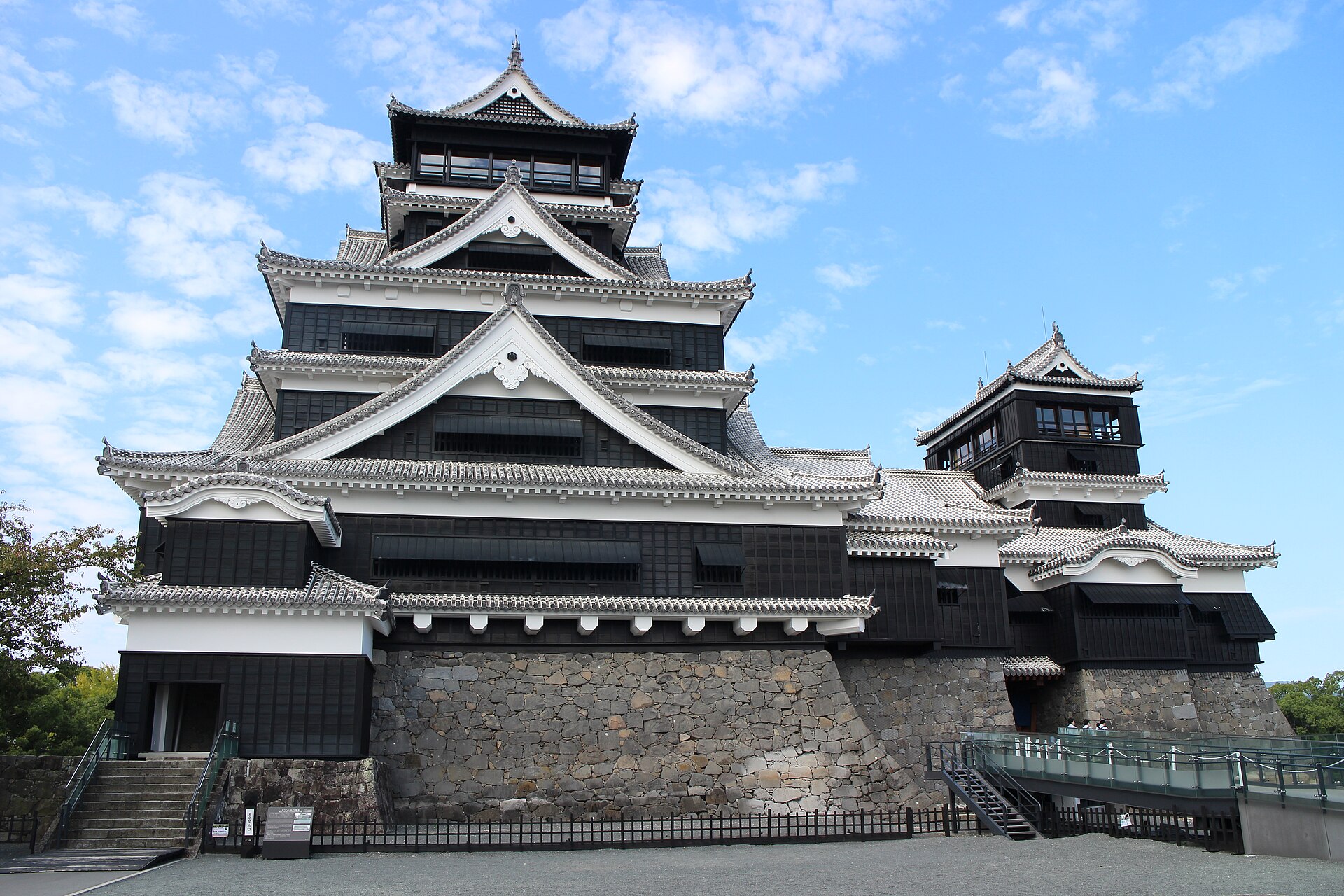
A hilltop castle in central Kumamoto, known for the curving stone ramparts of Kato Kiyomasa. The keep is open again after the earthquakes, and an elevated walkway crosses the parts of the grounds still being rebuilt.
- FromKumamoto Station
- ~30 minCity tram, then a 10-min walk
- Get off atKumamotojo-Shiyakushomae tram stop (Kumamoto City Tram)
- On foot
- Kumamoto Castle
Where it is
18 more notes in Kumamoto · open the map →What to look for — in walking order
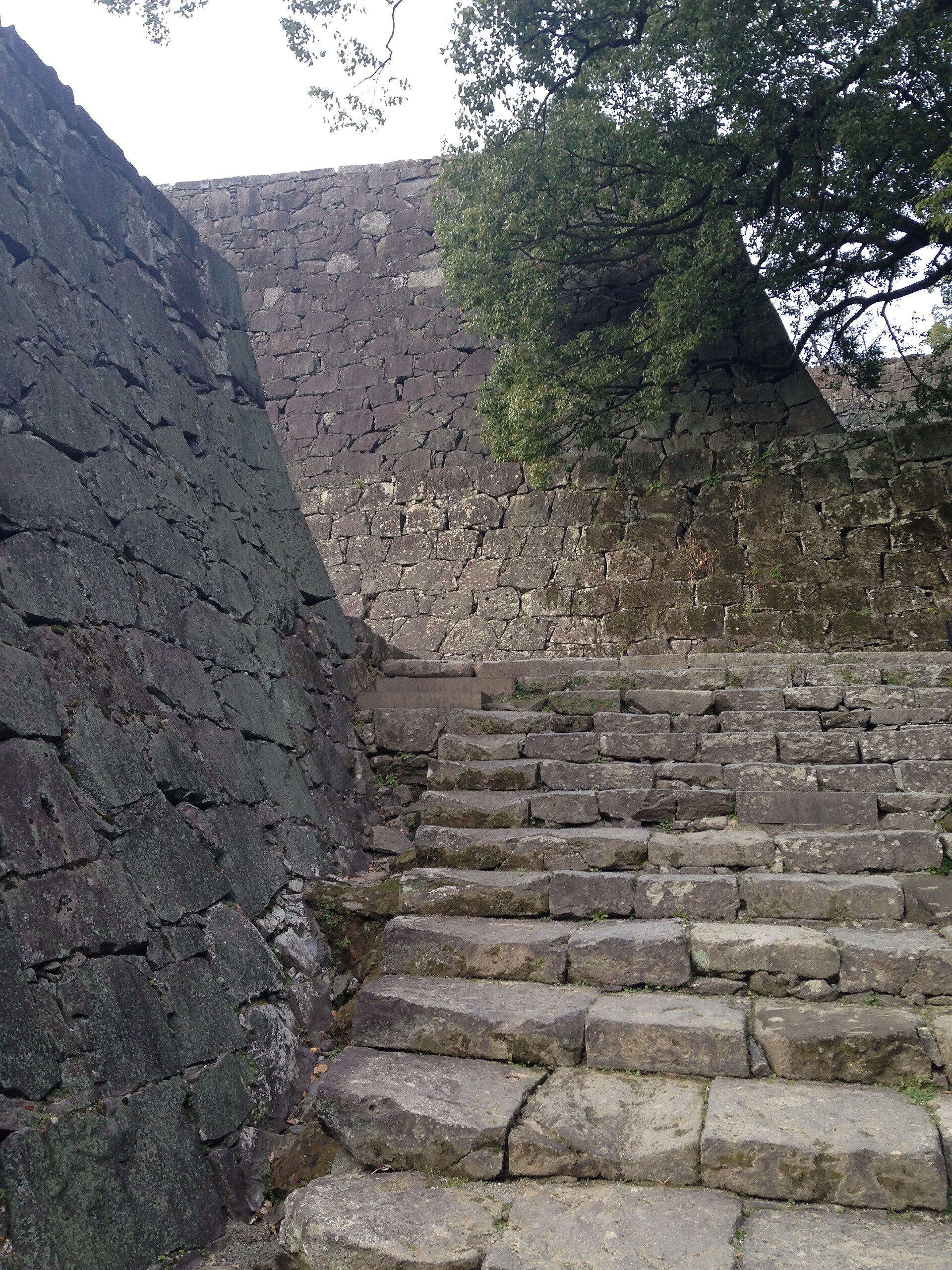
- Kiyomasa's stone wallslong curving ramparts along the approach, shallow at the base and near-vertical at the crest
- The special viewing walkwayan elevated deck built over the repair zone, level with the roofs around it
- Uto Yaguraa tower of three tiers and five storeys over one basement level, dismantled for its own restoration
- The main keepblack boards and white plaster, with a top-floor view over the city and the working ground
- Ninomaru Squareopen lawn west of the keep, the usual place for a full-height photograph
How to actually get there
- Kumamoto Station → Kumamotojo-Shiyakushomae (Kumamoto City Tram, about 17 minutes).
- Tram stop → the castle's south entrance (walk about 10 minutes via Sakura-no-baba).
- Enter at the south gate and take the elevated walkway across the repair zone to the keep.
- Come down through Ninomaru Square for the full-height view, then back to the tram.
- Kumamoto City Tram from Kumamoto Station
- Kumamoto Station tram stop →(Kumamoto City Tram, about 17 minutes)→ Kumamotojo-Shiyakushomae, then about a 10-minute walk up to the south entrance. The tram runs along a single trunk line through the city, so no timetable planning is needed. The adult fare is a flat 200 yen.
- Return from Kumamotojo-Shiyakushomae
- Walk back down to Kumamotojo-Shiyakushomae and ride the tram to Kumamoto Station. Trams keep running into the evening, but the castle shuts long before they do, so it is the closing time that sets the schedule rather than the last tram.
About the place
Kumamoto Castle stands on a low hill in the middle of the city, its black boards and white plaster visible from streets well below. Kato Kiyomasa gave it the curving ramparts known as musha-gaeshi: shallow at the base, almost vertical at the top. A pair of earthquakes brought long sections of that stonework down and damaged nearly every structure on the hill. The keep has since been repaired and reopened, while the rest of the site is being taken apart and reset stone by stone. A raised walkway was built so that visitors can cross the working area without setting foot in it.
How to enjoy it
Gates open at nine and last entry is an hour before closing, so the walkway is emptiest early in the day. On weekdays only the south entrance is open, which means planning to come up from Josaien rather than around the north side. Summer runs later than the rest of the year.
Background & history
Kato Kiyomasa built the castle at the end of the sixteenth century, and the town's name was written as Kumamoto from 1607. The Hosokawa family took over in 1632 and held the castle for the rest of the Edo period. Fire destroyed the keep during the Satsuma Rebellion in 1877, and the one standing today is a 1960 reconstruction in steel and concrete. Two earthquakes struck in 2016, and the keep's own restoration was completed in 2021.
Before you go
- Cash
- Admission at the time of checking was 800 yen for high-school age and above and 300 yen for elementary and junior-high pupils. The ticket desks take credit cards, electronic money and QR payment as well as cash, and the tram accepts IC cards.
- Before you go
- The castle closes on 29 December, and rough weather can close it at short notice. Broad areas of the grounds are fenced off as a working site, and which routes are open shifts as the restoration moves.
- Another way
- The Shiromegurin loop bus leaves Kumamoto Station and circles the castle and its neighbouring sites. From Kumamoto Airport, the limousine bus reaches Sakuramachi Bus Terminal, a short walk from the castle foot.
- After you get off
- From Kumamotojo-Shiyakushomae, walk west toward the castle wall, drop down onto the Sakura-no-baba ground, then climb the slope to the south entrance.