West Tokushima · IyaNo.630★★★Open in map →
Iya Kazurabashi
— The woven-vine footbridge of the Iya valley
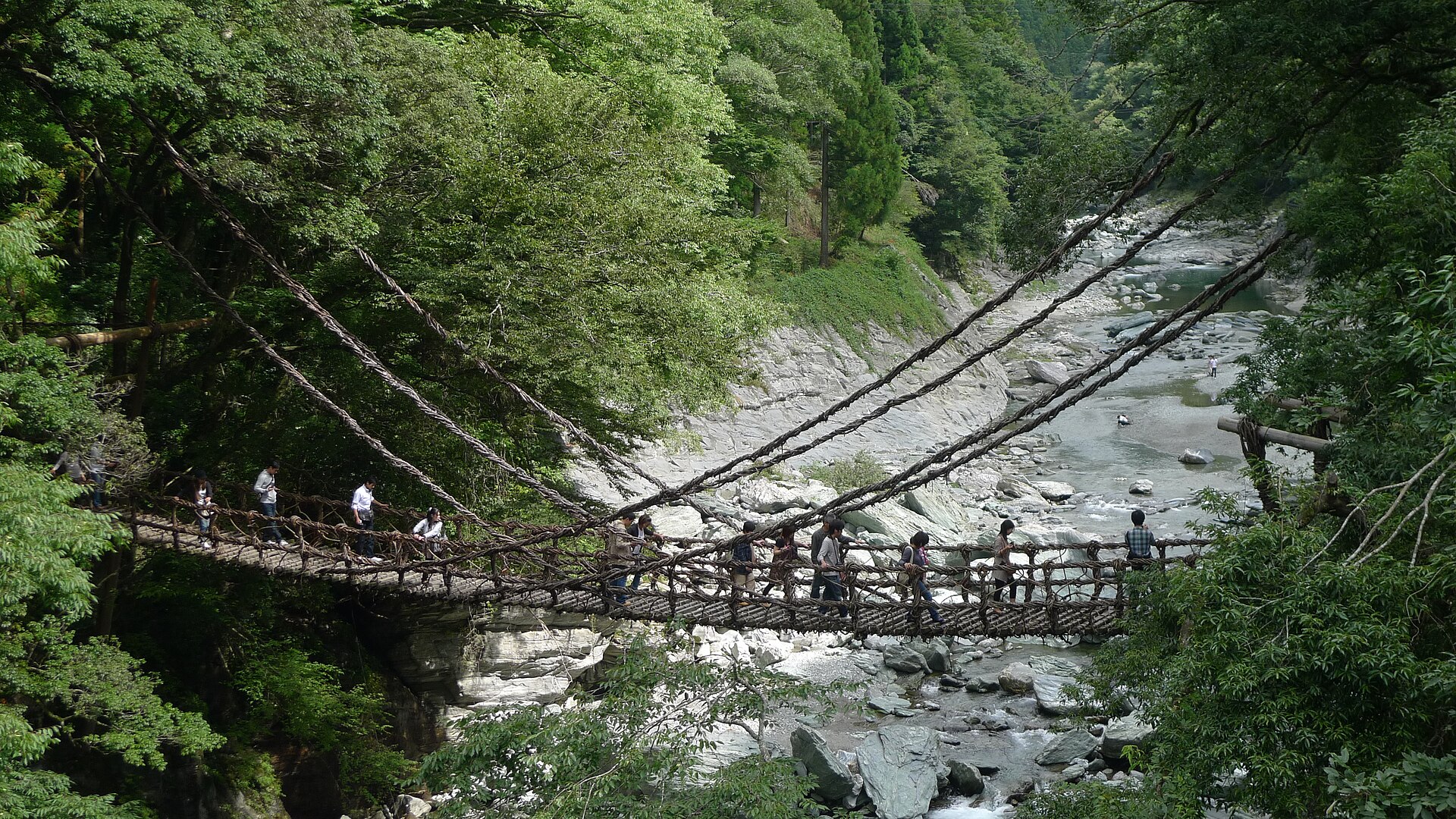
A footbridge woven from mountain vine, slung across the Iya River in the mountains of western Tokushima. It is a working crossing and a national folk cultural property at the same time, and it is rebuilt from fresh vine rather than repaired.
- FromOboke Station (JR Dosan Line)
- ~30-60 min by busBus from JR Oboke
- Iya Kazurabashi
Where it is
13 more notes in Tokushima · open the map →What to look for — in walking order
- Kazurabashi Yumebutaithe roadside station at the top of the slope, where the buses stop and the path down begins
- The bridge headticket hut, handrail of vine, and the first slat with nothing under it
- The Iya River belowgreen water over pale rock, visible through the gaps the whole way across
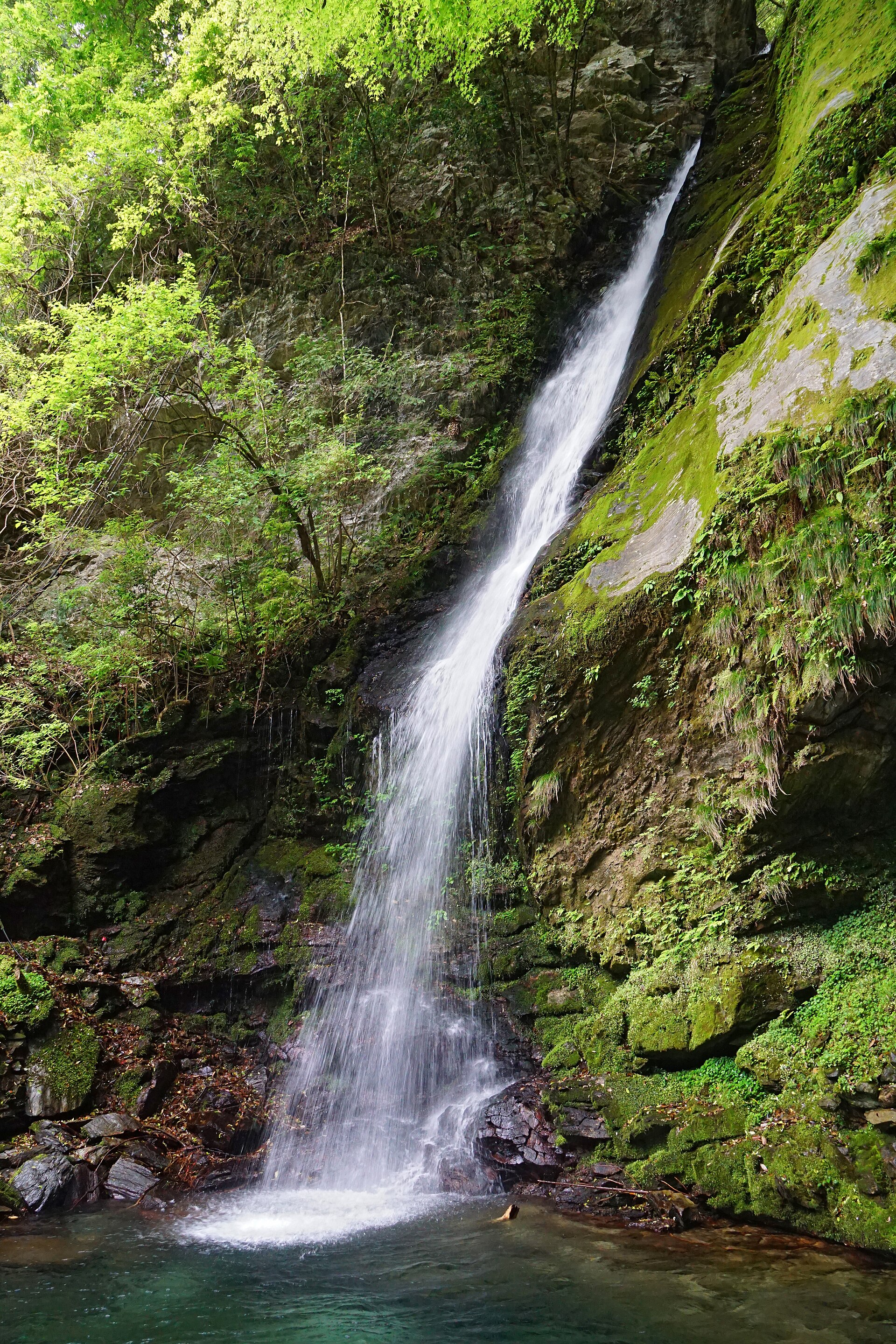
- Biwa Fallsa cascade in the trees a short walk on from where the bridge lands
How to actually get there
- Oboke Station → Kazurabashi (Shikoku Kotsu bus up the Iya valley; only a handful of departures a day).
- Bus stop → the ticket hut at the bridge head, a few minutes downhill.
- Cross to the far bank on the vine, one at a time, holding the rails rather than the slats.
- Walk on to Biwa Falls, then back up to the road for the return bus.
- Bus up the valley from Oboke Station
- Oboke Station is the rail end of the trip. From there a Shikoku Kotsu bus climbs the side valley to the Kazurabashi stop, a minute from the bridge, or to the Kazurabashi Yumebutai roadside station just above it. Services are few, so build the day around the timetable rather than the other way round.
- Return to Oboke Station
- The same bus route runs back down the valley, and there is nothing else in the way of public transport once it stops for the day. If you plan to stay for the lighting, book a room in the valley first, because the return leg does not exist that late.
About the place
The bridge runs 45 metres from bank to bank and is about 2 metres wide. It hangs 14 metres above the water. The deck is not a deck but a ladder of slats laid across the vine cables, spaced far enough apart that the river shows through at every step. Roughly 6 tonnes of shirakuchi-kazura, a hardy mountain vine, goes into a single bridge. It stands in the Nishi-Iya district of Miyoshi, where the road follows the river through a gorge and the far bank is forest all the way up.
How to enjoy it
Gates open at 8:00 for most of the year, at 7:30 in high summer, and close at 17:00 from September through March. From 19:00 to 21:30 the bridge is floodlit every evening, but not opened: the lighting is for looking at it, not for walking it. Treat the two as separate visits rather than two chances at the same one.
Background & history
Two stories explain the bridge. One says the defeated Heike fled into this valley and built their crossings from vine so they could be cut down in a hurry if pursuers came. The other credits Kobo Daishi, who is said to have crossed the Iya and left the bridge behind him. Neither can be proved, and both are still told here. What is documented is the practice: the bridge is rewoven every three years, and that unbroken habit of rebuilding is what the state recognised in naming it an Important Tangible Folk Cultural Property.
Before you go
- Cash
- Admission was 550 yen for adults and 350 yen for elementary-school children when checked, paid at the hut beside the bridge head; younger children go free. Bring cash for the bus as well.
- Before you go
- Gates open at 8:00 for most of the year, at 7:30 through high summer, and close at 17:00 from September into March. The bridge is not crossed during the evening floodlighting. Wet weather makes the slats slick, and winter in the valley brings snow to the road well before it reaches the coast.
- Another way
- The other approach is from Awa-Ikeda Station, with a bus to the Zentoku stop a short walk from the bridge. Deeper into the valley, above Higashi-Iya, a second pair of vine bridges hangs over a quieter stretch of river for anyone with a car and a spare afternoon.
- After you get off
- Everything past Oboke Station is bus, then foot. From the Kazurabashi stop the path drops from the road to the ticket hut at the bridge head; from the Yumebutai roadside station it is a short walk down the slope to the same point.