Shodoshima · Hishio no SatoNo.1174★★Open in map →
Marukin Soy Sauce Museum
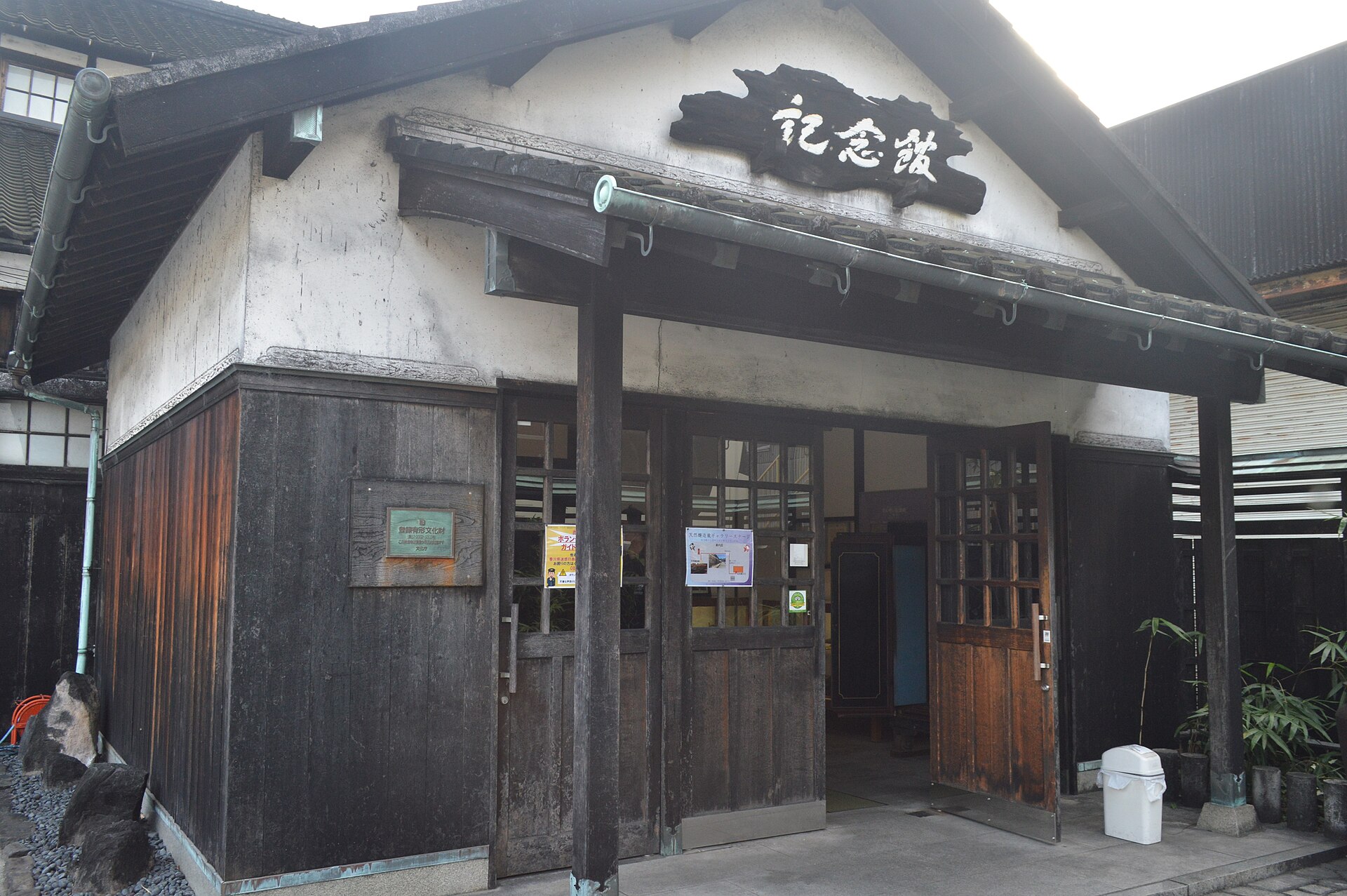
In the late Edo period Shodoshima moved its industry from salt to soy sauce. The brewing town it built is still standing, and one of the plants that pressed the mash now opens as a museum. Outside the gate the black-walled warehouses carry on.
- FromTakamatsu Station
- ~1 hr 40 minFerry + bus, 9 buses a day
- Get off atMarukin-mae bus stop (Olive Bus Sakate Line)
- On foot
- Marukin Soy Sauce Museum
The sweet spot
Shodoshima is known abroad for olives and for the film village, and the day-trip routes go to both. The soy sauce quarter is on the opposite coast, several bus stops past the olive ones, and it keeps the pace of a place where production is still running rather than the pace of a sight.
Where it is
25 more notes in Kagawa · open the map →What to look for — in walking order
- Marukin Soy Sauce Museuma former pressing plant in gassho-zukuri, the company mark painted across its gable
- The brewing tools insidevats, paddles and presses left from the years the building was still working
- The naturally brewed warehouse next doorcedar barrels kept in use for more than a hundred years, shown on the visitor route
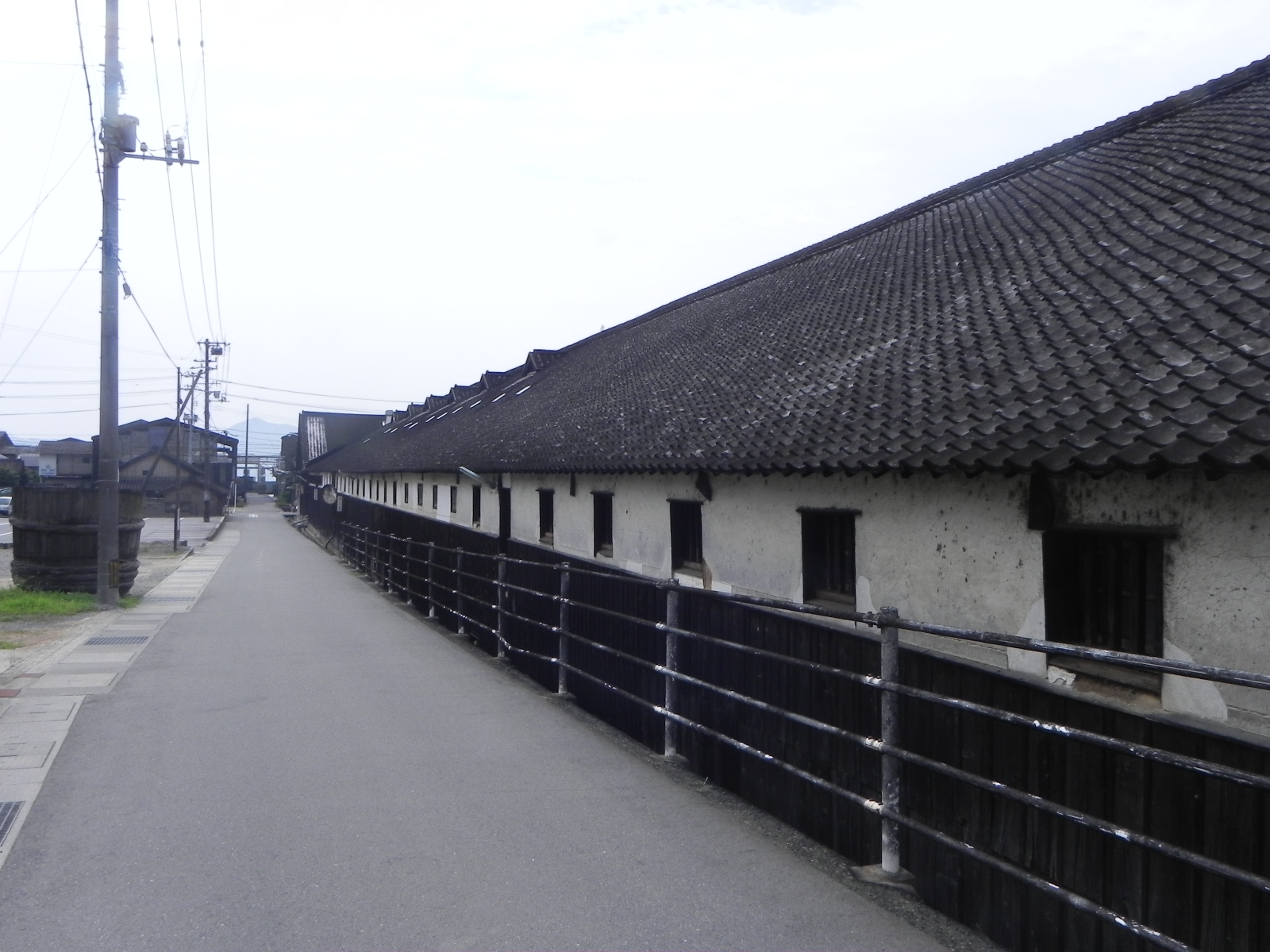
- Shoyu Warehouse Streetan unbroken run of black board wall and tiled roof heading north from the gate
- The Maki districta second cluster of brewery buildings that the prefecture maps as its own walking route
How to actually get there
- Walk from Takamatsu Station to the Sunport ferry terminal (about 10 min).
- Takamatsu Port to Ikeda Port on Shodoshima (Kokusai Ryobi Ferry, about 60 min, 700 yen one way).
- Ikeda Port to Marukin-mae on the Olive Bus Sakate Line (about 27 min).
- Get off at Marukin-mae, see the museum, then walk the warehouse street north.
- Ferry from Takamatsu, then the island bus at Ikeda Port
- Walk about 10 minutes from Takamatsu Station to the Sunport ferry terminal. Kokusai Ryobi Ferry crosses to Ikeda Port on Shodoshima in about 60 minutes, 700 yen one way for an adult, with about ten sailings each way through the day. At Ikeda, the Shodoshima Olive Bus Sakate Line reaches the Marukin-mae stop in about 27 minutes.
- Back from Marukin-mae
- The Sakate Line runs the other way to the Ikeda Port stop in about 26 minutes. On the current timetable the last bus of the day to call at Marukin-mae leaves at 19:05, and the last Takamatsu ferry out of Ikeda Port goes at 20:00. Fix those two before you decide how long to stay.
About the place
The museum stands at Nouma on the south-east coast of Shodoshima, in the stretch the island calls Hishio no Sato, the soy sauce village. Salt was the island's industry first. When the salt market turned, the shipowners who had been carrying it to Osaka brought the brewing trade home instead. The warm climate suited the ferment, the salt was already underfoot, and the wheat and soybeans came in on boats the island already owned. Less a lucky set of conditions than a whole system built for salt, switching cargo. Along the prefectural road the warehouses run in a line, charred cedar boards under tiled roofs, and the museum building is one of them, a pressing plant that stopped pressing and opened its doors.
How to enjoy it
The museum opens at nine, and the bus that stops at the gate is spread through the day rather than bunched into the morning, so nothing forces an early start. Go into the building first and walk the warehouse street afterwards, which is also the order the road is laid out in. Work backwards from the ferry when you plan the afternoon — the connection matters more than the hour you arrive.
Background & history
Salt came first. Shodoshima had boiled it since ancient times, and when the market ran to oversupply in the late Edo period the island turned its capital and its ships toward brewing. Through the 1870s and 1880s the number of brewing houses on the island reached about four hundred. Consolidation cut it back sharply after that, and what survived became the quarter standing today. The museum building, once the plant where soy sauce was pressed out of the mash, was entered on the national register of tangible cultural properties in 1996, and warehouses in the neighbouring districts carry the same listing.
Before you go
- Cash
- The museum's own site lists 500 yen for adults and 250 yen for primary-school children, as confirmed at the time of writing. Ferry tickets are sold at the terminal window. Carry coins for the bus.
- Before you go
- The warehouses along the road are working factories, so what is open to visitors is the museum and whatever the street shows you. The museum has closed days and its closing hour shifts with the season, so check the official site for the day you are going.
- Another way
- From Kansai, Jumbo Ferry sails from Kobe to Sakate Port on the island's east tip, and the same Sakate Line bus runs from Sakate up to Marukin-mae in a few stops.
- After you get off
- The Marukin-mae stop sits directly in front of the museum gate. Step off, cross the road, and you are at the entrance.