Kagawa · Shodoshima IslandNo.453★★Open in map →
Shodoshima Olives
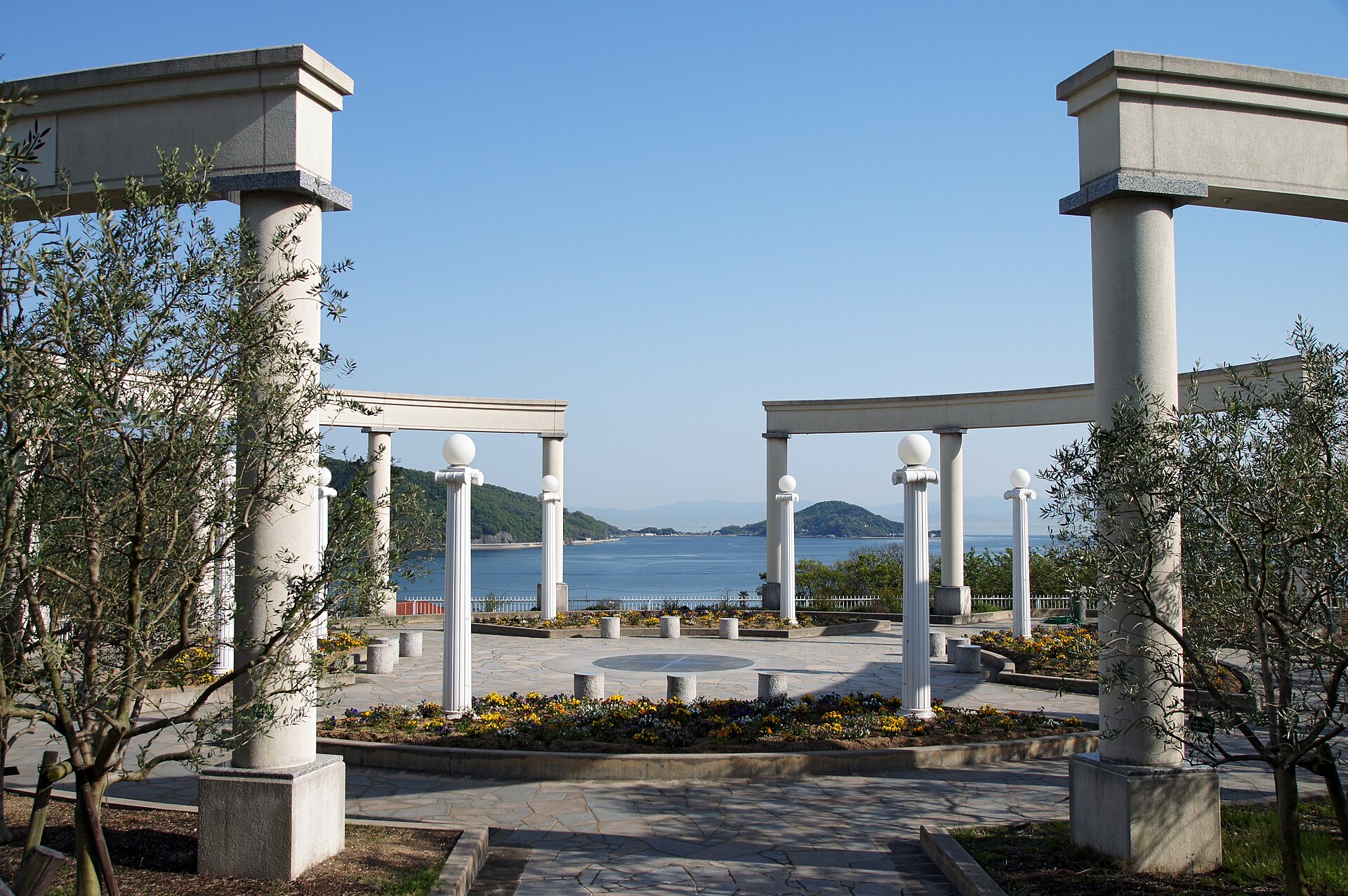
A roadside park on a hill above the Seto Inland Sea, on the ground where olive growing first succeeded in Japan. Oil pressed on the island, and everything else the crop is turned into, is sold beside the trees.
- FromTakamatsu Port
- ~1 hr 45 minFerry, then local bus
- Get off atOlive Koen-guchi bus stop (Shodoshima Olive Bus)
- On foot
- Shodoshima Olives
The sweet spot
This is not a hidden spot. It is a fixed stop on island bus tours, and the windmill is busy with people taking photographs. What is easy to miss is the grove behind it. The park exists because of the crop, not the view, and walking a little way up the slope changes what you are looking at.
Where it is
25 more notes in Kagawa · open the map →What to look for — in walking order
- Olive Memorial Hallthe park's central building, with a gallery tracing the history of the crop
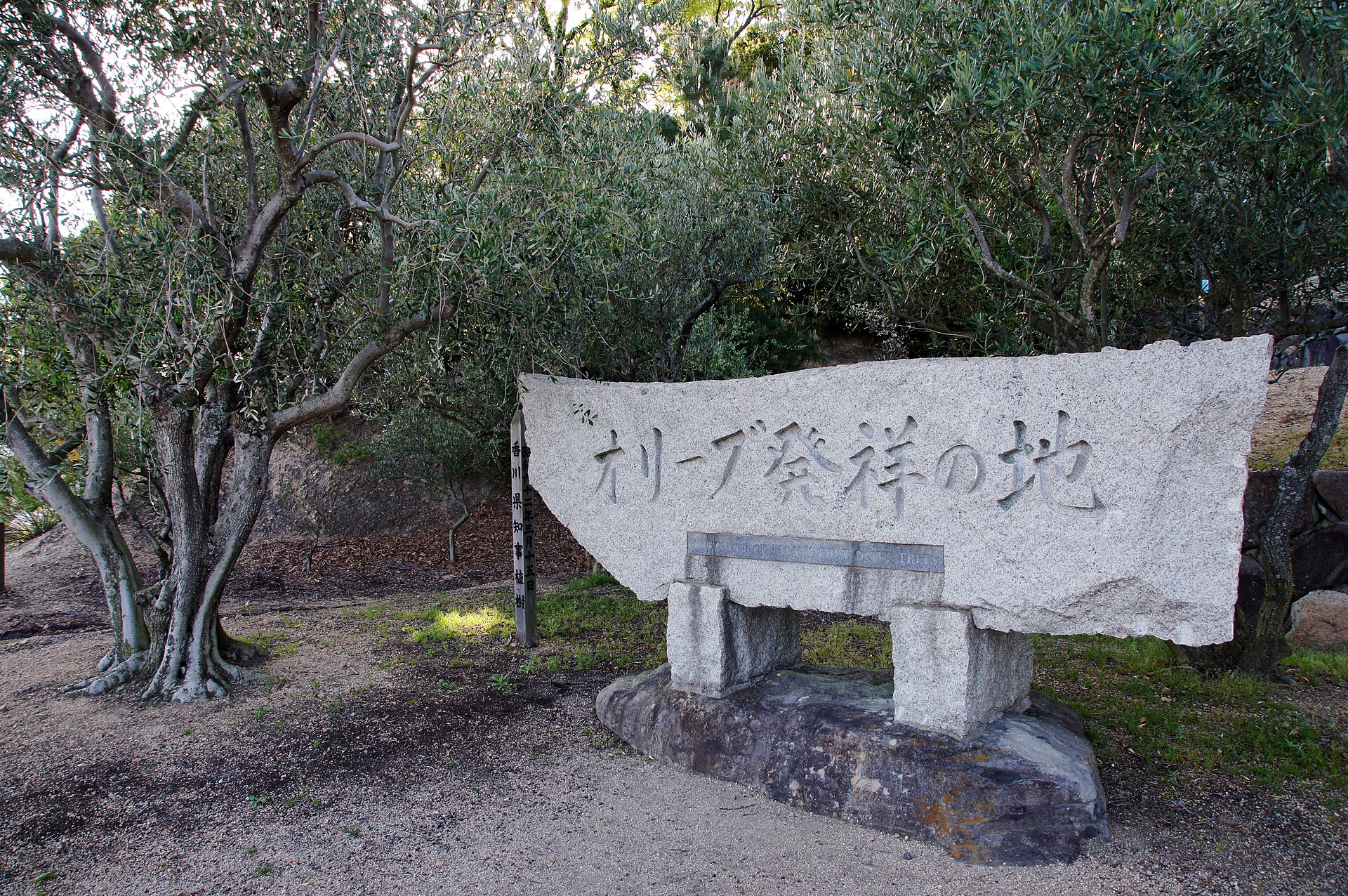
- Birthplace of the Olive monumenta stone marker among the older trees, on the ground where the first grove was planted
- The Koriko film seta herb and gift shop in a set built for the live-action Kiki's Delivery Service
- The Greek windmilla white windmill on the crest of the hill, facing straight out over the Inland Sea
How to actually get there
- Takamatsu Port → Tonosho Port (Shodoshima Ferry, about 60 min, 700 yen).
- Tonosho Port → Olive Koen-guchi (Shodoshima Olive Bus, Sakate Line or Minami-mawari Fukuda Line, about 30 min).
- Olive Koen-guchi → the park entrance (about 5 min on foot, uphill).
- Ferry from Takamatsu, then the island bus
- Takamatsu Port →(Shodoshima Ferry, about 60 min, 700 yen)→ Tonosho Port. From there the Shodoshima Olive Bus (Sakate Line or Minami-mawari Fukuda Line) reaches Olive Koen-guchi in about 30 min. Roughly 15 sailings run each way per day. Counting the walk up from the stop, allow about an hour and three quarters from port to park.
- Back to Tonosho Port
- The same lines run back from Olive Koen-guchi to Tonosho Port. Island buses thin out outside the middle of the day, so photograph the return times on the stop pole when you arrive. Ferries to Takamatsu finish in the evening, so check the departure board at the port rather than assuming a late boat.
About the place
Olives came to Japan as a government experiment, and only Shodoshima made them grow. The Inland Sea climate here is dry and mild in winter, closer to the Mediterranean than most of the country. On a hill above the water, Michi-no-Eki Shodoshima Olive Park holds roughly 2,000 olive trees, with a memorial hall, a herb garden, a film set and a windmill scattered among them. Being a roadside station, it also sells: goods made from the island's own olives are on the shelves a few steps from the trees. A landscaped garden and a working grove sharing one slope is what gives the place its character.
How to enjoy it
The park runs 8:30 to 17:00 and stays open through the year, so the simple plan is a morning ferry over, the middle of the day on the hill, and an afternoon bus back to the port. If you have only an hour, walk up through the grove to the windmill first and do the shopping on the way down. The shops carry oil, tea and leaf products side by side, which is the clearest way to see how far the island's harvest reaches beyond the bottle.
Background & history
Japan tried olives several times through the nineteenth century without lasting success. In 1908 the Ministry of Agriculture and Commerce imported American seedlings and ran a trial in three prefectures: Mie, Kagawa and Kagoshima. Only the plot at Nishimura on Shodoshima thrived. It bore fruit within a few years and was pressing oil by the start of the Taisho era. Kagawa has been the centre of Japanese olive growing ever since, and the olive is now both the prefectural flower and the prefectural tree.
Before you go
- Cash
- Shodoshima Olive Bus fares are capped at 500 yen a ride, and the buses take cash as well as IC cards such as Suica and PASMO. A one-day pass covering the whole network costs 1,600 yen. Shops inside the park and the bathhouse there are charged separately.
- Before you go
- The park is open all year and its paths are paved, but it sits on an exposed hill above the water with little shelter from rain or wind. In rough weather the crossing is the fragile part of the day, not the park: check the ferry first.
- Another way
- Ferries also reach Shodoshima from Okayama and from Himeji. On the island side, Kusakabe and Ikeda ports are closer to the park than Tonosho, and the park's own bus page maps routes from all three of the main ports.
- After you get off
- From Olive Koen-guchi the park entrance is about five minutes on foot, uphill from the coast road. If you are heading for the bathhouse inside the park, the San Olive stop puts you at the door.