Kagawa · Central TakamatsuNo.648★★Open in map →
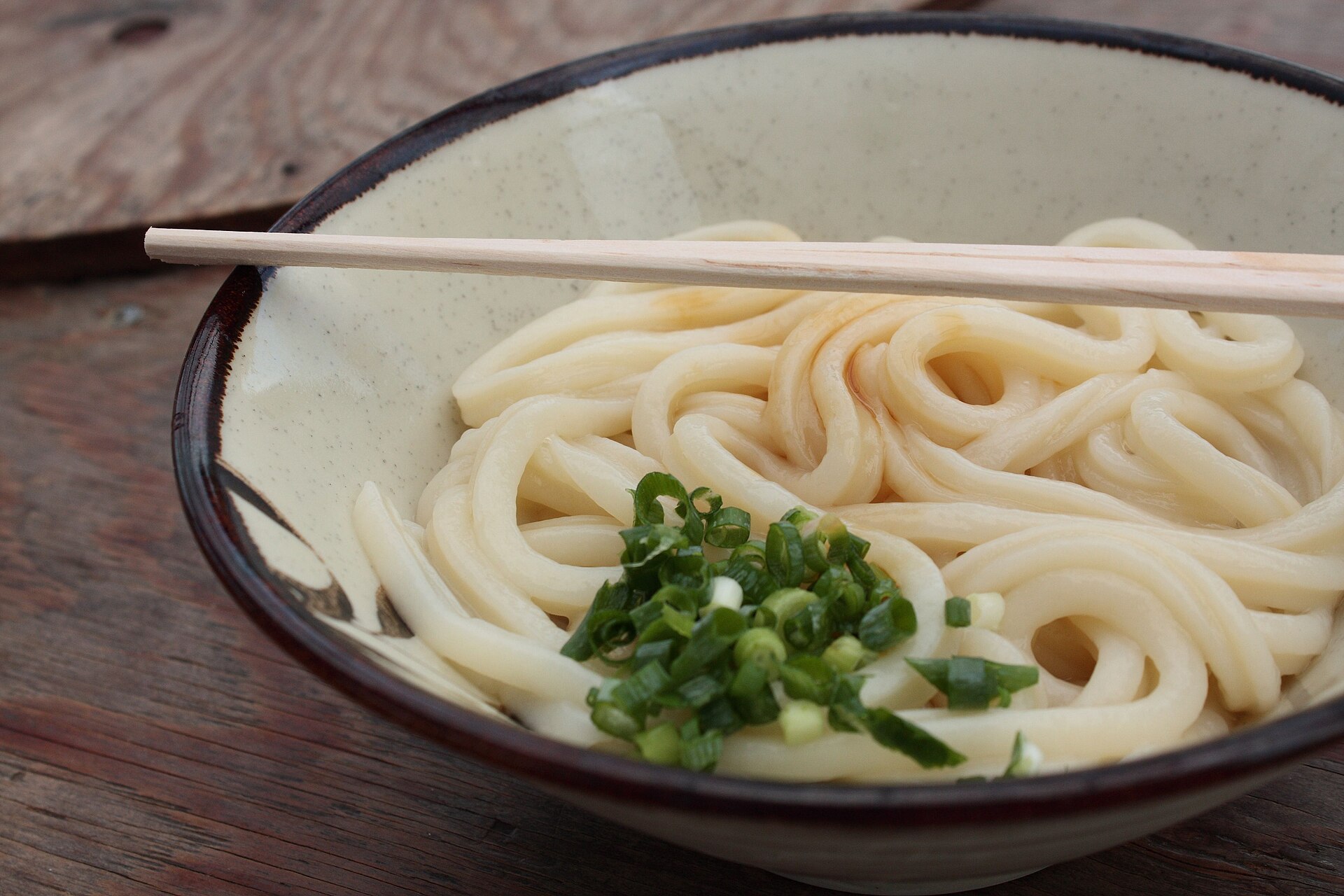
Sanuki Udon
— Kagawa's wheat noodles, in central Takamatsu
Kagawa built an identity on a bowl of wheat noodles and named itself the udon prefecture for it. In central Takamatsu the covered arcade puts the counters within one flat walk of the station, and the menu board reads as a set of instructions.
- FromTakamatsu Station (JR Yosan and Kotoku lines)
- ~10 minOn foot from Takamatsu Station
- Sanuki Udon
The sweet spot
This is the best-known regional noodle in Japan, not a hidden find. What is easy to miss is that the menu is a set of instructions rather than a list of dishes, so the same noodles arrive hot, chilled or undrained depending on the word you say at the counter.
Where it is
19 more notes in Kagawa · open the map →What to look for — in walking order
- Takamatsu Stationthe line's northern terminus beside the port, where the walk into the centre starts
- Hyogomachi arcadethe first covered street on the route, the arcade's northern arm
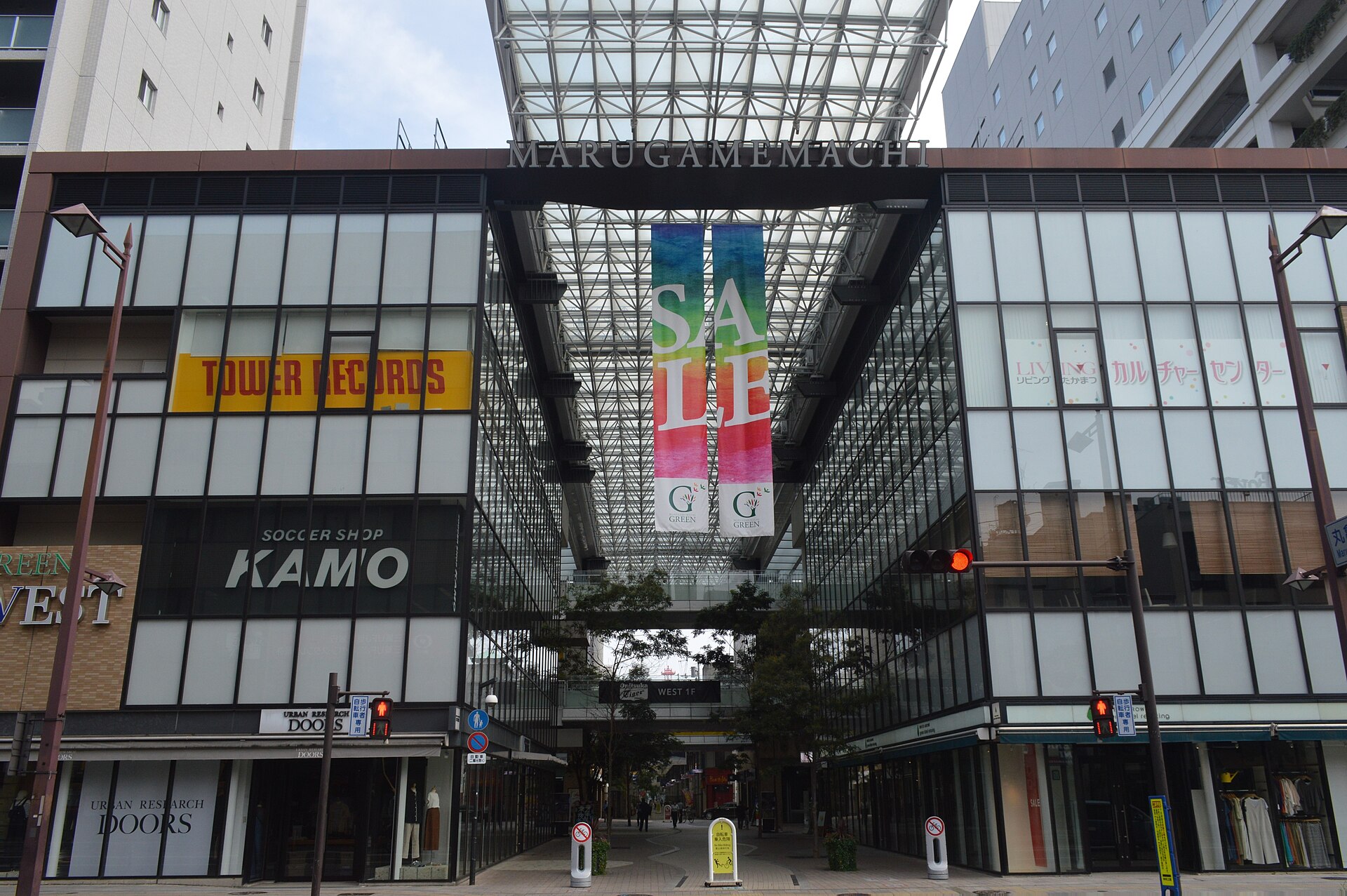
- Marugamemachi arcadethe rebuilt core of the covered run, roofed by a glass dome at its crossing
- Minami-Shinmachithe southern continuation of the same arcade, narrower and quieter than the dome
- Kawaramachi Stationthe Kotoden hub at the far end, where the local lines leave for the rest of the prefecture
How to actually get there
- Takamatsu Station → Hyogomachi, the northern end of the covered arcade (walk about 10 min).
- Walk south through Hyogomachi into Marugamemachi, the rebuilt core under its glass dome.
- Carry on south through Minami-Shinmachi toward Kawaramachi, stopping at whichever counter is open.
- Read the board before ordering: the name tells you how the noodles are handled, not what sits on top.
- On foot from Takamatsu Station
- Takamatsu Station is the northern terminus of the JR Yosan and Kotoku lines and stands beside Takamatsu Port. From the forecourt, walk south-east about ten minutes to reach the northern end of the covered arcade at Hyogomachi. The route is flat and paved, and once you are inside the arcade the rest of the walk is under a roof.
- Return to Takamatsu Station
- Walk back north through the arcade to the station, ten to fifteen minutes from the Marugamemachi dome depending on where you stopped. Trains toward Okayama and along the Kotoku line run into the evening, but last departures differ by line. Check the board at the station rather than assuming a late train before you settle in for a second bowl.
About the place
Sanuki is the old provincial name for Kagawa, and Sanuki udon is what the prefecture is known for. The noodles are wheat, worked until the dough turns firm and springy. The broth is built on iriko, the small dried anchovies of the Inland Sea, with salt. What separates one bowl from the next is method rather than topping. A shop board lists ways of handling the same noodles: chilled and re-warmed, chilled and dressed, or lifted straight from the pot. Kagawa's counters run from the cities out to crossroads in the rice country, and central Takamatsu is where a visitor can reach several of them on foot.
How to enjoy it
Read the board before you queue. Kake arrives hot in broth; bukkake comes chilled under a concentrated sauce; kamaage is lifted straight from the pot in its own water; kamatama goes undrained into a raw egg. Order a plain one first, because toppings make the noodles harder to judge. Hours vary along the arcade, so a late-afternoon plan is worth confirming before you walk.
Background & history
Sanuki is the name Kagawa carried before the prefectures were drawn, and it stayed attached to the noodles. A long-repeated tradition credits udon to Kukai, the monk who studied in Tang China and is said to have brought the method back to this coast; the prefecture tells the story while treating it as legend rather than record. What is not in doubt is the pairing that made the dish local: wheat grown on a dry plain, salt from the Inland Sea, and iriko drawn from the same water. The nickname came much later, when Kagawa began selling itself as the udon prefecture.
Before you go
- Cash
- The arcade is a public street and costs nothing to walk. Udon counters are inexpensive, but card and IC acceptance varies from shop to shop, so cash is the safe assumption. JR Takamatsu Station itself takes IC cards such as ICOCA and Suica.
- Before you go
- The arcade is roofed for its full length, so rain does not stop the walk. Opening days and hours are set shop by shop and are not uniform along the street, so read the notice at the shutter rather than assuming an evening service.
- Another way
- From the mainland, the Marine Liner rapid crosses the Seto-Ohashi bridge from Okayama into Takamatsu. Within the city, Kotoden's Kawaramachi Station sits at the southern end of the same covered run, so the arcade can be walked from either end.
- After you get off
- From Takamatsu Station, cross the forecourt and head south-east for about ten minutes. The covered arcade begins at Hyogomachi and continues south from there.