Okinawa Central · NakagusukuNo.678★★Open in map →
Nakagusuku Castle Ruins
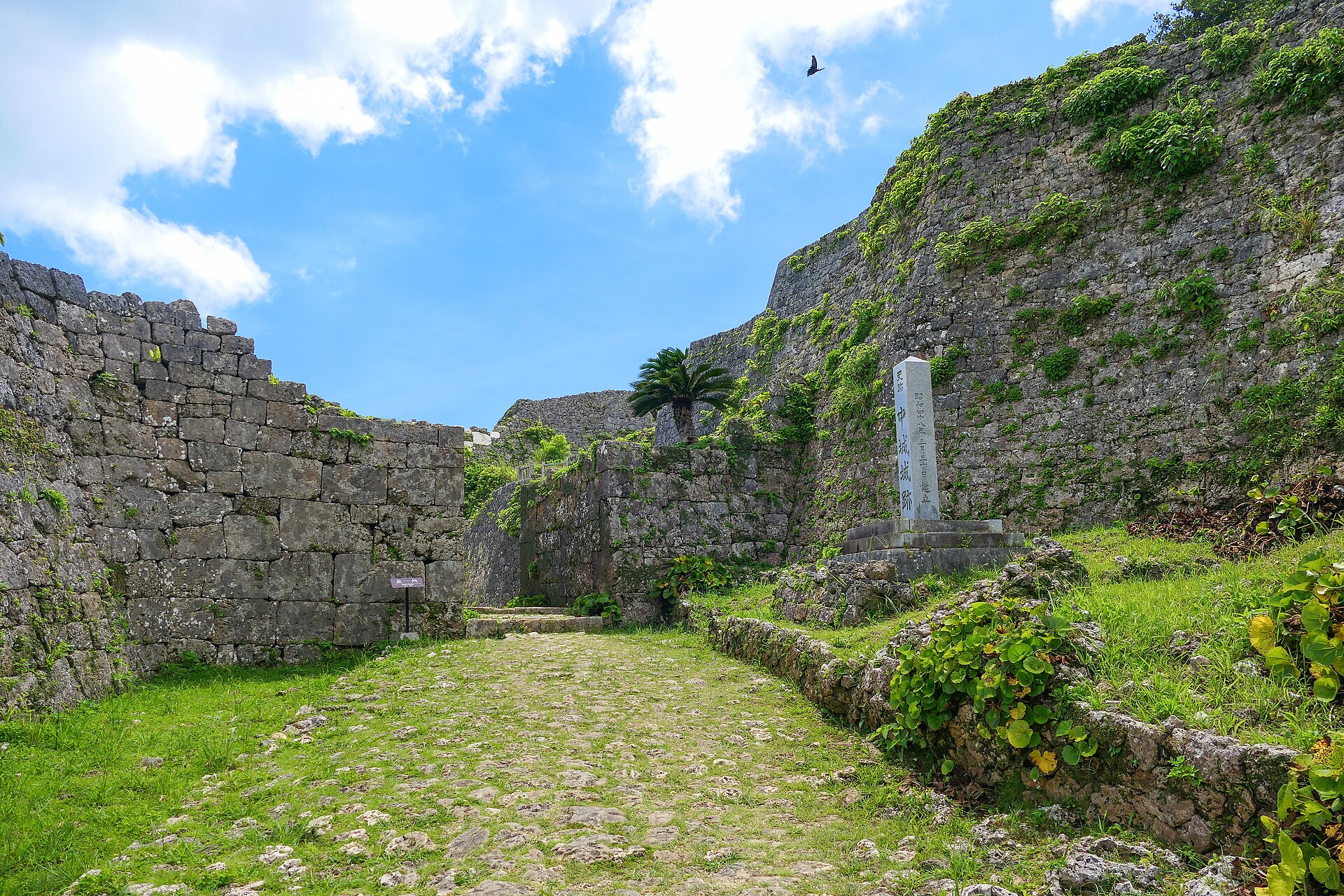
A World Heritage gusuku on a ridge in central Okinawa, preserved as bare stonework. The enclosures follow the natural rock, and three different wall-building techniques stand side by side along one walk.
- FromNaha Bus Terminal
- ~80 minLocal bus, then an uphill walk
- Get off atNakagusuku Shogakko-mae bus stop (bus from Naha Bus Terminal)
- From there
- Nakagusuku Castle Ruins
The sweet spot
This is a ticketed World Heritage site with coach groups, not a forgotten ruin. It stays quiet because it is awkward to reach without a car — the bus leaves you at the foot of the hill, and most independent visitors arrive in the middle of the day, so the first hour after opening tends to be the calmest.
Where it is
41 more notes in Okinawa · open the map →What to look for — in walking order
- The main gatethe formal entrance, where the castle's own signposted route begins
- The south enclosurenozurazumi — natural rocks fitted together much as they were found
- The first and second enclosuresnunozumi — stone cut into rectangular blocks and laid in even courses
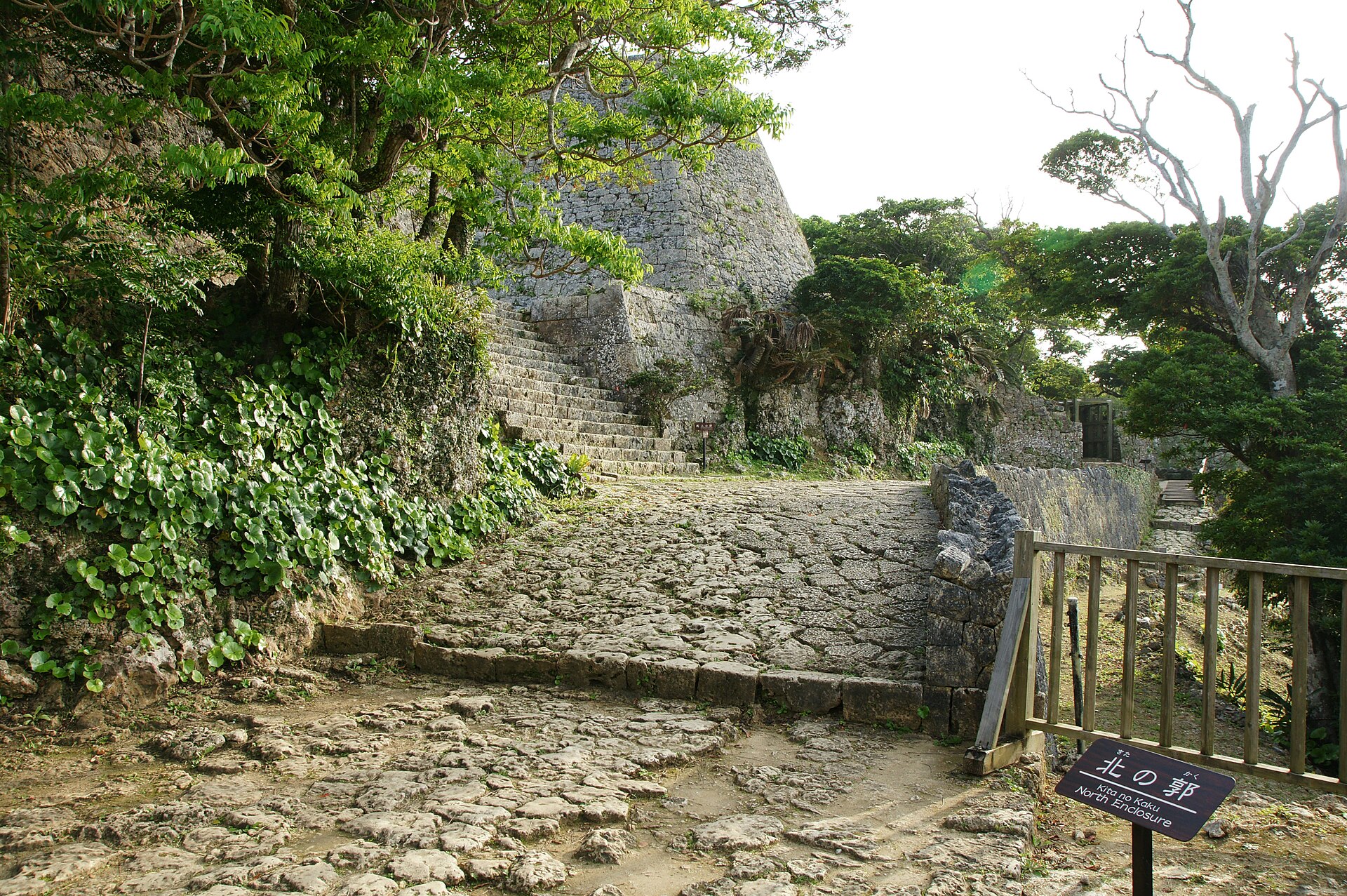
- The third and north enclosuresaikatazumi — polygonal stones cut to interlock, the technique Gosamaru brought
- Ufugaa, the great wellthe castle's own water source, held inside the line of the walls
How to actually get there
- Naha Bus Terminal → Nakagusuku Shogakko-mae bus stop (local bus, about 50 minutes).
- Nakagusuku Shogakko-mae → castle entrance (uphill on foot, roughly 30 minutes; about 5 minutes by taxi).
- Buy a ticket at the counter, then start from the main gate and follow the named enclosures along the ridge.
- By rental car: Okinawa Expressway to Kitanakagusuku IC, then follow the signposted route to the free car park.
- Bus from Naha Bus Terminal, then the hill
- From Naha Bus Terminal a local bus reaches the Nakagusuku Shogakko-mae stop in about 50 minutes. The castle is above the stop: roughly half an hour on foot uphill, or about five minutes by taxi. Allow around 80 minutes from terminal to gate if you walk the last stretch.
- Back down to the bus stop
- The return is the same route reversed, downhill to Nakagusuku Shogakko-mae and back to Naha Bus Terminal. Buses on this route are not frequent, so check the posted times before you start the climb up. If the timing goes wrong, a taxi down to the coastal road is the fallback.
About the place
Nakagusuku Castle stands on a ridge on the eastern side of central Okinawa, straddling the villages of Nakagusuku and Kitanakagusuku. Nothing rises above the stonework, and that is what the visit is about: the curtain walls survive almost entire, curving with the shape of the rock beneath them instead of cutting across it. Six enclosures run in a line along the ridge, each added in a different period, and the way the stone is cut and stacked changes between them. The site came through the Battle of Okinawa relatively lightly damaged, so most of what is on view is original coursing. Arched gateways open through the walls of the inner enclosures.
How to enjoy it
The counter opens at 8:30 and that first hour is the calmest part of the day. From May to September the site stays open until 18:00 rather than 17:00, and the gates shut 30 minutes after the counter closes — enough for one unhurried circuit of the enclosures. Low late light raking across the walls is the reason to use the longer summer hours.
Background & history
The first enclosures were raised by the lords of Nakagusuku over several generations from the fourteenth century. In 1440 the warrior Gosamaru was moved here by royal command and added the last two enclosures, strengthening the castle against Amawari, the lord of Katsuren — who later attacked him at the head of a royal army. Commodore Perry's expedition surveyed the ruins in 1853, and its officers wrote admiringly of the stonework. The site was designated a national historic site in 1972 and inscribed on the World Heritage list in 2000 within the Gusuku Sites and Related Properties of the Kingdom of Ryukyu.
Before you go
- Cash
- Admission at the time of checking was 500 yen for adults, 300 yen for junior and senior high school students, and 200 yen for primary school children; pre-school children accompanied by an adult enter free. Parking is free.
- Before you go
- Typhoons close the site outright: the management office posts a temporary closure and then the reopening date, and in an active season that happens more than once. The enclosures are open ground with little shade, so heat and wind are both felt up there.
- Another way
- A rental car is the simplest approach — from the airport side, join the Okinawa Expressway and come off at Kitanakagusuku IC, then follow the signs through the Anyaya junctions to the free car park. There is also a highway bus to the Kishaba stop, from where the on-demand mobi service covering the Kitanakagusuku area can be called to the castle.
- After you get off
- Nakagusuku Shogakko-mae sits down on the coastal road below the ridge, so the last leg is a steady climb rather than a stroll. A taxi from the stop is short and takes the hill out of the day.