Fukui · Obama, WakasaNo.1308★★Open in map →
Myotsuji Temple
A Shingon temple in Obama, Fukui, whose Kamakura-period main hall and three-storied pagoda are both National Treasures — the only National Treasure buildings in the prefecture. Late Heian statues inside the hall round out the visit.
- FromHigashi-Obama Station (JR Obama Line)
- ~10 minTaxi from JR Higashi-Obama
- Myotsuji Temple
The sweet spot
This is not a hidden temple. Its hall and pagoda are the only National Treasure buildings in Fukui, and the city and tourism sites feature it. The hurdle is access rather than fame: it stands away from the railway, and the official access notes give journey times by taxi or car, not on foot.
Where it is
28 more notes in Fukui · open the map →What to look for — in walking order
- Sanmon gatea two-storey gate rebuilt in the Edo period, guarded by a pair of Kamakura-period Nio statues
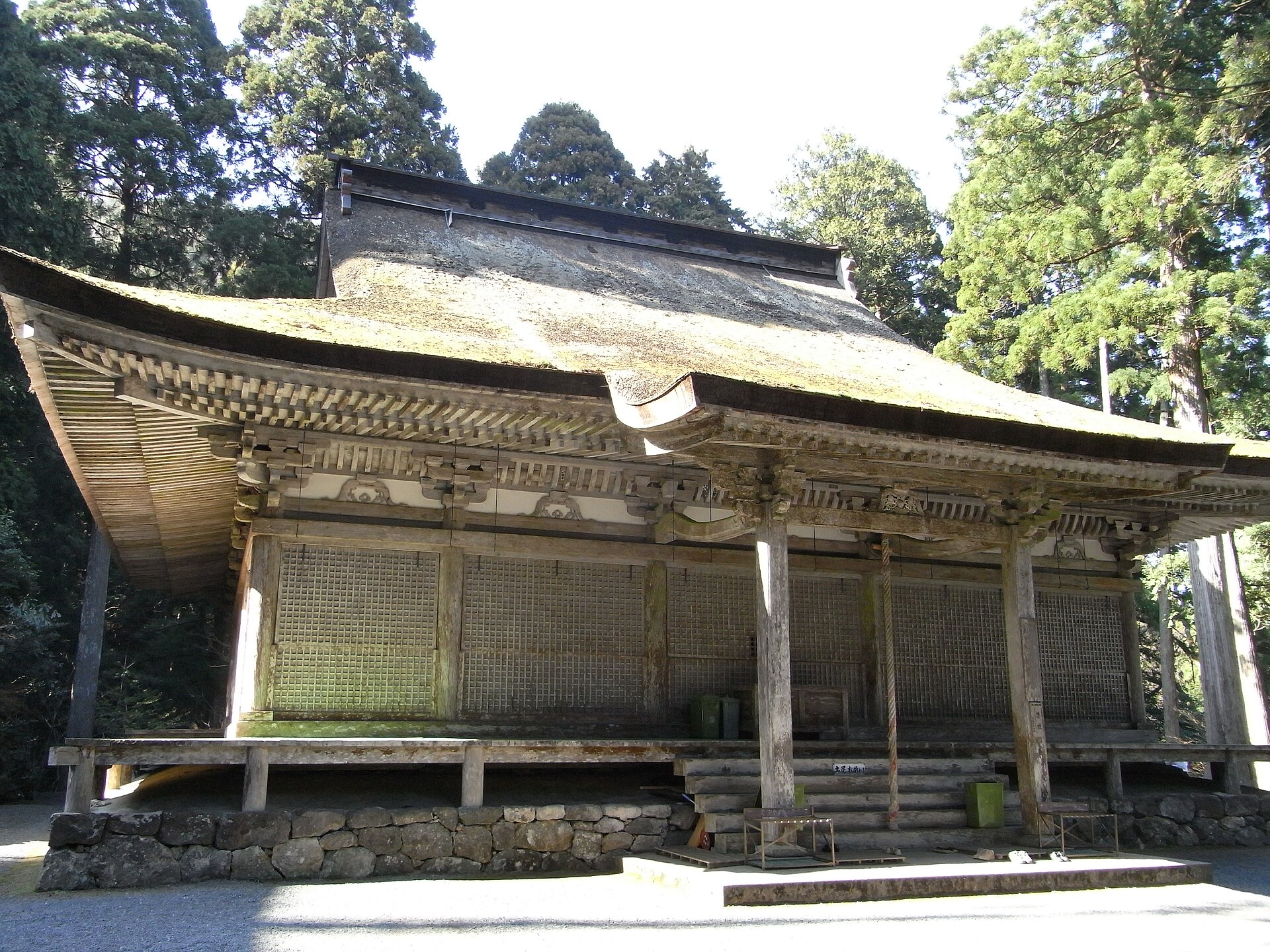
- Main halla National Treasure hall with a cypress-bark hip-and-gable roof, raised on a stone-walled base
- Statues of the main hallthe seated Yakushi, Buddha of healing, flanked by two tall standing figures
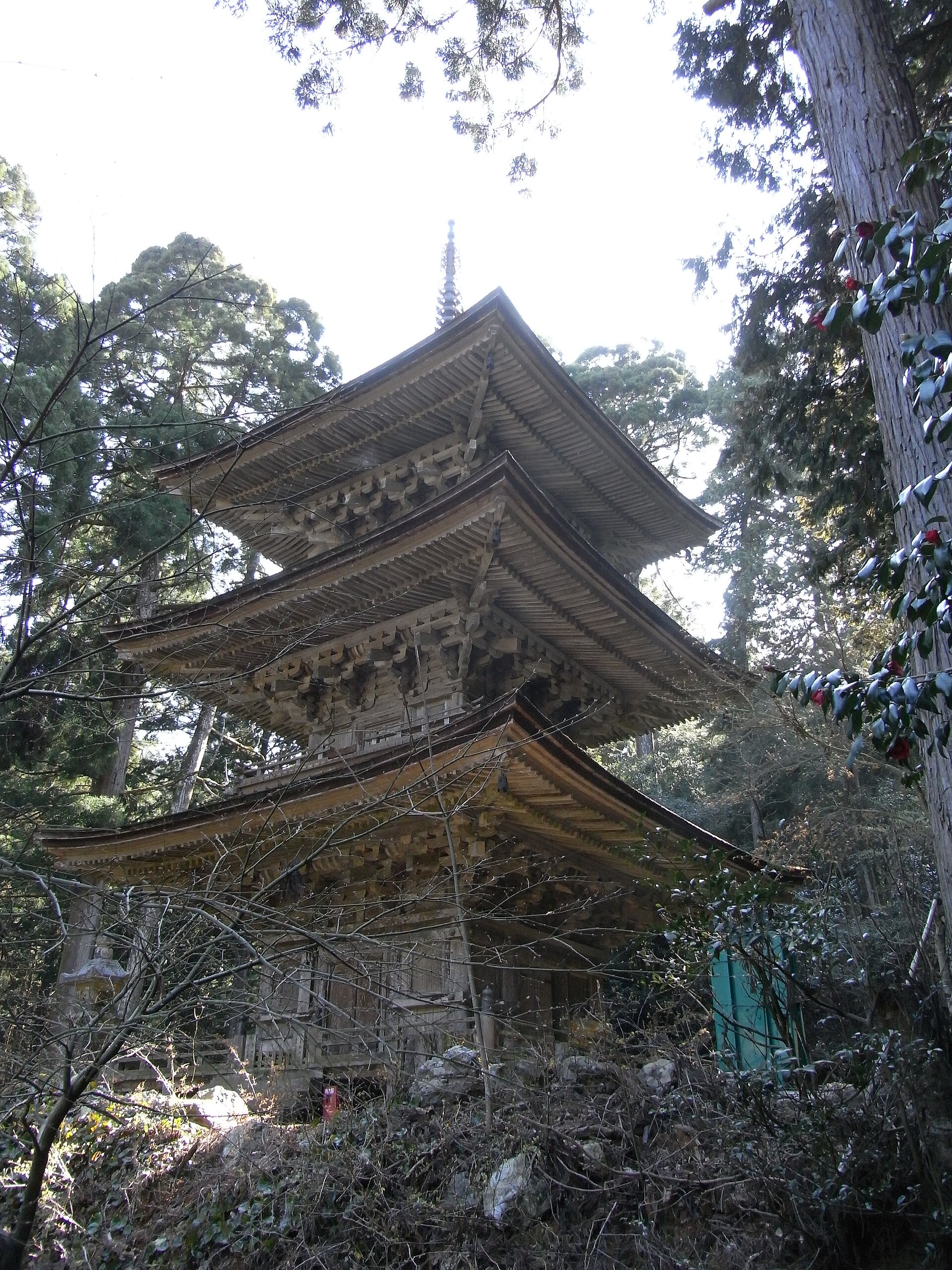
- Three-storied pagodathe temple's second National Treasure, roofed in cypress bark, just behind the main hall
How to actually get there
- Tsuruga Station → Higashi-Obama Station (JR Obama Line).
- Higashi-Obama Station → Myotsuji by taxi (about 10 min).
- Pass through the Sanmon gate and continue to the main hall.
- After the main hall, walk round to the three-storied pagoda, then leave by the gate.
- JR Obama Line to Higashi-Obama, then a taxi
- Ride the JR Obama Line, which runs between Tsuruga and Higashi-Maizuru, to Higashi-Obama Station. From the station a taxi reaches the temple in about ten minutes. The temple's access page names local taxi companies, so you can call one ahead.
- Return to Higashi-Obama Station
- Take a taxi back to Higashi-Obama Station, again about ten minutes. Check the JR Obama Line timetable before you leave the temple, and book the car to meet the train rather than the other way round.
About the place
Myotsuji is a temple of the Shingon Omuro school in Monzen, a district of Obama in the Wakasa region of western Fukui. Two of its buildings are National Treasures: the main hall and a three-storied pagoda. The main hall sits on a stone-walled base under a hip-and-gable roof of cypress bark. It measures five bays across and six bays deep. The pagoda, also roofed in cypress bark, stands just behind it. Inside the hall stand statues carved in the late Heian period, and visitors are given a short explanation there.
How to enjoy it
The temple's site lists opening hours of 9:00 to 17:00, closing at 16:30 from December to February, every day of the year. Arrive with enough time before closing to hear the explanation inside the main hall and then walk round to the pagoda.
Background & history
Temple tradition holds that Myotsuji was founded in 806 by Sakanoue no Tamuramaro, the Sei-i Taishogun of Emperor Kanmu's reign. The present main hall was raised in 1258, in the mid-Kamakura period, and the pagoda followed in 1270. Both were later designated National Treasures, and they are still the only buildings in Fukui Prefecture with that rank. The temple also keeps four statues from the late Heian period that are Important Cultural Properties of Japan.
Before you go
- Cash
- Admission is charged at the temple, and the current fee is on its official site. Carry cash for it, and ask about card payment when you book the taxi.
- Before you go
- The temple lists no regular closing day, but it shuts earlier in winter. Groups are asked to contact the temple before visiting.
- Another way
- By car, leave the Maizuru-Wakasa Expressway at Obama IC; the temple is about 15 minutes away and has its own car park with room for coaches. Obama City's community Aiai Bus also has a stop called Myotsuji, but check the current timetable on the city website before relying on it.
- After you get off
- Higashi-Obama Station is the railhead, not the destination. The temple lies about 4 km south-southeast of it in a straight line, so take a taxi from the station to the temple.