South Miyagi · ShiroishiNo.812★Open in map →
Kamitozawa and Shimotozawa
— Two post towns on the old Shichikashuku Kaido
Two of the seven post towns of the Shichikashuku Kaido, a few kilometres apart in a narrow valley in southern Miyagi. Neither has been restored for visitors — the old highway simply still runs between the houses, as a prefectural road.
- FromShiroishi Station
- ~35 minCity bus, weekdays only
- Get off atShimotozawa (Shiroishi city bus, Obara line)
- From there
- Kamitozawa and Shimotozawa
The sweet spot
People in Miyagi know the name Shichikashuku, but what they picture is the reservoir and the ski slopes, and those are far up the western end of the valley. The two Tozawa hamlets sit at the opposite end, on the side that drops away into Fukushima, and the bus that reaches them makes one trip a day on weekdays. Nothing here is closed off. There is simply almost no way to arrive by accident.
Where it is
23 more notes in Miyagi · open the map →What to look for — in walking order
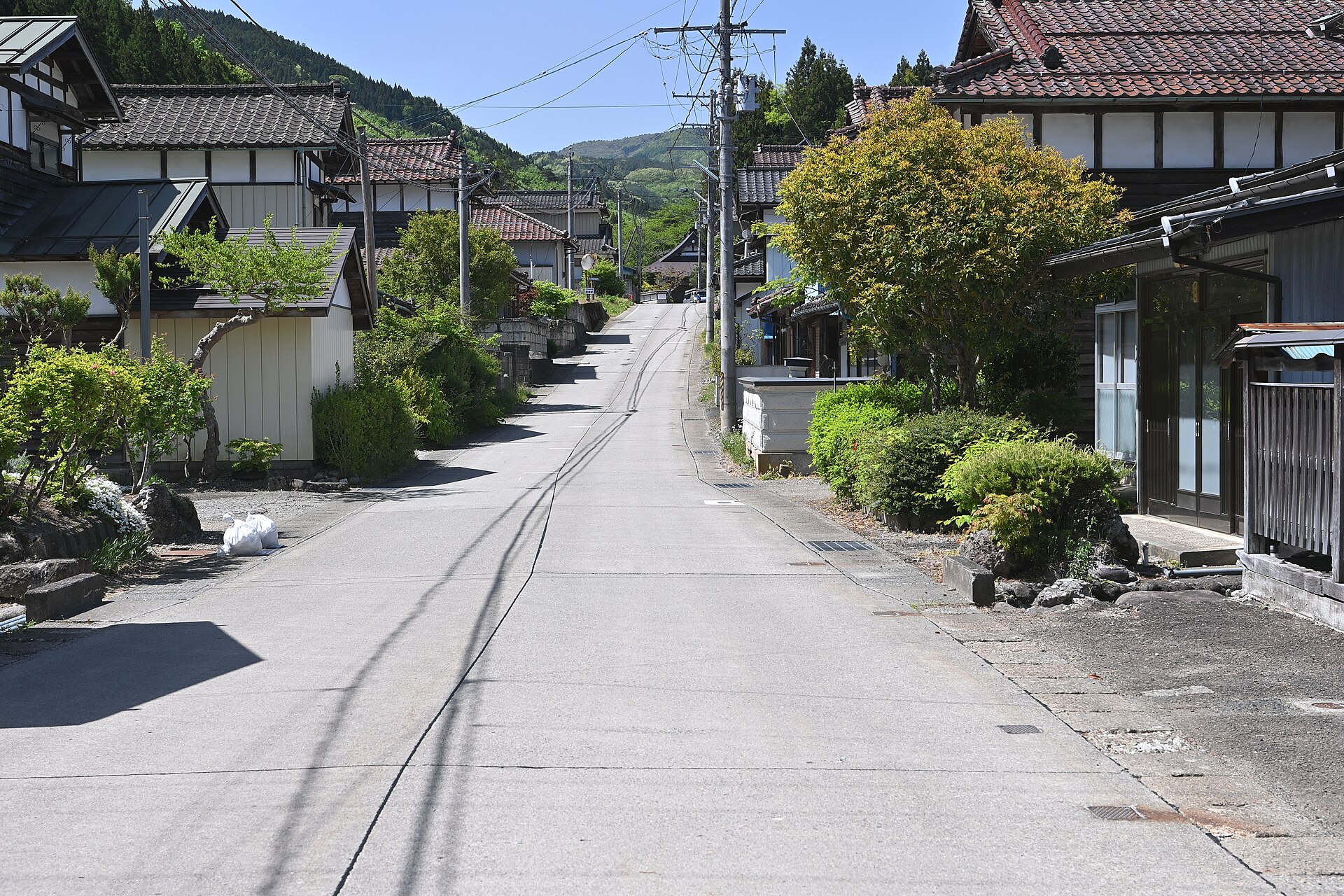
- The Shimotozawa streetone road with houses drawn up close on both sides, the post-town outline still legible
- The bend at the centrethe masugata, a sharp dog-leg built into the middle of the town for defence
- Kamitozawathe hamlet further up the valley, the post town that was never given a honjin
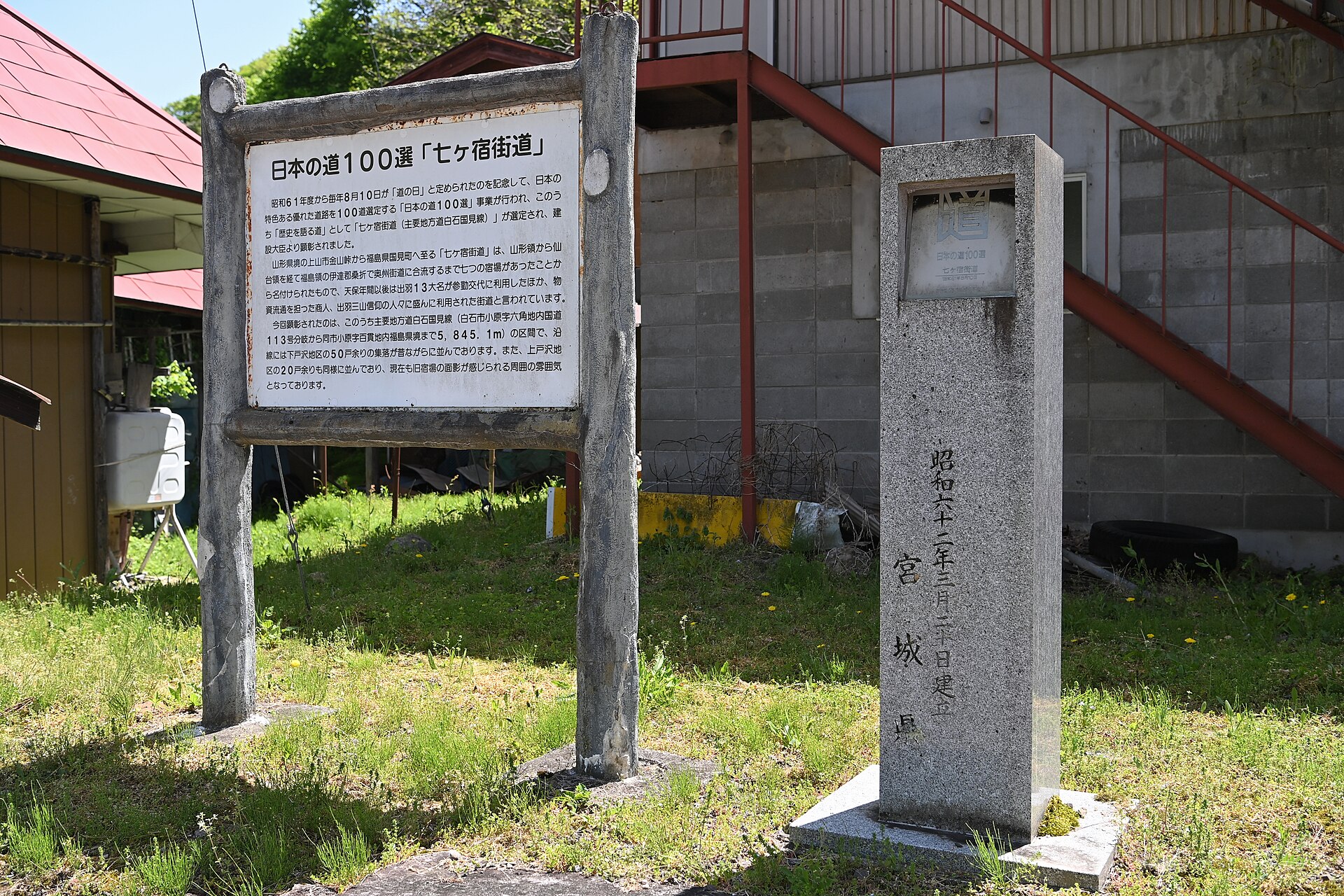
- The Road 100 markera prefectural stone and a board at Kamitozawa, setting out what the road once carried
How to actually get there
- Shiroishi Station → Shimotozawa (Shiroishi city bus, Obara line; weekdays, one run out).
- Walk the Shimotozawa street end to end, through the dog-leg at its centre.
- Ride or walk on to Kamitozawa for the road marker, then catch the single return bus.
- Shiroishi city bus, Obara line
- Shiroishi Station →(Shiroishi city bus, Obara line, bound for Kamitozawa)→ Shimotozawa, about thirty-five minutes. The line runs on weekdays, and only one run a day goes the full distance out to the two hamlets — most services on the route turn back earlier. Confirm the day's departure with the city before you build a day around it.
- Back from Shimotozawa
- There is one return run, and it is the same bus coming back down the valley. Miss it and there is no second chance that day: the line does not run at weekends and nothing else passes through. Settle on the return time before you step off.
About the place
The road came down from a pass on the Yamagata border and ran to Kunimi in Fukushima, where it met the Oshu Kaido. Seven post towns stood along it, and the seven are what the road — and later a whole town — took their name from. Kamitozawa and Shimotozawa are the two nearest the Fukushima end, a few kilometres apart in the same narrow valley. Neither has been rebuilt as an attraction. What survives is the shape: one road, houses drawn up close on both sides of it, the hills starting where the gardens stop. The alignment is a prefectural route now, and the stretch through the two hamlets is on the national list of a hundred notable roads.
How to enjoy it
The bus decides the day. There is one run out and one back on weekdays, in the morning on some days and in the afternoon on others, and the gap between them is somewhere between half an hour and an hour. That is one hamlet at a walking pace, not two. If you want both, come on a day when the run falls in the afternoon: the longer gap leaves time to ride one stop further to Kamitozawa and walk back down the valley to Shimotozawa for the bus home.
Background & history
The Shichikashuku Kaido crossed the mountains to link Oshu with Ushu, and thirteen daimyo of Dewa used it for their processions to Edo. Merchants moving goods went that way, and so did pilgrims bound for the Dewa Sanzan. Kamitozawa never had a honjin, the formal lodging kept for a lord; instead the kendan house of the Kimura family, which policed the post station and its relay horses, served as the lord's lodging and ran the packhorse agency as well. Shimotozawa had both a honjin and a wakihonjin. The Kimura house was later dismantled and rebuilt in a park down the valley.
Before you go
- Cash
- Walking the post towns costs nothing — they are a public road with houses along it. What costs money is the bus, paid on board, so carry coins rather than counting on any other way to pay.
- Before you go
- The line runs Monday to Friday, so assume nothing on Saturdays, Sundays or public holidays. This is a valley on the way up to a pass: in winter snow and ice change both the driving and the walking. Treat both hamlets as places with nothing laid on and carry your own water.
- Another way
- By car, the two hamlets are strung along the prefectural road that leaves Route 113 at Obara and climbs to the Fukushima border — the same stretch that is on the hundred-roads list. A taxi from Shiroishi Station is the other way in, and given the bus it is often the sensible one. Note that Shiroishi-Zao, the shinkansen station, is a different station from Shiroishi, and the bus starts from the latter.
- After you get off
- The bus sets you down in the middle of Shimotozawa. There is no walk from the stop to the sight, because the street is the sight. Kamitozawa is the next stop, a few kilometres further up the valley, and the road between the two follows the old alignment.