Northeast Fukuoka · HakozakiNo.1083★★Open in map →
Hakozakigu Shrine
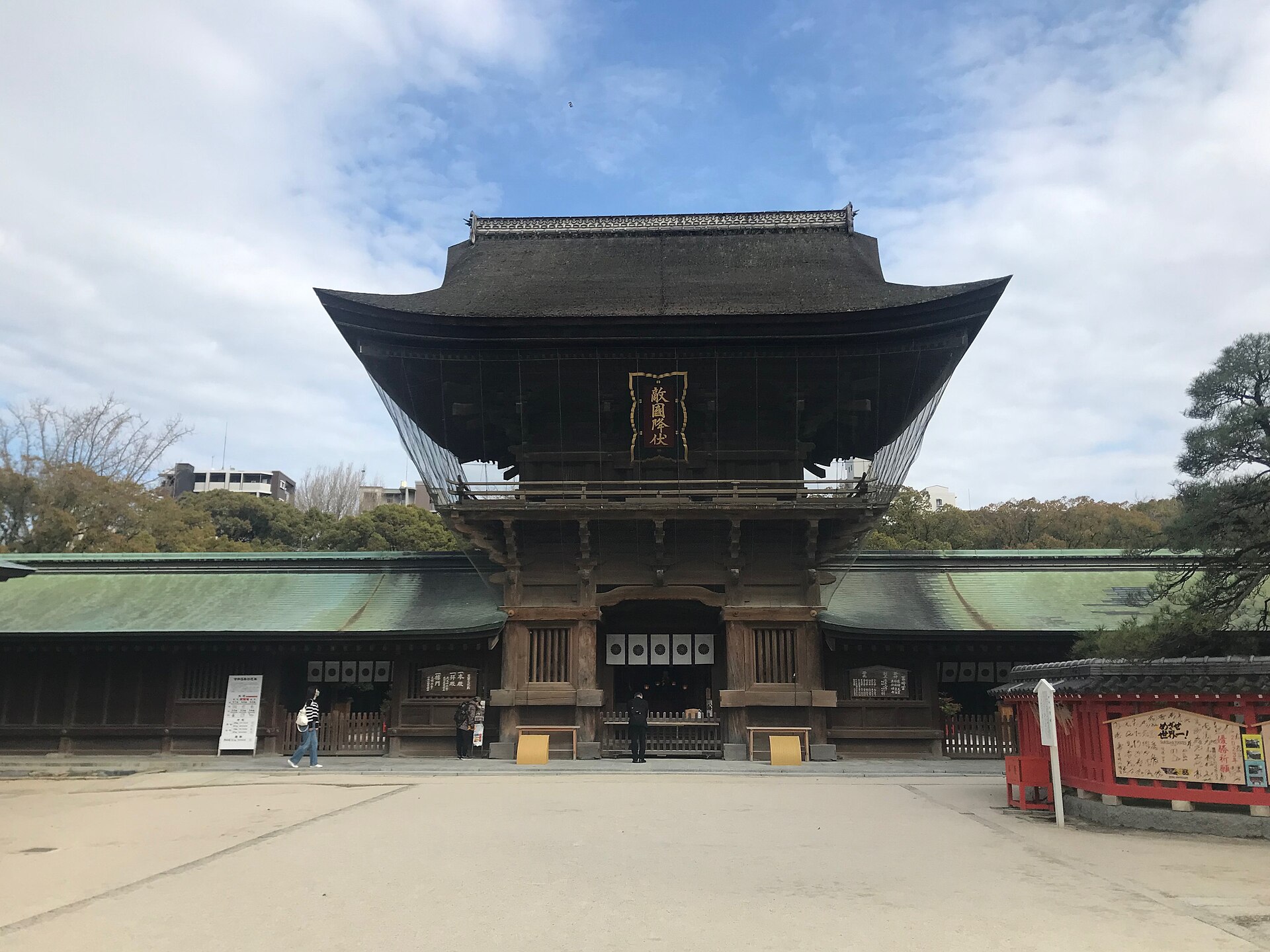
A Hachiman shrine in the northeast of Fukuoka, built facing Hakata Bay rather than the city. Its approach starts at a beach where worshippers still gather purifying sand, and ends at a tower gate that carries a prayer against invasion.
- FromHakata Station
- 3 min on foot from the stationSubway Hakozaki Line
- Get off atHakozakigu-mae Station (Subway Hakozaki Line)
- On foot
- Hakozakigu Shrine
The sweet spot
Hakozakigu is one of the major shrines of Fukuoka and one of the busiest places in the city during its September festival, so it is not a hidden find. What is easy to miss is the direction. Almost everyone arrives at a station behind the halls and leaves without walking the approach the shrine was built to face.
Where it is
28 more notes in Fukuoka · open the map →What to look for — in walking order
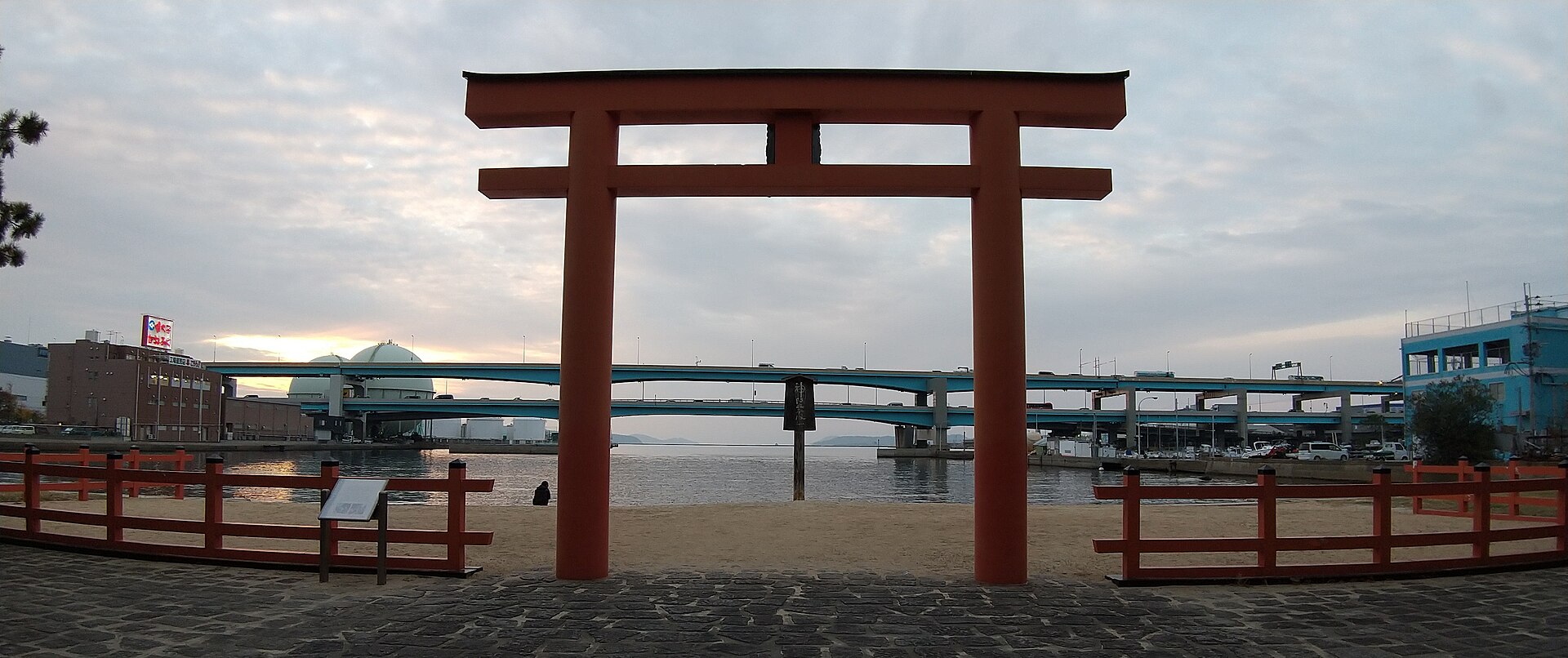
- Oshioi-hamathe beach at the seaward end of the approach, where worshippers collect purifying sand
- The stone toriia low granite gate of the local Hakozaki pattern, standing across the approach below the halls
- The tower gatea cypress-bark roof carried on bracket sets, with the famous plaque hung above the seaward face
- The worship and main hallslacquered halls in the flowing style, roofed in cypress bark, with a porch at each side
- The Wakide stone and the Hakomatsu pinea stone said to answer wishes, beside the pine that carries the shrine's founding legend
How to actually get there
- Hakata Station to Hakozakigu-mae (Fukuoka City Subway, changing at Nakasu-Kawabata).
- From Exit 1, walk seaward along the approach and cross to Oshioi-hama on Hakata Bay.
- Turn inland and walk back through the stone torii to the tower gate.
- Pay respects at the worship hall, then find the Wakide stone and the Hakomatsu pine.
- Subway from Hakata Station
- Take the Fukuoka City Subway Kuko Line from Hakata to Nakasu-Kawabata, then change to the Hakozaki Line for Hakozakigu-mae. Trains on both lines run frequently through the day. Fares are payable by IC card or at the ticket machine.
- Return from Hakozakigu-mae or Hakozaki
- Go back the way you came on the Hakozaki Line and change at Nakasu-Kawabata for Hakata. JR Hakozaki Station is a second option on the far side of the precinct and puts you on the Kagoshima Main Line. Check the last departures if you stay into the evening during the September festival.
About the place
Hakozakigu is counted with Usa and Iwashimizu as one of the three great Hachiman shrines of Japan, and it is the one that belongs to a port. It sits in Hakozaki, a flat district in the northeast of Fukuoka, and it is oriented toward Hakata Bay rather than toward the streets behind it. The approach therefore runs the length of the district: from the sand at Oshioi-hama, across the main road, past the stone torii, and up to the tower gate. Worshippers still carry sand home from that beach as a purifying charm. Local people call the shrine Hakozaki-san, and treat the whole line from the water to the halls as a single place.
How to enjoy it
The festival called Hojoya runs from 12 to 18 September, when hundreds of stalls line the approach and the district stays busy into the night. Outside those days it is a quiet neighbourhood street, and the walk in from the beach is short enough to add to a morning spent in Hakata. Late afternoon light runs straight down the approach from the bay, which is the direction the gate was built to face.
Background & history
An imperial oracle is given as the shrine's origin, and the sanctuary was moved to this ground beside the bay in 923. The four characters over the gate, read as a call for an enemy nation to surrender, belong to the century when Mongol fleets came into Hakata Bay and the court ordered prayers here. The buildings standing now came later. The main and worship halls were rebuilt in 1546 by Ouchi Yoshitaka and the gate was added in 1594 by Kobayakawa Takakage, and both are national Important Cultural Properties. The stone torii on the approach was raised in 1609 by Kuroda Nagamasa.
Before you go
- Cash
- There is no gate charge for the precinct itself. The flower garden inside the grounds is handled separately at its own entrance and its charge changes with the season, so read the shrine's official site before counting on it. Festival stalls work in cash.
- Before you go
- The approach is open ground with little shelter, and the stretch between the beach and the stone torii crosses a main road with traffic. During the September festival the approach is given over to stalls and crowds, which is worth planning around either way. The flower garden opens only in its seasons.
- Another way
- JR Hakozaki Station on the Kagoshima Main Line is one stop out from Hakata and about eight minutes on foot from the precinct, but it brings you in from behind the halls instead of up the approach.
- After you get off
- From Exit 1 at Hakozakigu-mae, come up onto the approach and turn away from the halls, toward the bay, to reach the beach first. Turning the other way brings you to the stone torii and the gate in a couple of minutes.