Okayama · Takahashi hillsNo.590★★Open in map →
Fukiya Furusato Village
— A red-ochre mining village in the Okayama hills
A preserved village high in the hills west of Takahashi, where copper and a red iron-oxide pigment paid for a street of merchant houses built to a single agreed colour. The wooden school at the top of it has reopened to visitors.
- FromBitchu-Takahashi Station
- ~1 hrBihoku Bus, about an hour
- Get off atFukiya bus stop (Bihoku Bus)
- On foot
- Fukiya Furusato Village
The sweet spot
Fukiya is documented, signposted and carries a national heritage listing, so it is not an unknown place. It stays quiet because of the road. The bus climbs out of the valley for a long stretch and comes back the same way, which puts the village well outside a casual detour from the main line and keeps the day's visitors inside a narrow window.
Where it is
14 more notes in Okayama · open the map →What to look for
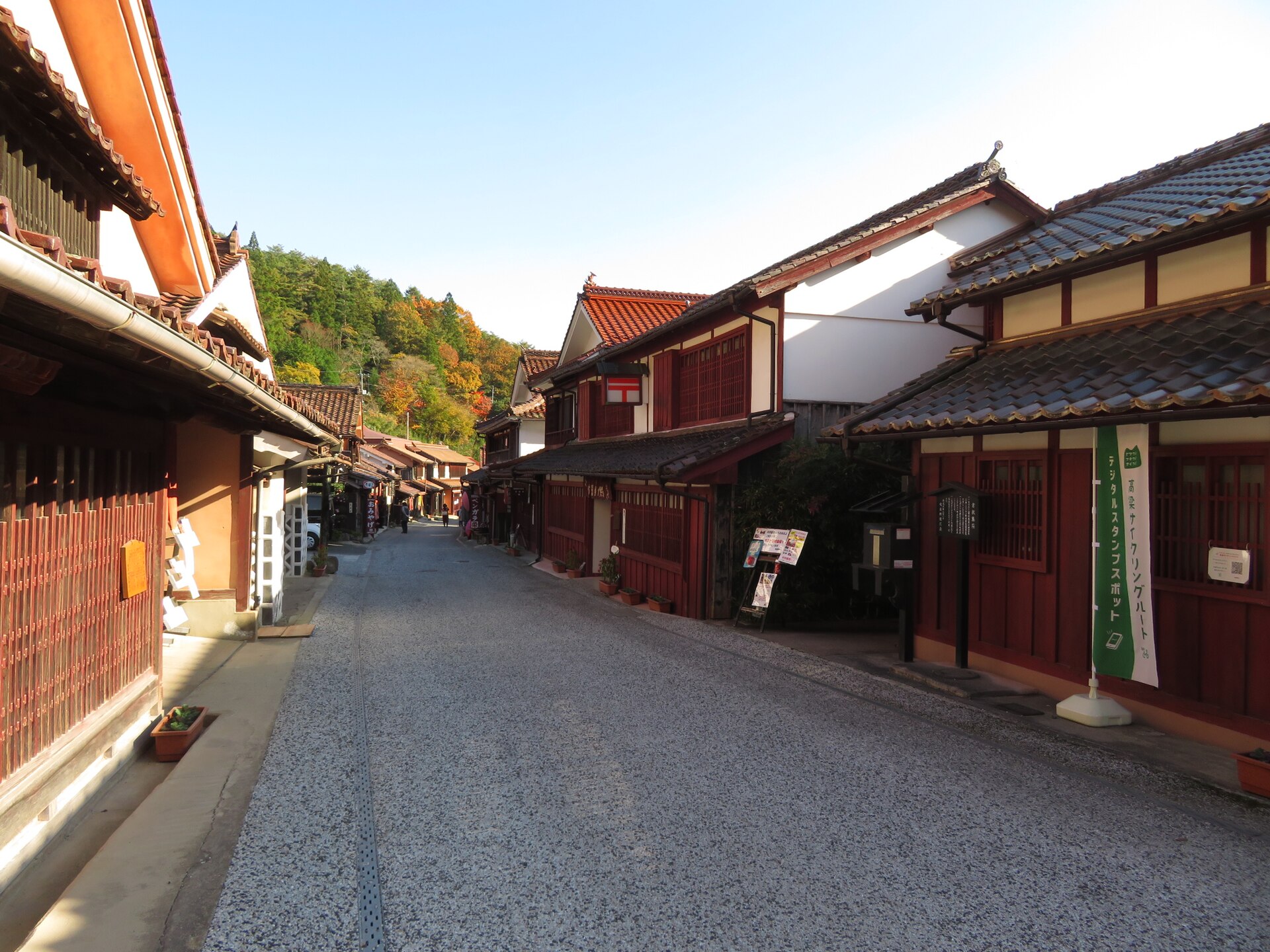
- The bengara streeta continuous frontage of ochre lattice and red-brown tile, held as one scheme rather than restored house by house
- Former Katayama Residence and the local museuma bengara merchant's house and shop front, nationally designated, with the family's rooms kept behind it
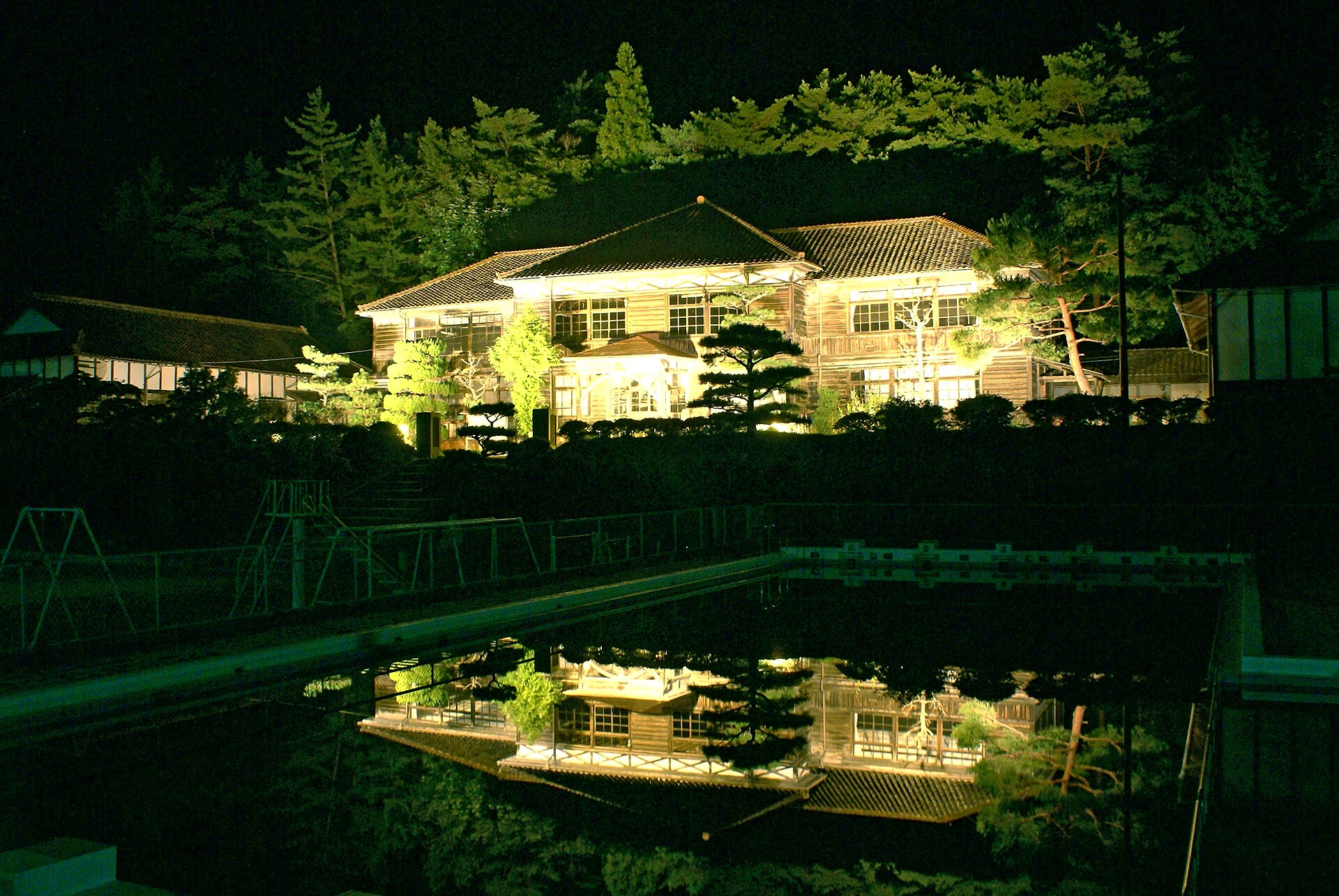
- Former Fukiya Elementary Schoollong wooden classrooms at the head of the village, now the visitor hub
- Bengara Halla rebuilt pigment works showing how the iron oxide was ground, washed and fired
- Sasaune mine tunnela restored copper working down the valley from the street, cool underground the year round
How to actually get there
- Okayama Station → Bitchu-Takahashi Station (JR Hakubi Line).
- Bitchu-Takahashi Station bus stand → Fukiya (Bihoku Bus, about an hour).
- Walk the preserved street uphill from the bus stop, taking the merchant house and museum on the way.
- Continue to the former elementary school at the head of the village, then return to the same stop for the bus down.
- Bihoku Bus from Bitchu-Takahashi Station
- Okayama Station → Bitchu-Takahashi Station on the JR Hakubi Line, then the Bihoku Bus service bound for Fukiya from the stand outside the station. The ride takes about an hour, climbing steadily out of the valley, and the Fukiya stop is on the through road in the middle of the preserved street. Services are limited, so read the return time off the timetable before you walk away from the stop.
- Back down on the same route
- The same Bihoku Bus route runs down to Bitchu-Takahashi Station, where the Hakubi Line connects to Okayama. There is no late service out of the village, so treat the last bus as the hard end of the day and build the visit around it rather than around the buildings.
About the place
Fukiya sits at about 550 metres in the hills west of Takahashi. Its wealth came first from copper and then from bengara, an iron-oxide red that was produced here on a scale found nowhere else in Japan. Rather than each merchant building to his own taste, the households of the town agreed on a single scheme and brought in tilers and carpenters from Shimane to carry it out. The result is a street where lattice, plaster and roofline all sit in one red-brown register, under the tiles of the San'in coast.
How to enjoy it
The bus from Bitchu-Takahashi takes about an hour each way, so read the return departure before you set off up the street — the timetable, not the village, decides how long you get. The old school and the merchant houses open from mid-morning and close earlier in winter than in summer. Walk the street once end to end before going inside anything: the point of Fukiya is the run of frontages, and it reads best as a whole.
Background & history
The copper mines and the bengara works that paid for the street closed long ago, but the buildings stayed. In 1977 the townscape became the first in Okayama to be designated a national preservation district for historic buildings, and in 2020 the wider area was listed as a Japan Heritage site under the title 'birthplace of Japan Red'. The wooden school at the head of the village, whose east and west wings went up in 1900, taught until 2012 and was known as the oldest schoolhouse in the country still in use; it reopened to visitors in 2022 after a long restoration.
Before you go
- Cash
- Each of the historic buildings charges its own admission, and a combined ticket covering several of them is sold on site. If you plan to see more than one, buy the combined ticket at the first building you enter rather than paying separately at each door.
- Before you go
- The village is high in the hills and the road up is narrow and slow in bad weather. The individual buildings keep shorter hours in winter than in summer, and some have set closing days, so a cold-season trip is worth checking before you commit a whole day to the bus.
- Another way
- By car, Fukiya is reached on the mountain roads west of Takahashi, and there is a car park at the edge of the village with room for coaches. Drivers usually pair it with the Hirokane Residence, a walled merchant estate on the hillside south of the street.
- After you get off
- The Fukiya stop is on the through road in the middle of the preserved street. Walking uphill from it brings the merchant house and the local museum first, with the old school at the far end; the mine tunnel lies the other way, further down the valley.