Asahikawa · NagayamaNo.972★★★Open in map →
Asahikawa Ramen
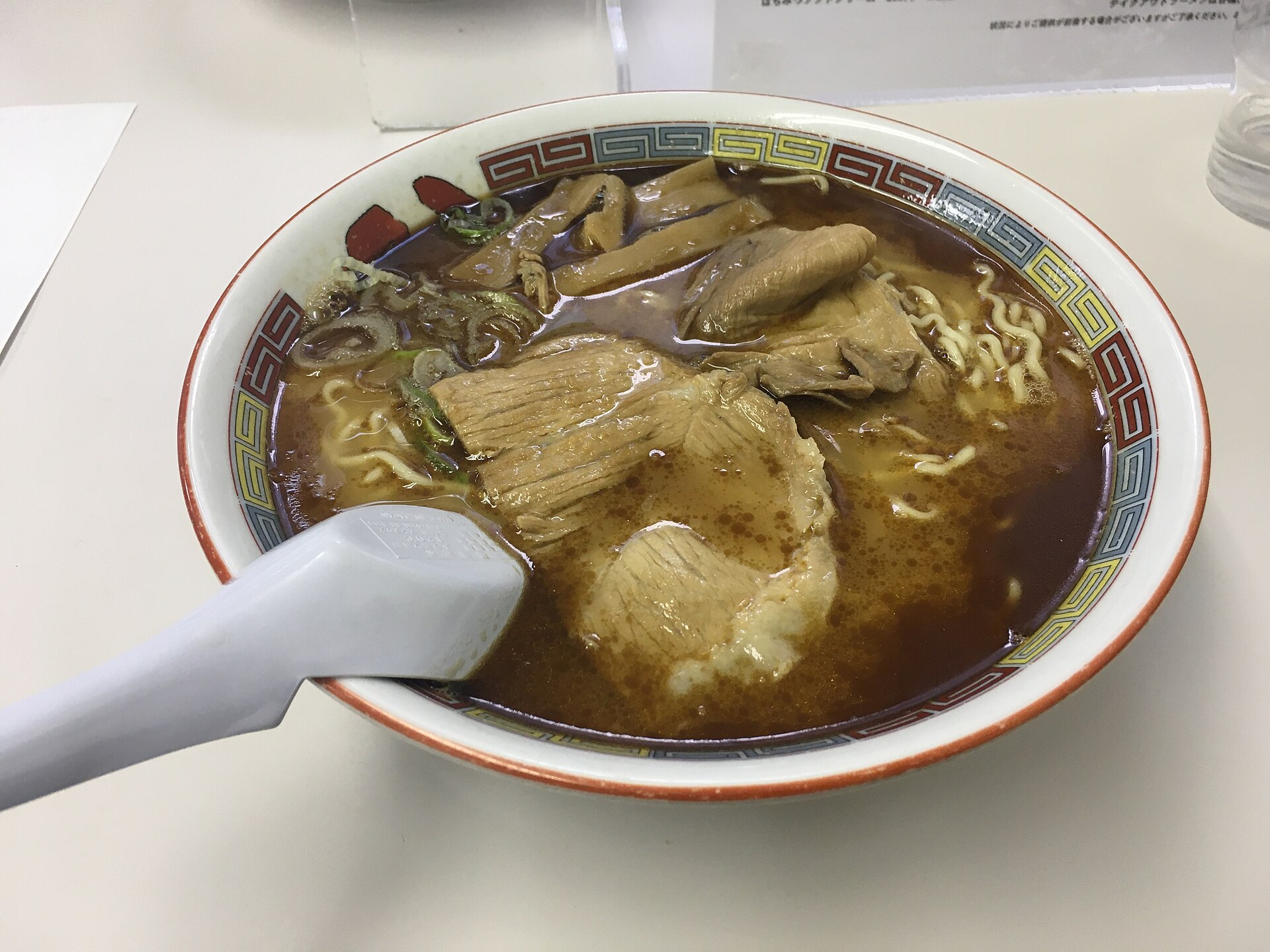
Soy-based ramen under a lid of lard, the bowl Asahikawa gave the rest of the country. Kitchens scattered across the city share one hall out in Nagayama, so the whole local style can be read in a single row of doors.
- FromAsahikawa Station
- ~20 minJR Sekihoku Line
- Get off atMinami-Nagayama Station (JR Sekihoku Line)
- On foot
- Asahikawa Ramen
Where it is
102 more notes in Hokkaido · open the map →What to look for — in walking order
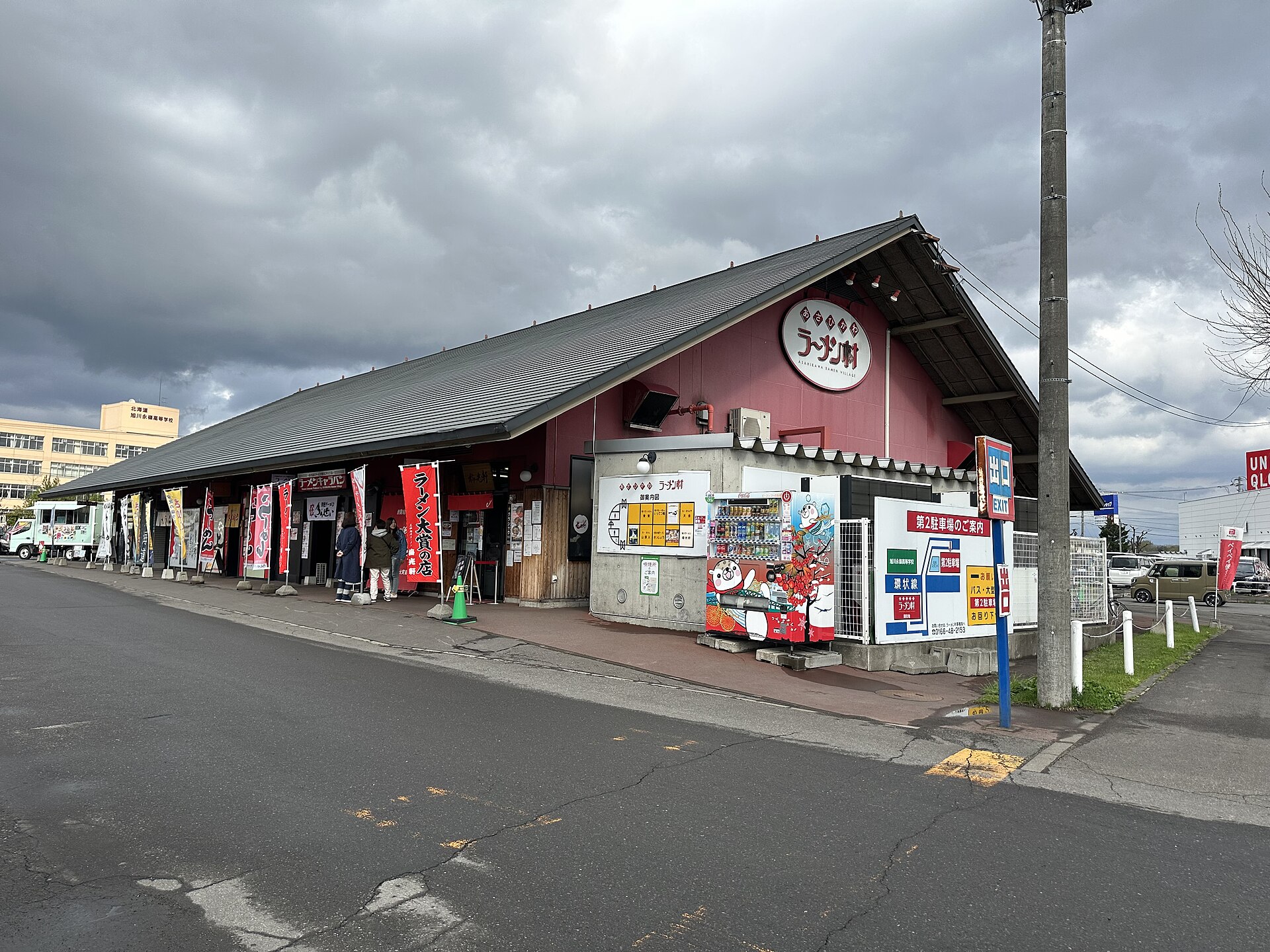
- The free car park on the ring roada wide lot facing the city ring road, open at no charge and large enough for tour coaches
- The entrance under the ramen-village signthe doorway at one corner of the Powers shopping-centre block
- The corridor of eight kitchenseight ramen shops from around the city, lined up along a single indoor passage
- Asahikawa Ramen Village Shrinea small shrine inside the hall, dedicated to good matches between eater and noodle
How to actually get there
- Asahikawa Station → Minami-Nagayama Station (JR Sekihoku Line); check the return time before you leave.
- Minami-Nagayama Station → the hall in the Powers shopping-centre block (under ten minutes on foot).
- Walk the corridor end to end once, reading the shopfronts, then choose a door.
- Look in at the small shrine inside the hall before you leave.
- JR Sekihoku Line to Minami-Nagayama
- From Asahikawa Station take the JR Sekihoku Line and get off at Minami-Nagayama, then walk under ten minutes to the hall. Local trains on this line are thin on the ground, so fix your departure and your return before you set out.
- Return from Minami-Nagayama Station
- The same line runs back to Asahikawa Station, but the gaps between trains are long. Note the return time on the platform board when you arrive, or plan to leave by bus instead.
About the place
Three cities in Hokkaido bent ramen to their own weather, and Asahikawa's answer was soy. The stock is doubled: pork bone from a district that raised pigs, dried fish from a freight hub that had them in quantity, soy sauce from a town where brewing was already a trade. The noodles are thin, wavy and made with little water, so the broth clings to them instead of sliding off. Over the top goes a layer of lard, which stops the steam and keeps the heat down to the last mouthful. In a city that freezes hard, that lid is engineering rather than decoration.
How to enjoy it
Take one slow pass down the row first: the sample bowls in the windows do the work a menu would. Soy is the city's signature, but no two pots here are built the same, so the row rewards a second visit more than a single verdict. Each kitchen sets its own hours, so if one particular bowl is why you came, check that shop before the day.
Background & history
Ramen spread through Hokkaido after the war and each city fixed on a flavour: salt in Hakodate, miso in Sapporo, soy here. Asahikawa's version is dated to around 1947, when local pork bone, dried fish arriving through the freight yards, and a long-established brewing trade came together in one pot. The hall in Nagayama is far younger: it opened in 1996, put together by residents who wanted the city's ramen better known. A small shrine to good matches between eater and noodle was added in 2006.
Before you go
- Cash
- Entry to the hall costs nothing; you pay only at the kitchen you choose. The operator lists foreign-language menus and the common QR payment services, and there is an accessible toilet on site.
- Before you go
- Opening days and hours are set kitchen by kitchen, and the operator notes that several are running shortened hours. The hall stands on a ring road with a wide car park, so in deep winter it is easier to arrive by road than on foot.
- Another way
- Dohoku Bus runs the Nagayama 10-jo service, route 66, from the stands in front of Asahikawa Station; get off at Nagayama 10-jo 4-chome and the hall is a short walk away. By car or taxi it is about twenty minutes from the station and roughly fifteen from Asahiyama Zoo.
- After you get off
- From Minami-Nagayama Station walk north-east along the ring road. The hall stands in one corner of a shopping-centre block, under a long gabled roof.